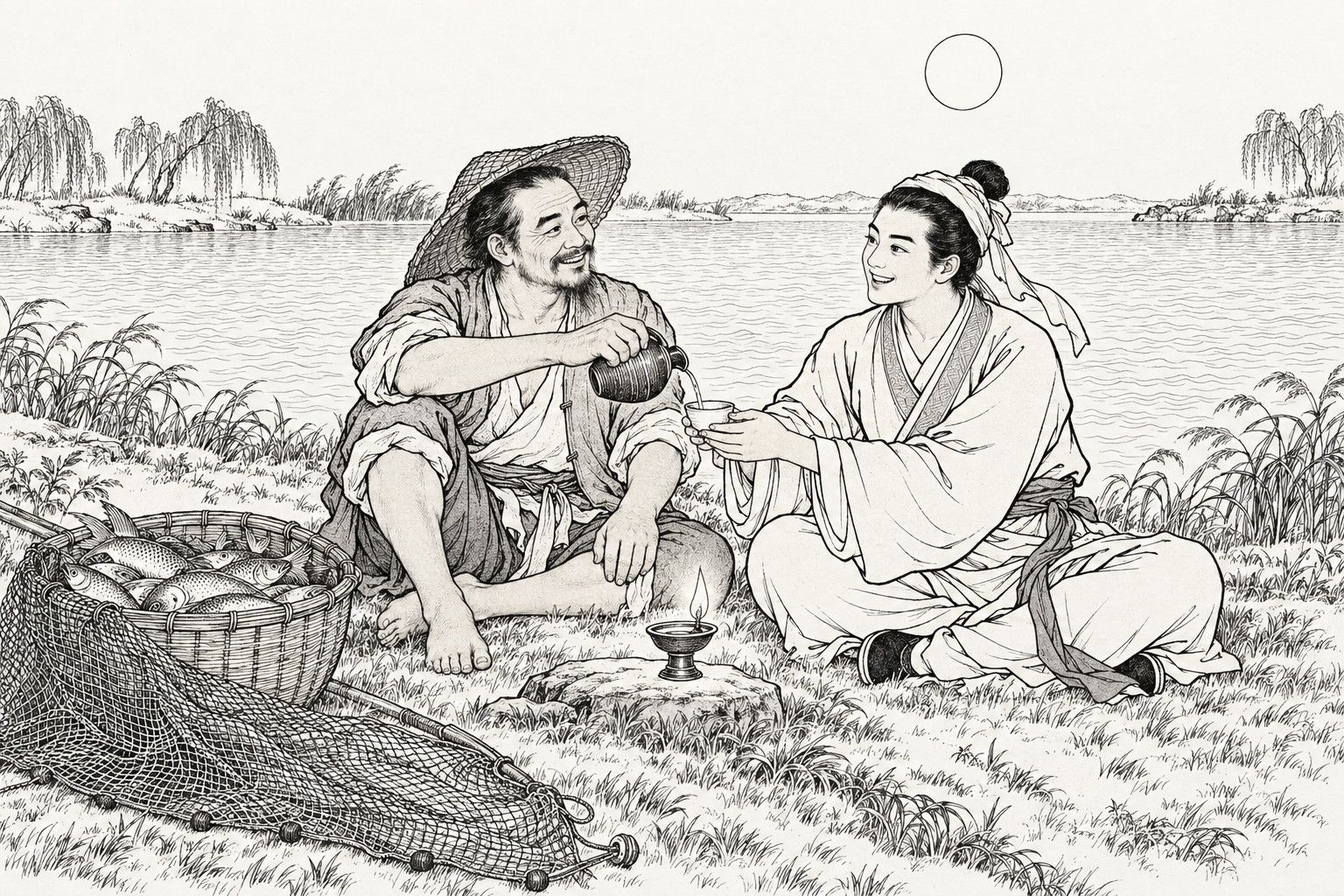
許姓,家淄之北郭,業漁。每夜,攜酒河上,飲且漁。飲則酹地,祝云:「河中溺鬼得飲。」以為常。他人漁,迄無所獲,而許獨滿筐。一夕,方獨酌,有少年來,徘徊其側。讓之飲,慨與同酌。既而終夜不獲一魚,意頗失。少年起曰:「請于下流為君驅之。」遂飄然去。少間,復返,曰:「魚大至矣。」果聞唼呷有聲。舉網而得數頭,皆盈尺。喜極,申謝。欲歸,贈以魚,不受,曰:「屢叨佳醞,區區何足云報。如不棄,要當以為常耳。」許曰:「方共一夕,何言屢也?如肯永顧,誠所甚願;但愧無以為情。」詢其姓字,曰:「姓王,無字,相見可呼王六郎。」遂別。明日,許貨魚,益沽酒。晚至河干,少年已先在,遂與歡飲。飲數杯,輒為許驅魚。
许姓,家淄之北郭,业渔。每夜,携酒河上,饮且渔。饮则酹地,祝云:「河中溺鬼得饮。」以为常。他人渔,迄无所获,而许独满筐。一夕,方独酌,有少年来,徘徊其侧。让之饮,慨与同酌。既而终夜不获一鱼,意颇失。少年起曰:「请于下流为君驱之。」遂飘然去。少间,复返,曰:「鱼大至矣。」果闻唼呷有声。举网而得数头,皆盈尺。喜极,申谢。欲归,赠以鱼,不受,曰:「屡叨佳酝,区区何足云报。如不弃,要当以为常耳。」许曰:「方共一夕,何言屡也?如肯永顾,诚所甚愿;但愧无以为情。」询其姓字,曰:「姓王,无字,相见可呼王六郎。」遂别。明日,许货鱼,益沽酒。晚至河干,少年已先在,遂与欢饮。饮数杯,辄为许驱鱼。
A man surnamed Xu lived outside the north wall of Zichuan and made his living by fishing. Every night he took wine down to the river and drank as he fished. Each time he drank, he poured some on the ground and prayed, “Drowned ghosts of the river, have a drink.” This was his habit. Other men fished and caught nothing at all, but Xu alone filled his basket. One evening, as he sat drinking alone, a young man came and wandered to and fro beside him. Xu offered him a drink, and he readily joined him. But all that night Xu did not catch a single fish, and he was rather disappointed. The young man rose and said, “Let me go downstream and drive them to you.” And off he went, light as the wind. In a little while he was back. “The fish are coming in force,” he said. Sure enough, Xu heard them smacking and gulping at the surface. He raised his net and caught several, every one more than a foot long. Overjoyed, he thanked the young man again and again. When he was ready to go home, he offered him some fish, but the young man would not take them. “I have so often enjoyed your fine wine,” he said. “This trifle is hardly worth calling a return. If you don’t mind, I should like to make it a regular thing.” “We have shared only one evening,” said Xu. “What do you mean, so often? If you will keep me company always, nothing would please me more. I am only ashamed that I have nothing to offer you.” He asked his name. “My surname is Wang. I have no courtesy name. When we meet, you can call me Wang Liulang.” And they parted. The next day Xu sold his fish and bought more wine. At evening he went to the riverbank, and the young man was already there before him, so they drank happily together. After a few cups, the young man would always go and drive the fish for Xu.
如是半載。忽告許曰:「拜識清揚,情逾骨肉。然相別有日矣。」語甚悽楚。驚問之。欲言而止者再,乃曰:「情好如吾兩人,言之或勿訝耶?今將別,無妨明告:我實鬼也。素嗜酒,沉醉溺死,數年于此矣。前君之獲魚,獨勝于他人者,皆僕之暗驅,以報酹奠耳。明日業滿,當有代者,將往投生。相聚只今夕,故不能無感。」許初聞甚駭;然親狎既久,不復恐怖。因亦欷歔,酌而言曰:「六郎飲此,勿戚也。相見遽違,良足悲惻,然業滿劫脫,正宜相賀,悲乃不倫。」遂與暢飲。因問:「代者何人?」曰:「兄于河畔視之,亭午,有女子渡河而溺者,是也。」聽村雞既唱,灑涕而別。明日,敬伺河邊,以覘其異。果有婦人抱嬰兒來,及河而墮。兒拋岸上,揚手擲足而啼。婦沉浮者屢矣,忽淋淋攀岸以出,藉地少息,抱兒徑去。當婦溺時,意良不忍,思欲奔救,轉念是所以代六郎者,故止不救。及婦自出,疑其言不驗。抵暮,漁舊處。少年復至,曰:「今又聚首,且不言別矣。」問其故。曰:「女子已相代矣;僕憐其抱中兒,代弟一人,遂殘二命,故捨之。更代不知何期。或吾兩人之緣未盡耶?」許感嘆曰:「此仁人之心,可以通上帝矣。」由此相聚如初。數日,又來告別。許疑其復有代者。曰:「非也。前一念惻隱,果達帝天。今授為招遠縣鄔鎮土地,來日赴任。倘不忘故交,當一往探,勿憚修阻。」許賀曰:「君正直為神,甚慰人心。但人神路隔,即不憚修阻,將復如何?」少年曰:「但往,勿慮。」再三叮嚀而去。
如是半载。忽告许曰:「拜识清扬,情逾骨肉。然相别有日矣。」语甚凄楚。惊问之。欲言而止者再,乃曰:「情好如吾两人,言之或勿讶耶?今将别,无妨明告:我实鬼也。素嗜酒,沉醉溺死,数年于此矣。前君之获鱼,独胜于他人者,皆仆之暗驱,以报酹奠耳。明日业满,当有代者,将往投生。相聚只今夕,故不能无感。」许初闻甚骇;然亲狎既久,不复恐怖。因亦欷歔,酌而言曰:「六郎饮此,勿戚也。相见遽违,良足悲恻,然业满劫脱,正宜相贺,悲乃不伦。」遂与畅饮。因问:「代者何人?」曰:「兄于河畔视之,亭午,有女子渡河而溺者,是也。」听村鸡既唱,洒涕而别。明日,敬伺河边,以觇其异。果有妇人抱婴儿来,及河而堕。儿抛岸上,扬手掷足而啼。妇沉浮者屡矣,忽淋淋攀岸以出,藉地少息,抱儿径去。当妇溺时,意良不忍,思欲奔救,转念是所以代六郎者,故止不救。及妇自出,疑其言不验。抵暮,渔旧处。少年复至,曰:「今又聚首,且不言别矣。」问其故。曰:「女子已相代矣;仆怜其抱中儿,代弟一人,遂残二命,故舍之。更代不知何期。或吾两人之缘未尽耶?」许感叹曰:「此仁人之心,可以通上帝矣。」由此相聚如初。数日,又来告别。许疑其复有代者。曰:「非也。前一念恻隐,果达帝天。今授为招远县邬镇土地,来日赴任。倘不忘故交,当一往探,勿惮修阻。」许贺曰:「君正直为神,甚慰人心。但人神路隔,即不惮修阻,将复如何?」少年曰:「但往,勿虑。」再三叮咛而去。
So it went on for half a year. Then one day the young man said to Xu, “Since I had the honour of knowing you, I have loved you more than my own flesh and blood. But the day of our parting has come.” His words were full of grief. Startled, Xu asked what he meant. Twice he began to speak and stopped. At last he said, “Friends as close as we are — perhaps you won’t be too shocked if I tell you. Now that we are to part, there is no harm in saying it plainly: I am a ghost. I always loved my wine. I drowned when I was dead drunk, and I have been here several years. All those fish you caught, more than anyone else — I drove them to you in secret, to repay you for the wine you poured out. Tomorrow my term is up. Someone will come to take my place, and I shall go to be born again. We have only tonight together, so I cannot help feeling it.” When Xu first heard this he was badly frightened. But they had been close for so long that his fear passed. He too sighed and sobbed, poured a cup and said, “Drink this, Liulang, and don’t be sad. To part so soon after we met is a real grief. But your term is served and your ordeal is over, and that calls for congratulations. Sorrow is out of place.” So they drank to their hearts’ content. Then Xu asked, “Who is to take your place?” “Watch from the riverbank, brother. At noon a woman crossing the river will drown. That is the one.” When they heard the village cocks crow, they parted in tears. The next day Xu waited dutifully by the river to see what strange thing would happen. Sure enough, a woman came carrying a baby, and when she reached the river she fell in. The baby was flung onto the bank, where it waved its hands, kicked its feet and cried. The woman went under and came up again and again. Then suddenly, streaming wet, she caught hold of the bank and pulled herself out. She lay on the ground to rest a little, then picked up the baby and went on her way. While she was drowning, Xu could hardly bear it and wanted to run and save her. But then he thought: this is the one who is to take Liulang’s place. So he held back and did not save her. When she got out by herself, he began to suspect that what Liulang had told him would not come true. At dusk he fished at the old spot. The young man came again. “Here we are together again,” he said, “and no more talk of parting.” Xu asked why. “The woman was to take my place. But I pitied the child in her arms. To replace one man, me, I would have destroyed two lives. So I let her go. When another will come to take my place, who knows? Perhaps the bond between the two of us is not yet used up.” Xu sighed, deeply moved. “A kind heart like this could reach the Lord on High.” From then on they met as before. A few days later the young man came again to say goodbye. Xu suspected that another substitute had come. “No,” he said. “That one moment of pity did reach Heaven after all. Now I have been appointed Earth God of Wu Town in Zhaoyuan County, and tomorrow I go to take up my post. If you don’t forget an old friend, come and see me there. Don’t be put off by the long, hard road.” Xu congratulated him. “You are upright, and so you have become a god. That is a great comfort to people. But men and gods walk different roads. Even if I don’t mind the long, hard road, what then?” “Just come,” said the young man. “Don’t worry.” He urged him again and again, and left.
許歸,即欲治裝東下。妻笑曰:「此去數百里,即有其地,恐土偶不可以共語。」許不聽,竟抵招遠。問之居人,果有鄔鎮。尋至其處,息肩逆旅,問祠所在。主人驚曰:「得無客姓為許?」許曰:「然。何見知?」又曰:「得勿客邑為淄?」曰:「然。何見知?」主人不答,遽出。俄而丈夫抱子,媳女窺門,雜沓而來,環如牆堵。許益驚。眾乃告曰:「數夜前,夢神言:淄川許友當即來,可助為資斧。祗候已久。」許亦異之,乃往祭于祠而祝曰:「別君後,寤寐不去心,遠踐曩約。又蒙夢示居人,感篆中懷。愧無腆物,僅有卮酒;如不棄,當如河上之飲。」祝畢,焚錢紙。俄見風起座後,旋轉移時,始散。夜夢少年來,衣冠楚楚,大異平時。謝曰:「遠勞顧問,喜淚交並。但任微職,不便會面,咫尺河山,甚愴于懷。居人薄有所贈,聊酬夙好。歸如有期,尚當走送。」居數日,許欲歸。眾留慇懃,朝請暮邀,日更數主。許堅辭欲行。眾乃折柬抱襆,爭來致贐,不終朝,饋遺盈橐。蒼頭稚子畢集,祖送出村。欻有羊角風起,隨行十餘里。許再拜曰:「六郎珍重!勿勞遠涉。君心仁愛,自能造福一方,無庸故人囑也。」風盤旋久之,乃去。村人亦嗟訝而返。許歸,家稍裕,遂不復漁。後見招遠人問之,其靈應如響云。或言:即章丘石坑莊。未知孰是。
许归,即欲治装东下。妻笑曰:「此去数百里,即有其地,恐土偶不可以共语。」许不听,竟抵招远。问之居人,果有邬镇。寻至其处,息肩逆旅,问祠所在。主人惊曰:「得无客姓为许?」许曰:「然。何见知?」又曰:「得勿客邑为淄?」曰:「然。何见知?」主人不答,遽出。俄而丈夫抱子,媳女窥门,杂沓而来,环如墙堵。许益惊。众乃告曰:「数夜前,梦神言:淄川许友当即来,可助为资斧。祗候已久。」许亦异之,乃往祭于祠而祝曰:「别君后,寤寐不去心,远践曩约。又蒙梦示居人,感篆中怀。愧无腆物,仅有卮酒;如不弃,当如河上之饮。」祝毕,焚钱纸。俄见风起座后,旋转移时,始散。夜梦少年来,衣冠楚楚,大异平时。谢曰:「远劳顾问,喜泪交并。但任微职,不便会面,咫尺河山,甚怆于怀。居人薄有所赠,聊酬夙好。归如有期,尚当走送。」居数日,许欲归。众留慇懃,朝请暮邀,日更数主。许坚辞欲行。众乃折柬抱襆,争来致赆,不终朝,馈遗盈橐。苍头稚子毕集,祖送出村。欻有羊角风起,随行十余里。许再拜曰:「六郎珍重!勿劳远涉。君心仁爱,自能造福一方,无庸故人嘱也。」风盘旋久之,乃去。村人亦嗟讶而返。许归,家稍裕,遂不复渔。后见招远人问之,其灵应如响云。或言:即章丘石坑庄。未知孰是。
Xu went home and at once wanted to pack and head east. His wife laughed at him. “It is hundreds of li from here. Even if there is such a place, I doubt a clay idol will make much conversation.” Xu would not listen, and went all the way to Zhaoyuan. He asked the people there, and sure enough there was a Wu Town. He found his way to it, set down his load at an inn and asked where the shrine was. The innkeeper looked startled. “Could your name be Xu, sir?” “It is,” said Xu. “How did you know?” “And could you be from Zichuan, sir?” “I am. How did you know?” The innkeeper made no answer and hurried out. In a moment the men came with children in their arms, and wives and daughters peered round the door, and they crowded in pell-mell until they stood round him like a wall. Xu was more astonished. Then they told him, “A few nights ago the god said to us in a dream, ‘My friend Xu from Zichuan will be here soon. You can help him with money for the road.’ We have been waiting for you a long time.” Xu too marvelled at this. He went to the shrine to make an offering, and prayed, “Since I parted from you, waking or sleeping, you have never left my mind, and I have come a long way to keep our old promise. And you kindly told the people here in a dream; my gratitude is engraved on my heart. I am ashamed to bring no fine gift, only a cup of wine. If you don’t scorn it, let us drink as we did by the river.” When he had prayed, he burned paper money. In a moment a wind rose behind the altar and whirled round for a long while before it died away. That night he dreamed that the young man came, finely dressed in cap and robe, very different from how he used to look. He thanked Xu: “You have come so far to see me that I am weeping for joy. But I hold a humble office, and it is not fitting for me to meet you face to face. You are only a step away, yet it is as if hills and rivers lay between us, and it grieves me deeply. The people here have a small gift for you, some return for our old friendship. When you set off for home, I will come to see you on your way.” After a few days Xu wanted to go home. The people pressed him warmly to stay. They invited him morning and evening, and he changed hosts several times a day. Xu firmly declined and insisted on leaving. Then they came with notes of farewell and bundles in their arms, vying to give him parting gifts, and before the morning was out his bags were full. Old men and children all gathered to see him off outside the village. Suddenly a whirlwind rose and followed him for more than ten li. Xu bowed twice and said, “Take care of yourself, Liulang! Don’t trouble to come so far. Your heart is kind, and you will surely bring blessings to this whole district. Your old friend need not tell you that.” The wind circled for a long while and then went away. The villagers too turned back, sighing in wonder. When Xu got home, his family was somewhat better off, and he gave up fishing. Afterwards, whenever he met someone from Zhaoyuan he asked about the god, and they said he answered prayers as surely as an echo. Some say the place is really Shikeng Village in Zhangqiu. Which is right, I do not know.
異史氏曰:「置身青雲,無忘貧賤,此其所以神也。今日車中貴介,寧復識戴笠人哉?余鄉有林下者,家綦貧。有童稚交,任肥秩。計投之必相周顧。竭力辦裝,奔涉千里,殊失所望;瀉囊貨騎,始得歸。其族弟甚諧,作月令嘲之云:『是月也,哥哥至,貂帽解,傘蓋不張,馬化為驢,靴始收聲。』念此可為一笑。」
异史氏曰:「置身青云,无忘贫贱,此其所以神也。今日车中贵介,宁复识戴笠人哉?余乡有林下者,家綦贫。有童稚交,任肥秩。计投之必相周顾。竭力办装,奔涉千里,殊失所望;泻囊货骑,始得归。其族弟甚谐,作月令嘲之云:『是月也,哥哥至,貂帽解,伞盖不张,马化为驴,靴始收声。』念此可为一笑。」
The Historian of the Strange says: To rise to the blue clouds and not forget the poor and lowly — that is what made him a god. Of the grandees riding in carriages today, which of them still knows the man in the straw hat? In my home district there was a gentleman living in retirement whose family was very poor. A boyhood friend of his held a fat post, and he reckoned that if he went to him, his friend would be sure to look after him. He scraped together all he could for the journey and travelled a thousand li, only to be sorely disappointed. He had to empty his purse and sell his horse before he could get home. A younger cousin of his, a great wit, mocked him with a parody of the Monthly Ordinances: ‘In this month, Elder Brother arrives. The sable hat is taken off. The parasol is not raised. The horse turns into a donkey. The boots first fall silent.’ Thinking of it is good for a laugh.