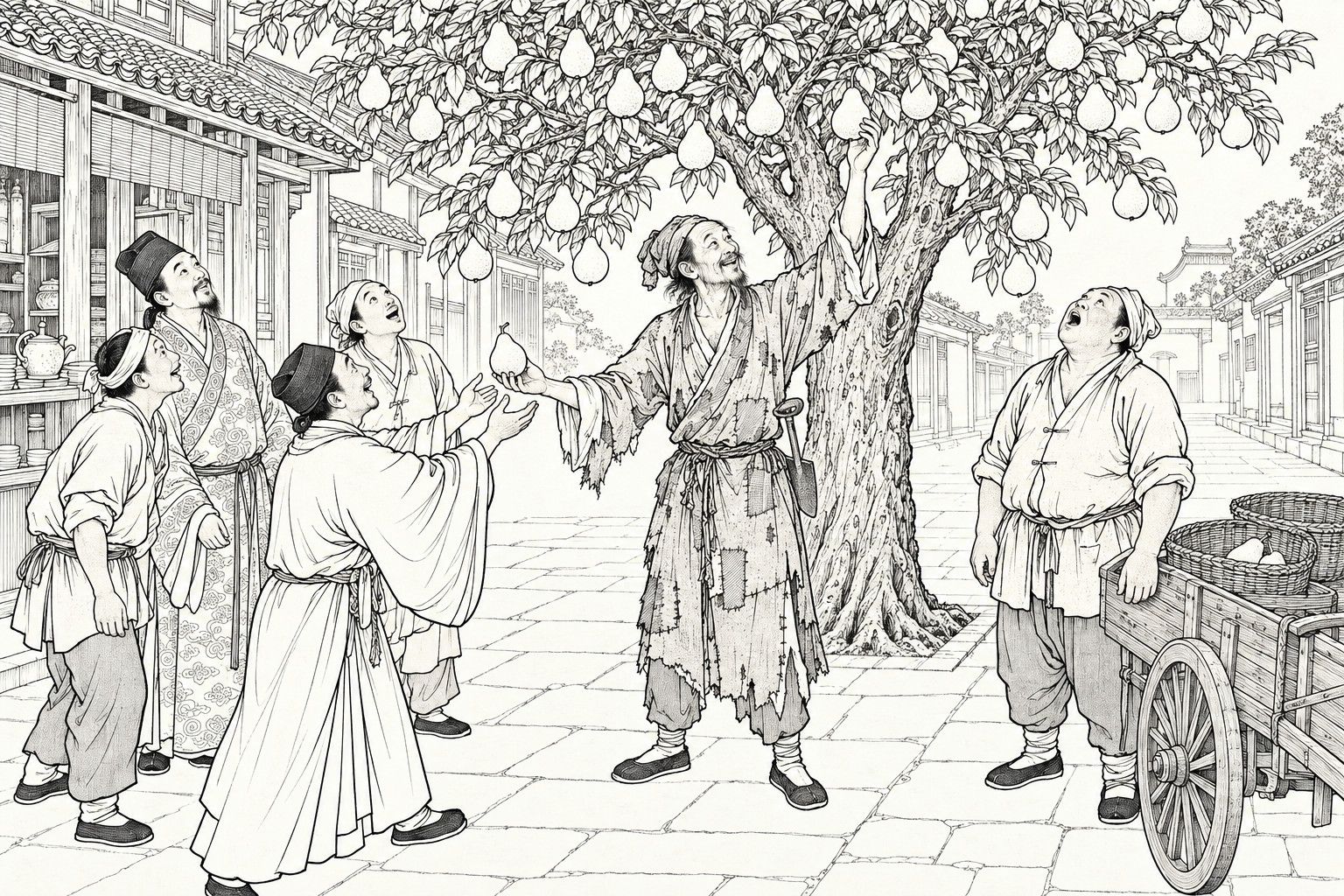
有鄉人貨梨於市,頗甘芳,價騰貴。有道士破巾絮衣,丐於車前,鄉人咄之而不去,鄉人怒,加以叱罵。道士曰:「一車數百顆,老衲止丐其一,於居士亦無大損,何怒為?」觀者勸置劣者一枚,令去,鄉人執不肯。
有乡人货梨于市,颇甘芳,价腾贵。有道士破巾絮衣,丐于车前,乡人咄之而不去,乡人怒,加以叱骂。道士曰:「一车数百颗,老衲止丐其一,于居士亦无大损,何怒为?」观者劝置劣者一枚,令去,乡人执不肯。
A countryman was selling pears in the market. They were very sweet and fragrant, and the price was high. A Daoist in a ragged headcloth and a padded cotton coat stood begging in front of his cart. The countryman shouted at him to be off, but he would not go. The countryman grew angry and cursed him. “There are several hundred pears in your cart,” said the Daoist. “This old monk asks for only one. It would be no great loss to you, good layman. Why be so angry?” The onlookers urged the countryman to give him a poor one and send him away, but he stubbornly refused.
肆中傭保者,見喋聒不堪,遂出錢市一枚,付道士,道士拜謝,謂眾曰:「出家人不解吝惜,我有佳梨,請出供客。」或曰:「既有之,何不自食?」曰:「吾特需此核作種。」於是掬梨大啗,且盡,把核於手,解肩上鑱坎地上深數寸,納之,而覆以土,向市人索湯沃灌。好事者,於臨路店,索得沸瀋,道士接浸坎處。萬目攢視,見有勾萌出,漸大,俄成樹,枝葉扶疏,倏而花,倏而實,碩大芳馥,纍纍滿樹。道人乃即樹頭,摘賜觀者,頃刻而盡,已乃以鑱伐樹,丁丁良久乃斷,帶葉荷肩頭從容徐步而去。
肆中佣保者,见喋聒不堪,遂出钱市一枚,付道士,道士拜谢,谓众曰:「出家人不解吝惜,我有佳梨,请出供客。」或曰:「既有之,何不自食?」曰:「吾特需此核作种。」于是掬梨大啗,且尽,把核于手,解肩上镵坎地上深数寸,纳之,而覆以土,向市人索汤沃灌。好事者,于临路店,索得沸沈,道士接浸坎处。万目攒视,见有勾萌出,渐大,俄成树,枝叶扶疏,倏而花,倏而实,硕大芳馥,累累满树。道人乃即树头,摘赐观者,顷刻而尽,已乃以镵伐树,丁丁良久乃断,带叶荷肩头从容徐步而去。
A waiter in one of the shops, seeing that the squabbling was more than anyone could stand, paid for a pear himself and gave it to the Daoist. The Daoist bowed his thanks and said to the crowd, “We who have left home know nothing of stinginess. I have some fine pears, and I invite you all to share them.” “If you have some,” someone said, “why don’t you eat them yourself?” “All I want is the pip of this one, for seed,” he said. Then, holding the pear in both hands, he ate it up in great bites. When it was almost gone, he took a pip in his hand, unslung the spade from his shoulder, dug a hole in the ground several inches deep, put the pip in and covered it with earth. He asked the people of the market for hot water to water it. Some busybody got boiling water from a shop by the road, and the Daoist took it and soaked the hole. With ten thousand eyes fixed on the spot, a curled shoot came up. It grew bigger, and in a moment it was a tree, its branches and leaves spreading thick. All at once it was in blossom; all at once it was in fruit, big and fragrant, hanging in clusters all over the tree. The Daoist picked the pears from the treetop and handed them out to the onlookers, and in no time they were gone. Then he chopped at the tree with his spade, chop, chop, for a long time before it came down. He shouldered it, leaves and all, and strolled unhurriedly away.
初道士作法時,鄉人亦雜眾中,引領注目,竟忘其業。道士既去,始顧車中,則梨已空矣,方悟適所俵散,皆己物也。又細視車上一靶亡,是新鑿斷者,心大憤恨。急跡之,轉過牆隅,則斷靶棄垣下,始知所伐梨本,即是物也。道士不知所在,一市粲然。
初道士作法时,乡人亦杂众中,引领注目,竟忘其业。道士既去,始顾车中,则梨已空矣,方悟适所俵散,皆己物也。又细视车上一靶亡,是新凿断者,心大愤恨。急迹之,转过墙隅,则断靶弃垣下,始知所伐梨本,即是物也。道士不知所在,一市粲然。
When the Daoist began his magic, the countryman had been among the crowd too, craning his neck to watch, and had quite forgotten his business. Only after the Daoist had gone did he look round at his cart: the pears were all gone. Then he understood that what had just been handed out was all his own. And when he looked more closely, one of the cart’s shafts was missing, freshly chopped off. He was furious. He hurried after the Daoist, and as he turned the corner of a wall, there was the shaft, thrown down at the foot of the wall. Only then did he know that the pear tree that had been chopped down was this very thing. Where the Daoist had gone, no one knew. The whole market roared with laughter.
異史氏曰:鄉人憒憒,憨狀可掬,其見笑於市人,有以哉。每見鄉中稱素封者,良朋乞米,則怫然,且計曰:「是數日之資也。」或勸濟一危難,飯一煢獨,則又忿然計曰:「此十人五人之食也。」甚而父子兄弟,較盡錙銖。及其淫博迷心,則傾囊不吝,刀鋸臨頸,則贖命不遑。諸如此類,正不勝道,蠢爾鄉人,又何足怪?
异史氏曰:乡人愦愦,憨状可掬,其见笑于市人,有以哉。每见乡中称素封者,良朋乞米,则怫然,且计曰:「是数日之资也。」或劝济一危难,饭一茕独,则又忿然计曰:「此十人五人之食也。」甚而父子兄弟,较尽锱铢。及其淫博迷心,则倾囊不吝,刀锯临颈,则赎命不遑。诸如此类,正不胜道,蠢尔乡人,又何足怪?
The Historian of the Strange says: The countryman was a muddled fool. One can just picture his dim look, and the market had good reason to laugh at him. Yet time and again I see men in the countryside who are known as rich. When a good friend begs a little rice, they bristle and reckon, ‘That would keep me for several days.’ When someone urges them to rescue a man in trouble or feed someone alone in the world, they reckon again, angrily, ‘That would feed ten men, or five.’ Even between father and son, between brothers, they count every last farthing. Yet when lust and gambling have bewitched them, they empty their purses without a pang; and when the knife and the saw are at their necks, they cannot buy back their lives fast enough. There are more of this kind than can be told. So why wonder at that blockhead of a countryman?