邑有王生行七,故家子。少慕道,聞勞山多仙人,負笈往遊,登一頂,有觀宇,甚幽。一道士坐蒲團上,素髮垂領,而神觀爽邁。叩而與語,理甚玄妙,請師之。道士曰:「恐嬌惰不能作苦。」答言:「能之。」其門人甚眾,薄暮畢集,王俱與稽首,遂留觀中。
邑有王生行七,故家子。少慕道,闻劳山多仙人,负笈往游,登一顶,有观宇,甚幽。一道士坐蒲团上,素发垂领,而神观爽迈。叩而与语,理甚玄妙,请师之。道士曰:「恐娇惰不能作苦。」答言:「能之。」其门人甚众,薄暮毕集,王俱与稽首,遂留观中。
In my county there was a young scholar named Wang, the seventh of his generation, from an old family. From his youth he had longed to learn the Way, and hearing that Mount Lao was home to many immortals, he shouldered his book box and set off to travel there. Climbing one of its peaks, he came upon a Daoist temple, deep in seclusion. A Daoist sat on a rush cushion, his white hair hanging down to his collar, his look clear and vigorous. Wang bowed and spoke with him, and found his teaching profound and subtle, so he asked to become his disciple. “I am afraid,” said the Daoist, “that you are too pampered and lazy to bear hard work.” “I can bear it,” Wang answered. The Daoist had a great many disciples. At dusk they all gathered, and Wang joined them in bowing to the Master. And so he stayed on at the temple.
凌晨,道士呼王去,授以斧,使隨眾採樵,王謹受教。過月餘,手足重繭,不堪其苦,陰有歸志。一夕歸,見二人與師共酌,日已暮,尚無燈燭,師乃剪紙如鏡,粘壁間,俄頃,月明輝壁,光鑒毫芒,諸門人環聽奔走。一客曰:「良宵勝樂,不可不同。」乃於案上取壺酒,分賚諸徒,且囑盡醉。王自思:「七八人,壺酒何能徧給?」遂各覓盎盂,競飲先釂,惟恐樽盡,而往復挹注,竟不少減,心奇之。俄一客曰:「蒙賜月明之照,乃爾寂飲,何不呼嫦娥來?」乃以箸擲月中,見一美人,自光中出,初不盈尺,至地,遂與人等,纖腰秀項,翩翩作霓裳舞。已而歌曰:「仙仙乎,而還乎,而幽我於廣寒乎?」其聲清越,烈如簫管。歌畢,盤旋而起,躍登几上,驚顧之間,已復為箸,三人大笑,又一客曰:「今宵最樂,然不勝酒力矣,其餞我於月宮可乎?」三人移席,漸入月中,眾視三人坐月中飲,鬚眉畢見,如影之在鏡中。移時,月漸暗,門人然燭來,則道士獨坐,而客杳矣。几上肴核尚存,壁上月,紙圓如鏡而已。道士問眾,「飲足乎?」曰:「足矣。」「足宜早寢,勿誤樵蘇。」眾諾而退。
凌晨,道士呼王去,授以斧,使随众采樵,王谨受教。过月余,手足重茧,不堪其苦,阴有归志。一夕归,见二人与师共酌,日已暮,尚无灯烛,师乃剪纸如镜,粘壁间,俄顷,月明辉壁,光鉴毫芒,诸门人环听奔走。一客曰:「良宵胜乐,不可不同。」乃于案上取壶酒,分赉诸徒,且嘱尽醉。王自思:「七八人,壶酒何能徧给?」遂各觅盎盂,竞饮先釂,惟恐樽尽,而往复挹注,竟不少减,心奇之。俄一客曰:「蒙赐月明之照,乃尔寂饮,何不呼嫦娥来?」乃以箸掷月中,见一美人,自光中出,初不盈尺,至地,遂与人等,纤腰秀项,翩翩作霓裳舞。已而歌曰:「仙仙乎,而还乎,而幽我于广寒乎?」其声清越,烈如箫管。歌毕,盘旋而起,跃登几上,惊顾之间,已复为箸,三人大笑,又一客曰:「今宵最乐,然不胜酒力矣,其饯我于月宫可乎?」三人移席,渐入月中,众视三人坐月中饮,须眉毕见,如影之在镜中。移时,月渐暗,门人然烛来,则道士独坐,而客杳矣。几上肴核尚存,壁上月,纸圆如镜而已。道士问众,「饮足乎?」曰:「足矣。」「足宜早寝,勿误樵苏。」众诺而退。
At first light the Daoist called Wang, gave him an axe and sent him off with the others to cut firewood. Wang respectfully did as he was told. After a month and more, his hands and feet were thick with calluses. He could not bear the hardship, and secretly he began to think of going home. One evening, coming back, he found two guests drinking with the Master. Night had already fallen, and still no lamp or candle had been lit. So the Master cut a piece of paper into a round like a mirror and stuck it on the wall. In a moment a bright moon shone on the wall, so clear that a single hair could be seen by it, and the disciples stood round the guests, waiting on them and running their errands. One guest said, “On so fine a night, such joy should be shared by all.” He took a pot of wine from the table, gave it to the disciples to share, and told them to drink until they were drunk. Wang thought, “There are seven or eight of us. How can one pot go round?” Each of them found a bowl or a cup, and they raced to drain theirs first, afraid the pot would run dry. Yet though they poured from it again and again, it never grew the least bit less. Wang marvelled at it. Presently one guest said, “You have favoured us with the light of the moon, yet we drink in silence. Why not call Chang’e to join us?” He threw a chopstick into the moon, and a beautiful woman came out of the light. At first she was less than a foot tall, but when she reached the ground she was as tall as anyone. With her slender waist and graceful neck, she danced the Rainbow Skirt, light as a bird. Then she sang: “Lightly, lightly I dance — will you return? Or will you keep me shut away in the Palace of Vast Cold?” Her voice was clear and high, as piercing as flute and pipes. When the song was done she whirled and rose, and leapt onto the table — and as they stared in astonishment, she was a chopstick again. The three men laughed aloud. Then a guest said, “Tonight has been the happiest of all, but I cannot hold any more wine. Will you see me off with a farewell cup in the Moon Palace?” The three of them moved their seats and went little by little into the moon. The disciples watched the three sitting and drinking in the moon, every hair of their beards and brows plain to see, like reflections in a mirror. After a while the moon began to dim. A disciple lit a candle and brought it in: the Daoist sat alone, and the guests had vanished. The dishes and fruit were still on the table, and the moon on the wall was only a circle of paper like a mirror. “Have you all had enough to drink?” the Daoist asked them. “We have,” they said. “Then you had better go to bed early. Don’t be late for the firewood.” The disciples said they would and withdrew.
王竊忻慕,歸念遂息。又一月,苦不可忍,而道士並不傳教一術,心不能持,辭曰:「弟子數百里,受業仙師,縱不能得長生術,或小有傳習,亦可慰求教之心,今閱兩三月,不過早樵而暮歸,弟子在家,未諳此苦。」道士笑曰:「我固謂不能作苦,今果然,明早,當遣汝行。」
王窃忻慕,归念遂息。又一月,苦不可忍,而道士并不传教一术,心不能持,辞曰:「弟子数百里,受业仙师,纵不能得长生术,或小有传习,亦可慰求教之心,今阅两三月,不过早樵而暮归,弟子在家,未谙此苦。」道士笑曰:「我固谓不能作苦,今果然,明早,当遣汝行。」
Wang was secretly thrilled and full of longing, and his thoughts of going home were laid to rest. But after another month the hardship was more than he could stand, and still the Daoist had not taught him a single art. He could hold out no longer, and went to take his leave. “Your disciple came hundreds of li to study under an immortal master,” he said. “Even if I cannot learn the art of living forever, a little teaching of some kind would still comfort the heart that came here seeking it. Now two or three months have gone by, and all I do is cut firewood in the morning and come back at night. At home, your disciple never knew hardship like this.” The Daoist laughed. “I told you from the start that you could not bear hard work, and now it is plain. Tomorrow morning I shall send you on your way.”
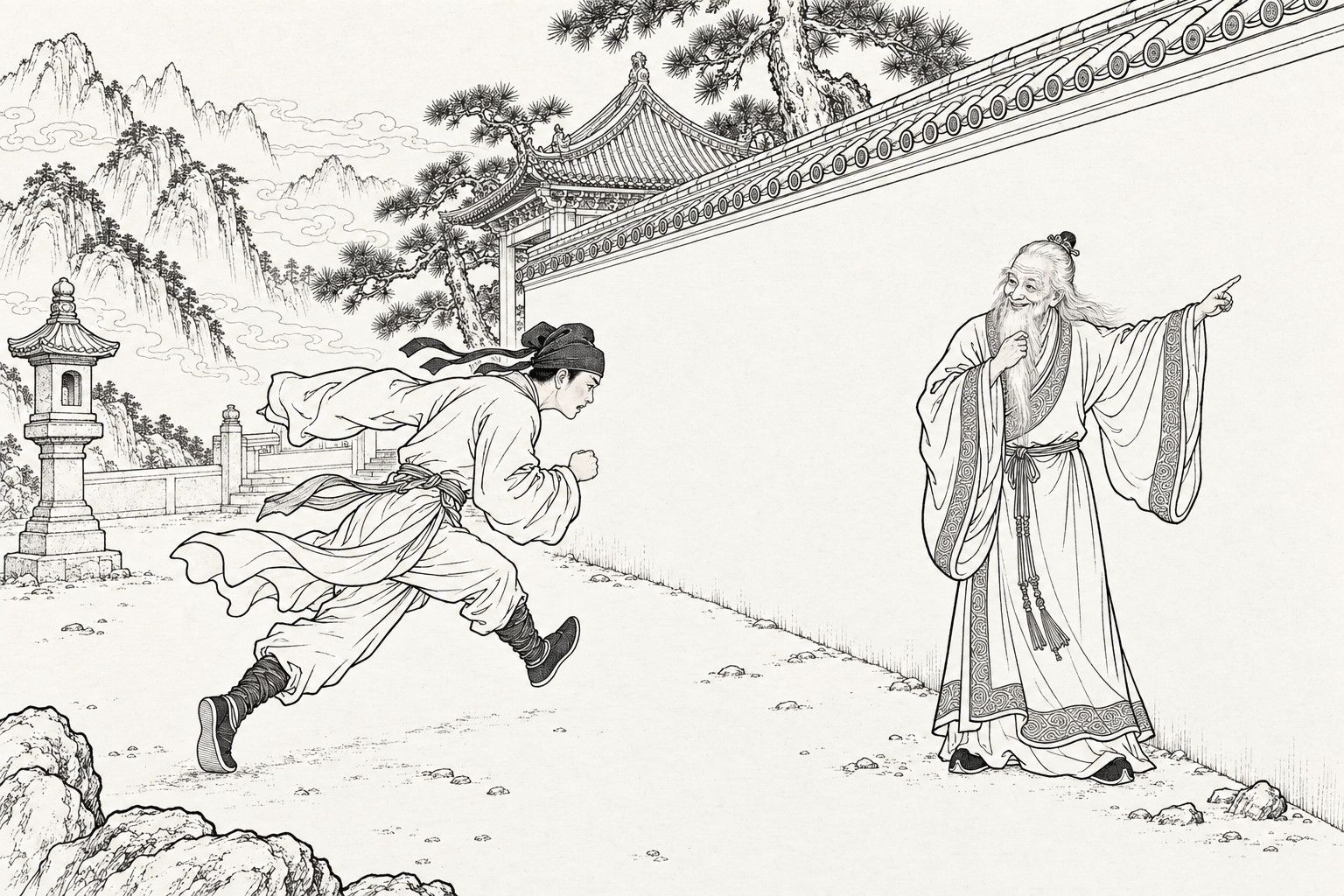
王曰:「弟子操作多日,師略授小技,此來為不負也。」道士問何術之求?王曰:「每見師行處,牆壁所不能隔,但得此法,足矣。」道士笑而允之。乃傳以訣,令自咒畢,呼曰:「入之!」王面牆不敢入,又曰:「試入之。」王果從容入,及牆而阻。道士曰:「俛首驟入,勿逡巡。」王果去牆數步奔而入,及牆,虛若無物,回視,果在牆外矣。大喜,入謝。道士曰:「歸宜潔持,否則不驗。」遂助資斧遣之歸。
王曰:「弟子操作多日,师略授小技,此来为不负也。」道士问何术之求?王曰:「每见师行处,墙壁所不能隔,但得此法,足矣。」道士笑而允之。乃传以诀,令自咒毕,呼曰:「入之!」王面墙不敢入,又曰:「试入之。」王果从容入,及墙而阻。道士曰:「俛首骤入,勿逡巡。」王果去墙数步奔而入,及墙,虚若无物,回视,果在墙外矣。大喜,入谢。道士曰:「归宜洁持,否则不验。」遂助资斧遣之归。
“Your disciple has laboured here many days,” said Wang. “If you would teach me some small trick, Master, then I will not have come for nothing.” The Daoist asked what art he wanted. “I have often seen that wherever you walk, Master, walls cannot stop you,” said Wang. “If I could just learn that, it would be enough.” The Daoist laughed and agreed. He taught him a spell and had him recite it himself. When Wang had finished, the Daoist called out, “Go in!” Wang stood facing the wall and did not dare. “Try going in,” the Daoist said again. So Wang walked at it unhurriedly, and when he reached the wall it stopped him. “Duck your head and go in fast,” said the Daoist. “Don’t hang back.” So Wang stepped back a few paces from the wall and ran at it — and when he reached it, it was as if nothing were there. He looked back, and he was outside the wall. Overjoyed, he went back in to thank the Daoist. “When you get home,” the Daoist said, “you must keep yourself pure, or it will not work.” Then he gave him money for the road and sent him home.
抵家自詡遇仙,堅壁所不能阻,妻不信,王傚其作為,去牆數尺,奔而入;頭觸硬壁,驀然而踣,妻扶視之,額上墳起如巨卵焉。妻揶揄之,王慚忿,罵老道士之無良而已。
抵家自诩遇仙,坚壁所不能阻,妻不信,王傚其作为,去墙数尺,奔而入;头触硬壁,蓦然而踣,妻扶视之,额上坟起如巨卵焉。妻揶揄之,王惭忿,骂老道士之无良而已。
Back home, he boasted that he had met an immortal and that even the thickest wall could not stop him. His wife did not believe him. So Wang did as he had done before: he stood a few feet from the wall and ran at it. His head struck the hard wall, and down he went. His wife helped him up and looked: on his forehead a lump had swelled up like a big egg. His wife laughed at him. Ashamed and furious, Wang could only curse the old Daoist for a scoundrel.
異史氏曰:聞此事,未有不大笑者,而不知世之為王生者,正復不少。今有傖父喜疢毒而畏藥石,遂有舐癰吮痔者,進宣威逞暴之術,以迎其旨,紿之曰,執此術也以往,可以橫行而無礙,初試,未嘗不小效,遂謂天下之大,舉可以如是行矣,勢不至觸硬壁而顛蹶,不止也。
异史氏曰:闻此事,未有不大笑者,而不知世之为王生者,正复不少。今有伧父喜疢毒而畏药石,遂有舐痈吮痔者,进宣威逞暴之术,以迎其旨,绐之曰,执此术也以往,可以横行而无碍,初试,未尝不小效,遂谓天下之大,举可以如是行矣,势不至触硬壁而颠蹶,不止也。
The Historian of the Strange says: No one hears this story without laughing aloud. Yet people do not know how many Scholar Wangs there are in the world. Here is some boor who loves what poisons him and dreads the medicine that would cure him. And so there come those who would lick his boils and suck his piles, offering him the arts of flaunting power and doing violence to suit his taste, and they deceive him: “Go forth with this art and you can ride roughshod over anyone, and nothing will stand in your way.” The first time he tries it, it never fails to work a little, and so he decides that the whole wide world can be walked through like this. He will not stop until he runs into a hard wall and falls flat on his face.