長清僧,道行高潔。年八十餘猶健。一日,顛仆不起,寺僧奔救,已圓寂矣。僧不自知死,魂飄去,至河南界。河南有故紳子,率十餘騎,按鷹獵兔。馬逸,墮斃。魂適相值,翕然而合,遂漸蘇。廝僕環問之。張目曰:「胡至此!」眾扶歸。入門,則粉白黛綠者,紛集顧問。大駭曰:「我僧也,胡至此!」家人以為妄,共提耳悟之。僧亦不自申解,但閉目不復有言。餉以脫粟則食,酒肉則拒。夜獨宿,不受妻妾奉。
长清僧,道行高洁。年八十余犹健。一日,颠仆不起,寺僧奔救,已圆寂矣。僧不自知死,魂飘去,至河南界。河南有故绅子,率十余骑,按鹰猎兔。马逸,堕毙。魂适相值,翕然而合,遂渐苏。厮仆环问之。张目曰:「胡至此!」众扶归。入门,则粉白黛绿者,纷集顾问。大骇曰:「我僧也,胡至此!」家人以为妄,共提耳悟之。僧亦不自申解,但闭目不复有言。饷以脱粟则食,酒肉则拒。夜独宿,不受妻妾奉。
There was a monk of Changqing whose practice of the Way was lofty and pure. Past eighty, he was still hale. One day he fell and did not get up. The monks of his temple ran to help him, but he had already passed into nirvana. The monk did not know he was dead. His soul drifted away until it reached the borders of Henan. In Henan there was the son of a former official, who had gone out with a dozen or so horsemen and their hawks to hunt hares. His horse bolted; he fell and was killed. The soul happened upon him just then, and the two closed into one, and little by little he came to. His servants gathered round, asking how he was. He opened his eyes and said, “How did I get here?” They helped him home. When he came through the gate, women with powdered faces and painted brows came crowding round to ask after him. In great alarm he said, “I am a monk. How did I get here?” The household thought he was raving, and they all earnestly tried to talk him back to his senses. The monk did not try to explain himself either; he only shut his eyes and said nothing more. When they brought him coarse grain he ate it; wine and meat he refused. At night he slept alone and would not let his wife and concubines wait on him.
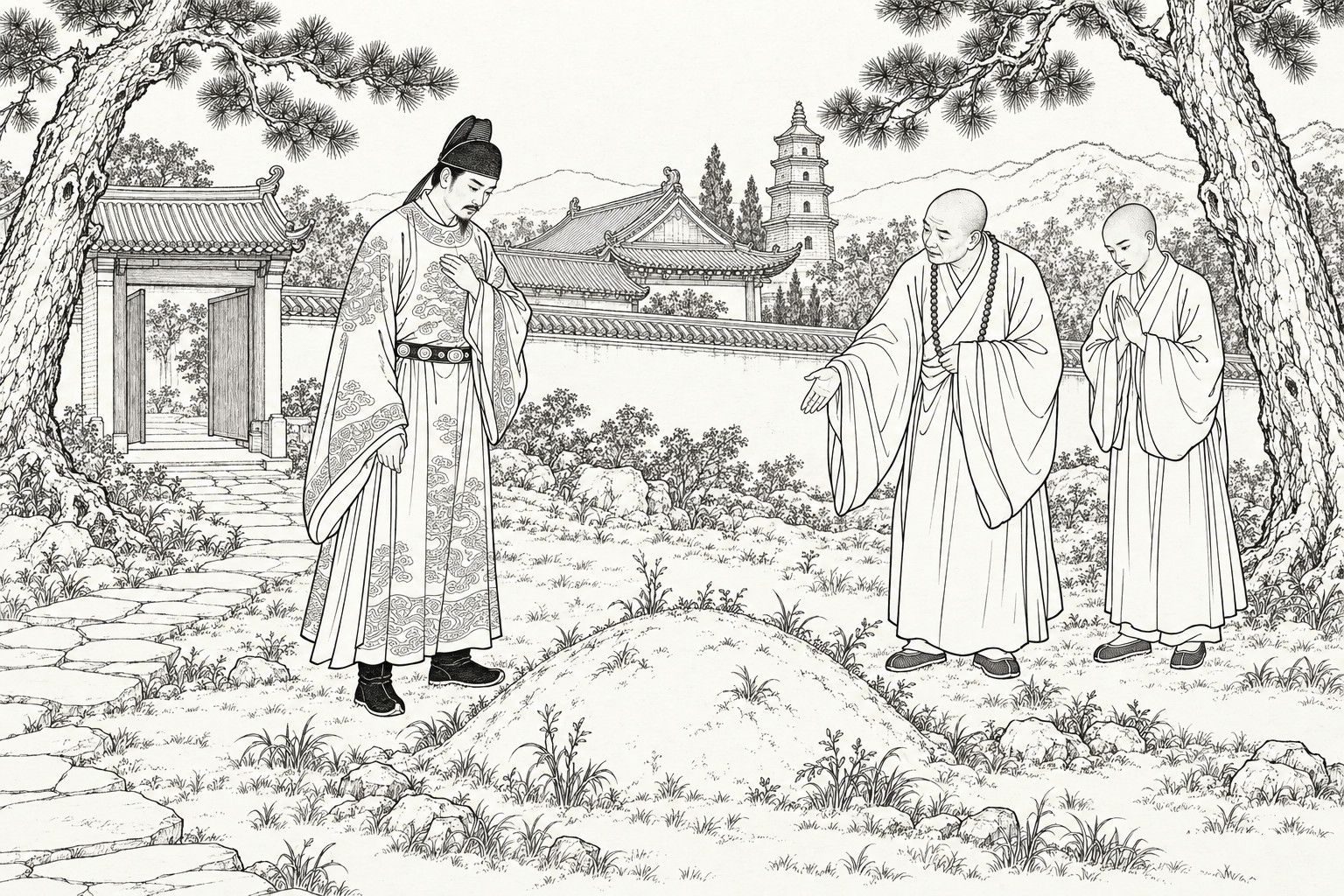
數日後,忽思少步。眾皆喜。既出,少定,即有諸僕紛來,錢簿穀籍,雜請會計。公子托以病倦,悉謝絕之。惟問:「山東長清縣,知之否?」共答:「知之。」曰:「我鬱無聊賴,欲往游矚,宜即治任。」眾謂新瘳,未應遠涉。不聽,翼日遂發。抵長清,視風物如昨。無煩問途,竟至蘭若。弟子數人見貴客至,伏謁甚恭。乃問:「老僧焉往?」答云:「吾師曩已物化。」問墓所。群導以往,則三尺孤墳,荒草猶未合也。眾僧不知何意。既而戒馬欲歸,囑曰:「汝師戒行之僧,所遺手澤,宜恪守,勿俾損壞。」眾唯唯。乃行。既歸,灰心木坐,了不勾當家務。
数日后,忽思少步。众皆喜。既出,少定,即有诸仆纷来,钱簿谷籍,杂请会计。公子托以病倦,悉谢绝之。惟问:「山东长清县,知之否?」共答:「知之。」曰:「我郁无聊赖,欲往游瞩,宜即治任。」众谓新瘳,未应远涉。不听,翼日遂发。抵长清,视风物如昨。无烦问途,竟至兰若。弟子数人见贵客至,伏谒甚恭。乃问:「老僧焉往?」答云:「吾师曩已物化。」问墓所。群导以往,则三尺孤坟,荒草犹未合也。众僧不知何意。既而戒马欲归,嘱曰:「汝师戒行之僧,所遗手泽,宜恪守,勿俾损坏。」众唯唯。乃行。既归,灰心木坐,了不勾当家务。
After some days, he suddenly felt like taking a little walk. Everyone was delighted. No sooner was he out and settled than the servants came crowding in one after another with money ledgers and grain registers, all wanting him to go over the accounts. The young master pleaded that he was ill and tired, and turned them all away. He asked only, “Changqing County in Shandong — do you know it?” “We know it,” they all answered. “I am low and listless,” he said. “I want to go there and see the sights. Get ready for the journey at once.” They said he had only just recovered and ought not to travel so far. He would not listen, and the next day he set out. When he reached Changqing, everything looked just as it had the day before. Without needing to ask the way, he went straight to the temple. Several disciples, seeing a distinguished guest arrive, prostrated themselves and greeted him most respectfully. He asked, “Where has the old monk gone?” “Our master has passed away,” they answered. He asked where the grave was. They all led him there: a lonely mound three feet high, the weeds on it not yet grown together. The monks had no idea what he meant by it. Then he had his horse made ready to go home, and charged them: “Your master was a monk who kept the precepts. Whatever he left that his hands have touched, guard it with care and let nothing be damaged.” The monks said yes, yes. Then he left. Back home, he sat as still as wood, his heart like dead ashes, and paid no attention at all to the affairs of the house.
居數月,出門自遁,直抵舊寺,謂弟子:「我即汝師。」眾疑其謬,相視而笑。乃述返魂之由,又言生平所為,悉符。眾乃信,居以故榻,事之如平日。後公子家屢以輿馬來,哀請之,略不顧瞻。又年余,夫人遣紀綱至,多所饋遺。金帛皆卻之,惟受布袍一襲而已。友人或至其鄉,敬造之。見其人默然誠篤;年僅而立,而輒道其八十餘年事。
居数月,出门自遁,直抵旧寺,谓弟子:「我即汝师。」众疑其谬,相视而笑。乃述返魂之由,又言生平所为,悉符。众乃信,居以故榻,事之如平日。后公子家屡以舆马来,哀请之,略不顾瞻。又年余,夫人遣纪纲至,多所馈遗。金帛皆却之,惟受布袍一袭而已。友人或至其乡,敬造之。见其人默然诚笃;年仅而立,而辄道其八十余年事。
After some months, he slipped out of the gate on his own and went straight to his old temple. “I am your master,” he told the disciples. They thought he was talking nonsense, and looked at one another and laughed. So he told them how his soul had come back, and spoke of what he had done in his life, and everything matched. Then they believed him. They gave him his old bed and served him just as before. Later the young master’s family came again and again with carriages and horses, begging him to return; he did not so much as glance at them. After another year or so, his lady sent her steward with many gifts. The gold and silk he refused; he accepted only a single cloth robe. A friend of mine who happened to visit that district called on him respectfully. He found him a silent man, sincere and earnest. He was barely thirty, yet he would talk of things from his eighty-odd years.
異史氏曰:「人死則魂散,其千里而不散者,性定故耳。余于僧,不異之乎其再生,而異之乎其入紛華靡麗之鄉,而能絕人以逃世也。若眼睛一閃,而蘭麝熏心,有求死而不得者矣,況僧乎哉!」
异史氏曰:「人死则魂散,其千里而不散者,性定故耳。余于僧,不异之乎其再生,而异之乎其入纷华靡丽之乡,而能绝人以逃世也。若眼睛一闪,而兰麝熏心,有求死而不得者矣,况僧乎哉!」
The Historian of the Strange says: When a man dies, his soul scatters. That this one went a thousand li and did not scatter was because his nature was settled. What I find strange about the monk is not that he lived again, but that he entered a world of glitter and luxury and could still cut himself off from people and flee the world. Let the eyes flicker for an instant and the scent of orchid and musk steal into the heart, and there are those who would seek death and not find it — and how much more a monk!