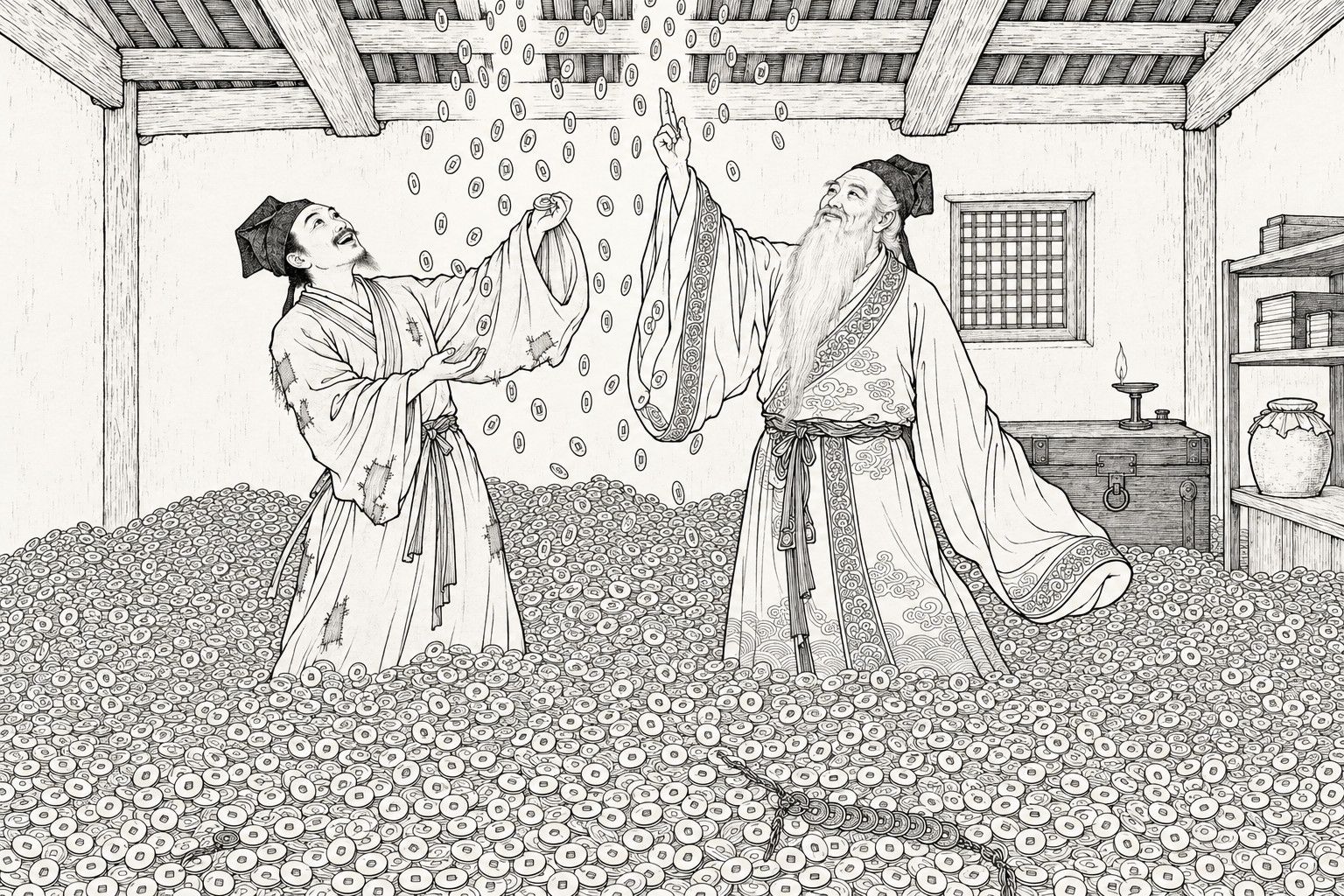
濱州一秀才讀書齋中,有款門者,啟視則一老翁,形貌甚古。延入,通姓氏,翁自言:「養真,姓胡,實狐仙。慕君高雅,願共晨夕。」生故曠達,亦不為怪。相與評駁今古,殊博洽,鏤花雕繪,粲於牙齒,時抽經義,則名理湛深,出人意外。生驚服,留之甚久。
滨州一秀才读书斋中,有款门者,启视则一老翁,形貌甚古。延入,通姓氏,翁自言:「养真,姓胡,实狐仙。慕君高雅,愿共晨夕。」生故旷达,亦不为怪。相与评驳今古,殊博洽,镂花雕绘,粲于牙齿,时抽经义,则名理湛深,出人意外。生惊服,留之甚久。
In Binzhou a licentiate was reading in his study when someone knocked at the door. He opened it and found an old man of a very antique look. He invited him in, and they exchanged names. “My name is Yangzhen, surname Hu,” the old man said. “In truth I am a fox immortal. I admire your refinement, and I would like to keep you company morning and evening.” The scholar was broad-minded by nature and did not find this strange. They discussed and argued over things old and new. The old man was remarkably learned: his talk was carved and painted with flowers and sparkled on his lips, and whenever he drew out the meaning of the classics, his reasoning ran deep and clear, beyond anything one would expect. The scholar was amazed and won over, and kept him with him a long time.