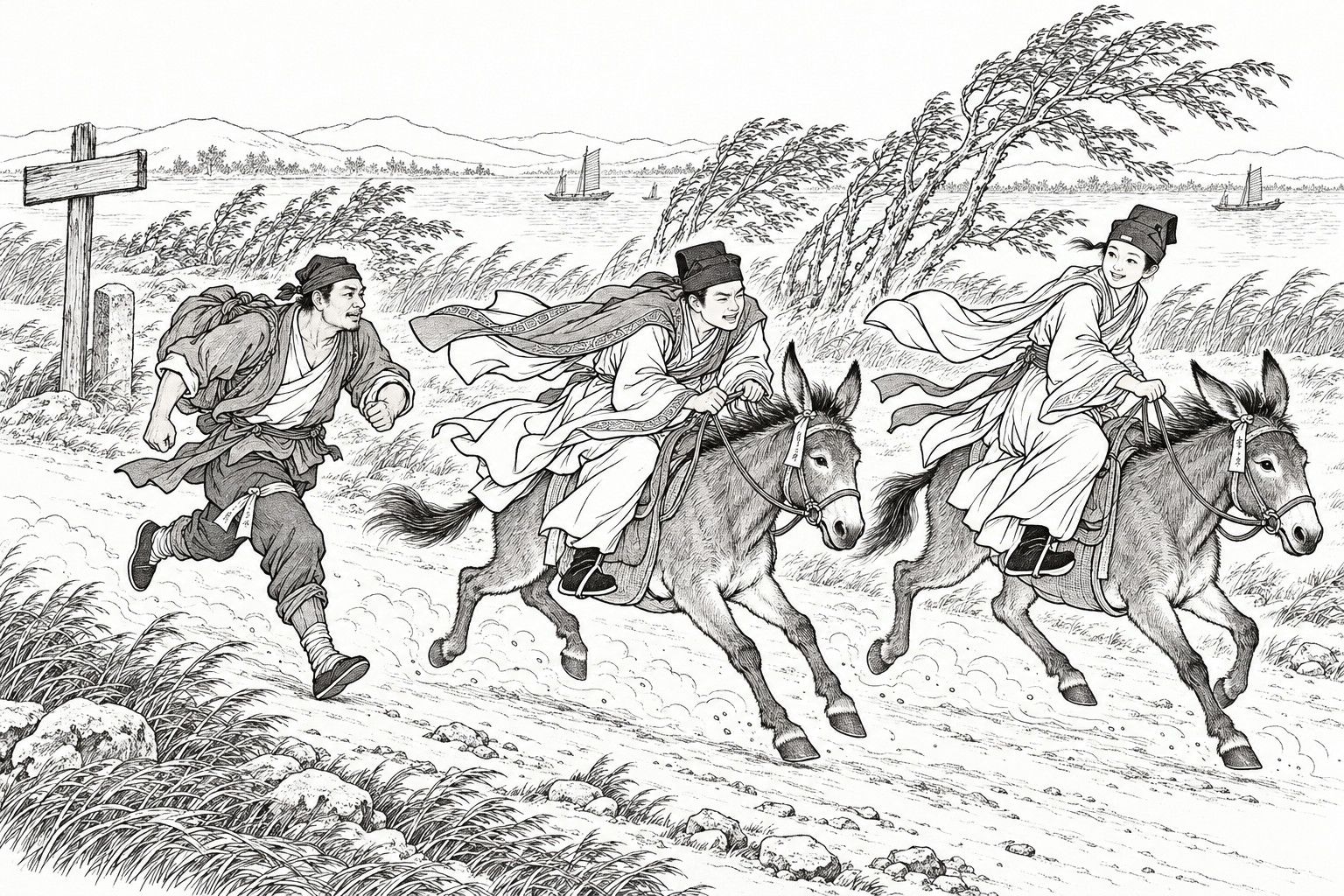
諸生王文,東昌人。少誠篤。薄遊於楚,過六河,休於旅舍,閒步門外。遇里戚趙東樓,大賈也,常數年不歸。見王,相執甚懽,便邀臨存。至其所,有美人坐室中,愕怪卻步。趙曳之,又隔窗呼妮子去,王乃入。趙具酒饌,話溫涼。王問:「此何處所?」答云:「此是小勾欄。余因久客,暫假床寢。」話間,妮子頻來出入。王跼促不安,離席告別。趙強捉令坐。俄,見一少女經門外過,望見王,秋波頻顧,眉目含情,儀度嫻婉,實神仙也。王素方直,至此惘然若失。便問:「麗者何人?」趙曰:「此媼次女,小字鴉頭,年十四矣。纏頭者屢以重金啗媼,女執不願,致母鞭楚,女以齒穉哀免,今尚待聘耳。」王聞言俯首,默然癡坐,酬應悉乖。趙戲之曰:「君倘垂意,當作冰斧。」王憮然曰:「此念所不敢存。」然日向夕,絕不言去。趙又戲請之。王曰:「雅意極所感佩,囊澀奈何!」趙知女性激烈,必當不允,故許以十金為助。王拜謝趨出,罄貲而至,得五數,強趙致媼。媼果少之。鴉頭言於母曰:「母日責我不作錢樹子,今請得如母所願。我初學作人,報母有日,勿以區區放卻財神去。」媼以女性拗執,但得允從,即甚懽喜。遂諾之,使婢邀王郎。趙難中悔,加金付媼。王與女懽愛甚至。既,謂王曰:「妾煙花下流,不堪匹敵;既蒙繾綣,義即至重。君傾囊博此一宵懽,明日如何?」王泫然悲哽。女曰:「勿悲。妾委風塵,實非所願。顧未有敦篤可託如君者。請以宵遁。王喜,遽起;女亦起。聽譙鼓已三下矣。女急易男裝,草草偕出,叩主人扉。王故從雙衛,託以急務,命僕便發。女以符繫僕股並驢耳上,縱轡極馳,目不容啟,耳後但聞風鳴;平明,至漢江口,稅屋而止。王驚其異。女曰:「言之,得無懼乎?妾非人,狐耳。母貪淫,日遭虐遇,心所積懣。今幸脫苦海。百里外,即非所知,可幸無恙。」王略無疑貳,從容曰:「室對芙蓉,家徒四壁,實難自慰,恐終見棄置。」女曰:「何為此慮。今市貨皆可居,三數口,淡薄亦可自給。可鬻驢子作貲本。」王如言,即門前設小肆,王與僕人躬同操作,賣酒販漿其中。女作披肩,刺荷囊,日獲贏餘,飲膳甚優。積年餘,漸能蓄婢媼。王自是不著犢鼻,但課督而已。
诸生王文,东昌人。少诚笃。薄游于楚,过六河,休于旅舍,闲步门外。遇里戚赵东楼,大贾也,常数年不归。见王,相执甚懽,便邀临存。至其所,有美人坐室中,愕怪却步。赵曳之,又隔窗呼妮子去,王乃入。赵具酒馔,话温凉。王问:「此何处所?」答云:「此是小勾栏。余因久客,暂假床寝。」话间,妮子频来出入。王跼促不安,离席告别。赵强捉令坐。俄,见一少女经门外过,望见王,秋波频顾,眉目含情,仪度娴婉,实神仙也。王素方直,至此惘然若失。便问:「丽者何人?」赵曰:「此媪次女,小字鸦头,年十四矣。缠头者屡以重金啗媪,女执不愿,致母鞭楚,女以齿穉哀免,今尚待聘耳。」王闻言俯首,默然痴坐,酬应悉乖。赵戏之曰:「君倘垂意,当作冰斧。」王怃然曰:「此念所不敢存。」然日向夕,绝不言去。赵又戏请之。王曰:「雅意极所感佩,囊涩奈何!」赵知女性激烈,必当不允,故许以十金为助。王拜谢趋出,罄赀而至,得五数,强赵致媪。媪果少之。鸦头言于母曰:「母日责我不作钱树子,今请得如母所愿。我初学作人,报母有日,勿以区区放却财神去。」媪以女性拗执,但得允从,即甚懽喜。遂诺之,使婢邀王郎。赵难中悔,加金付媪。王与女懽爱甚至。既,谓王曰:「妾烟花下流,不堪匹敌;既蒙缱绻,义即至重。君倾囊博此一宵懽,明日如何?」王泫然悲哽。女曰:「勿悲。妾委风尘,实非所愿。顾未有敦笃可托如君者。请以宵遁。王喜,遽起;女亦起。听谯鼓已三下矣。女急易男装,草草偕出,叩主人扉。王故从双卫,托以急务,命仆便发。女以符系仆股并驴耳上,纵辔极驰,目不容启,耳后但闻风鸣;平明,至汉江口,税屋而止。王惊其异。女曰:「言之,得无惧乎?妾非人,狐耳。母贪淫,日遭虐遇,心所积懑。今幸脱苦海。百里外,即非所知,可幸无恙。」王略无疑贰,从容曰:「室对芙蓉,家徒四壁,实难自慰,恐终见弃置。」女曰:「何为此虑。今市货皆可居,三数口,淡薄亦可自给。可鬻驴子作赀本。」王如言,即门前设小肆,王与仆人躬同操作,卖酒贩浆其中。女作披肩,刺荷囊,日获赢余,饮膳甚优。积年余,渐能蓄婢媪。王自是不着犊鼻,但课督而已。
Wang Wen, a licentiate of Dongchang, was honest and steady from his youth. Travelling for a time in Chu, he passed through Liuhe and put up at an inn. He was strolling outside the gate when he ran into Zhao Donglou, a kinsman from his home village. Zhao was a great merchant who often stayed away for years at a time. When he saw Wang, he took his hands with great delight and invited him to visit his lodging. When they got there, a beautiful woman was sitting in the room. Wang was startled and drew back. Zhao pulled him along and called through the window for Nizi to go, and Wang went in. Zhao set out wine and food, and they talked of how each had fared. Wang asked, “What sort of place is this?” “It’s a little pleasure house,” Zhao answered. “I’ve been away from home so long that I’m borrowing a bed here for the time being.” While they talked, Nizi kept coming in and going out. Wang grew uneasy and rose from the table to take his leave. Zhao caught hold of him and made him sit down. A moment later a young girl passed the door. She saw Wang, and her eyes, clear as autumn water, turned back to him again and again, full of feeling. Her manner was graceful and gentle: she was like an immortal. Wang had always been upright and strict with himself, but now he was lost and dazed. “Who is the beauty?” he asked. “The old woman’s second daughter,” said Zhao. “Her pet name is Yatou. She’s fourteen. Clients have tempted the old woman with large sums again and again, but the girl stubbornly refuses, and her mother has whipped her for it. She begged off because she is so young, and she is still waiting to be spoken for.” Wang hung his head when he heard this and sat in a silent daze, and every answer he gave was beside the point. Zhao teased him: “If you’ve taken a fancy to her, I’ll be your go-between.” “I wouldn’t dare even think of it,” said Wang gloomily. But the day was drawing to evening, and he said not a word about leaving. Zhao teased him with the offer again. “I’m deeply grateful for your kindness,” said Wang, “but what can I do with an empty purse?” Zhao knew the girl was fierce-tempered and was sure she would refuse, so he promised ten taels of silver toward it. Wang thanked him with a bow and hurried out, and came back with all he had: five taels. He pressed Zhao to take it to the old woman. As expected, she thought it too little. But Yatou said to her mother, “Every day you scold me for not being your money tree. Now let me do as you wish. I’m only starting out in the trade, and the day will come when I repay you. Don’t let the god of wealth get away from you over a trifle.” The old woman knew how stubborn the girl was, and was delighted just to have her consent. She agreed, and sent a maid to invite Mr. Wang in. Zhao could hardly go back on his word, and added his own silver to what he gave the old woman. Wang and the girl made love with great tenderness. Afterwards she said to him, “I am a low thing of the flower-and-smoke trade, not fit to be your match. But since you have loved me so dearly, I owe you a great deal. You emptied your purse for the pleasure of this one night. What about tomorrow?” Wang wept and choked with grief. “Don’t grieve,” she said. “I never chose this life. It’s only that I have never met anyone so true and dependable as you to trust myself to. Let us run away tonight.” Wang was overjoyed and sprang up; she rose too. They heard the watch drum: it had already struck the third watch. The girl quickly changed into men’s clothes, and they hurried out together and knocked at the innkeeper’s door. Wang had come with two donkeys; he pleaded urgent business and told his servant to set out at once. The girl tied charms to the servant’s thigh and to the donkeys’ ears, and they let the reins go and galloped at full speed. They could not open their eyes, and behind their ears they heard only the wind howling. At dawn they reached the mouth of the Han River, rented a house and stopped. Wang was amazed at the strangeness of it. “If I tell you, won’t you be afraid?” said the girl. “I’m not human. I’m a fox. My mother is greedy and lewd, and she abused me every day, until my heart was full of bitterness. Now, by good luck, I’ve escaped that sea of suffering. Once we’re a hundred li away, she won’t know where I am. We should be safe.” Wang had no doubts at all. He said calmly, “With a lotus flower facing me in my room and nothing in my house but four bare walls, I can hardly feel easy. I’m afraid you’ll leave me in the end.” “Why worry about that?” she said. “Nowadays any goods in the market can be stocked and sold. Two or three people living plainly can support themselves. Sell the donkeys for capital.” Wang did as she said and set up a little shop right by the door, where he and the servant worked with their own hands, selling wine and drinks. The girl made capes and embroidered purses. Each day they made a profit, and they ate and drank very well. After a year or so they could afford maids and an old serving woman. From then on Wang no longer wore the calf-nose apron; he only kept an eye on the work.
女一日悄然忽悲,曰:「今夜合有難作,奈何!」王問之。女曰:「母已知妾消息,必見凌逼。若遣姊來,吾無憂;恐母自至耳。」夜已央,自慶曰:「不妨,阿姊來矣。」居無何,妮子排闥入。女笑逆之。妮子罵曰:「婢子不羞,隨人逃匿!老母令我縛去。」即出索子縶女頸。女怒曰:「從一者得何罪?」妮子益忿,捽女斷衿。家中婢媼皆集。妮子懼,奔出。女曰:「姊歸,母必自至。大禍不遠,可速作計。」乃急辦裝,將更播遷。媼忽掩入,怒容可掬,曰:「我故知婢子無禮,須自來也!」女迎跪哀啼。媼不言,揪髮提去。王徘徊愴惻,眠食都廢。急詣六河,翼得賄贖。至則門庭如故,人物已非。問之居人,俱不知其所徙。悼喪而返。於是俵散客旅,囊貲東歸。後數年,偶入燕都,過育嬰堂,見一兒,七八歲。僕人怪似其主,反復凝注之。王問:「看兒何說?」僕笑以對,王亦笑。細視兒,風度磊落。自念乏嗣,因其肖己,愛而贖之。詰其名,自稱王孜。王曰:「子棄之襁褓,何知姓氏?」曰:「本師嘗言,得我時,胸前有字,書山東王文之子。」王大駭曰:「我即王文,烏得有子?」念必同己姓名者。心竊喜,甚愛惜之。及歸,見者不問而知為王生子。孜漸長,孔武有力,喜田獵,不務生產,樂鬥好殺;王亦不能箝制之。又自言能見鬼狐,悉不之信。會里中有患狐者,請孜往覘之。至則指狐隱處,令數人隨指處擊之,即聞狐鳴,毛血交落,自是遂安。由是人益異之。
女一日悄然忽悲,曰:「今夜合有难作,奈何!」王问之。女曰:「母已知妾消息,必见凌逼。若遣姊来,吾无忧;恐母自至耳。」夜已央,自庆曰:「不妨,阿姊来矣。」居无何,妮子排闼入。女笑逆之。妮子骂曰:「婢子不羞,随人逃匿!老母令我缚去。」即出索子絷女颈。女怒曰:「从一者得何罪?」妮子益忿,捽女断衿。家中婢媪皆集。妮子惧,奔出。女曰:「姊归,母必自至。大祸不远,可速作计。」乃急办装,将更播迁。媪忽掩入,怒容可掬,曰:「我故知婢子无礼,须自来也!」女迎跪哀啼。媪不言,揪发提去。王徘徊怆恻,眠食都废。急诣六河,翼得贿赎。至则门庭如故,人物已非。问之居人,俱不知其所徙。悼丧而返。于是俵散客旅,囊赀东归。后数年,偶入燕都,过育婴堂,见一儿,七八岁。仆人怪似其主,反复凝注之。王问:「看儿何说?」仆笑以对,王亦笑。细视儿,风度磊落。自念乏嗣,因其肖己,爱而赎之。诘其名,自称王孜。王曰:「子弃之襁褓,何知姓氏?」曰:「本师尝言,得我时,胸前有字,书山东王文之子。」王大骇曰:「我即王文,乌得有子?」念必同己姓名者。心窃喜,甚爱惜之。及归,见者不问而知为王生子。孜渐长,孔武有力,喜田猎,不务生产,乐斗好杀;王亦不能箝制之。又自言能见鬼狐,悉不之信。会里中有患狐者,请孜往觇之。至则指狐隐处,令数人随指处击之,即闻狐鸣,毛血交落,自是遂安。由是人益异之。
One day the girl suddenly grew quiet and sad. “Tonight trouble will come,” she said. “What can we do?” Wang asked what she meant. “My mother has learned where I am,” she said. “She is sure to come after me. If she sends my sister, I have nothing to fear. I’m afraid she’ll come herself.” Late in the night she said happily, “It’s all right. My sister is coming.” Before long Nizi pushed open the door and came in. The girl met her with a smile. Nizi cursed her: “You shameless slut, running off with a man and hiding! Mother told me to tie you up and bring you back.” She took out a rope and noosed it round the girl’s neck. “What crime is it to keep to one man?” the girl said angrily. Nizi grew angrier still, grabbed hold of her and tore her collar. The maids and the serving woman all came running. Nizi took fright and ran out. “Now that my sister has gone back, my mother will surely come herself,” said the girl. “Great trouble is near. We must make plans quickly.” She hurried to pack, meaning to move again. Suddenly the old woman burst in, her face plainly full of anger. “I knew the little slut would be insolent. I had to come myself!” The girl went to meet her, knelt and wept and pleaded. The old woman said nothing, seized her by the hair and carried her off. Wang paced about in anguish and could neither sleep nor eat. He hurried to Liuhe, hoping to buy her back. When he got there, the gate and courtyard were as before, but the people were gone. He asked the neighbours, but none knew where they had moved. He went back in grief. Then he wound up his business on the road and went home east with his money. Some years later he happened to go to Yan, the capital. Passing a foundling home, he saw a boy of seven or eight. Wang’s servant was struck by how much the boy looked like his master and stared at him again and again. “What are you looking at the boy for?” Wang asked. The servant smiled and told him, and Wang smiled too. Looking closely at the boy, he found him open and fine in his bearing. He had no heir himself, and the boy looked like him, so he took a liking to him and paid to take him home. He asked the boy’s name. “Wang Zi,” said the boy. “You were abandoned in swaddling clothes,” said Wang. “How do you know your surname?” “The master here once told me that when they found me, there was writing on my chest: ‘Son of Wang Wen of Shandong.’” Wang was astounded. “I am Wang Wen. How could I have a son?” He thought it must be someone with the same name. But secretly he was glad, and cherished the boy dearly. When they got home, everyone who saw the boy knew without asking that he was Wang’s son. As Zi grew up he was strong and powerful. He loved hunting, did not attend to making a living, and delighted in fighting and killing; even Wang could not control him. He also said he could see ghosts and foxes, but nobody believed him. It happened that someone in the village was plagued by a fox, and they asked Zi to come and look. When he arrived, he pointed out where the fox was hiding and had several men strike at the spot. At once they heard a fox shriek, and fur and blood fell together. After that the house was at peace, and people thought Zi all the more remarkable.