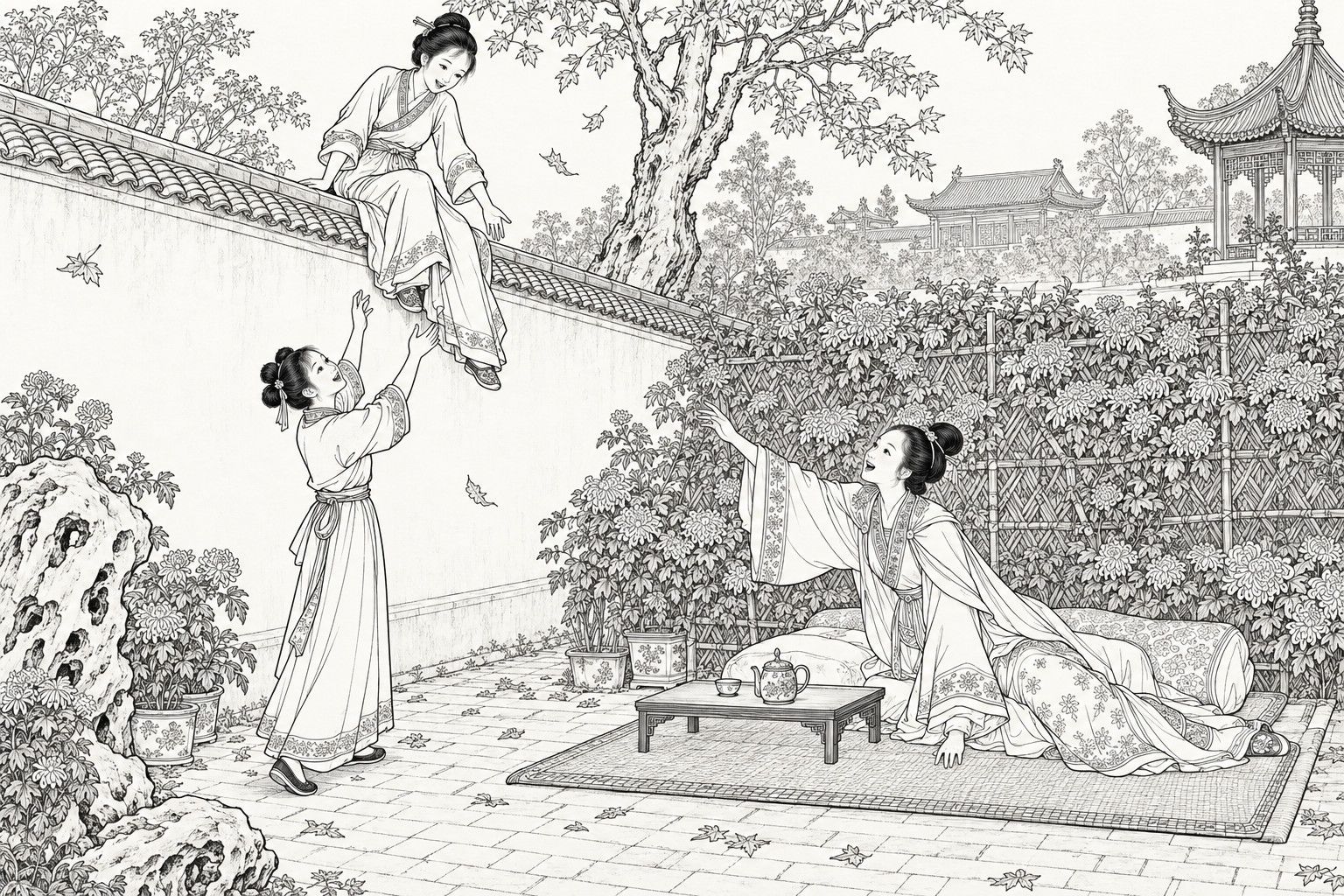
范十一娘,城祭酒之女。少豔美,騷雅尤絕。父母鐘愛之,求聘者輒令自擇;女恆少可。會上元日,水月寺中諸尼,作「盂蘭盆會」。是日,游女如雲,女亦詣之。方隨喜間,一女子步趨相從,屢望顏色,似欲有言。審視之,二八絕代姝也。悅而好之,轉用盼注。女子微笑曰:「姊非范十一娘乎?」答曰:「然。」女子曰:「久聞芳名,人言果不虛謬。」十一娘亦審里居。女答言:「妾封氏,第三,近在鄰村。」把臂歡笑,詞致溫婉,於是大相愛悅,依戀不捨。十一娘問:「何無伴侶?」曰:「父母早世,家中止一老嫗,留守門戶,故不得來。」十一娘將歸,封凝眸欲涕,十一娘亦惘然,遂邀過從。封曰:「娘子朱門繡戶,妾素無葭莩親,慮致譏嫌。」十一娘固邀之。答:「俟異日。」十一娘乃脫金釵一股贈之,封亦摘髻上綠簪為報。十一娘既歸,傾想殊切。出所贈簪,非金非玉,家人都不之識,甚異之。日望其來,悵然遂病。父母訊得故,使人於近村諮訪,並無知者。時值重九,十一娘羸頓無聊,倩侍兒強扶窺園,設褥東籬下。忽一女子攀垣來窺,覘之,則封女也。呼曰:「接我以力?」侍兒從之,驀然遂下。十一娘驚喜,頓起,曳坐褥間,責其負約,且問所來。答云:「妾家去此尚遠,時來舅家作耍。前言近村者,緣舅家耳。別後懸思頗苦;然貧賤者與貴人交,足未登門,先懷慚怍,恐為婢僕下眼覷,是以不果來。適經牆外過,聞女子語,便一攀望,冀是小姐,今果如願。」十一娘因述病源。封泣下如雨,因曰:「妾來當須秘密。造言生事者,飛短流長,所不堪受。」十一娘諾。偕歸同榻,快與傾懷。病尋愈。訂為姊妹,衣服履舄,輒互易著。見人來,則隱匿夾幙間。積五六月,公及夫人頗聞之。
范十一娘,城祭酒之女。少艳美,骚雅尤绝。父母钟爱之,求聘者辄令自择;女恒少可。会上元日,水月寺中诸尼,作「盂兰盆会」。是日,游女如云,女亦诣之。方随喜间,一女子步趋相从,屡望颜色,似欲有言。审视之,二八绝代姝也。悦而好之,转用盼注。女子微笑曰:「姊非范十一娘乎?」答曰:「然。」女子曰:「久闻芳名,人言果不虚谬。」十一娘亦审里居。女答言:「妾封氏,第三,近在邻村。」把臂欢笑,词致温婉,于是大相爱悦,依恋不舍。十一娘问:「何无伴侣?」曰:「父母早世,家中止一老妪,留守门户,故不得来。」十一娘将归,封凝眸欲涕,十一娘亦惘然,遂邀过从。封曰:「娘子朱门绣户,妾素无葭莩亲,虑致讥嫌。」十一娘固邀之。答:「俟异日。」十一娘乃脱金钗一股赠之,封亦摘髻上绿簪为报。十一娘既归,倾想殊切。出所赠簪,非金非玉,家人都不之识,甚异之。日望其来,怅然遂病。父母讯得故,使人于近村咨访,并无知者。时值重九,十一娘羸顿无聊,倩侍儿强扶窥园,设褥东篱下。忽一女子攀垣来窥,觇之,则封女也。呼曰:「接我以力?」侍儿从之,蓦然遂下。十一娘惊喜,顿起,曳坐褥间,责其负约,且问所来。答云:「妾家去此尚远,时来舅家作耍。前言近村者,缘舅家耳。别后悬思颇苦;然贫贱者与贵人交,足未登门,先怀惭怍,恐为婢仆下眼觑,是以不果来。适经墙外过,闻女子语,便一攀望,冀是小姐,今果如愿。」十一娘因述病源。封泣下如雨,因曰:「妾来当须秘密。造言生事者,飞短流长,所不堪受。」十一娘诺。偕归同榻,快与倾怀。病寻愈。订为姊妹,衣服履舄,辄互易着。见人来,则隐匿夹幙间。积五六月,公及夫人颇闻之。
Fan Shiyiniang was the daughter of a Chancellor of the Imperial Academy at Lucheng. She was lovely from girlhood, and in poetry and refinement she had no equal. Her parents doted on her, and whenever anyone sought her hand they let her choose for herself; she seldom approved of anyone. It happened that on the day of the Lantern Festival the nuns of the Water-Moon Temple held an Ullambana service. Women thronged out that day like clouds, and Shiyiniang went too. As she was going round the halls, a girl kept pace with her, glancing again and again at her face as if she wanted to speak. Shiyiniang looked at her closely: she was a beauty of about sixteen, without peer in her generation. Shiyiniang liked her at once and turned to gaze at her in return. The girl smiled. “Aren’t you Miss Fan Shiyiniang?” “I am,” she said. “I have long heard of you,” said the girl, “and what people say is no lie.” Shiyiniang asked in turn where she lived. “My family name is Feng,” the girl answered, “and I am the third daughter. I live close by, in the next village.” They took each other by the arm and laughed together. The girl spoke gently and sweetly, and they grew so fond of each other that they could not bear to part. “Why have you no one with you?” Shiyiniang asked. “My parents died when I was small. There is only an old woman at home to keep the door, so she could not come.” When Shiyiniang was about to go home, Feng gazed at her as if about to cry, and Shiyiniang too felt lost, so she invited her to visit. “Your family lives behind vermilion gates and embroidered doors,” said Feng, “and I am not even the most distant relation. I fear people would mock me and resent me.” Shiyiniang pressed her. “Some other day,” she answered. Shiyiniang took one of the gold pins from her hair and gave it to her, and Feng drew a green pin from her own topknot in return. Back home, Shiyiniang longed for her desperately. She brought out the pin she had been given: it was neither gold nor jade, and no one in the household knew what it was. They thought it very strange. Every day she watched for Feng to come, and in her disappointment she fell ill. Her parents questioned her and learned the reason, and sent people to inquire in the villages nearby, but no one knew of the girl. It was now the Double Ninth. Shiyiniang, weak and listless, had a maid help her out against her strength to look at the garden, and had a mat laid for her beneath the eastern hedge. Suddenly a girl climbed the wall and peered over. Shiyiniang looked: it was Feng. “Help me down?” Feng called. The maid did so, and in a moment Feng was down. Shiyiniang, startled and delighted, sprang up, pulled her down onto the mat, scolded her for breaking her promise, and asked where she had come from. “My home is a long way from here,” she said. “I often come to my uncle’s to amuse myself. When I said the next village, I meant his house. Since we parted I have missed you terribly. But when the poor make friends with the great, before they ever set foot in the door they are already ashamed. I was afraid the maids and servants would look down on me, so I never came. Just now I was passing outside the wall and heard a girl’s voice, so I climbed up to look, hoping it was you, miss — and so it was.” Shiyiniang told her how she had fallen ill. Feng wept, her tears falling like rain. “If I come,” she said, “it must be in secret. People who invent stories and stir up trouble, with all their gossip — I could not bear it.” Shiyiniang promised. They went in together and shared a bed, and poured out their hearts. Shiyiniang soon recovered. They swore to be sisters, and often wore each other’s clothes and shoes. Whenever anyone came, Feng hid between the bed curtains. Five or six months went by, and the Chancellor and Lady Fan had heard a good deal about it.