渭南姜部郎第,多鬼魅,常惑人。因徙去。留蒼頭門之而死,數易皆死;遂廢之。里有陶生望三者,夙倜儻,好狎妓,酒闌輒去之。友人故使妓奔就之,亦笑內不拒;而實終夜無所沾染。常宿部郎家,有婢夜奔,生堅拒不亂,部郎以是契重之。家綦貧,又有「鼓盆之戚」,茆屋數椽,溽暑不堪其熱;因請部郎,假廢第。部郎以其凶故,卻之。生因作「續無鬼論」獻部郎,且曰:「鬼何能為!」部郎以其請之堅,諾之。生往除廳事。薄暮,置書其中;返取他物,則書已亡。怪之,仰臥榻上,靜息以伺其變。食頃,聞步履聲,睨之,見二女自房中出,所亡書,送還案上。一約二十,一可十七八,並皆姝麗。逡巡立榻下,相視而笑。生寂不動。長者翹一足踹生腹,少者掩口匿笑。生覺心搖搖若不自持,即急肅然端念,卒不顧。女近以左手捋髭,右手輕批頤頰,作小響。少者益笑。生驟起,叱曰:「鬼物敢爾!」二女駭奔而散。生恐夜為所苦,欲移歸,又恥其言不掩;乃挑燈讀。暗中鬼影憧憧,略不顧瞻。夜將半,燭而寢。始交睫,覺人以細物穿鼻,奇癢,大嚏;但聞暗處隱隱作笑聲。生不語,假寐以俟之。俄見少女以紙條撚細股,鶴行鷺伏而至;生暴起訶之,飄竄而去。既寢,又穿其耳。終夜不堪其擾。雞既鳴,乃寂無聲,生始酣眠,終日無所睹聞。日既下,恍惚出現。生遂夜炊,將以達旦。長者漸曲肱几上,觀生讀。既而掩生卷。生怒捉之,即已飄散;少間,又撫之。生以手按卷讀。少者潛於腦後,交兩手掩生目,瞥然去,遠立以哂。生指罵曰:「小鬼頭!捉得便都殺卻!」女子即又不懼。因戲之曰:「房中縱送,我都不解,纏我無益。」二女微笑,轉身向灶,析薪溲米,為生執爨。生顧而獎曰:「兩卿此為,不勝憨跳耶?」俄頃,粥熟,爭以匕、箸、陶椀置几上。生曰:「感卿服役,何以報德?」女笑云:「飯中溲合砒、酖矣。」生曰:「與卿夙無嫌怨,何至以此相加。」啜已,復盛,爭為奔走。生樂之,習以為常。
渭南姜部郎第,多鬼魅,常惑人。因徙去。留苍头门之而死,数易皆死;遂废之。里有陶生望三者,夙倜傥,好狎妓,酒阑辄去之。友人故使妓奔就之,亦笑内不拒;而实终夜无所沾染。常宿部郎家,有婢夜奔,生坚拒不乱,部郎以是契重之。家綦贫,又有「鼓盆之戚」,茆屋数椽,溽暑不堪其热;因请部郎,假废第。部郎以其凶故,却之。生因作「续无鬼论」献部郎,且曰:「鬼何能为!」部郎以其请之坚,诺之。生往除厅事。薄暮,置书其中;返取他物,则书已亡。怪之,仰卧榻上,静息以伺其变。食顷,闻步履声,睨之,见二女自房中出,所亡书,送还案上。一约二十,一可十七八,并皆姝丽。逡巡立榻下,相视而笑。生寂不动。长者翘一足踹生腹,少者掩口匿笑。生觉心摇摇若不自持,即急肃然端念,卒不顾。女近以左手捋髭,右手轻批颐颊,作小响。少者益笑。生骤起,叱曰:「鬼物敢尔!」二女骇奔而散。生恐夜为所苦,欲移归,又耻其言不掩;乃挑灯读。暗中鬼影憧憧,略不顾瞻。夜将半,烛而寝。始交睫,觉人以细物穿鼻,奇痒,大嚏;但闻暗处隐隐作笑声。生不语,假寐以俟之。俄见少女以纸条撚细股,鹤行鹭伏而至;生暴起诃之,飘窜而去。既寝,又穿其耳。终夜不堪其扰。鸡既鸣,乃寂无声,生始酣眠,终日无所睹闻。日既下,恍惚出现。生遂夜炊,将以达旦。长者渐曲肱几上,观生读。既而掩生卷。生怒捉之,即已飘散;少间,又抚之。生以手按卷读。少者潜于脑后,交两手掩生目,瞥然去,远立以哂。生指骂曰:「小鬼头!捉得便都杀却!」女子即又不惧。因戏之曰:「房中纵送,我都不解,缠我无益。」二女微笑,转身向灶,析薪溲米,为生执爨。生顾而奖曰:「两卿此为,不胜憨跳耶?」俄顷,粥熟,争以匕、箸、陶椀置几上。生曰:「感卿服役,何以报德?」女笑云:「饭中溲合砒、酖矣。」生曰:「与卿夙无嫌怨,何至以此相加。」啜已,复盛,争为奔走。生乐之,习以为常。
In Weinan, the mansion of Jiang, a secretary in one of the ministries, was haunted by ghosts and goblins that often bewitched people. So the family moved away. They left an old servant to keep the gate, and he died; they replaced him several times, and each one died. So the house was abandoned. In the neighbourhood lived a scholar named Tao Wangsan, a free spirit who had always liked to amuse himself with courtesans, but when the wine was finished he would send them away. Once his friends deliberately had a courtesan go to him in the night. He laughed and let her in without refusing, but in fact all night long he never touched her. He often stayed at Secretary Jiang’s house, and once a maid came to him in the night; Tao firmly refused her and would not be led astray. For this the secretary thought highly of him. Tao’s family was very poor, and he had also suffered “the grief of drumming on the basin.” His few rooms of thatch were unbearably hot in the steamy summer, so he asked the secretary to lend him the abandoned mansion. Because it was haunted, the secretary refused. So Tao wrote “A Sequel to ‘There Are No Ghosts’” and presented it to him, saying, “What can ghosts do?” Since he asked so insistently, the secretary agreed. Tao went and swept out the main hall. At dusk he put his books there; when he went back to fetch his other things, the books had vanished. He thought this odd, and lay on his back on the couch, breathing quietly, to wait and see what would happen. After about as long as it takes to eat a meal, he heard footsteps. He looked out of the corner of his eye and saw two girls come out of the inner room and put the missing books back on the desk. One was about twenty, the other perhaps seventeen or eighteen, and both were beautiful. They hovered at the foot of the couch, looking at each other and laughing. Tao lay quite still. The elder lifted a foot and pressed it on his belly, and the younger covered her mouth and giggled. Tao felt his heart sway as if he could not hold himself steady, but at once he gravely composed his thoughts and paid them no attention at all. The elder girl came closer, stroked his whiskers with her left hand, and with her right patted his cheek lightly, making little slapping sounds. The younger one laughed harder than ever. Tao sprang up and shouted at them, “How dare you, ghosts!” The two girls fled in fright and scattered. Tao was afraid they would torment him in the night, and thought of going home, but he was ashamed that his boast would not stand. So he trimmed the lamp and read. In the darkness the shadows of ghosts flitted to and fro, but he never once looked up. Toward midnight he lit a candle and went to bed. He had barely closed his eyes when he felt someone poking something thin up his nose. It tickled terribly, and he gave a great sneeze, and heard faint laughter from somewhere in the dark. Tao said nothing, but pretended to sleep and waited. Soon he saw the younger girl coming with a twist of paper rolled into a fine spill, stalking like a crane and crouching like an egret. Tao sprang up and scolded her, and she whisked away. When he lay down again, she poked his ear. All night long the teasing was more than he could bear. Once the cocks had crowed it was quiet, and Tao slept soundly at last. All the next day he saw and heard nothing. As soon as the sun had set, they appeared again, dimly. So Tao cooked his meal at night, meaning to stay up until dawn. The elder one gradually came to lean on her elbows on the desk and watch Tao read; then she shut his book. Tao angrily grabbed at her, but she drifted away at once; a little later she was touching the book again. Tao held the book down with his hand and read on. The younger one stole up behind him and covered his eyes with both hands, then whisked away and stood at a distance, smirking. Tao pointed at her and scolded: “Little devil! If I catch you I’ll kill the pair of you!” But the girls were not afraid at all. So he teased them: “The goings-on of the bedroom are nothing I know about. It’s no use pestering me.” The two girls smiled a little, turned to the stove, split firewood and washed rice, and cooked for him. Tao watched them and praised them: “Isn’t this better than romping about like silly children?” In a moment the gruel was cooked, and they vied with each other to set a spoon, chopsticks and an earthenware bowl on the table. “Thank you for your service,” said Tao. “How can I repay you?” The girls laughed. “We’ve mixed arsenic and poison into the rice.” “I’ve never done either of you any wrong,” said Tao. “Why would you do this to me?” When he had eaten, they filled his bowl again, racing each other to wait on him. Tao enjoyed it, and soon it became a habit.
日漸稔,接坐傾語,審其姓名。長者云:「妾秋容,喬氏;彼阮家小謝也。」又研問所由來。小謝笑曰:「癡郎!尚不敢一呈身,誰要汝問門第,作嫁娶耶?」生正容曰:「相對麗質,寧獨無情;但陰冥之氣,中人必死。不樂與居者,行可耳;樂與居者,安可耳。如不見愛,何必玷兩佳人?如果見愛,何必死一狂生?」二女相顧動容,自此不甚虐弄之;然時而探手於懷,捋袴於地,亦置不為怪。
日渐稔,接坐倾语,审其姓名。长者云:「妾秋容,乔氏;彼阮家小谢也。」又研问所由来。小谢笑曰:「痴郎!尚不敢一呈身,谁要汝问门第,作嫁娶耶?」生正容曰:「相对丽质,宁独无情;但阴冥之气,中人必死。不乐与居者,行可耳;乐与居者,安可耳。如不见爱,何必玷两佳人?如果见爱,何必死一狂生?」二女相顾动容,自此不甚虐弄之;然时而探手于怀,捋袴于地,亦置不为怪。
As the days went on they grew familiar with him, sat with him and talked freely. He asked their names. “I am Qiurong, of the Qiao family,” said the elder, “and she is Xiaoxie, of the Ruan family.” He went on to ask where they came from. Xiaoxie laughed. “Silly man! You don’t even dare give yourself to us — who wants you asking about our families, as if you meant to marry?” Tao grew serious. “Face to face with such beauty, how could I feel nothing? But the breath of the dead kills any man it touches. If you don’t like living with me, you can go; if you do, you can stay in peace. If you don’t love me, why should I sully two lovely girls? If you do love me, why should you be the death of a mad scholar?” The two girls looked at each other, moved. From then on they did not torment him so much; but now and then they would slip a hand inside his clothes, or pull his trousers down to the floor, and he let it pass without minding.
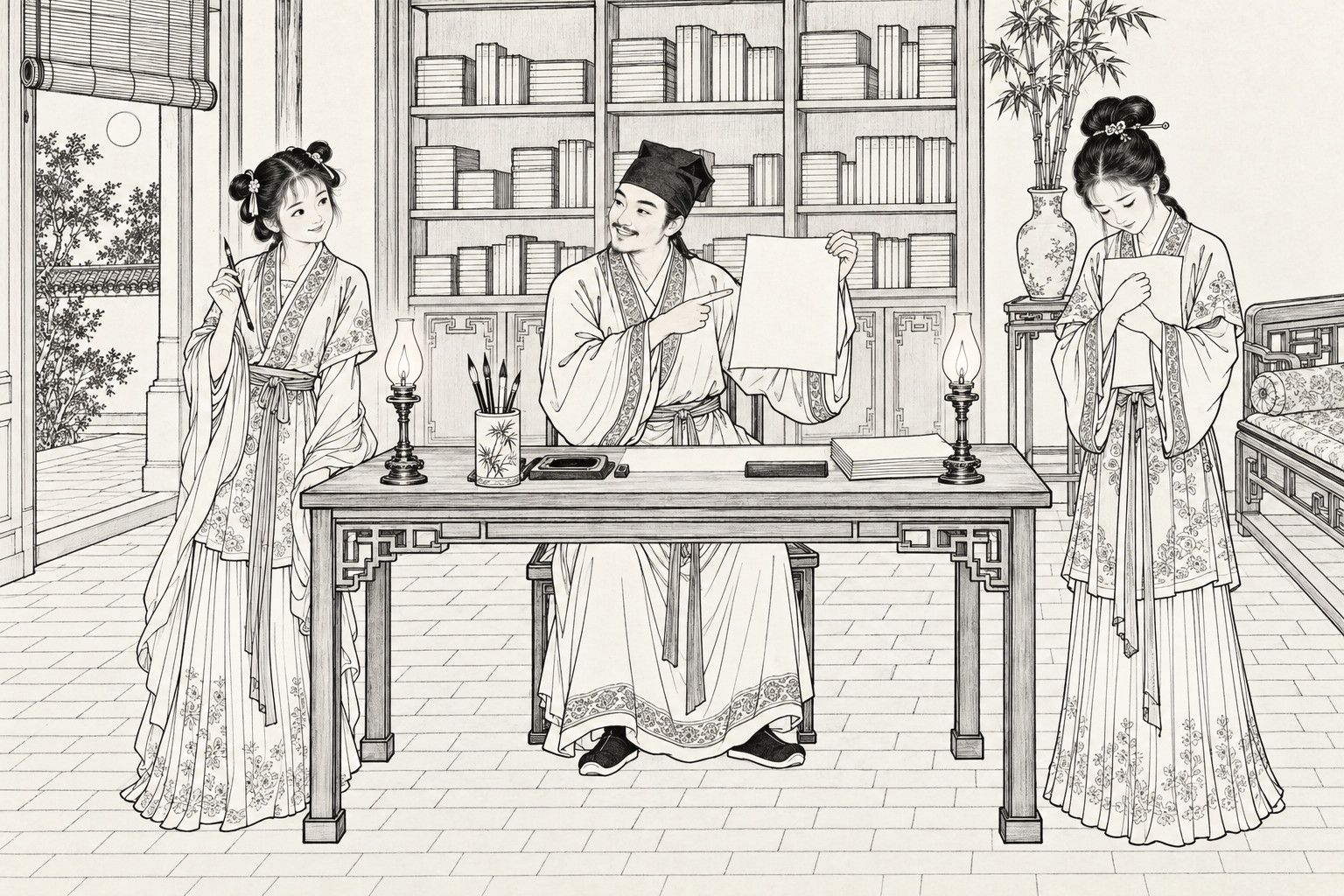
一日,錄書未卒業而出,返則小謝伏案頭,操管代錄。見生,擲筆睨笑。近視之,雖劣不成書,而行列疏整。生贊曰:「卿雅人也!苟樂此,僕教卿為之。」乃擁諸懷,把腕而教之畫。秋容自外入,色乍變,意似妒。小謝笑曰:「童時嘗從父學書,久不作,遂如夢寐。」秋容不語。生喻其意,偽為不覺者,遂抱而授以筆,曰:「我視卿能此否?」作數字而起,曰:「秋娘大好筆力!」秋容乃喜。生於是折兩紙為範,俾共臨摹;生另一燈讀。竊喜其各有所事,不相侵擾。倣畢,祗立几前,聽生月旦。秋容素不解讀,塗鴉不可辨認,花判已,自顧不如小謝,有慚色。生獎慰之,顏始霽。二女由此師事生,坐為抓背,臥為按股,不惟不敢侮,爭媚之。
一日,录书未卒业而出,返则小谢伏案头,操管代录。见生,掷笔睨笑。近视之,虽劣不成书,而行列疏整。生赞曰:「卿雅人也!苟乐此,仆教卿为之。」乃拥诸怀,把腕而教之画。秋容自外入,色乍变,意似妒。小谢笑曰:「童时尝从父学书,久不作,遂如梦寐。」秋容不语。生喻其意,伪为不觉者,遂抱而授以笔,曰:「我视卿能此否?」作数字而起,曰:「秋娘大好笔力!」秋容乃喜。生于是折两纸为范,俾共临摹;生另一灯读。窃喜其各有所事,不相侵扰。倣毕,祗立几前,听生月旦。秋容素不解读,涂鸦不可辨认,花判已,自顾不如小谢,有惭色。生奖慰之,颜始霁。二女由此师事生,坐为抓背,卧为按股,不惟不敢侮,争媚之。
One day Tao went out before he had finished copying something, and when he came back he found Xiaoxie bent over the desk, brush in hand, copying it for him. When she saw him, she threw down the brush and looked at him sidelong with a smile. He looked closely: the writing was poor, hardly proper characters, but the columns were neatly spaced. “You have refined tastes, my dear!” he said admiringly. “If you enjoy this, I will teach you.” He took her on his lap and, holding her wrist, taught her to make the strokes. Qiurong came in from outside, and her face changed; she seemed jealous. Xiaoxie laughed. “When I was little I learned to write from my father. I haven’t done it for so long that it’s like a dream.” Qiurong said nothing. Tao understood how she felt, but pretended not to notice. He took her on his lap too and gave her the brush. “Let me see whether you can do this.” She wrote a few characters and got up. “What a strong hand, Qiuniang!” said Tao, and Qiurong was pleased. Then Tao folded two sheets of paper as models and had them both copy them, while he read by another lamp. He was secretly glad that they each had something to do and left him in peace. When they had finished copying, they stood respectfully before the desk to hear his verdict. Qiurong had never learned to read, and her scrawl was illegible. When he had marked their work, she saw she was not as good as Xiaoxie and looked ashamed. Tao praised and comforted her, and at last her face cleared. From then on the two girls treated Tao as their teacher. When he sat, they scratched his back; when he lay down, they rubbed his legs. Far from daring to tease him, they vied to please him.