于公者,少任俠,喜拳勇,力能持高壺,作旋風舞。崇禎間,殿試在都,僕疫不起,患之。會市上有善卜者,能決人生死,將代問之。既至,未言。卜曰:「君莫欲問僕病乎?」公駭應之。曰:「病者無害,君可危。」公乃自卜。卜者起卦,愕然曰:「君三日當死!」公驚詫良久。卜者從容曰:「鄙人有小術,報我十金,當代禳之。」公自念,生死已定,術豈能解;不應而起,欲出。卜者曰:「惜此小費,勿悔勿悔!」愛公者皆為公懼,勸罄橐以哀之。公不聽。
于公者,少任侠,喜拳勇,力能持高壶,作旋风舞。崇祯间,殿试在都,仆疫不起,患之。会市上有善卜者,能决人生死,将代问之。既至,未言。卜曰:「君莫欲问仆病乎?」公骇应之。曰:「病者无害,君可危。」公乃自卜。卜者起卦,愕然曰:「君三日当死!」公惊诧良久。卜者从容曰:「鄙人有小术,报我十金,当代禳之。」公自念,生死已定,术岂能解;不应而起,欲出。卜者曰:「惜此小费,勿悔勿悔!」爱公者皆为公惧,劝罄橐以哀之。公不听。
Mr. Yu was a gallant in his youth and loved boxing and feats of strength: he could lift a tall jar and whirl it about in a whirlwind dance. In the Chongzhen reign he was in the capital for the palace examination when his servant fell ill in an epidemic and could not get up. Yu was worried. Now there was a skilled diviner in the marketplace who could tell whether a man would live or die, and Yu meant to go and ask on his servant’s behalf. When he got there, before he had said a word, the diviner said, “Haven’t you come to ask about your servant’s illness?” Yu, startled, said yes. “The sick man will come to no harm,” said the diviner. “It is you who are in danger.” So Yu had his own fortune told. The diviner cast the hexagrams and said in alarm, “You will die in three days!” Yu stood dumbfounded for a long while. Then the diviner said calmly, “I have a small art. Pay me ten taels and I will ward it off for you.” Yu thought to himself: life and death are already fixed; how could any art undo them? He made no answer and got up to leave. “Grudge this small expense if you like,” said the diviner. “But don’t regret it, don’t regret it!” Those who cared for Yu were all afraid for him and urged him to empty his purse and beg the man for mercy. Yu would not listen.
倏忽至三日,公端坐旅舍,靜以覘之,終日無恙。至夜,闔戶挑燈,倚劍危坐。一漏向盡,更無死法。意欲就枕,忽聞窗隙窣窣有聲。急視之,一小人荷戈入;及地,則高如人。公捉劍起,急擊之,飄忽未中。遂遽小,復尋窗隙,意欲遁去。公疾斫之,應手而倒。燭之,則紙人,已腰斷矣。公不敢臥,又坐待之。逾時,一物穿窗入,怪獰如鬼。才及地,急擊之,斷而為兩,皆蠕動。恐其復起,又連擊之,劍劍皆中,其聲不耎。審視,則土偶,片片已碎。於是移坐窗下,目注隙中。久之,聞窗外如牛喘,有物推窗櫺,房壁震搖,其勢欲傾。公懼覆壓,計不如出而鬬之,遂剨然脫扃,奔而出。見一巨鬼,高與檐齊;昏月中,見其面黑如煤,眼閃爍有黃光;上無衣,下無履,手弓而腰矢。公方駭,鬼則彎矣。公以劍撥矢,矢墮;欲擊之,則又關矣。公急躍避,矢貫于壁,戰戰有聲。鬼怒甚,拔佩刀,揮如風,望公力劈。公猱進,刀中庭石,石立斷。公出其股間,削鬼中踝,鏗然有聲。鬼益怒,吼如雷,轉身復剁。公又伏身入;刀落,斷公裙。公已及脅下,猛斫之,亦鏗然有聲,鬼仆而僵。公亂擊之,聲硬如柝。燭之,則一木偶,高大如人。弓矢尚纏腰際,刻畫猙獰;劍擊處,皆有血出。公因秉燭待旦,方悟鬼物皆卜人遣之,欲致人于死,以神其術也。
倏忽至三日,公端坐旅舍,静以觇之,终日无恙。至夜,阖户挑灯,倚剑危坐。一漏向尽,更无死法。意欲就枕,忽闻窗隙窣窣有声。急视之,一小人荷戈入;及地,则高如人。公捉剑起,急击之,飘忽未中。遂遽小,复寻窗隙,意欲遁去。公疾斫之,应手而倒。烛之,则纸人,已腰断矣。公不敢卧,又坐待之。逾时,一物穿窗入,怪狞如鬼。才及地,急击之,断而为两,皆蠕动。恐其复起,又连击之,剑剑皆中,其声不耎。审视,则土偶,片片已碎。于是移坐窗下,目注隙中。久之,闻窗外如牛喘,有物推窗櫺,房壁震摇,其势欲倾。公惧覆压,计不如出而鬬之,遂剨然脱扃,奔而出。见一巨鬼,高与檐齐;昏月中,见其面黑如煤,眼闪烁有黄光;上无衣,下无履,手弓而腰矢。公方骇,鬼则弯矣。公以剑拨矢,矢堕;欲击之,则又关矣。公急跃避,矢贯于壁,战战有声。鬼怒甚,拔佩刀,挥如风,望公力劈。公猱进,刀中庭石,石立断。公出其股间,削鬼中踝,铿然有声。鬼益怒,吼如雷,转身复剁。公又伏身入;刀落,断公裙。公已及胁下,猛斫之,亦铿然有声,鬼仆而僵。公乱击之,声硬如柝。烛之,则一木偶,高大如人。弓矢尚缠腰际,刻画狰狞;剑击处,皆有血出。公因秉烛待旦,方悟鬼物皆卜人遣之,欲致人于死,以神其术也。
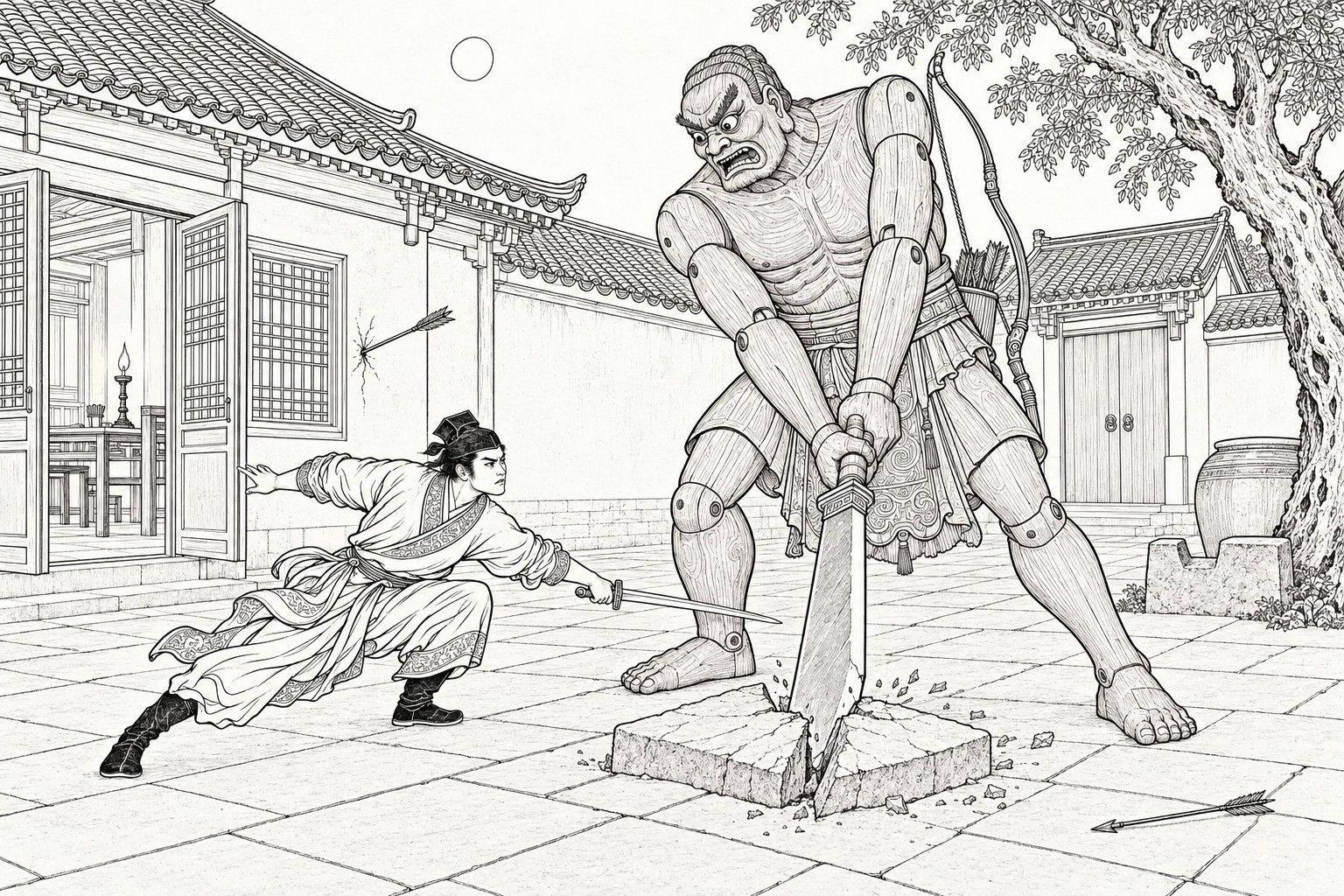
In no time the third day came. Yu sat upright in his inn and quietly watched. All day nothing happened. At night he shut the door, trimmed the lamp and sat bolt upright with his sword at his side. The first watch was nearly out, and still there was no way for him to die. He was thinking of going to bed when he heard a rustling at a crack in the window. He looked quickly: a little man was coming in with a spear on his shoulder. When it reached the floor it was as tall as a man. Yu seized his sword, sprang up and struck at it, but it flitted aside and he missed. Then it suddenly shrank and made for the crack in the window again, meaning to escape. Yu slashed at it swiftly and it fell at the stroke. He held the candle to it: it was a paper man, cut through at the waist. Yu dared not lie down, but sat and waited again. After a while something came in through the window, hideous as a ghost. The moment it touched the floor he struck at it and cut it in two. Both halves squirmed. Afraid it would get up again, he struck again and again. Every stroke hit, and the sound was not soft. He looked closely: it was a clay figure, smashed to pieces. So he moved his seat under the window and kept his eyes on the crack. A long time passed. Then outside the window he heard what sounded like an ox panting. Something pushed at the window frame, and the walls of the room shook as if about to fall. Afraid of being crushed, Yu reckoned he had better go out and fight. He threw back the bolt with a crash and ran out. He saw a huge ghost, as tall as the eaves. In the dim moonlight he could see its face, black as coal, and its eyes glinting with a yellow light. It had no clothes on its body and no shoes on its feet; it held a bow in its hand and had arrows at its waist. While Yu stood aghast, the ghost drew its bow. Yu knocked the arrow aside with his sword and it fell. He moved to strike, but the ghost had drawn again. Yu leapt aside; the arrow lodged in the wall and quivered there, humming. The ghost was furious. It drew the knife at its belt, swung it like the wind and hewed at Yu with all its strength. Yu darted in like a monkey. The blade struck a stone in the courtyard, and the stone split clean through. Yu came out between its legs and slashed at its ankle. There was a clang. The ghost grew angrier still, roared like thunder and turned to chop at him again. Again Yu ducked in. The blade came down and cut through the skirt of his gown. Yu was already under its ribs. He hacked at it hard; again there was a clang, and the ghost toppled and lay stiff. Yu struck at it all over, and it sounded as hard as a watchman’s clapper. He held up the candle: it was a wooden figure, tall and big as a man. The bow and arrows were still tied at its waist, and its carved and painted face was hideous. Wherever the sword had struck, blood was coming out. Yu sat holding the candle till dawn. Only then did he understand that all these ghosts had been sent by the diviner, who meant to kill him and so prove his art.
次日,遍告交知,與共詣卜所。卜人遙見公,瞥不可見。或曰:「皆翳形術也,犬血可破。」公如言,戒備而往。卜人又匿如前。急以犬血沃立處,但見卜人頭面,皆為犬血模糊,目灼灼如鬼立。乃執付有司而殺之。
次日,遍告交知,与共诣卜所。卜人遥见公,瞥不可见。或曰:「皆翳形术也,犬血可破。」公如言,戒备而往。卜人又匿如前。急以犬血沃立处,但见卜人头面,皆为犬血模糊,目灼灼如鬼立。乃执付有司而杀之。
The next day he told all his friends and acquaintances, and went with them to the diviner’s stall. The diviner saw Yu from far off and in a flash was gone. Someone said, “That is the art of hiding one’s shape. Dog’s blood will break it.” Yu did as he was told and went back prepared. The diviner hid again as before. They quickly poured dog’s blood over the spot where he had been standing, and there they saw the diviner’s head and face, all smeared with dog’s blood, his eyes glaring, standing there like a ghost. They seized him and handed him over to the authorities, and he was put to death.
異史氏曰:「嘗謂買卜為一痴。世之講此道而不爽于生死者幾人?卜之而爽,猶不卜也。且即明明告我以死期之至,將復如何?況借人命以神其術者,其可畏尤甚耶!」
异史氏曰:「尝谓买卜为一痴。世之讲此道而不爽于生死者几人?卜之而爽,犹不卜也。且即明明告我以死期之至,将复如何?况借人命以神其术者,其可畏尤甚耶!」
The Historian of the Strange says: I have always held that paying for a fortune is a kind of folly. Of all those in the world who practise this art, how many are never wrong about life and death? If the answer may be wrong, you might as well not ask. And even if it told me plainly that my hour of death was at hand, what could I do about it? How much more to be feared are those who would take a man’s life to make their art seem divine!