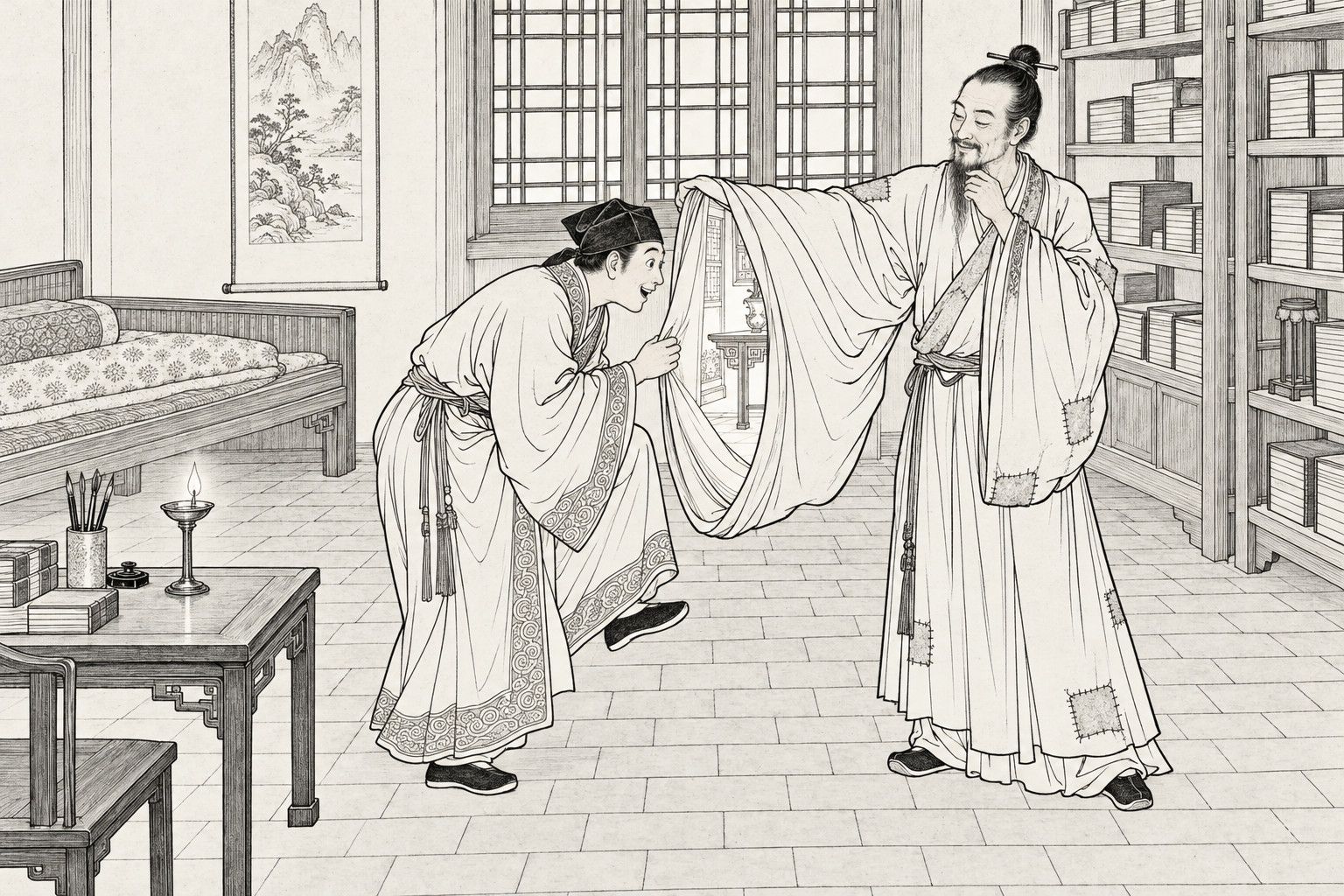
鞏道人,無名字,亦不知何里人。嘗求見魯王,閽人不為通。有中貴人出,揖求之。中貴見其鄙陋,逐去之;已而復來。中貴怒,且逐且扑。至無人處,道人笑出黃金二百兩,煩逐者覆中貴:「為言我亦不要見王;但聞後苑花木樓臺,極人間佳勝,若能導我一游,生平足矣。」又以白金賂逐者。其人喜,反命。中貴亦喜,引道人自後宰門入,諸景俱歷。又從登樓上。中貴方凭窗,道人一推,但覺身墮樓外,有細葛繃腰,懸於空際;下視,則高深暈目,葛隱隱作斷聲。懼極,大號。無何,數監至,駭極。見其去地絕遠,登樓共視,則葛端繫櫺上;欲解援之,則葛細不堪用力。遍索道人已杳矣。束手無計,奏之魯王。王詣視,大奇之,命樓下藉茅鋪絮,將因而斷之。甫畢,葛崩然自絕,去地乃不咫耳。相與失笑。王命訪道士所在。聞館於尚秀才家,往問之,則出游未復。既,遇於途,遂引見王。王賜宴坐,便請作劇。道士曰:「臣草野之夫,無他庸能。既承優寵,敢獻女樂為大王壽。」遂探袖中出美人,置地上,向王稽拜已。道士命扮「瑤池宴」本,祝王萬年。女子弔場數語。道士又出一人,自白「王母」。少間,董雙成、許飛瓊……一切仙姬,次第俱出。末有織女來謁,獻天衣一襲,金彩絢爛,光映一室。王意其偽,索觀之。道士急言:「不可!」王不聽,卒觀之,果無縫之衣,非人工所能制也。道士不樂曰:「臣竭誠以奉大王,暫而假諸天孫,今為濁氣所染,何以還故主乎?」王又意歌者必仙姬,思欲留其一二;細視之,則皆宮中樂妓耳。轉疑此曲,非所夙諳,問之,果茫然不自知。道士以衣置火燒之,然後納諸袖中,再搜之,則已無矣。王於是深重道士,留居府內。道士曰:「野人之性,視宮殿如藩籠,不如秀才家得自由也。」每至中夜,必還其所;時而堅留,亦遂宿止。輒於筵間顛倒四時花木為戲。王問曰:「聞仙人亦不能忘情,果否?」對曰:「或仙人然耳;臣非仙人,故心如枯木矣。」一夜,宿府中,王遣少妓往試之。入其室,數呼不應;燭之,則瞑坐榻上。搖之,目一閃即復合;再搖之,齁聲作矣。推之,則遂手而倒,酣臥如雷;彈其額,逆指作鐵釜聲。返以白王。王使刺以針,針弗入。推之,重不可搖;加十餘人舉擲床下,若千斤石墮地者。旦而窺之,仍眠地上。醒而笑曰:「一場惡睡,墮床下不覺耶!」後女子輩每於其坐臥時,按之為戲:初按猶軟,再按則鐵石矣。道士舍秀才家,恆中夜不歸。尚鎖其戶,及旦啟扉,道士已臥室中。初,尚與曲妓惠哥善,矢志嫁娶。惠雅善歌,絃索傾一時。魯王聞其名,召入供奉,遂絕情好。每繫念之,苦無由通。一夕,問道士:「見惠哥否?」答言:「諸姬皆見,但不知其惠哥為誰。」尚述其貌,道其年,道士乃憶之。尚求轉寄一語。道士笑曰:「我世外人,不能為君塞鴻。」尚哀之不已。道士展其袖曰:「必欲一見,請入此。」尚窺之,中大如屋。伏身入,則光明洞徹,寬若廳堂,几案床榻,無物不有。居其內,殊無悶苦。道士入府,與王對弈。望惠哥至,陽以袍袖拂塵,惠哥已納袖中,而他人不之睹也。尚方獨坐凝想時,忽有美人自簷間墮,視之,惠哥也。兩相驚喜,綢繆臻至。尚曰:「今日奇緣,不可不誌。請與卿聯之。」書壁上曰:「候門似海久無蹤。」惠續云:「誰識蕭郎今又逢。」尚曰:「袖裏乾坤真箇大。」惠曰:「離人思婦盡包容。」書甫畢,忽有五人入,八角冠,淡紅衣,認之,都與無素。默然不言,捉惠哥去。尚驚駭,不知所由。道士既歸,呼之出,問其情事,隱諱不以盡言。道士微笑,解衣反袂示之。尚審視,隱隱有字蹟,細裁如蟣,蓋即所題句也。後十數日,又求一人。前後凡三入。
巩道人,无名字,亦不知何里人。尝求见鲁王,阍人不为通。有中贵人出,揖求之。中贵见其鄙陋,逐去之;已而复来。中贵怒,且逐且扑。至无人处,道人笑出黄金二百两,烦逐者覆中贵:「为言我亦不要见王;但闻后苑花木楼台,极人间佳胜,若能导我一游,生平足矣。」又以白金赂逐者。其人喜,反命。中贵亦喜,引道人自后宰门入,诸景俱历。又从登楼上。中贵方凭窗,道人一推,但觉身堕楼外,有细葛绷腰,悬于空际;下视,则高深晕目,葛隐隐作断声。惧极,大号。无何,数监至,骇极。见其去地绝远,登楼共视,则葛端系櫺上;欲解援之,则葛细不堪用力。遍索道人已杳矣。束手无计,奏之鲁王。王诣视,大奇之,命楼下藉茅铺絮,将因而断之。甫毕,葛崩然自绝,去地乃不咫耳。相与失笑。王命访道士所在。闻馆于尚秀才家,往问之,则出游未复。既,遇于途,遂引见王。王赐宴坐,便请作剧。道士曰:「臣草野之夫,无他庸能。既承优宠,敢献女乐为大王寿。」遂探袖中出美人,置地上,向王稽拜已。道士命扮「瑶池宴」本,祝王万年。女子吊场数语。道士又出一人,自白「王母」。少间,董双成、许飞琼……一切仙姬,次第俱出。末有织女来谒,献天衣一袭,金彩绚烂,光映一室。王意其伪,索观之。道士急言:「不可!」王不听,卒观之,果无缝之衣,非人工所能制也。道士不乐曰:「臣竭诚以奉大王,暂而假诸天孙,今为浊气所染,何以还故主乎?」王又意歌者必仙姬,思欲留其一二;细视之,则皆宫中乐妓耳。转疑此曲,非所夙谙,问之,果茫然不自知。道士以衣置火烧之,然后纳诸袖中,再搜之,则已无矣。王于是深重道士,留居府内。道士曰:「野人之性,视宫殿如藩笼,不如秀才家得自由也。」每至中夜,必还其所;时而坚留,亦遂宿止。辄于筵间颠倒四时花木为戏。王问曰:「闻仙人亦不能忘情,果否?」对曰:「或仙人然耳;臣非仙人,故心如枯木矣。」一夜,宿府中,王遣少妓往试之。入其室,数呼不应;烛之,则瞑坐榻上。摇之,目一闪即复合;再摇之,齁声作矣。推之,则遂手而倒,酣卧如雷;弹其额,逆指作铁釜声。返以白王。王使刺以针,针弗入。推之,重不可摇;加十余人举掷床下,若千斤石堕地者。旦而窥之,仍眠地上。醒而笑曰:「一场恶睡,堕床下不觉耶!」后女子辈每于其坐卧时,按之为戏:初按犹软,再按则铁石矣。道士舍秀才家,恒中夜不归。尚锁其户,及旦启扉,道士已卧室中。初,尚与曲妓惠哥善,矢志嫁娶。惠雅善歌,弦索倾一时。鲁王闻其名,召入供奉,遂绝情好。每系念之,苦无由通。一夕,问道士:「见惠哥否?」答言:「诸姬皆见,但不知其惠哥为谁。」尚述其貌,道其年,道士乃忆之。尚求转寄一语。道士笑曰:「我世外人,不能为君塞鸿。」尚哀之不已。道士展其袖曰:「必欲一见,请入此。」尚窥之,中大如屋。伏身入,则光明洞彻,宽若厅堂,几案床榻,无物不有。居其内,殊无闷苦。道士入府,与王对弈。望惠哥至,阳以袍袖拂尘,惠哥已纳袖中,而他人不之睹也。尚方独坐凝想时,忽有美人自檐间堕,视之,惠哥也。两相惊喜,绸缪臻至。尚曰:「今日奇缘,不可不志。请与卿联之。」书壁上曰:「候门似海久无踪。」惠续云:「谁识萧郎今又逢。」尚曰:「袖里乾坤真个大。」惠曰:「离人思妇尽包容。」书甫毕,忽有五人入,八角冠,淡红衣,认之,都与无素。默然不言,捉惠哥去。尚惊骇,不知所由。道士既归,呼之出,问其情事,隐讳不以尽言。道士微笑,解衣反袂示之。尚审视,隐隐有字迹,细裁如虮,盖即所题句也。后十数日,又求一人。前后凡三入。
There was a Daoist named Gong. He had no given name, and no one knew where he came from. He once sought an audience with the Prince of Lu, but the gatekeeper would not announce him. A palace eunuch came out, and Gong bowed and begged him instead. Seeing how shabby and coarse he was, the eunuch drove him off. Before long he was back. The eunuch, enraged, had him chased away with blows. When they reached a spot where no one was about, the Daoist laughed, brought out two hundred taels of gold, and asked the man chasing him to take a message back to the eunuch: “Tell him I don’t really need to see the Prince. Only I hear that the flowers and trees, towers and terraces of the rear garden are the finest sight in the world of men. If he would show me round them once, I’d ask nothing more of life.” He also bribed the man himself with silver. The man was delighted and went back with the message. The eunuch was delighted too. He led the Daoist in by the rear gate of the palace, and they went round every sight. Then he took him up into a tower. The eunuch was just leaning on the window when the Daoist gave him a push. All he knew was that he had fallen out of the tower, and a thin kudzu cord was tight round his waist, holding him hanging in mid-air. He looked down: the height made his head swim, and the cord gave faint sounds of snapping. In utter terror he howled. Before long several eunuchs came running, appalled. Seeing how far he hung above the ground, they climbed the tower together to look: the end of the cord was tied to the window lattice. They wanted to untie it and haul him up, but the cord was too thin to bear any pull. They searched everywhere for the Daoist; he had vanished. At their wits’ end, they reported it to the Prince. The Prince came to look and was astonished. He ordered thatch laid under the tower and cotton wadding spread over it, meaning to cut the cord once that was done. The moment it was ready, the cord snapped of itself with a twang — and the eunuch had been less than a foot from the ground. They all burst out laughing. The Prince had inquiries made for the Daoist. Learning that he lodged at the house of a licentiate named Shang, they went to ask for him, but he had gone out wandering and not come back. Later they met him on the road and brought him before the Prince. The Prince gave him a seat at a banquet and asked him to put on some show. “I am a rustic from the wilds,” said the Daoist, “with no other talents. But since Your Highness honours me so, I venture to present a troupe of singing girls to wish Your Highness long life.” He reached into his sleeve, brought out a beautiful woman and set her on the floor, and she bowed low to the Prince. The Daoist bade them play The Banquet at the Jade Pool and wish the Prince ten thousand years. The woman spoke a few lines alone to open the scene. The Daoist brought out another, who announced herself as the Queen Mother. Presently Dong Shuangcheng, Xu Feiqiong … all the fairy maidens came out one after another. Last came the Weaving Maid to pay her respects, and she presented a heavenly robe, so brilliant with gold and colour that its light filled the room. The Prince thought it a fake and asked to look at it. “You mustn’t!” the Daoist said hastily. The Prince would not listen and looked at it anyway. It was indeed a seamless robe, beyond the power of human hands to make. The Daoist was displeased. “I did my utmost to serve Your Highness, and borrowed it for a moment from Heaven’s Granddaughter. Now it has been tainted by foul mortal air. How can I return it to its owner?” The Prince also supposed the singers must be fairy maidens, and thought of keeping one or two of them. But when he looked closely, they were only the singing girls of his own palace. Then it struck him as odd that they knew this piece, which they had never learned. He asked them, and sure enough they were at a loss and knew nothing of it themselves. The Daoist put the robe in the fire and burned it, then tucked it into his sleeve; when they searched the sleeve afterwards, it was gone. From then on the Prince held the Daoist in deep esteem and kept him in the palace. “A man of the wilds,” said the Daoist, “looks on palaces as cages. I’d sooner be at the scholar’s house, where I’m free.” Every night at midnight he would go back to his lodging, though sometimes, when pressed hard to stay, he stayed. At banquets he would often amuse them by making the flowers and trees of the four seasons bloom out of turn. The Prince asked him, “I hear that even immortals cannot forget desire. Is it so?” “Perhaps immortals are like that,” he replied. “I am no immortal, so my heart is like a withered tree.” One night when he stayed in the palace, the Prince sent a young singing girl to test him. She went into his room and called him several times without an answer. She held up a candle: he was sitting on the couch with his eyes shut. She shook him; his eyes flickered open and shut again. She shook him again, and he began to snore. She pushed him, and he toppled over at her touch and lay snoring like thunder. She flicked his forehead, and it rang against her finger like an iron pot. She went back and told the Prince. The Prince had him pricked with a needle; the needle would not go in. They pushed him: he was too heavy to budge. More than ten men together lifted him and threw him off the bed, and he hit the floor like a half-ton boulder. At dawn they peeked in: he was still asleep on the floor. When he woke he laughed. “What a dead sleep! Fell off the bed and never noticed!” After that the girls would often amuse themselves by pressing on him as he sat or lay: at the first press he was still soft, at the second he was iron and stone. When the Daoist stayed at the scholar’s house, he was often still out at midnight. Shang would lock his door, yet when he opened it at dawn, the Daoist would be lying inside. Earlier, Shang had been close to a singing girl named Huige, and they had sworn to marry. Huige sang beautifully, and her playing on the strings was the rage of her day. The Prince of Lu heard of her and summoned her into his palace to serve him, and that was the end of their love. Shang thought of her constantly, but had no way to reach her. One evening he asked the Daoist, “Have you seen Huige?” “I’ve seen all the girls,” he answered, “but I don’t know which of them is Huige.” Shang described her looks and told him her age, and the Daoist remembered her. Shang begged him to carry a message. The Daoist laughed. “I am a man outside the world. I can’t be the wild goose that carries your letters.” Shang pleaded with him without end. The Daoist spread open his sleeve. “If you must see her, get in here.” Shang peered in: inside it was as big as a house. He crouched down and went in, and found it full of light, as spacious as a hall, with tables, desks, a bed and couches — there was nothing it lacked. Staying inside was no hardship at all. The Daoist went to the palace and sat down to a game of go with the Prince. When he saw Huige coming, he made as if to brush away some dust with the sleeve of his robe — and Huige was already inside it, without anyone else seeing. Shang was sitting alone, lost in thought, when suddenly a beauty dropped down from the eaves. He looked: it was Huige. Both were amazed and overjoyed, and they could not have been more tender with each other. “Such a strange meeting today must be recorded,” said Shang. “Let us make a poem together, line by line.” He wrote on the wall: “The noble’s gate is deep as the sea; long no trace of you.” Huige went on: “Who’d have thought I’d meet my Xiao Lang again?” Shang wrote: “Heaven and earth in a sleeve — how vast they truly are!” Huige wrote: “Parted lovers and longing wives, it holds them all.” They had just finished writing when five men suddenly came in, wearing eight-cornered caps and pale red robes. Shang looked at them; he knew none of them. Without a word they seized Huige and took her away. Shang was horrified and could not think what had happened. When the Daoist got home, he called Shang out of the sleeve and asked him how things had gone. Shang was evasive and would not tell him everything. The Daoist smiled, took off his robe, turned the sleeve inside out and showed him. Shang looked closely: there were faint traces of writing, as tiny as nits — the very lines they had written. Some ten days later Shang asked to go in again. In all he went in three times.