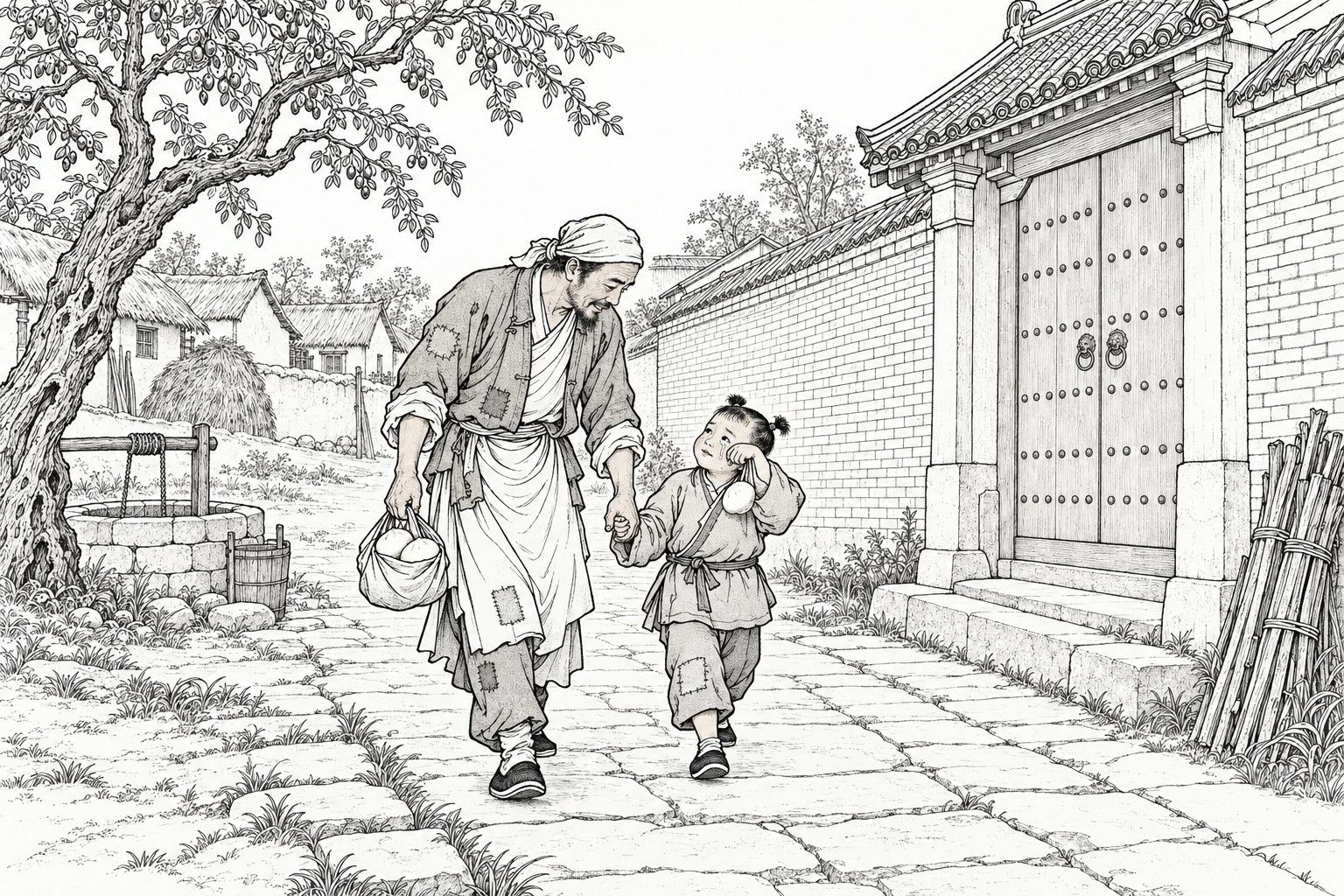
莒人商姓者,兄富而弟貧,鄰垣而居。康熙間,歲大凶,弟朝夕不自給。一日,日向午,尚未舉火,枵腹蹀踱,無以為計。妻令往告兄,商曰:「無益。脫兄憐我貧也,當早有以處此矣。」妻固強之,商便使其子往。少頃,空手而返。商曰:「何如哉!」妻詳問阿伯云何。子曰:「伯躊躕目視伯母,伯母告我曰:『兄弟析居,有飯各食,誰復能相顧也。』」夫妻無言,暫以殘盎敗榻,少易糠粃而生。里中三四惡少,窺大商饒足,夜踰垣入。夫妻驚寤,鳴盥器而號。鄰人共嫉之,無援者。不得已,疾呼二商。商聞嫂鳴,欲趨救,妻止之,大聲對嫂曰:「兄弟析居,有禍各受,誰復能相顧也!」俄,盜破扉,執大商及婦,炮烙之,呼聲綦慘。二商曰:「彼固無情,焉有坐視兄死而不救者!」率子越垣,大聲疾呼。二商父子故武勇,人所畏懼,又恐驚致他援,盜乃去。視兄嫂,兩股焦灼,扶榻上,招集婢僕,乃歸。大商雖被創,而金帛無所亡失。謂妻曰:「今所遺留,悉出弟賜,宜分給之。」妻曰:「汝有好兄弟,不受此苦矣!」商乃不言。二商家絕食,謂兄必有一報;久之,寂不聞。婦不能待,使子捉囊往從貸,得斗粟而返。婦怒其少,欲反之;二商止之。踰兩月,貧餒愈不可支。二商曰:「今無術可以謀生,不如鬻宅於兄。兄恐我他去,或不受券而恤焉,未可知;縱或不然,得十餘金,亦可存活。」妻以為然,遣子操券詣大商。大商告之婦,且曰:「弟即不仁,我手足也。彼去則我孤立,不如反其券而周之。」妻曰:「不然。彼言去,挾我也;果爾,則適墮其謀。世間無兄弟者,便都死卻耶?我高葺牆垣,亦足自固。不如受其券,從所適,亦可以廣吾宅。」計定,令二商押署券尾,付直而去。二商於是徙居鄰村。鄉中不逞之徒,聞二商去,又攻之。復執大商,搒楚並兼,梏毒慘至,所有金貲,悉以贖命。盜臨去,開廩呼村中貧者,恣所取,頃刻都盡。次日,二商始聞,及奔視,則兄已昏憒不能語;開目見弟,但以手抓床席而已。少頃遂死。二商忿訴邑宰。盜首逃竄,莫可緝獲。盜粟者百餘人,皆里中貧民,州守亦莫如何。大商遺幼子,纔五歲,家既貧,往往自投叔所,數日不歸;送之歸,則啼不止。二商婦頗不加青眼。二商曰:「渠父不義,其子何罪?」因市蒸餅數枚,自送之。過數日,又避妻子,陰負斗粟於嫂,使養兒。如此以為常。又數年,大商賣其田宅,母得直,足自給,二商乃不復至。後歲大饑,道殣相望,二商食指益繁,不能他顧。姪年十五,荏弱不能操業,使攜籃從兄貨胡餅。一夜,夢兄至,顏色慘戚曰:「余惑于婦言,遂失手足之義。弟不念前嫌,增我汗羞。所賣故宅,今尚空閒,宜僦居之。屋後篷顆下,藏有窖金,發之,可以小阜。使醜兒相從;長舌婦余甚恨之,勿顧也。」既醒,異之。以重直啗第主,始得就,果發得五百金。從此棄賤業,使兄弟設肆廛間。姪頗慧,記算無訛;又誠愨,凡出入,一錙銖必告。二商益愛之。一日,泣為母請粟。商妻欲勿與;二商念其孝,按月廩給之。數年家益富。大商婦病死,二商亦老,乃析姪,家貲割半與之。
莒人商姓者,兄富而弟贫,邻垣而居。康熙间,岁大凶,弟朝夕不自给。一日,日向午,尚未举火,枵腹蹀踱,无以为计。妻令往告兄,商曰:「无益。脱兄怜我贫也,当早有以处此矣。」妻固强之,商便使其子往。少顷,空手而返。商曰:「何如哉!」妻详问阿伯云何。子曰:「伯踌蹰目视伯母,伯母告我曰:『兄弟析居,有饭各食,谁复能相顾也。』」夫妻无言,暂以残盎败榻,少易糠粃而生。里中三四恶少,窥大商饶足,夜逾垣入。夫妻惊寤,鸣盥器而号。邻人共嫉之,无援者。不得已,疾呼二商。商闻嫂鸣,欲趋救,妻止之,大声对嫂曰:「兄弟析居,有祸各受,谁复能相顾也!」俄,盗破扉,执大商及妇,炮烙之,呼声綦惨。二商曰:「彼固无情,焉有坐视兄死而不救者!」率子越垣,大声疾呼。二商父子故武勇,人所畏惧,又恐惊致他援,盗乃去。视兄嫂,两股焦灼,扶榻上,招集婢仆,乃归。大商虽被创,而金帛无所亡失。谓妻曰:「今所遗留,悉出弟赐,宜分给之。」妻曰:「汝有好兄弟,不受此苦矣!」商乃不言。二商家绝食,谓兄必有一报;久之,寂不闻。妇不能待,使子捉囊往从贷,得斗粟而返。妇怒其少,欲反之;二商止之。逾两月,贫馁愈不可支。二商曰:「今无术可以谋生,不如鬻宅于兄。兄恐我他去,或不受券而恤焉,未可知;纵或不然,得十余金,亦可存活。」妻以为然,遣子操券诣大商。大商告之妇,且曰:「弟即不仁,我手足也。彼去则我孤立,不如反其券而周之。」妻曰:「不然。彼言去,挟我也;果尔,则适堕其谋。世间无兄弟者,便都死却耶?我高葺墙垣,亦足自固。不如受其券,从所适,亦可以广吾宅。」计定,令二商押署券尾,付直而去。二商于是徙居邻村。乡中不逞之徒,闻二商去,又攻之。复执大商,搒楚并兼,梏毒惨至,所有金赀,悉以赎命。盗临去,开廪呼村中贫者,恣所取,顷刻都尽。次日,二商始闻,及奔视,则兄已昏愦不能语;开目见弟,但以手抓床席而已。少顷遂死。二商忿诉邑宰。盗首逃窜,莫可缉获。盗粟者百余人,皆里中贫民,州守亦莫如何。大商遗幼子,才五岁,家既贫,往往自投叔所,数日不归;送之归,则啼不止。二商妇颇不加青眼。二商曰:「渠父不义,其子何罪?」因市蒸饼数枚,自送之。过数日,又避妻子,阴负斗粟于嫂,使养儿。如此以为常。又数年,大商卖其田宅,母得直,足自给,二商乃不复至。后岁大饥,道殣相望,二商食指益繁,不能他顾。姪年十五,荏弱不能操业,使携篮从兄货胡饼。一夜,梦兄至,颜色惨戚曰:「余惑于妇言,遂失手足之义。弟不念前嫌,增我汗羞。所卖故宅,今尚空闲,宜僦居之。屋后篷颗下,藏有窖金,发之,可以小阜。使丑儿相从;长舌妇余甚恨之,勿顾也。」既醒,异之。以重直啗第主,始得就,果发得五百金。从此弃贱业,使兄弟设肆廛间。姪颇慧,记算无讹;又诚悫,凡出入,一锱铢必告。二商益爱之。一日,泣为母请粟。商妻欲勿与;二商念其孝,按月廪给之。数年家益富。大商妇病死,二商亦老,乃析姪,家赀割半与之。
In Ju County there were two brothers named Shang. The elder was rich and the younger poor, and they lived on either side of one wall. In the Kangxi reign there came a year of terrible harvest, and the younger brother could not keep himself fed from morning to night. One day, with noon coming on, his household still had not lit the stove. He paced about on an empty stomach, with no idea what to do. His wife told him to go to his brother. “No use,” said Shang. “If my brother pitied me for being poor, he would have done something about it long ago.” His wife insisted, so Shang sent their son. Before long the boy came back empty-handed. “What did I tell you!” said Shang. His wife asked the boy exactly what his uncle had said. “Uncle hesitated and looked at Aunt,” said the boy, “and Aunt told me, ‘When brothers have split the household, each eats his own rice. Who can look after anyone else?’” Husband and wife said nothing. For the time being they traded broken pots and a battered bed for a little chaff and husks, and lived on that. Three or four young thugs of the village, who had their eye on the elder Shang’s wealth, climbed over his wall one night. The elder Shang and his wife woke in fright, banged on the washbasin and screamed. The neighbours all disliked them, and no one came to help. With nothing else for it, they shouted for the younger Shang. Hearing his sister-in-law’s cries, he wanted to rush to the rescue, but his wife held him back and called out loudly to her sister-in-law, “When brothers have split the household, each suffers his own misfortunes. Who can look after anyone else?” Soon the robbers broke down the door, seized the elder Shang and his wife, and tortured them with fire. Their screams were dreadful. “He may have no feeling for me,” said the younger Shang, “but who could sit and watch his brother die and not save him!” He went over the wall with his son, shouting at the top of his voice. The younger Shang and his son had always been strong fighters, and people feared them; the robbers were also afraid the noise would bring others, so they left. He looked at his brother and sister-in-law: their thighs were burned and blistered. He helped them onto the bed, called the maids and servants together, and only then went home. Though the elder Shang was hurt, he had lost none of his money or silks. He said to his wife, “Everything we still have we owe to my brother. We ought to give him a share.” “If you had a good brother,” said his wife, “you wouldn’t have suffered this!” The elder Shang said no more. The younger Shang’s household had nothing left to eat. He thought his brother would surely make some return; but a long time passed and nothing was heard. His wife could not wait, and sent their son with a sack to ask for a loan. He came back with a dou of grain. She was angry it was so little and wanted to send it back; the younger Shang stopped her. Two months went by, and their hunger and poverty grew past bearing. “There is no way left to make a living,” said the younger Shang. “Better sell our house to my brother. He may be afraid I’ll go away, and refuse the deed and help us instead — who knows? Even if not, we’ll get ten taels or so, enough to stay alive.” His wife agreed, and sent their son with the deed to the elder Shang. The elder Shang told his wife, and added, “My brother may have no heart, but he is my own flesh and blood. If he goes, I’ll stand alone. Better give him back his deed and help him out.” “No,” said his wife. “This talk of leaving is his way of forcing our hand. If you do that, you’ll fall right into his scheme. Do people with no brothers all just die? If we build the walls up high, that’s protection enough. Better take the deed and let him go where he likes. It will make our place bigger, too.” So it was settled. They had the younger Shang sign at the foot of the deed and paid him the price, and he left. The younger Shang moved to a neighbouring village. When the lawless types of the district heard that he was gone, they attacked again. Once more they seized the elder Shang, beat and flogged him and tortured him most cruelly, and he gave up all his money to buy his life. As they left, the robbers opened his granary and called the village poor to take what they liked; in moments it was all gone. Not until the next day did the younger Shang hear of it. He ran to see, but his brother was already senseless and could not speak; he opened his eyes, saw his brother, and could only claw at the bed mat with his hand. Shortly afterwards he died. In his anger the younger Shang brought a charge before the county magistrate. The ringleader fled and could not be caught. Those who had taken the grain numbered over a hundred, all poor folk of the village, and the magistrate could do nothing about them. The elder Shang left a little son only five years old. The household was now poor, and the boy would often take himself off to his uncle’s and not come home for days; when they sent him home, he cried and cried. The younger Shang’s wife gave him no kind looks. “His father did wrong,” said the younger Shang, “but what crime has the boy committed?” He bought a few steamed buns and took the child home himself. Some days later, keeping it from his wife and son, he secretly carried a dou of grain to his sister-in-law so that she could feed the boy. This became his habit. Some years later the elder Shang’s fields and house were sold; the boy’s mother got the money, enough to live on, and the younger Shang stopped coming. Later there was a great famine, and the starved lay dead along the roads in sight of one another. The younger Shang had more and more mouths to feed and could not look after anyone else. His nephew, now fifteen, was too frail for heavy work, so he sent him with a basket to sell sesame flatbreads alongside his cousin. One night the younger Shang dreamed that his brother came to him, looking wretched and sorrowful. “I was led astray by my wife’s words, and forgot what a brother owes a brother. You have not held the past against me, and that only deepens my shame. The old house that was sold is standing empty; you should rent it and live there. Under the clump of weeds behind the house there is silver buried in a pit. Dig it up and it will make you comfortably off. Let my poor boy stay with you. That long-tongued woman — I hate her bitterly. Pay her no mind.” When he woke he thought it strange. He tempted the owner with a high rent, and only then got the house; and there, sure enough, he dug up five hundred taels. From then on they gave up their lowly trade, and he set the two cousins up with a shop in the market. The nephew was very clever and kept the accounts without a mistake; he was honest, too, and reported every last copper that came in or went out. The younger Shang grew fonder and fonder of him. One day the boy wept and begged grain for his mother. The younger Shang’s wife wanted to refuse, but he was moved by the boy’s devotion and sent her an allowance of grain every month. In a few years the household grew richer still. The elder Shang’s widow fell ill and died, and the younger Shang was getting old, so he divided the household with his nephew and gave him half of everything.