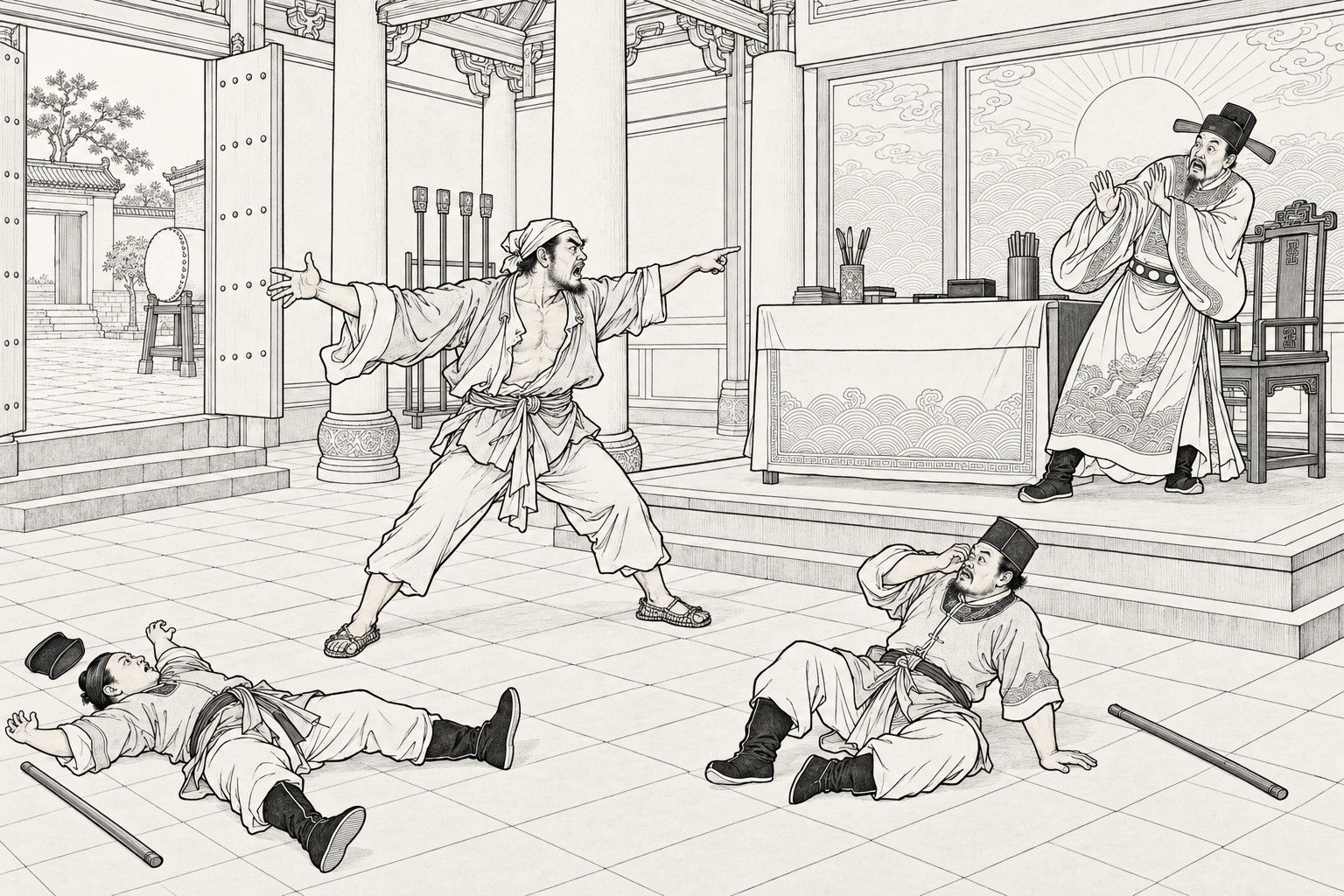
朱生,陽穀人。少年佻達,喜詼謔。因喪偶,往求媒媼。遇其鄰人之妻,睨之美。戲謂媼曰:「適睹尊鄰,雅少麗,若為我求凰,渠可也。」媼亦戲曰:「請殺其男子,我為若圖之。」朱笑曰:「諾。」更月餘,鄰人出討負,被殺於野。邑令拘鄰保,血膚取實,究無端緒;惟媒媼述相謔之詞,以此疑朱。捕至,百口不承。令又疑鄰婦與私,搒掠之,五毒參至,婦不能堪,誣伏。又訊朱。朱曰:「細嫩不任苦刑,所言皆妄。既是冤死,而又加以不節之名,縱鬼神無知,予心何忍乎?我實供之可矣:欲殺夫而娶其婦,皆我之為,婦實不知之也。」問:「何憑?」答言:「血衣可證。」及使人搜諸其家,竟不可得。又掠之,死而復蘇者再。朱乃云:「此母不忍出證據死我耳,待自取之。」因押歸告母曰:「予我衣,死也;即不予,亦死也:均之死,故遲也不如其速也。」母泣,入室移時,取衣出,付之。令審其跡確,擬斬。再駁再審,無異詞。經年餘,決有日矣。令方慮囚,忽一人直上公堂,努目視令而大罵曰:「如此憒憒,何足臨民!」隸役數十輩,將共執之。其人振臂一揮,頹然並仆。令懼,欲逃,其人大言曰:「我關帝前周將軍也!昏官若動,即便誅卻!」令戰懼悚聽。其人曰:「殺人者乃宮標也,於朱某何與?」言已,倒地,氣若絕。少頃而醒,面無人色。及問其人,則宮標也。搒之,盡服其罪。蓋宮素不逞,知其討負而歸,意腰橐必富,及殺之,竟無所得。聞朱誣服,竊自幸。是日身入公門,殊不自知。令問朱血衣所自來,朱亦不知之。喚其母鞫之,則割臂所染;驗其左臂,刀痕猶未平也。令亦愕然。後以此被參揭免官,罰贖羈留而死。年餘,鄰母欲嫁其婦;婦感朱義,遂嫁之。
朱生,阳谷人。少年佻达,喜诙谑。因丧偶,往求媒媪。遇其邻人之妻,睨之美。戏谓媪曰:「适睹尊邻,雅少丽,若为我求凰,渠可也。」媪亦戏曰:「请杀其男子,我为若图之。」朱笑曰:「诺。」更月余,邻人出讨负,被杀于野。邑令拘邻保,血肤取实,究无端绪;惟媒媪述相谑之词,以此疑朱。捕至,百口不承。令又疑邻妇与私,搒掠之,五毒参至,妇不能堪,诬伏。又讯朱。朱曰:「细嫩不任苦刑,所言皆妄。既是冤死,而又加以不节之名,纵鬼神无知,予心何忍乎?我实供之可矣:欲杀夫而娶其妇,皆我之为,妇实不知之也。」问:「何凭?」答言:「血衣可证。」及使人搜诸其家,竟不可得。又掠之,死而复苏者再。朱乃云:「此母不忍出证据死我耳,待自取之。」因押归告母曰:「予我衣,死也;即不予,亦死也:均之死,故迟也不如其速也。」母泣,入室移时,取衣出,付之。令审其迹确,拟斩。再驳再审,无异词。经年余,决有日矣。令方虑囚,忽一人直上公堂,努目视令而大骂曰:「如此愦愦,何足临民!」隶役数十辈,将共执之。其人振臂一挥,颓然并仆。令惧,欲逃,其人大言曰:「我关帝前周将军也!昏官若动,即便诛却!」令战惧悚听。其人曰:「杀人者乃宫标也,于朱某何与?」言已,倒地,气若绝。少顷而醒,面无人色。及问其人,则宫标也。搒之,尽服其罪。盖宫素不逞,知其讨负而归,意腰橐必富,及杀之,竟无所得。闻朱诬服,窃自幸。是日身入公门,殊不自知。令问朱血衣所自来,朱亦不知之。唤其母鞫之,则割臂所染;验其左臂,刀痕犹未平也。令亦愕然。后以此被参揭免官,罚赎羁留而死。年余,邻母欲嫁其妇;妇感朱义,遂嫁之。
A scholar named Zhu, of Yanggu, was flippant and loose as a young man, and loved a joke. When his wife died, he went to see an old matchmaker. There he happened to see the wife of her neighbour, and one glance told him she was beautiful. “I just caught sight of your neighbour,” he said to the old woman in jest. “Very young and very pretty. If you mean to help me in my search for a phoenix mate, she would do.” The old woman joked back: “Kill her husband, then, and I’ll see what I can do for you.” Zhu laughed. “Done.” A month or so later the neighbour went out to collect a debt and was murdered in the fields. The county magistrate arrested the neighbours and the ward headman and had them beaten bloody to get at the truth, but found no clue. Only the matchmaker reported the joke she and Zhu had traded, and on that account the magistrate suspected Zhu. Zhu was arrested and brought in, and denied it over and over. The magistrate also suspected the neighbour’s wife of an affair with him, and had her flogged. All five tortures were laid on her in turn; she could not bear it, and falsely confessed. Then he questioned Zhu again. “She is young and tender and cannot stand torture,” Zhu said. “Everything she said is false. To die wronged, and to have the name of an unchaste woman added to it — even if the gods and spirits know nothing of it, how could my heart bear that? Let me confess the truth. I wanted to kill the husband and marry the wife. It was all my doing. The wife truly knew nothing about it.” “What proof is there?” “The bloodstained clothes will prove it.” But when men were sent to search his house, none could be found. He was flogged again, and twice he died under it and came back to life. Then Zhu said, “It is only that my mother cannot bear to hand over the proof that will kill me. Let me fetch it myself.” So he was taken home under guard. “Give me the clothes, and I die,” he told his mother. “Don’t give them, and I still die. It is death either way, so better quick than slow.” His mother wept. She went into the inner room, and after a while came out with the clothes and gave them to him. The magistrate examined the stains, judged the evidence sound, and proposed that Zhu be beheaded. The case was sent back and tried again, more than once, and Zhu never changed his story. More than a year passed, and the day of execution was fixed. The magistrate was going over the prisoners’ cases when suddenly a man strode straight up into the courtroom, glared at him and cursed him: “A muddlehead like you — how are you fit to govern the people?” The runners, several dozen of them, moved together to seize him. He swung his arm once, and they all collapsed in a heap. The magistrate, terrified, tried to flee. “I am General Zhou, who stands before Lord Guan!” the man roared. “Move, you benighted official, and I’ll kill you on the spot!” The magistrate trembled and listened. “The murderer is Gong Biao,” said the man. “What has it to do with Zhu?” With that he fell to the ground as if his breath had stopped. In a moment he came to, his face drained of colour. When they asked who he was, he was Gong Biao. He was flogged, and confessed the whole crime. Gong had always been a lawless rogue. Knowing the neighbour was on his way home from collecting a debt, he assumed the purse at his waist would be full; but when he had killed him he found nothing. When he heard that Zhu had falsely confessed, he congratulated himself in secret. That day he had walked into the courthouse without knowing it at all. The magistrate asked Zhu where the bloodstained clothes had come from. Zhu did not know either. His mother was summoned and questioned: she had cut her own arm to stain them. They examined her left arm, and the knife wound had not yet healed. The magistrate, too, was aghast. Afterwards he was impeached for this and dismissed from office. He was fined and held in custody, and died there. A year or so later the neighbour’s mother wanted to marry off her son’s widow. Moved by Zhu’s chivalry, the young woman married him.