淮陽葉生者,失其名字。文章詞賦,冠絕當時;而所如不偶,困于名場。會關東丁乘鶴來令是邑,見其文,奇之;召與語,大悅。使即官署,受燈火;時賜錢穀恤其家。值科試,公游揚于學使,遂領冠軍。公期望綦切。闈後,索文讀之,擊節稱嘆。不意時數限人,文章憎命,榜既放,依然鎩羽。生嗒喪而歸,愧負知己,形銷骨立,痴若木偶。公聞,召之來而慰之。生零涕不已。公憐之,相期攷滿入都,攜與俱北。生甚感佩。辭而歸,杜門不出。
淮阳叶生者,失其名字。文章词赋,冠绝当时;而所如不偶,困于名场。会关东丁乘鹤来令是邑,见其文,奇之;召与语,大悦。使即官署,受灯火;时赐钱谷恤其家。值科试,公游扬于学使,遂领冠军。公期望綦切。闱后,索文读之,击节称叹。不意时数限人,文章憎命,榜既放,依然铩羽。生嗒丧而归,愧负知己,形销骨立,痴若木偶。公闻,召之来而慰之。生零涕不已。公怜之,相期攷满入都,携与俱北。生甚感佩。辞而归,杜门不出。
There was a scholar of Huaiyang named Ye; his given name has been lost. In prose and in poetry he stood above everyone of his day. Yet nothing he attempted went his way, and he was stuck fast in the examinations. It happened that Ding Chenghe, a man from east of the passes, came to be magistrate of the county. Ding saw Ye’s writing and thought it remarkable. He sent for him to talk, and was delighted with him. He had Ye come and study at the county office, gave him lamps and candles, and from time to time sent money and grain to help his family. When the qualifying examination came round, Lord Ding sang his praises to the education commissioner, and Ye came out first. Ding’s hopes for him were very high. After the provincial examination he asked to read Ye’s essays, and beat time on the table in admiration. But who would have thought that fate sets limits on a man, and that fine writing hates its author to prosper? When the list was posted, Ye had failed once again, his wings clipped. He went home crushed, ashamed to have failed the one man who understood him. He wasted away to skin and bone, and sat dazed like a wooden puppet. When Lord Ding heard of it, he sent for him and comforted him. Ye could not stop weeping. Ding pitied him, and promised that when his term of office was up and he went to the capital, he would take Ye north with him. Ye was deeply moved and grateful. He took his leave, went home, and shut his door to the world.
無何,寢疾。公遺問不絕;而服藥百裹,殊罔所效。公適以忤上官免,將解任去。函致生,其略云:「僕東歸有日;所以遲遲者,待足下耳。足下朝至,則僕夕發矣。」傳之臥榻。生持書啜泣。寄語來使:「疾革難遽瘥,請先發。」使人返白,公不忍去,徐待之。逾數日,門者忽通葉生至。公喜,逆而問之。生曰:「以犬馬病,勞夫子久待,萬慮不寧。今幸可從杖履。」公乃束裝戒旦。抵里,命子師事生,夙夜與俱。公子名再昌,時年十六,尚不能文。然絕慧,凡文藝三兩過,輒無遺忘。居之期歲,便能落筆成文。益之公力,遂入邑庠。生以生平所擬舉子業,悉錄授讀。闈中七題,並無脫漏,中亞魁。公一日謂生曰:「君出餘緒,遂使孺子成名。然黃鐘長棄,奈何!」生曰:「是殆有命。借福澤為文章吐氣,使天下人知半生淪落,非戰之罪也,願亦足矣。且士得一人知己,可無憾,何必拋卻白紵,乃謂之利市哉。」公以其久客,恐誤歲試,勸令歸省。生慘然不樂。公不忍強,囑公子至都,為之納粟。公子又捷南宮,授部中主政。攜生赴監,與共晨夕。逾歲,生入北闈,竟領鄉荐。會公子差南河典務,因謂生曰:「此去離貴鄉不遠。先生奮跡雲霄,錦還為快。」生亦喜,擇吉就道。抵淮陽界,命僕馬送生歸。
无何,寝疾。公遗问不绝;而服药百裹,殊罔所效。公适以忤上官免,将解任去。函致生,其略云:「仆东归有日;所以迟迟者,待足下耳。足下朝至,则仆夕发矣。」传之卧榻。生持书啜泣。寄语来使:「疾革难遽瘥,请先发。」使人返白,公不忍去,徐待之。逾数日,门者忽通叶生至。公喜,逆而问之。生曰:「以犬马病,劳夫子久待,万虑不宁。今幸可从杖履。」公乃束装戒旦。抵里,命子师事生,夙夜与俱。公子名再昌,时年十六,尚不能文。然绝慧,凡文艺三两过,辄无遗忘。居之期岁,便能落笔成文。益之公力,遂入邑庠。生以生平所拟举子业,悉录授读。闱中七题,并无脱漏,中亚魁。公一日谓生曰:「君出余绪,遂使孺子成名。然黄钟长弃,奈何!」生曰:「是殆有命。借福泽为文章吐气,使天下人知半生沦落,非战之罪也,愿亦足矣。且士得一人知己,可无憾,何必抛却白纻,乃谓之利市哉。」公以其久客,恐误岁试,劝令归省。生惨然不乐。公不忍强,嘱公子至都,为之纳粟。公子又捷南宫,授部中主政。携生赴监,与共晨夕。逾岁,生入北闱,竟领乡荐。会公子差南河典务,因谓生曰:「此去离贵乡不远。先生奋迹云霄,锦还为快。」生亦喜,择吉就道。抵淮阳界,命仆马送生归。
Before long he fell ill. Lord Ding sent to ask after him again and again, but a hundred packets of medicine did him no good at all. Just then Ding offended a superior and was dismissed, and was about to leave his post. He wrote to Ye, and the gist of the letter was: “The day of my return east is near. The reason I am lingering is to wait for you. If you come in the morning, I leave that evening.” The letter was brought to Ye’s sickbed. Ye held it and sobbed. He sent word back by the messenger: “My illness is grave and will not mend soon. Please go on ahead.” The messenger came back and reported this, but Ding could not bear to leave, and waited on. A few days later the gatekeeper suddenly announced that Ye had come. Ding was delighted, went out to meet him and asked how he was. “This miserable illness of mine kept you waiting so long, sir,” said Ye, “that I have had no peace of mind. Now, happily, I am fit to follow you.” So Ding packed his things and set off at dawn. When they reached his home, he had his son take Ye as his teacher, and the two were together day and night. The son, Zaichang, was sixteen and still could not write an essay. But he was extremely clever: any piece of writing he went over two or three times, he never forgot. After a year with Ye he could write an essay straight off. With his father’s influence added, he entered the county school. Ye copied out all the examination essays he had drafted in his whole life and gave them to the boy to study. Of the seven topics set in the examination hall, not one was missing from them, and the boy passed sixth on the list. One day Lord Ding said to Ye, “You gave the boy only the scraps of your learning, and they have made his name. Yet the great bell lies cast aside for good. What is to be done?” “It must be fate,” said Ye. “If through your family’s good fortune my writing can at last breathe freely, and the world can see that my half a life of failure was no fault of my fighting, that is all I could wish. Besides, a scholar who finds one man who understands him has nothing to regret. Why must he throw off his plain white gown before he can call himself lucky?” Since Ye had been away from home so long, Ding was afraid he would miss the annual examination, and urged him to go home and see his family. Ye looked stricken and was unhappy. Ding could not bear to press him. He told his son, when he went to the capital, to buy Ye a place at the Imperial Academy. Zaichang went on to pass the metropolitan examination as well, and was made a secretary in one of the ministries. He took Ye with him to the Academy, and they were together morning and evening. The next year Ye sat the provincial examination in the capital, and at last he passed. Then Zaichang was sent south to take charge of river works, and he said to Ye, “This takes us not far from your home, sir. You have risen to the clouds; how fine to go home in brocade!” Ye was glad too. They chose a lucky day and set out. At the border of Huaiyang, Zaichang sent a servant with horses to see Ye home.
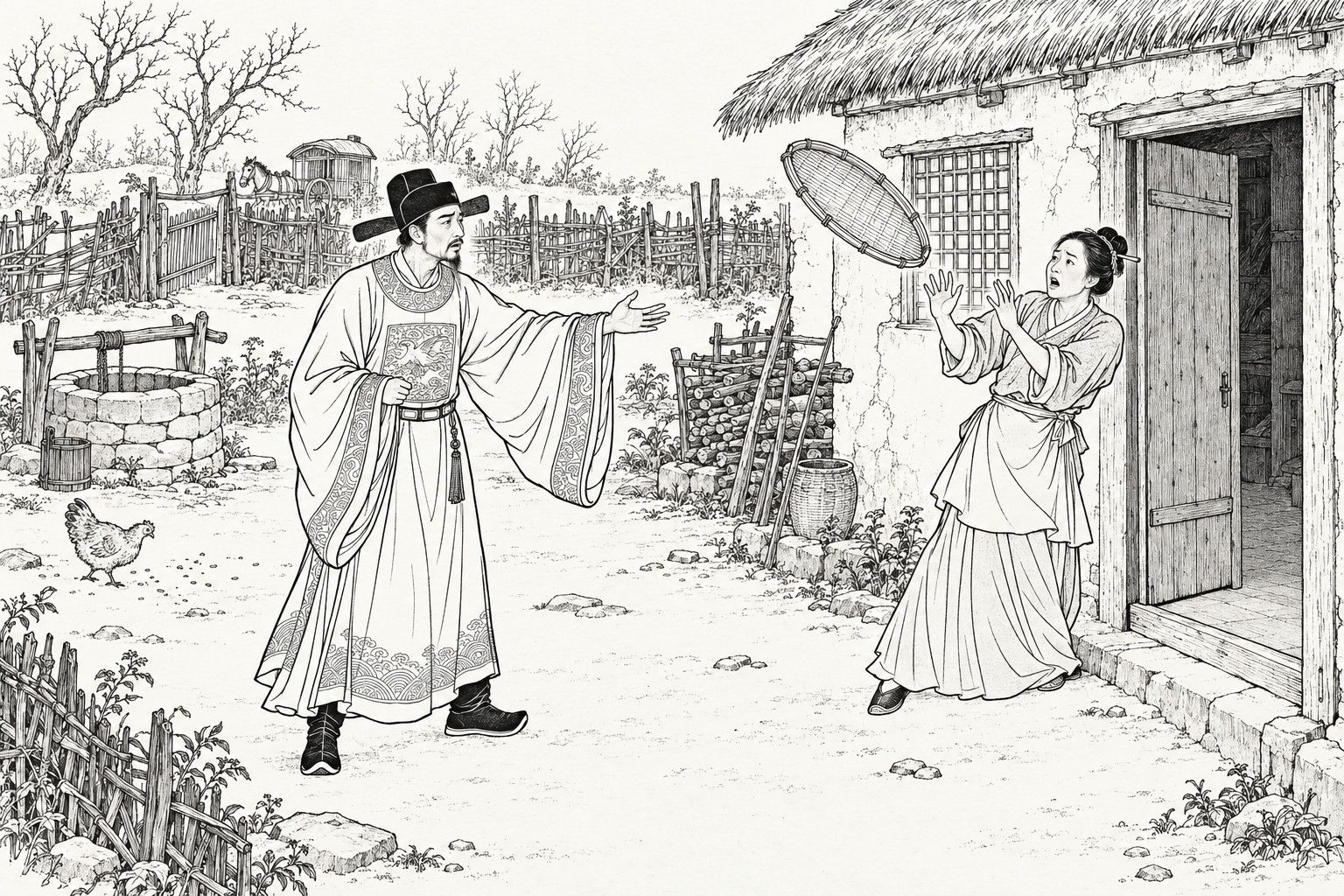
歸見門戶蕭條,意甚悲惻。逡巡至庭中,妻攜簸具以出,見生,擲具駭走。生淒然曰:「我今貴矣。三四年不覿,何遂頓不相識?」妻遙謂曰:「君死已久,何復言貴?所以久淹君柩者,以家貧子幼耳。今阿大亦已成立,將卜窀穸。勿作怪異嚇生人。」生聞之,憮然惆悵。逡巡入室,見靈柩儼然,仆地而滅。妻驚視之,衣冠履舄如脫委焉。大慟,抱衣悲哭。子自塾中歸,見結駟于門,審所自來,駭奔告母。母揮涕告訴。又細詢從者,始得顛末。從者返,公子聞之,涕墮垂膺。即命駕哭諸其室;出橐營喪,葬以孝廉禮。又厚遺其子,為延師教讀。言于學使,逾年游泮。
归见门户萧条,意甚悲恻。逡巡至庭中,妻携簸具以出,见生,掷具骇走。生凄然曰:「我今贵矣。三四年不觌,何遂顿不相识?」妻遥谓曰:「君死已久,何复言贵?所以久淹君柩者,以家贫子幼耳。今阿大亦已成立,将卜窀穸。勿作怪异吓生人。」生闻之,怃然惆怅。逡巡入室,见灵柩俨然,仆地而灭。妻惊视之,衣冠履舄如脱委焉。大恸,抱衣悲哭。子自塾中归,见结驷于门,审所自来,骇奔告母。母挥涕告诉。又细询从者,始得颠末。从者返,公子闻之,涕堕垂膺。即命驾哭诸其室;出橐营丧,葬以孝廉礼。又厚遗其子,为延师教读。言于学使,逾年游泮。
When he got home, Ye found the gate desolate and the house run down, and his heart was full of grief. He hesitated, then walked into the courtyard. His wife came out carrying a winnowing basket. When she saw him she threw it down and ran off in terror. “I am a man of rank now,” said Ye sadly. “We have not seen each other for three or four years. How can you not know me?” His wife spoke to him from a distance. “You have been dead a long time. What is this talk of rank? I have kept your coffin unburied all this while only because we were poor and our son was small. Now our eldest is grown, and we are about to choose a grave for you. Don’t come back haunting and frightening the living.” When Ye heard this he stood lost and desolate. He hesitated, then went into the room and saw his coffin standing there. He fell to the ground and vanished. His wife, frightened, went to look: his cap and gown and shoes lay there like a shed skin. She broke down and wept, hugging the clothes. Their son came home from his lessons, saw a team of horses at the gate, and asked where they came from. Then he ran in fright to tell his mother. Wiping away her tears, she told him what had happened. They questioned the servant closely, and only then learned the whole story. When the servant returned and Zaichang heard it, his tears fell until they soaked his chest. At once he called for his carriage and went to weep at Ye’s house. He paid for the funeral from his own purse and buried Ye with the rites due to a provincial graduate. He also gave Ye’s son generous gifts and hired a tutor for him. He spoke to the education commissioner on the boy’s behalf, and a year later the boy entered the county school.
異史氏曰:「魂從知己,竟忘死耶?聞者疑之,余深信焉。同心倩女,至離枕上之魂;千里良朋,猶識夢中之路。而況繭絲蠅跡,嘔學士之心肝;流水高山,通我曹之性命哉!嗟乎!遇合難期,遭逢不偶。行蹤落落,對影長愁;傲骨嶙嶙,搔頭自愛。嘆面目之酸澀,來鬼物之揶揄。頻居康了之中,則鬚髮之條條可醜;一落孫山之外,則文章之處處皆疵。古今痛哭之人,卞和惟爾;顛倒逸群之物,伯樂伊誰?抱刺于懷,三年滅字;側身以望,四海無家。人生世上,只須合眼放步,以聽造物之低昂而已。天下之昂藏淪落如葉生其人者,亦復不少,顧安得令威復來,而生死從之也哉?噫!」
异史氏曰:「魂从知己,竟忘死耶?闻者疑之,余深信焉。同心倩女,至离枕上之魂;千里良朋,犹识梦中之路。而况茧丝蝇迹,呕学士之心肝;流水高山,通我曹之性命哉!嗟乎!遇合难期,遭逢不偶。行踪落落,对影长愁;傲骨嶙嶙,搔头自爱。叹面目之酸涩,来鬼物之揶揄。频居康了之中,则须发之条条可丑;一落孙山之外,则文章之处处皆疵。古今痛哭之人,卞和惟尔;颠倒逸群之物,伯乐伊谁?抱刺于怀,三年灭字;侧身以望,四海无家。人生世上,只须合眼放步,以听造物之低昂而已。天下之昂藏沦落如叶生其人者,亦复不少,顾安得令威复来,而生死从之也哉?噫!」
The Historian of the Strange says: A soul that follows the one who understood it, and forgets that it is dead? Those who hear of it doubt it; I believe it deeply. A girl of one heart with her lover can send her soul out from the pillow where she lies; a good friend a thousand li away still knows the road in his dream. How much more a scholar who has spat out his heart and liver in lines as fine as silk thread and fly tracks, and whose life is bound to ours by flowing water and high mountains! Alas! A true meeting of minds cannot be hoped for, and fortune does not fall our way. He goes his lonely road, grieving before his own shadow; his proud bones stand out sharp, and he scratches his head and holds himself dear. He sighs at his own sour, pinched face, and ghosts come out to jeer at him. Let him sit among the failed time after time, and every hair of his head and beard is ugly; let his name fall but once below the last on the list, and every line of his writing is flawed. Of all who have wept bitterly, past and present, only Bian He, weeping over his jade, was your like; and for a steed that outruns the herd but is judged all wrong, where is a Bole to know it? He carries his name card in his breast till in three years the writing has worn away; he turns sideways and looks about him, and in all the four seas he has no home. A man in this world can only shut his eyes and stride on, and let the Creator raise him up or bring him low. There are many in the world, fine and upright yet sunk in failure, like Ye; but where can one find a Ding Lingwei to come again, whom they might follow in life and in death? Alas!