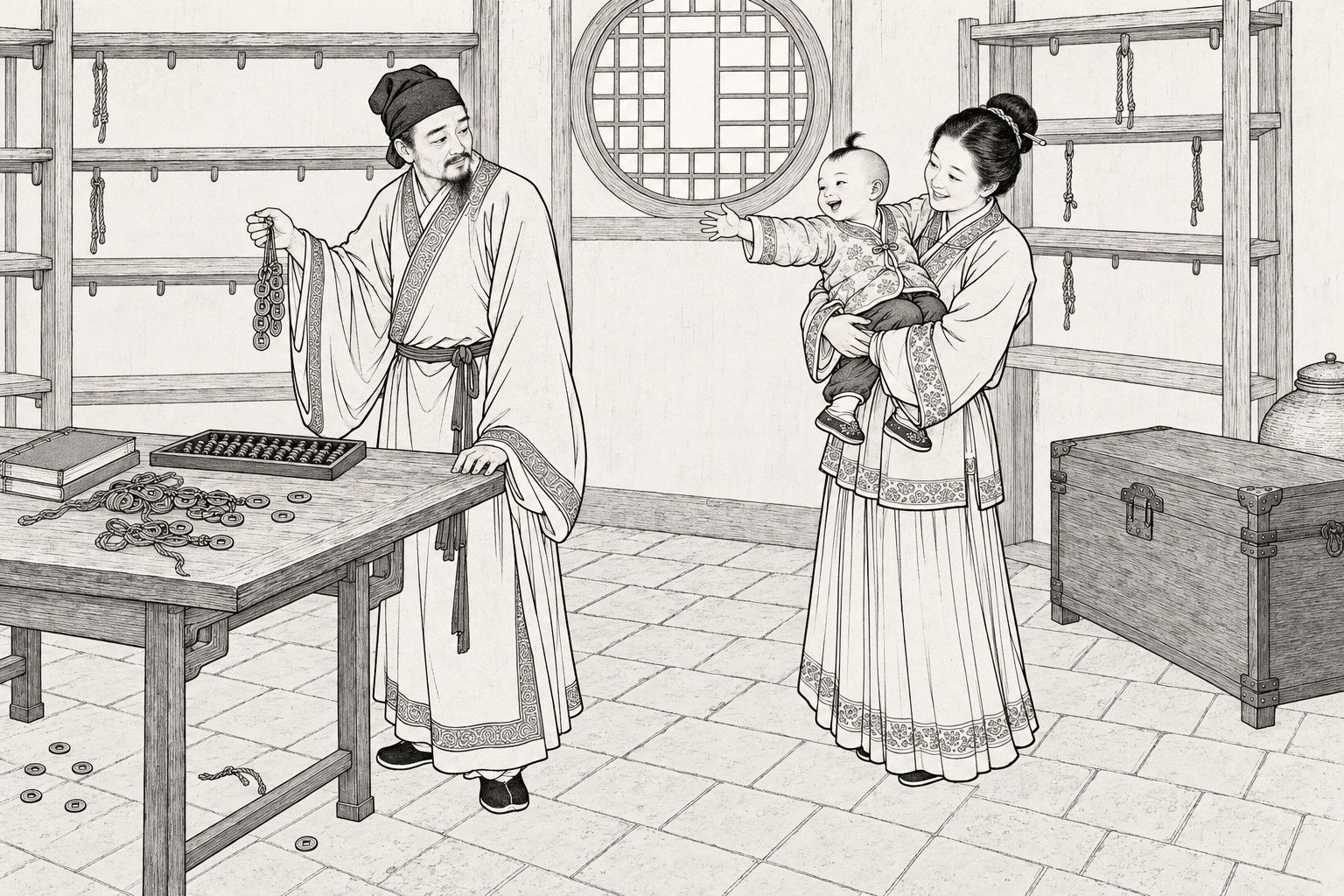
新城王大司馬,有主計僕,家稱素封。忽夢一人奔入,曰:「汝欠四十千,今宜還矣。」問之,不答,徑入內去。既醒,妻產男。知為夙孽,遂以四十千捆置一室,凡兒衣食病藥,皆取給焉。過三四歲,視室中錢,僅存七百。適乳姥抱兒至,調笑于側。因呼之曰:「四十千將盡,汝宜行矣。」言已,兒忽顏色蹙變,項折目張。再撫之,氣已絕矣。乃以余資置葬具而瘞之。此可為負欠者戒也。
新城王大司马,有主计仆,家称素封。忽梦一人奔入,曰:「汝欠四十千,今宜还矣。」问之,不答,径入内去。既醒,妻产男。知为夙孽,遂以四十千捆置一室,凡儿衣食病药,皆取给焉。过三四岁,视室中钱,仅存七百。适乳姥抱儿至,调笑于侧。因呼之曰:「四十千将尽,汝宜行矣。」言已,儿忽颜色蹙变,项折目张。再抚之,气已绝矣。乃以余资置葬具而瘗之。此可为负欠者戒也。
Minister of War Wang of Xincheng had a steward who kept his accounts, a man whose family was reckoned as rich as a lord, though he held no title. One night the steward dreamed that a man came running in and said, “You owe me forty thousand cash. Now it is time to pay it back.” He asked what he meant, but the man did not answer and went straight on into the inner rooms. When the steward woke, his wife gave birth to a boy. He knew it was an old debt from a past life. So he tied up forty thousand cash in strings and put it in a room by itself, and everything the child needed, his clothes, his food, medicine when he was ill, was paid out of it. Three or four years went by. He looked at the money in the room: only seven hundred were left. Just then the nurse carried the boy in, and she sat playing with him at the steward’s side. So the steward called to him: “The forty thousand are nearly gone. You ought to be on your way.” As he said it, the boy’s face suddenly puckered and changed colour; his head dropped to one side and his eyes stared wide. The steward stroked him again, but his breath had already stopped. With the money that was left he bought what was needed for a burial, and buried him. Let this be a warning to anyone who owes a debt.
昔有老而無子者,問諸高僧。僧曰:「汝不欠人者,人又不欠汝者,烏得子?」蓋生佳兒,所以報我之緣;生頑兒,所以取我之債。生者勿喜,死者勿悲也。
昔有老而无子者,问诸高僧。僧曰:「汝不欠人者,人又不欠汝者,乌得子?」盖生佳儿,所以报我之缘;生顽儿,所以取我之债。生者勿喜,死者勿悲也。
Once there was a man who had grown old without a son, and he asked an eminent monk about it. The monk said, “You owe nothing to anyone, and no one owes anything to you. How could you have a son?” For a good son is born to repay what is owed to us, and a wayward son is born to collect what we owe. Let no one rejoice when a child is born, nor grieve when one dies.