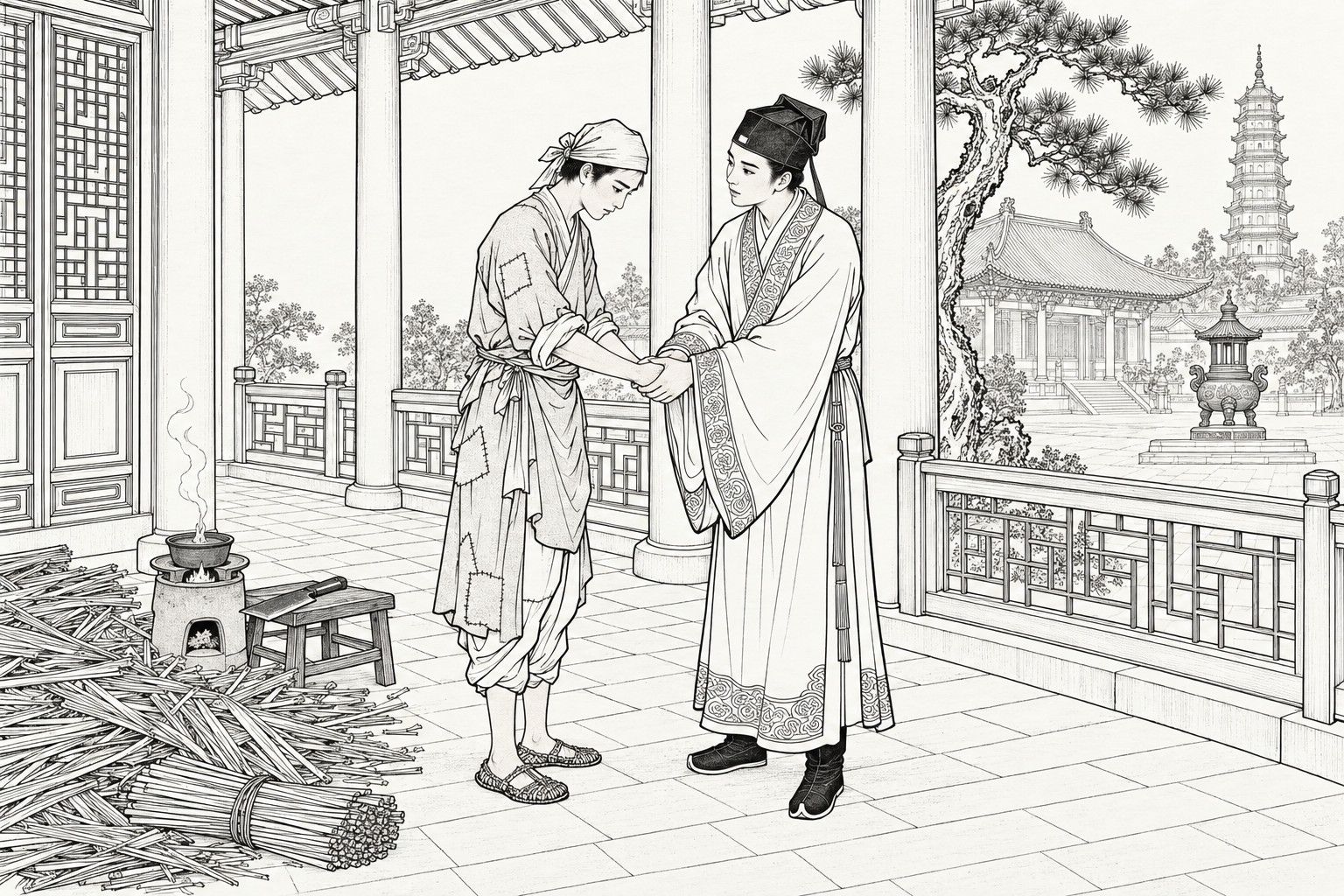
順天陳孝廉,十六七歲時,嘗從塾師讀於僧寺,徒侶甚繁。內有褚生,自言山東人,攻苦講求,略不暇息;且寄宿齋中,未嘗一見其歸。陳與最善,因詰之。答曰:「僕家貧,辦束金不易,即不能惜寸陰,而加以夜半,則我之二日,可當人三日。」陳感其言,欲攜榻來與共寢。褚止之曰:「且勿,且勿!我視先生,學非吾師也。阜城門有呂先生,年雖耄,可師,請與俱遷之。」──蓋都中設帳者多以月計,月終束金完,任其留止。於是兩生同詣呂。呂,越之宿儒,落魄不能歸,因授童蒙,實非其志也。得兩生甚喜;而褚又甚慧,過目輒了,故尤器重之。兩人情好款密,晝同几,夜亦同榻。月既終,褚忽假歸,十餘日不復至。共疑之。一日,陳以故至天寧寺,遇褚廊下,劈檾淬硫,作火具焉。見陳,忸怩不安。陳問:「何遽廢讀?」褚握手請間,戚然曰:「貧無以遺先生,必半月販,始能一月讀。」陳感慨良久,曰:「但往讀,自合極力。」命從人收其業,同歸塾。戒陳勿洩,但託故以告先生。陳父固肆賈,居物致富,陳輒竊父金,代褚遺師。父以亡金責陳,陳實告之。父以為癡,遂使廢學。褚大慚,別師欲去。呂知其故,讓之曰:「子既貧,胡不早告?」乃悉以金返陳父,止褚讀如故,與共饔飧,若子焉。陳雖不入館,每邀褚過酒家飲。褚固以避嫌不往;而陳要之彌堅,往往泣下,褚不忍絕,遂與往來無間。逾二年,陳父死,復求受業。呂感其誠,納之;而廢學既久,較褚懸絕矣。居半年,呂長子自越來,丐食尋父。門人輩斂金助裝,褚惟灑涕依戀而已。呂臨別,囑陳師事褚。陳從之,館褚於家。未幾,入邑庠,以「遺才」應試。陳慮不能終幅,褚請代之。至期,褚偕一人來,云是表兄劉天若,囑陳暫從去。陳方出,褚忽自後曳之,身欲踣,劉急挽之而去。覽眺一過,相攜宿於其家。家無婦女,即館客於內舍。居數日,忽已中秋。劉曰:「今日李皇親園中,游人甚夥,當往一豁積悶,相便送君歸。」使人荷茶鼎、酒具而往。但見水肆梅亭,喧啾不得入。過水關,則老柳之下,橫一畫橈,相將登舟。酒數行,苦寂。劉顧僮曰:「梅花館近有新姬,不知在家否?」僮去少時,與姬俱至,蓋勾欄李遏雲也。李,都中名妓,工詩善歌,陳曾與友人飲其家,故識之。相見,略道溫涼。姬戚戚有憂容。劉命之歌,為歌「蒿里」。陳不悅,曰:「主客即不當卿意,何至對生人歌死曲?」姬起謝,強顏歡笑,乃歌豔曲。陳喜,捉腕曰:「卿向日『浣溪紗』讀之數過,今並忘之。」姬吟曰:
「淚眼盈盈對鏡臺,開簾忽見小姑來,低頭轉側看弓鞋。強解綠蛾開笑面,頻將紅袖拭香腮,小心猶恐被人猜。」
陳反覆數四。已而泊舟,過長廊,見壁上題詠甚多,即命筆記詞其上。日已薄暮,劉曰:「闈中人將出矣。」遂送陳歸。入門,即別去。陳見室暗無人,俄延間,褚已入門;細審之,卻非褚生。方疑,客遽近身而仆。家人曰:「公子憊矣!」共扶拽之。轉覺仆者非他,即己也。既起,見褚生在旁,惚惚若夢。屏人而研究之。褚曰:「告之勿驚:我實鬼也。久當投生,所以因循於此者,高誼所不能忘,故附君體,以代捉刀;三場畢,此願了矣。」陳復求赴春闈。曰:「君先世福薄,慳吝之骨,誥贈所不堪也。」問:「將何適?」曰:「呂先生與僕有父子之分,繫念常不能置。表兄為冥司典簿,求白地府主者,或當有說。」遂別而去。陳異之。天明,訪李姬,將問以泛舟之事;則姬死數日矣。又至皇親園,見題句猶存,而淡墨依稀,若將磨滅。始悟題者為魂,作者為鬼。至夕,褚喜而至,曰:「所謀幸成,敬與君別。」遂伸兩掌,命陳書褚字於上以誌之。陳將置酒為餞,搖首曰:「勿須。君如不忘舊好,放榜後,勿憚修阻。」陳揮涕送之。見一人伺候於門;褚方依依,其人以手按其頂,隨手而匾,掬入囊,負之而去。過數日,陳果捷。于是治裝如越。呂妻斷育幾十年,五旬餘,忽生一子,兩手握固不可開。陳至,請相見,便謂掌中當有文曰「褚」。呂不深信。兒見陳,十指自開,視之果然。驚問其故,具告之。共相歡異。陳厚貽之,乃返。後呂以歲貢,廷試入都,舍於陳;則兒十三歲,入泮矣。
顺天陈孝廉,十六七岁时,尝从塾师读于僧寺,徒侣甚繁。内有褚生,自言山东人,攻苦讲求,略不暇息;且寄宿斋中,未尝一见其归。陈与最善,因诘之。答曰:「仆家贫,办束金不易,即不能惜寸阴,而加以夜半,则我之二日,可当人三日。」陈感其言,欲携榻来与共寝。褚止之曰:「且勿,且勿!我视先生,学非吾师也。阜城门有吕先生,年虽耄,可师,请与俱迁之。」──盖都中设帐者多以月计,月终束金完,任其留止。于是两生同诣吕。吕,越之宿儒,落魄不能归,因授童蒙,实非其志也。得两生甚喜;而褚又甚慧,过目辄了,故尤器重之。两人情好款密,昼同几,夜亦同榻。月既终,褚忽假归,十余日不复至。共疑之。一日,陈以故至天宁寺,遇褚廊下,劈檾淬硫,作火具焉。见陈,忸怩不安。陈问:「何遽废读?」褚握手请间,戚然曰:「贫无以遗先生,必半月贩,始能一月读。」陈感慨良久,曰:「但往读,自合极力。」命从人收其业,同归塾。戒陈勿泄,但托故以告先生。陈父固肆贾,居物致富,陈辄窃父金,代褚遗师。父以亡金责陈,陈实告之。父以为痴,遂使废学。褚大惭,别师欲去。吕知其故,让之曰:「子既贫,胡不早告?」乃悉以金返陈父,止褚读如故,与共饔飧,若子焉。陈虽不入馆,每邀褚过酒家饮。褚固以避嫌不往;而陈要之弥坚,往往泣下,褚不忍绝,遂与往来无间。逾二年,陈父死,复求受业。吕感其诚,纳之;而废学既久,较褚悬绝矣。居半年,吕长子自越来,丐食寻父。门人辈敛金助装,褚惟洒涕依恋而已。吕临别,嘱陈师事褚。陈从之,馆褚于家。未几,入邑庠,以「遗才」应试。陈虑不能终幅,褚请代之。至期,褚偕一人来,云是表兄刘天若,嘱陈暂从去。陈方出,褚忽自后曳之,身欲踣,刘急挽之而去。览眺一过,相携宿于其家。家无妇女,即馆客于内舍。居数日,忽已中秋。刘曰:「今日李皇亲园中,游人甚伙,当往一豁积闷,相便送君归。」使人荷茶鼎、酒具而往。但见水肆梅亭,喧啾不得入。过水关,则老柳之下,横一画桡,相将登舟。酒数行,苦寂。刘顾僮曰:「梅花馆近有新姬,不知在家否?」僮去少时,与姬俱至,盖勾栏李遏云也。李,都中名妓,工诗善歌,陈曾与友人饮其家,故识之。相见,略道温凉。姬戚戚有忧容。刘命之歌,为歌「蒿里」。陈不悦,曰:「主客即不当卿意,何至对生人歌死曲?」姬起谢,强颜欢笑,乃歌艳曲。陈喜,捉腕曰:「卿向日『浣溪纱』读之数过,今并忘之。」姬吟曰:
「泪眼盈盈对镜台,开帘忽见小姑来,低头转侧看弓鞋。强解绿蛾开笑面,频将红袖拭香腮,小心犹恐被人猜。」
陈反复数四。已而泊舟,过长廊,见壁上题咏甚多,即命笔记词其上。日已薄暮,刘曰:「闱中人将出矣。」遂送陈归。入门,即别去。陈见室暗无人,俄延间,褚已入门;细审之,却非褚生。方疑,客遽近身而仆。家人曰:「公子惫矣!」共扶拽之。转觉仆者非他,即己也。既起,见褚生在旁,惚惚若梦。屏人而研究之。褚曰:「告之勿惊:我实鬼也。久当投生,所以因循于此者,高谊所不能忘,故附君体,以代捉刀;三场毕,此愿了矣。」陈复求赴春闱。曰:「君先世福薄,悭吝之骨,诰赠所不堪也。」问:「将何适?」曰:「吕先生与仆有父子之分,系念常不能置。表兄为冥司典簿,求白地府主者,或当有说。」遂别而去。陈异之。天明,访李姬,将问以泛舟之事;则姬死数日矣。又至皇亲园,见题句犹存,而淡墨依稀,若将磨灭。始悟题者为魂,作者为鬼。至夕,褚喜而至,曰:「所谋幸成,敬与君别。」遂伸两掌,命陈书褚字于上以志之。陈将置酒为饯,摇首曰:「勿须。君如不忘旧好,放榜后,勿惮修阻。」陈挥涕送之。见一人伺候于门;褚方依依,其人以手按其顶,随手而匾,掬入囊,负之而去。过数日,陈果捷。于是治装如越。吕妻断育几十年,五旬余,忽生一子,两手握固不可开。陈至,请相见,便谓掌中当有文曰「褚」。吕不深信。儿见陈,十指自开,视之果然。惊问其故,具告之。共相欢异。陈厚贻之,乃返。后吕以岁贡,廷试入都,舍于陈;则儿十三岁,入泮矣。
When a provincial graduate named Chen, of Shuntian, was sixteen or seventeen, he studied with a tutor at a Buddhist monastery, one of a great many pupils. Among them was a scholar named Chu, who said he came from Shandong. He toiled at his books and worked through their meaning with hardly a moment’s rest; he lodged in the study, and no one ever once saw him go home. Chen was his closest friend, and asked him about it. “My family is poor,” Chu answered, “and the fee is hard to find. I may not be able to make every moment count, but if I add half the night as well, two of my days are worth three of anyone else’s.” Chen was moved by this and wanted to bring his bed over and sleep there with him. Chu stopped him. “Not yet, not yet! As I see it, our tutor’s learning is not enough to make him my master. There is a Mr. Lü at Fucheng Gate. He is very old, but he is fit to teach. Let us both move to him.” — For in the capital most of those who kept schools charged by the month, and once the month was up and the fee paid, a pupil was free to stay or go. So the two went to Lü together. Lü was an old scholar from Yue who had come down in the world and could not get home, so he taught young children, though it was far from what he had set his heart on. He was delighted to have the two of them; and Chu was very quick, grasping anything he had seen once, so Lü thought especially highly of him. The two young men grew very close: by day they shared a desk, and by night a bed. When the month was over, Chu suddenly asked for leave to go home, and for more than ten days he did not come back. Everyone wondered at it. One day Chen had business at Tianning Temple and came upon Chu in a side gallery, splitting hemp stalks and dipping them in sulphur to make fire-sticks. Seeing Chen, Chu was embarrassed and ill at ease. “Why have you suddenly given up your studies?” Chen asked. Chu took his hand, drew him aside, and said sadly, “I am too poor to pay the teacher. I have to peddle for half a month before I can study for one.” Chen was moved for a long while. “Just come and study,” he said. “I will do all I can.” He had his servant gather up Chu’s wares, and they went back to the school together. Chu made Chen promise not to let it out, but to give the teacher some other reason. Chen’s father was a shopkeeper who had grown rich by buying up goods and holding them, and Chen would steal his father’s money and pay the teacher for Chu. When his father missed the money and took him to task, Chen told him the truth. His father thought him a fool and made him give up school. Chu was deeply ashamed and took leave of the teacher, meaning to go. Lü found out why and scolded him. “If you were poor, why didn’t you tell me sooner?” He gave all the money back to Chen’s father, kept Chu at his studies as before, and shared his meals with him as if he were his son. Though Chen no longer came to the school, he would often ask Chu to a wineshop for a drink. Chu firmly refused, to avoid any suspicion; but Chen pressed him all the harder, often in tears, until Chu could not bear to turn him away, and they saw each other as freely as ever. Two years later Chen’s father died, and Chen asked to be taken back as a pupil. Lü, moved by his sincerity, accepted him; but he had been away from his books so long that he was now far behind Chu. Half a year later Lü’s eldest son came from Yue, begging his way, to look for his father. The pupils took up a collection for the journey; Chu could only weep and cling to his teacher. At parting Lü told Chen to take Chu as his teacher. Chen did so, and gave Chu lodging in his own house. Before long Chen entered the county school, and went in for the provincial examination as one of the “left-out talents”. He was afraid he could not finish his papers, and Chu offered to sit them in his place. When the day came, Chu arrived with a man he said was his cousin, Liu Tianruo, and told Chen to go off with him for a while. Chen was just going out when Chu suddenly pulled at him from behind. Chen nearly fell, but Liu quickly caught hold of him and led him away. After a look round the sights, Liu took him home to stay. There were no women in the house, so he put his guest up in the inner rooms. A few days passed, and suddenly it was already the Mid-Autumn Festival. “There will be crowds out in Imperial Kinsman Li’s garden today,” said Liu. “We should go and air out our gloom, and I can see you home on the way.” He had servants carry a tea kettle and wine things, and they set off. The waterside stalls and the plum pavilions were so noisy and packed that they could not get in. Past the water gate, under an old willow, a painted boat lay across the stream, and they went aboard together. After a few rounds of wine they found it dull. Liu turned to his boy. “There’s a new girl at the Plum Blossom House lately. I wonder if she’s in?” The boy went off and before long came back with her: it was Li Eyun of the pleasure quarter. Li was a famous courtesan of the capital, skilled at poetry and singing. Chen had once drunk at her house with friends, so he knew her. They greeted each other and exchanged a few pleasantries. She looked downcast and sad. Liu told her to sing, and she sang “Haoli”. Chen was displeased. “Even if your host and his guest are not to your liking, why go so far as to sing a song of the dead to the living?” She rose and apologized, forced a smile, and sang a love song. Chen was pleased and took her by the wrist. “That ‘Silk-Washing Stream’ of yours the other day — I read it over several times, and now I’ve forgotten every word.” She chanted:
“Eyes brimming with tears, she sits before her mirror stand;she raises the blind and suddenly sees her husband’s young sister coming;head bowed, she turns aside to look down at her bow-shaped shoes. Forcing her green moth brows to unknit, she puts on a smiling face,again and again wipes her fragrant cheeks with her red sleeve,and careful as she is, still fears that someone will guess.”
Chen went over it again and again. Presently they moored the boat and walked along a long covered gallery, where many poems were written on the wall; Chen called for a brush and wrote the lyric up among them. The sun was going down. “The men in the examination hall will be coming out,” said Liu, and he took Chen home. As soon as they were inside the gate, he took his leave. Chen found the room dark and empty. While he lingered there, Chu came in at the gate — but looking closely, Chen saw it was not Chu. As he was wondering, the visitor came straight up to him and fell to the ground. “The young master is worn out!” cried the household, and they all helped to haul him up. Then Chen realized that the one who had fallen was none other than himself. When he got up he saw Chu at his side, and he felt dazed, as if in a dream. He sent everyone out and questioned Chu closely. “Don’t be alarmed at what I tell you,” said Chu. “I am really a ghost. I should have been reborn long ago. I have lingered here because I could not forget your great kindness; so I entered your body to write in your place. Now the three sessions are over, and this wish is fulfilled.” Chen asked him to sit the spring examination in the capital for him as well. “Your forebears had little good fortune,” said Chu. “Stingy bones like theirs could not bear the honours the court bestows.” “Where will you go now?” Chen asked. “Mr. Lü and I are as father and son,” said Chu. “He is always on my mind; I cannot put him out of it. My cousin is a registrar in the underworld. I mean to ask him to put my case to the lord of the underworld courts; perhaps something can be done.” With that he took his leave. Chen marvelled at it. At daybreak he went to see Li, meaning to ask her about the boating; but she had been dead several days. He went on to the Imperial Kinsman’s garden. The lines he had written were still there, but the ink was pale and blurred, as if about to fade away. Only then did he understand that the one who had written them up was a soul, and the one who had composed them a ghost. That evening Chu came, happy. “My plan has succeeded, by good fortune,” he said. “I have come to say goodbye.” He held out both palms and had Chen write the character Chu on them, as a mark. Chen was going to set out wine to see him off, but Chu shook his head. “No need. If you have not forgotten our old friendship, then after the results are posted, don’t shrink from a long, hard road.” Chen wept as he saw him off. A man was waiting at the gate. As Chu lingered, loath to part, the man pressed a hand on the top of his head; Chu went flat under the hand, and the man scooped him into a bag, slung it on his back, and went away. A few days later Chen did indeed pass. So he packed for a journey and went to Yue. Lü’s wife had borne no children for nearly ten years; now, past fifty, she had suddenly given birth to a son, whose two hands were clenched tight and could not be opened. When Chen arrived he asked to see the child, and said there would be the character Chu in his palms. Lü did not quite believe it. But when the boy saw Chen, his ten fingers opened of themselves, and when they looked, it was so. Astonished, Lü asked how this could be, and Chen told him everything. They rejoiced together and marvelled at it. Chen gave Lü rich gifts and went home. Later Lü was sent up as a tribute student by seniority and came to the capital for the examination at court, and he stayed with Chen. By then the boy was thirteen and had entered the county school.