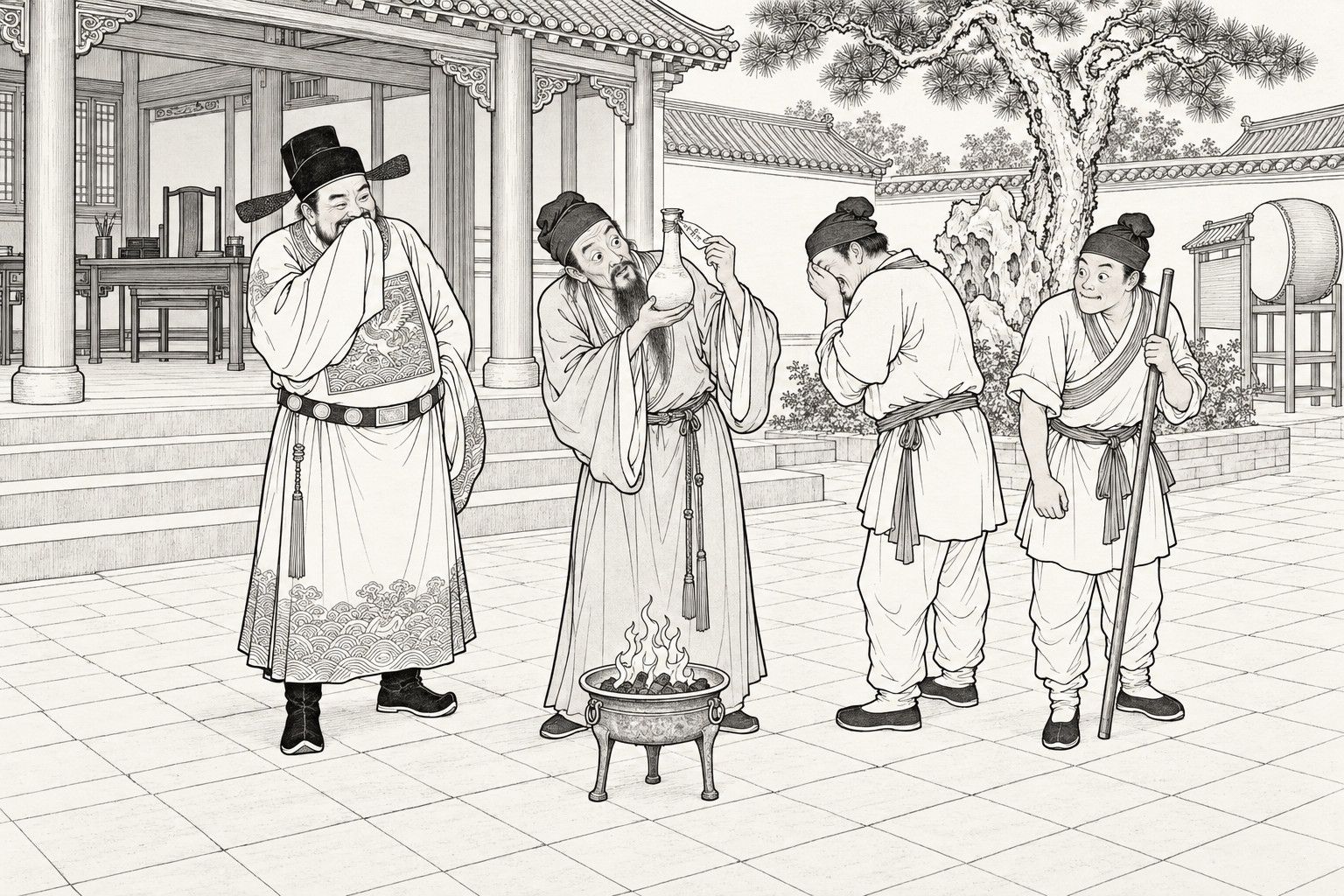
順治間,滕、嶧之區,十人而七盜,官不敢捕。後受撫,邑宰別之為「盜戶」。凡值與良民爭,則曲意左袒之,蓋恐其復叛也。後訟者輒冒稱盜戶,而怨家則力攻其偽;每兩造具陳,曲直且置不辨,而先以盜之真偽,反復相苦,煩有司稽籍焉。適官署多狐,宰有女為所惑,聘術士來,符捉入瓶,將熾以火。狐在瓶內大呼曰:「我盜戶也!」聞者無不匿笑。
顺治间,滕、峄之区,十人而七盗,官不敢捕。后受抚,邑宰别之为「盗户」。凡值与良民争,则曲意左袒之,盖恐其复叛也。后讼者辄冒称盗户,而怨家则力攻其伪;每两造具陈,曲直且置不辨,而先以盗之真伪,反复相苦,烦有司稽籍焉。适官署多狐,宰有女为所惑,聘术士来,符捉入瓶,将炽以火。狐在瓶内大呼曰:「我盗户也!」闻者无不匿笑。
In the Shunzhi reign, in the country around Teng and Yi, seven men in ten were bandits, and the officials did not dare arrest them. Later the bandits accepted an amnesty, and the county magistrate entered them in the registers separately as “bandit households.” Whenever one of them had a quarrel with an honest commoner, the magistrate went out of his way to take the bandit’s side, for fear, it seems, that they would rise again. After that, people who went to law would claim to be bandit households, and their opponents would fight hard to prove the claim false. Each time both sides laid out their case, the question of who was right was set aside unexamined: first they had to torment each other back and forth over whether the banditry was genuine, and the officials had to be troubled to check the registers. It happened that the magistrate’s office was overrun with foxes, and the magistrate’s daughter was bewitched by one. He sent for an exorcist, who caught it with a charm and shut it in a bottle, and was about to set it over the fire. From inside the bottle the fox shouted, “I’m a bandit household!” Everyone who heard it hid a smile.