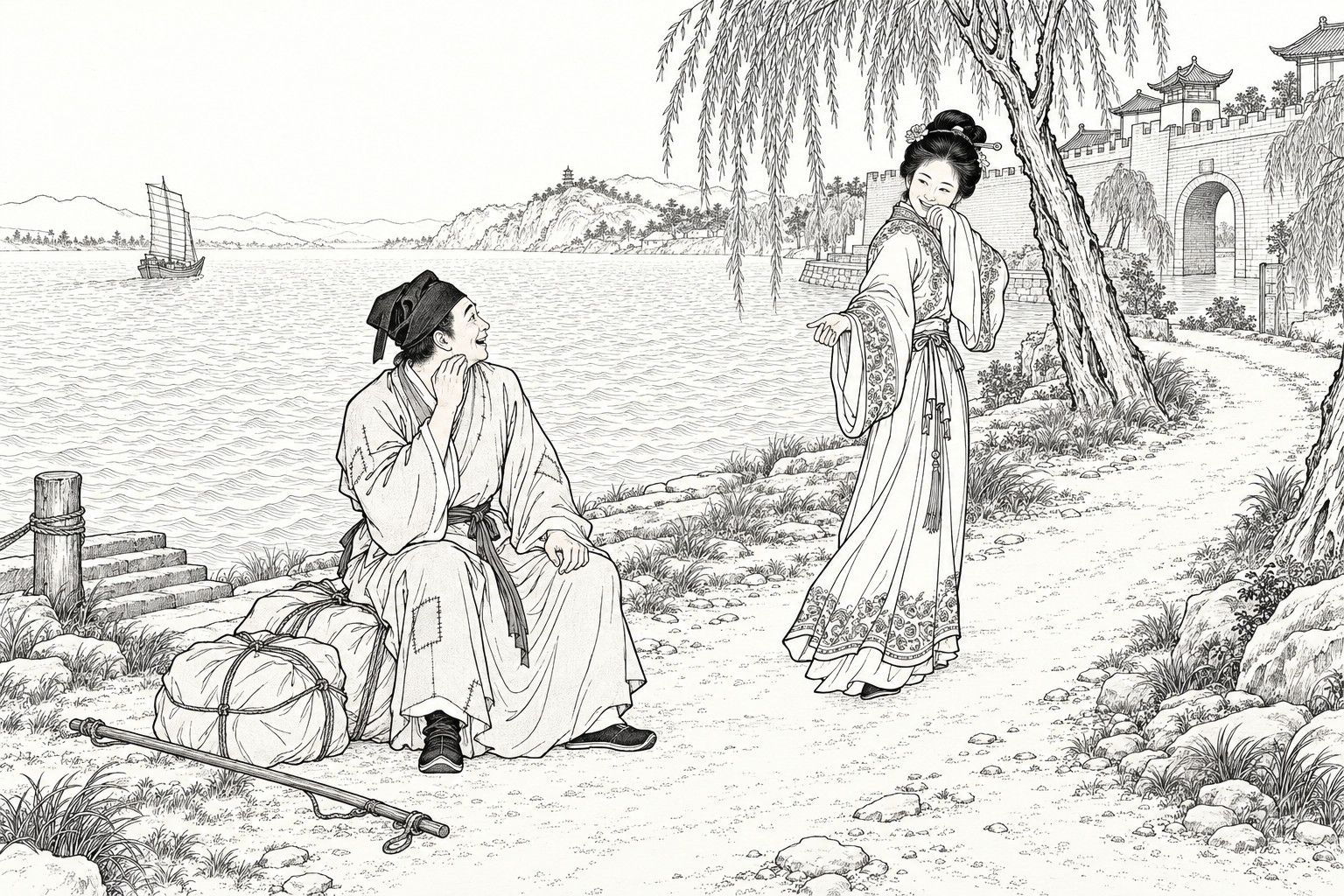
朱大興,彰德人。家富有而吝嗇已甚,非兒女婚嫁,坐無賓、廚無肉。然佻達喜漁色,色所在,冗費不惜。每夜,踰垣過村,從蕩婦眠。一夜,遇少婦獨行,知為亡者,強脅之,引與俱歸。燭之,美絕。自言「霍氏」。細致研詰。女不悅曰:「既加收齒,何必復盤察?如恐相累,不如早去。」朱不敢問,留與寢處。顧女不能安粗糲,又厭見肉臛,必燕窩或雞心、魚肚白作羹湯,始能饜飽。朱無奈,竭力奉之。又善病,日須參湯一碗。朱初不肯。女呻吟垂絕,不得已,投之,病若失。遂以為常。女衣必錦繡,數日,即厭其故。如是月餘,計費不貲,朱漸不供。女啜泣不食,求去。朱懼,又委曲承順之。每苦悶,輒令十數日一招優伶為戲;戲時,朱設凳簾外,抱兒坐觀之。女亦無喜容,數相誚罵,朱亦不甚分解。居二年,家漸落。向女婉言,求少減;女許之,用度皆損其半。久之,仍不給,女亦以肉糜相安;又漸而不珍亦御矣。朱竊喜。忽一夜,啟後扉亡去。朱怊悵若失;遍訪之,乃知在鄰村何氏家。何大姓,世冑也,豪縱好客,燈火達旦。忽有麗人,半夜入閨闥。詰之,則朱家之逃妾也。朱為人,何素藐之;又悅女美,竟納焉。綢繆數日,益惑之,窮極奢欲,供奉一如朱。朱得耗,坐索之,何殊不為意。朱質於官。官以其姓名來歷不明,置不理。朱貨產行賕,乃准拘質。女謂何曰:「妾在朱家,原非采禮媒定者,胡畏之?」何喜,將與質成。座客顧生諫曰:「收納逋逃,已干國紀;況此女入門,日費無度,即千金之家,何能久也?」何大悟,罷訟,以女歸朱。過一二日,女又逃。有黃生者,故貧士,無偶。女叩扉入,自言所來。黃見豔麗忽投,驚懼不知所為。黃素懷刑,固卻之。女不去。應對間,嬌婉無那。黃心動,留之;而慮其不能安貧。女早起,躬操家苦,劬勞過舊室。黃為人蘊藉瀟灑,工於內媚,因恨相得之晚。止恐風聲漏洩,為歡不久。而朱自訟後,家益貧;又度女終不能安,遂置不究。女從黃數歲,親愛甚篤。一日,忽欲歸寧,要黃御送之。黃曰:「向言無家,何前後之舛?」曰:「曩漫言之。妾鎮江人。昔從蕩子,流落江湖,遂至於此。妾家頗裕,君竭貲而往,必無相虧。」黃從其言,賃輿同去。至揚州境,泊舟江際。女適凭窗,有巨商子過,驚其豔,反舟綴之,而黃不知也。女忽曰:「君家綦貧,今有一療貧之法,不知能從否?」黃詰之。女曰:「妾相從數年,未能為君育男女,亦一不了事。妾雖陋,幸未老耄,有能以千金相贈者,便鬻妾去,此中妻室、田廬皆備焉。此計如何?」黃失色,不知何故。女笑曰:「君勿急,天下固多佳人,誰肯以千金買妾者。其戲言於外,以覘其有無。賣不賣,固自在君耳。」黃不肯。女自與榜人婦言之,婦目黃,黃漫應焉。婦去無幾,返言:「鄰舟有商人子,願出八百。」黃故搖首以難之。未幾,復來,便言如命,即請過船交兌。黃微哂。女曰:「教渠姑待,我囑黃郎,即令去。」女謂黃曰:「妾日以千金之軀事君,今始知耶?」黃問:「以何詞遣之?」女曰:「請即往署券,去不去固自在我耳。」黃不可。女逼促之,黃不得已,詣焉。立刻兌付。黃令封誌之,曰:「遂以貧故,竟果如此,遽相割捨。倘室人必不肯從,仍以原金璧趙。」方運金至舟,女已從榜人婦從船尾登商舟,遙顧作別,並無悽戀。黃驚魂離舍,嗌不能言。俄商舟解纜,去如箭激。黃大號,欲追傍之,榜人不從,開舟南渡矣。瞬息達鎮江,運貲上岸。榜人急解舟去。黃守裝悶坐,無所適歸,望江水之滔滔,如萬鏑之叢體。方掩泣間,忽聞姣聲呼「黃郎」。愕然四顧,則女已在前途。喜極,負裝從之。問:「卿何遽得來?」女笑曰:「再遲數刻,則君有疑心矣。」黃乃疑其非常,固詰其情。女笑曰:「妾生平於吝者則破之,於邪者則誑之也。若實與君謀,君必不肯,何處可致千金者?錯囊充牣,而合浦珠還,君幸足矣,窮問何為?」乃僱役荷囊,相將俱去。至水門內,一宅南向,逕入。俄而翁媼男婦,紛出相迎,皆曰:「黃郎來也!」黃入參公姥。有兩少年,揖坐與語,是女兄弟,大郎、三郎也。筵間味無多品,玉柈四枚,方几已滿。雞蟹鵝魚,皆臠切為箇。少年以巨椀行酒,談吐豪放。已而導入別院,俾夫婦同處。衾枕滑耎,而床則以熟革代棕藤焉。日有婢媼饋致三餐,女或時竟日不出。黃獨居悶苦,屢言歸,女固止之。一日,謂黃曰:「今為君謀:請買一人,為子嗣計。然買婢媵則價奢;當偽為妾也兄者,使父與論婚,良家子不難致。」黃不可,女弗聽。有張貢士之女新寡,議聘金百緡,女強為娶之。新婦小名阿美,頗婉妙。女嫂呼之;黃瑟踧不安,而女殊坦坦。他日,謂黃曰:「妾將與大姊至南海一省阿姨,月餘可返,請夫婦安居。」遂去。夫妻獨居一院,按時給飲食,亦甚隆備。然自入門後,曾無一人復至其室。每晨,阿美入覲媼,一兩言輒退。娣姒在旁,惟相視一笑。既流連久坐,亦不款曲,黃見翁,亦如之。偶值諸郎聚語,黃至,既都寂然。黃疑悶莫可告語。阿美覺之,詰曰:「君既與諸郎伯仲,何以月來都如生客?」黃倉猝不能對,吃吃而言曰:「我十年於外,今始歸耳。」美又細審翁姑閥閱,及妯娌里居。黃大窘,不能復隱,底里盡露。女泣曰:「妾家雖貧,無作賤媵者,無怪諸宛若鄙不齒數矣!」黃惶怖莫知籌計,惟長跪一聽女命。美收涕挽之,轉請所處。黃曰:「僕何敢他謀,計惟孑身自去耳。」女曰:「既嫁復歸,於情何忍?渠雖先從,私也;妾雖後至,公也。不如姑俟其歸,問彼既出此謀,將何以置妾也?」居數月,女竟不返。一夜,聞客舍喧飲,黃潛往窺之,見二客戎裝上坐:一人裹豹皮巾,凜若天神;東首一人,以虎頭革作兜牟,虎口啣額,鼻耳悉具焉。驚異而返,以告阿美,竟莫測霍父子何人。夫妻疑懼,謀欲僦寓他所,又恐生其猜度。黃曰:「實告卿:即南海人還,折證已定,僕亦不能家此也。今欲攜卿去,又恐尊大人別有異言。不如姑別,二年中當復至。卿能待,待之;如欲他適,亦自任也。」阿美欲告父母而從之,黃不可。阿美流涕,要以信誓,乃別而歸。黃入辭翁姑。時諸郎皆他出,翁挽留以待其歸,黃不聽而行。登舟淒然,形神喪失。至瓜州,忽回首見片帆來,駛如飛;漸近,則船頭按劍而坐者,霍大郎也。遙謂曰:「君欲遄返,胡再不謀?遺夫人去,二三年,誰能相待也?」言次,舟已逼近。阿美自舟中出,大郎挽登黃舟,跳身逕去。先是,阿美既歸,方向父母泣訴,忽大郎將輿登門,按劍相脅,逼女風走。一家慴息,莫敢遮問。女述其狀,黃不解何意,而得美良喜,開舟遂發。至家,出貲營業,頗稱富有。
阿美常懸念父母,欲黃一往探之;又恐以霍女來,嫡庶復有參差。
居無何,張翁訪至,見屋宇修整,心頗慰。謂女曰:「汝出門後,遂詣霍家探問,見門戶已扃,第主亦不之知,半年竟無消息。汝母日夜零涕,謂被奸人賺去,不知流離何所。今幸無恙耶?」黃實告以情,因相猜為神。後阿美生子,取名仙賜。至十餘歲,母遣詣鎮江,至揚州界,休於旅舍,從者皆出。有女子來,挽兒入他室,下簾,抱諸膝上,笑問何名。兒告之。問:「取名何義?」答云:「不知。」女曰:「歸問汝父當自知。」乃為挽髻,自摘髻上花代簪之;出金釧束腕上。又以黃金內袖,曰:「將去買書讀。」兒問其誰,曰:「兒不知更有一母耶?歸告汝父:朱大興死無棺木,當助之,勿忘也。」老僕歸舍,失少主;尋至他室,聞與人語,窺之,則故主母。簾外微嗽,將有咨白。女推兒榻上,恍惚已杳。問之舍主,並無知者。數日,自鎮江歸,語黃,又出所贈。黃感歎不已。及詢朱,則死裁三日,露尸未葬,厚恤之。
朱大兴,彰德人。家富有而吝啬已甚,非儿女婚嫁,坐无宾、厨无肉。然佻达喜渔色,色所在,冗费不惜。每夜,逾垣过村,从荡妇眠。一夜,遇少妇独行,知为亡者,强胁之,引与俱归。烛之,美绝。自言「霍氏」。细致研诘。女不悦曰:「既加收齿,何必复盘察?如恐相累,不如早去。」朱不敢问,留与寝处。顾女不能安粗粝,又厌见肉臛,必燕窝或鸡心、鱼肚白作羹汤,始能餍饱。朱无奈,竭力奉之。又善病,日须参汤一碗。朱初不肯。女呻吟垂绝,不得已,投之,病若失。遂以为常。女衣必锦绣,数日,即厌其故。如是月余,计费不赀,朱渐不供。女啜泣不食,求去。朱惧,又委曲承顺之。每苦闷,辄令十数日一招优伶为戏;戏时,朱设凳帘外,抱儿坐观之。女亦无喜容,数相诮骂,朱亦不甚分解。居二年,家渐落。向女婉言,求少减;女许之,用度皆损其半。久之,仍不给,女亦以肉糜相安;又渐而不珍亦御矣。朱窃喜。忽一夜,启后扉亡去。朱怊怅若失;遍访之,乃知在邻村何氏家。何大姓,世胄也,豪纵好客,灯火达旦。忽有丽人,半夜入闺闼。诘之,则朱家之逃妾也。朱为人,何素藐之;又悦女美,竟纳焉。绸缪数日,益惑之,穷极奢欲,供奉一如朱。朱得耗,坐索之,何殊不为意。朱质于官。官以其姓名来历不明,置不理。朱货产行赇,乃准拘质。女谓何曰:「妾在朱家,原非采礼媒定者,胡畏之?」何喜,将与质成。座客顾生谏曰:「收纳逋逃,已干国纪;况此女入门,日费无度,即千金之家,何能久也?」何大悟,罢讼,以女归朱。过一二日,女又逃。有黄生者,故贫士,无偶。女叩扉入,自言所来。黄见艳丽忽投,惊惧不知所为。黄素怀刑,固却之。女不去。应对间,娇婉无那。黄心动,留之;而虑其不能安贫。女早起,躬操家苦,劬劳过旧室。黄为人蕴藉潇洒,工于内媚,因恨相得之晚。止恐风声漏泄,为欢不久。而朱自讼后,家益贫;又度女终不能安,遂置不究。女从黄数岁,亲爱甚笃。一日,忽欲归宁,要黄御送之。黄曰:「向言无家,何前后之舛?」曰:「曩漫言之。妾镇江人。昔从荡子,流落江湖,遂至于此。妾家颇裕,君竭赀而往,必无相亏。」黄从其言,赁舆同去。至扬州境,泊舟江际。女适凭窗,有巨商子过,惊其艳,反舟缀之,而黄不知也。女忽曰:「君家綦贫,今有一疗贫之法,不知能从否?」黄诘之。女曰:「妾相从数年,未能为君育男女,亦一不了事。妾虽陋,幸未老耄,有能以千金相赠者,便鬻妾去,此中妻室、田庐皆备焉。此计如何?」黄失色,不知何故。女笑曰:「君勿急,天下固多佳人,谁肯以千金买妾者。其戏言于外,以觇其有无。卖不卖,固自在君耳。」黄不肯。女自与榜人妇言之,妇目黄,黄漫应焉。妇去无几,返言:「邻舟有商人子,愿出八百。」黄故摇首以难之。未几,复来,便言如命,即请过船交兑。黄微哂。女曰:「教渠姑待,我嘱黄郎,即令去。」女谓黄曰:「妾日以千金之躯事君,今始知耶?」黄问:「以何词遣之?」女曰:「请即往署券,去不去固自在我耳。」黄不可。女逼促之,黄不得已,诣焉。立刻兑付。黄令封志之,曰:「遂以贫故,竟果如此,遽相割舍。倘室人必不肯从,仍以原金璧赵。」方运金至舟,女已从榜人妇从船尾登商舟,遥顾作别,并无凄恋。黄惊魂离舍,嗌不能言。俄商舟解缆,去如箭激。黄大号,欲追傍之,榜人不从,开舟南渡矣。瞬息达镇江,运赀上岸。榜人急解舟去。黄守装闷坐,无所适归,望江水之滔滔,如万镝之丛体。方掩泣间,忽闻姣声呼「黄郎」。愕然四顾,则女已在前途。喜极,负装从之。问:「卿何遽得来?」女笑曰:「再迟数刻,则君有疑心矣。」黄乃疑其非常,固诘其情。女笑曰:「妾生平于吝者则破之,于邪者则诳之也。若实与君谋,君必不肯,何处可致千金者?错囊充牣,而合浦珠还,君幸足矣,穷问何为?」乃雇役荷囊,相将俱去。至水门内,一宅南向,径入。俄而翁媪男妇,纷出相迎,皆曰:「黄郎来也!」黄入参公姥。有两少年,揖坐与语,是女兄弟,大郎、三郎也。筵间味无多品,玉柈四枚,方几已满。鸡蟹鹅鱼,皆脔切为个。少年以巨椀行酒,谈吐豪放。已而导入别院,俾夫妇同处。衾枕滑耎,而床则以熟革代棕藤焉。日有婢媪馈致三餐,女或时竟日不出。黄独居闷苦,屡言归,女固止之。一日,谓黄曰:「今为君谋:请买一人,为子嗣计。然买婢媵则价奢;当伪为妾也兄者,使父与论婚,良家子不难致。」黄不可,女弗听。有张贡士之女新寡,议聘金百缗,女强为娶之。新妇小名阿美,颇婉妙。女嫂呼之;黄瑟踧不安,而女殊坦坦。他日,谓黄曰:「妾将与大姊至南海一省阿姨,月余可返,请夫妇安居。」遂去。夫妻独居一院,按时给饮食,亦甚隆备。然自入门后,曾无一人复至其室。每晨,阿美入觐媪,一两言辄退。娣姒在旁,惟相视一笑。既流连久坐,亦不款曲,黄见翁,亦如之。偶值诸郎聚语,黄至,既都寂然。黄疑闷莫可告语。阿美觉之,诘曰:「君既与诸郎伯仲,何以月来都如生客?」黄仓猝不能对,吃吃而言曰:「我十年于外,今始归耳。」美又细审翁姑阀阅,及妯娌里居。黄大窘,不能复隐,底里尽露。女泣曰:「妾家虽贫,无作贱媵者,无怪诸宛若鄙不齿数矣!」黄惶怖莫知筹计,惟长跪一听女命。美收涕挽之,转请所处。黄曰:「仆何敢他谋,计惟孑身自去耳。」女曰:「既嫁复归,于情何忍?渠虽先从,私也;妾虽后至,公也。不如姑俟其归,问彼既出此谋,将何以置妾也?」居数月,女竟不返。一夜,闻客舍喧饮,黄潜往窥之,见二客戎装上坐:一人裹豹皮巾,凛若天神;东首一人,以虎头革作兜牟,虎口啣额,鼻耳悉具焉。惊异而返,以告阿美,竟莫测霍父子何人。夫妻疑惧,谋欲僦寓他所,又恐生其猜度。黄曰:「实告卿:即南海人还,折证已定,仆亦不能家此也。今欲携卿去,又恐尊大人别有异言。不如姑别,二年中当复至。卿能待,待之;如欲他适,亦自任也。」阿美欲告父母而从之,黄不可。阿美流涕,要以信誓,乃别而归。黄入辞翁姑。时诸郎皆他出,翁挽留以待其归,黄不听而行。登舟凄然,形神丧失。至瓜州,忽回首见片帆来,驶如飞;渐近,则船头按剑而坐者,霍大郎也。遥谓曰:「君欲遄返,胡再不谋?遗夫人去,二三年,谁能相待也?」言次,舟已逼近。阿美自舟中出,大郎挽登黄舟,跳身径去。先是,阿美既归,方向父母泣诉,忽大郎将舆登门,按剑相胁,逼女风走。一家慴息,莫敢遮问。女述其状,黄不解何意,而得美良喜,开舟遂发。至家,出赀营业,颇称富有。
阿美常悬念父母,欲黄一往探之;又恐以霍女来,嫡庶复有参差。
居无何,张翁访至,见屋宇修整,心颇慰。谓女曰:「汝出门后,遂诣霍家探问,见门户已扃,第主亦不之知,半年竟无消息。汝母日夜零涕,谓被奸人赚去,不知流离何所。今幸无恙耶?」黄实告以情,因相猜为神。后阿美生子,取名仙赐。至十余岁,母遣诣镇江,至扬州界,休于旅舍,从者皆出。有女子来,挽儿入他室,下帘,抱诸膝上,笑问何名。儿告之。问:「取名何义?」答云:「不知。」女曰:「归问汝父当自知。」乃为挽髻,自摘髻上花代簪之;出金钏束腕上。又以黄金内袖,曰:「将去买书读。」儿问其谁,曰:「儿不知更有一母耶?归告汝父:朱大兴死无棺木,当助之,勿忘也。」老仆归舍,失少主;寻至他室,闻与人语,窥之,则故主母。帘外微嗽,将有咨白。女推儿榻上,恍惚已杳。问之舍主,并无知者。数日,自镇江归,语黄,又出所赠。黄感叹不已。及询朱,则死裁三日,露尸未葬,厚恤之。
Zhu Daxing was a man of Zhangde. His family was rich, but he was miserly in the extreme: unless a son or daughter was being married, no guest sat in his house and no meat hung in his kitchen. Yet he was a frivolous man who loved chasing women, and where a woman was concerned he grudged no waste of money. Every night he climbed over walls and went across to other villages to sleep with loose women. One night he met a young woman walking alone. Knowing she must be a runaway, he forced her with threats to come home with him. By candlelight she was a rare beauty. She said her family name was Huo. He questioned her closely. She was displeased. “Now that you have taken me in, why cross-examine me? If you are afraid I will get you into trouble, I had better go now.” Zhu dared not ask further, and kept her to share his bed. But she could not put up with coarse food, and the sight of meat stew sickened her; only soups made of bird’s nest, or chicken hearts, or fish maw would satisfy her. Zhu had no choice, and strained every resource to provide them. She was often ill, too, and needed a bowl of ginseng broth every day. At first Zhu refused. She lay moaning at death’s door, until he had to give it to her, and the illness was gone as if it had never been. After that it became the rule. Her clothes had to be brocade and embroidery, and after a few days she was tired of them as old. After a month or more of this, the cost was past reckoning, and Zhu began to hold back. She wept and would not eat, and asked to leave. Zhu took fright and bent himself once more to humour her. She was often low and bored, and every ten days or so she had a troupe of actors called in to put on a play; while it was playing, Zhu set a stool outside the curtain and sat watching with a child in his arms. Even so she never looked pleased, and often mocked and scolded him, and Zhu hardly tried to defend himself. After two years the family was going down. He spoke to her gently and asked her to cut back a little. She agreed, and all her expenses were halved. In time even that was more than he could meet, and she made do with minced-meat porridge; little by little she would eat even plain fare. Zhu was secretly pleased. Then one night she opened the back door and ran away. Zhu was as forlorn as if he had lost something. He searched everywhere, and learned that she was at the house of the He family in the next village. The Hes were a great family of long official descent. He himself was lavish and unbridled and loved company, and his lamps burned till dawn. One midnight a beautiful woman suddenly walked into his private rooms. When questioned, she proved to be the runaway concubine of the Zhu household. He had always despised Zhu as a man, and he was taken with her beauty, so he kept her. After a few days of lovemaking he was more infatuated than ever. She indulged every extravagance, and he kept her exactly as Zhu had. Zhu got word and came and sat at He’s gate demanding her back; He paid him no attention at all. Zhu took the case to the magistrate. Since the woman’s name and origins were unknown, the magistrate let it lie. Zhu sold property to pay bribes, and only then was a summons granted to bring the parties to court. The woman said to He, “I was never betrothed into the Zhu house with gifts and a go-between. Why fear him?” He was pleased, and prepared to fight it out in court. One of his guests, a scholar named Gu, warned him: “Harbouring a runaway is already against the laws of the state. Besides, since this woman came through your door the daily spending has had no limit. Even a family worth a thousand in gold could not last long.” He saw it at once. He dropped the suit and gave her back to Zhu. A day or two later she ran away again. There was a scholar named Huang, a poor man with no wife. She knocked at his door, came in, and told him where she had come from. Seeing such a beauty arrive out of nowhere, Huang was startled and afraid and did not know what to do. He had always been mindful of the law, and he firmly refused her. She would not leave. As they talked she was charming beyond words. Huang’s heart was moved, and he let her stay; but he worried that she could not settle to poverty. She rose early and did the hard work of the house herself, toiling harder than a wife of many years. Huang was a refined, easy-going man and skilled at pleasing a woman in bed, and the two of them regretted only that they had not found each other sooner. Their one fear was that word would get out and their happiness would not last. But after the lawsuit Zhu’s family was poorer still, and reckoning that she would never settle with him anyway, he let the matter drop. She stayed with Huang for several years, and they were deeply devoted. One day she suddenly wanted to go and visit her parents, and asked Huang to escort her. “You told me before that you had no family,” said Huang. “Why does your story not hang together?” “That was just talk,” she said. “I am from Zhenjiang. Long ago I went off with a wastrel and drifted about the country, and so I ended up here. My family is quite well off. Spend everything you have on getting there, and you will be no loser by it.” Huang did as she said, and they hired transport and set off together. At the border of Yangzhou they moored their boat by the river. She happened to be leaning at the window when the son of a great merchant went by. Struck by her beauty, he turned his boat about and followed them, though Huang did not know it. Suddenly she said, “You are very poor. Now there is a cure for poverty — I wonder if you will go along with it?” Huang asked what she meant. “I have been with you several years and have not given you a son or a daughter — that is one thing left undone. Plain as I am, I am luckily not yet old. If someone will give a thousand in gold for me, sell me off; with that, a wife, fields and a house are all provided for. What do you say?” Huang went pale, not knowing what she meant by it. She laughed. “Don’t be alarmed. The world is full of beauties — who would pay a thousand for me? Just put it about as a joke and see whether there are any takers. Whether to sell or not is still up to you.” Huang would not. She spoke of it herself to the boatman’s wife. The woman looked at Huang, and Huang gave a vague nod. She was gone only a short while, and came back to say, “There’s a merchant’s son on the next boat who’ll give eight hundred.” Huang shook his head on purpose, to put him off. Soon she came again: the man would meet the price, and asked Huang to come over to his boat and settle. Huang smiled faintly. “Tell him to wait a moment,” said the woman. “I’ll have a word with Huang and send him straight over.” She said to Huang, “Every day I have served you with a body worth a thousand in gold — did you only realize it now?” “What shall I say to get rid of him?” asked Huang. “Just go and sign the contract,” she said. “Whether I go or not is still up to me.” Huang would not. She pressed him until he had no choice, and he went. The money was paid over on the spot. Huang had it sealed and marked, and said, “That poverty should bring it to this — that I should give her up so suddenly! If my wife will not go with you, I will give back the money whole, as the jade went back to Zhao.” Just as the money was being carried back to their boat, she had already gone with the boatman’s wife over the stern onto the merchant’s boat. She looked back from a distance in farewell, with no sign of sorrow or longing. Huang’s soul fled his body; his throat closed and he could not speak. In a moment the merchant’s boat cast off and shot away like an arrow. Huang howled and wanted to give chase, but the boatman would not; he set off south across the river. In no time they reached Zhenjiang. The money was carried ashore, and the boatman cast off in haste and was gone. Huang sat in misery guarding his baggage, with nowhere to go. Watching the river roll on and on, he felt as if ten thousand arrows had struck him at once. As he sat weeping into his hands, he suddenly heard a sweet voice call, “Huang!” Startled, he looked all round: there she was, on the road ahead. Overjoyed, he shouldered the baggage and went after her. “How did you get here so quickly?” he asked. She laughed. “A little later, and you would have begun to doubt me.” Now Huang suspected that she was no ordinary woman, and pressed her for the truth. She laughed. “All my life, the stingy I break and the lecherous I cheat. If I had told you the plan truly, you would never have agreed, and where else were you to find a thousand in gold? Your purse is stuffed full and the pearls have come back to Hepu — be content with your luck. Why ask so much?” So they hired porters to carry the bags, and set off together. Inside the water gate there was a house facing south, and she went straight in. At once an old man and an old woman, men and women, came crowding out to greet them, all saying, “Huang’s here!” Huang went in and paid his respects to her father and mother. Two young men bowed, sat him down and talked with him: her brothers, Dalang and Sanlang. At the meal there were not many dishes; four jade platters filled the square table. Chicken, crab, goose and fish were all hacked into great chunks. The young men passed the wine round in huge bowls and talked loudly and freely. Afterwards they led the couple to a separate courtyard where husband and wife could stay together. The quilts and pillows were smooth and soft, and the bed was strung with tanned hide instead of palm fibre and rattan. Maids and old women brought three meals a day. At times she did not appear all day. Huang was lonely and miserable on his own, and kept saying he wanted to go home, but she firmly kept him there. One day she said to him, “Now I have a plan for you: buy a woman, so that you will have heirs. But buying a maid or a concubine is expensive. You must pretend to be my brother, and have my father arrange a marriage for you; a girl of good family will not be hard to come by.” Huang would not; she would not listen. A daughter of a tribute scholar named Zhang had lately been widowed. The betrothal money was agreed at a hundred strings of cash, and she forced Huang to marry her. The bride’s pet name was Amei, and she was very sweet and lovely. Miss Huo called her sister-in-law; Huang squirmed with unease, but Miss Huo was perfectly at ease. Some days later she said to Huang, “I am going with my eldest sister to the Southern Sea to visit my aunt. I shall be back in a month or so. You two live here in peace.” And she left. Husband and wife lived alone in their courtyard. Food and drink were brought on time, and generously. But from the day they arrived, no one else ever came to their rooms. Every morning Amei went in to pay her respects to the old woman, and after a word or two she withdrew. The sisters-in-law beside her only looked at one another and smiled. Even if she lingered and sat a long while, they were not cordial. It was the same when Huang saw the old man. If he came upon the brothers talking together, they all fell silent when he came in. Huang was puzzled and troubled, with no one to tell. Amei noticed, and asked him, “You are a brother to these young men — why is it that all this month they have treated you like a stranger?” Caught off guard, Huang could not answer. He stammered, “I have been away ten years. I have only just come home.” Amei went on to ask closely about the old couple’s family standing, and where her sisters-in-law came from. Huang was cornered; he could hide it no longer, and the whole story came out. Amei wept. “My family may be poor, but none of us has ever been a lowly concubine. No wonder those sisters-in-law despise me and will not count me as one of them!” Huang was frightened and at a loss. He could only kneel upright and wait for her to decide. Amei dried her tears and raised him up, and asked in turn what he meant to do. “How could I dare plan anything else?” said Huang. “All I can do is go away alone.” “Married and then sent home — how could I bear it?” she said. “She may have come to you first, but hers was a private arrangement; I came later, but I was married in the open. Better wait till she comes back, and ask her, since this plan was hers, what she means to do with me.” Months passed, and Miss Huo never came back. One night Huang heard loud drinking in the guest quarters. He crept over to look, and saw two guests in armour sitting in the places of honour. One wore a headcloth of leopard skin and looked as awesome as a god from heaven. The one on the east side wore a helmet made from a tiger’s head, the tiger’s jaws clamped round his brow, the nose and ears all still there. Amazed, Huang went back and told Amei, but they could not make out what manner of men Huo and his sons were. Husband and wife were uneasy and afraid. They thought of renting lodgings elsewhere, but feared that would make the family suspicious. Huang said, “I’ll tell you the truth. Even when the one in the Southern Sea comes back and the matter is settled, I cannot make my home here. I would take you with me now, but I fear your father would have something to say against it. Better we part for now; within two years I will come back. If you can wait, wait for me; if you want to marry elsewhere, that is up to you.” Amei wanted to tell her parents and go with him, but Huang would not have it. Amei wept and made him swear an oath, and then they parted and she went home. Huang went in to take leave of the old couple. The sons were all out at the time; the old man pressed him to wait till they came back, but Huang would not listen and left. When he boarded the boat he was desolate, a man who had lost body and soul. At Guazhou he looked back and saw a single sail coming on as if flying. As it drew near, the man sitting in the bow with his hand on his sword was Huo’s eldest brother, Dalang. He called from afar, “If you wanted to hurry home, why not talk to us again? Leave your lady behind for two or three years — who could wait that long?” As he spoke, his boat drew alongside. Amei came out of the cabin. Dalang handed her across into Huang’s boat, then leapt back and was gone. What had happened was this: when Amei got home, she was in tears telling her parents everything when suddenly Dalang came to the door with a sedan chair, hand on his sword, threatening them, and hustled her off like the wind. The whole family held its breath, and no one dared stop him or ask. She told Huang all this. He could not tell what it meant, but he was very glad to have Amei, and they cast off and went on their way. Back home he put the money into business and became quite rich.
Amei often thought anxiously of her parentsand wished Huang would go and see them;but she feared that Miss Huo might come back with him,and the question of wife and concubine be stirred up again.
Before long old Zhang came looking for them. Seeing the house well kept, he was much comforted. He said to his daughter, “After you left, I went to the Huo house to ask after you, and found the gates locked; the owner of the house knew nothing of them either. For half a year there was no news at all. Your mother wept day and night, thinking you had been tricked away by villains and were wandering who knows where. And you are safe and well, thank heaven?” Huang told him all that had happened, and together they guessed that the Huos were gods. Later Amei bore a son, and they named him Xianci. When he was a little over ten, his mother sent him to Zhenjiang. At the border of Yangzhou he stopped at an inn, and his attendants all went out. A woman came, led the boy into another room, let down the curtain, took him on her knee and asked him, smiling, what his name was. He told her. “What does the name mean?” she asked. “I don’t know,” he said. “Ask your father when you get home, and you will find out.” She did his hair up in a topknot, took the flower from her own hair and pinned it in his instead, and fastened a gold bracelet on his wrist. She also slipped gold into his sleeve, saying, “Take this and buy books to read.” The boy asked who she was. “Don’t you know you have another mother? Go home and tell your father: Zhu Daxing has died with no coffin. He must help him. He must not forget.” When the old servant came back to the inn, the young master was gone. He searched till he came to the other room, heard the boy talking with someone, peeped in, and saw his former mistress. He gave a little cough outside the curtain, meaning to speak to her. She pushed the boy onto the couch, and in a blur she was gone. He asked the innkeeper, but no one knew anything of her. Some days later, back from Zhenjiang, he told Huang, and brought out her gifts. Huang sighed over it again and again. When he inquired after Zhu, he found the man had been dead only three days, his body lying unburied in the open. Huang gave generously for him.