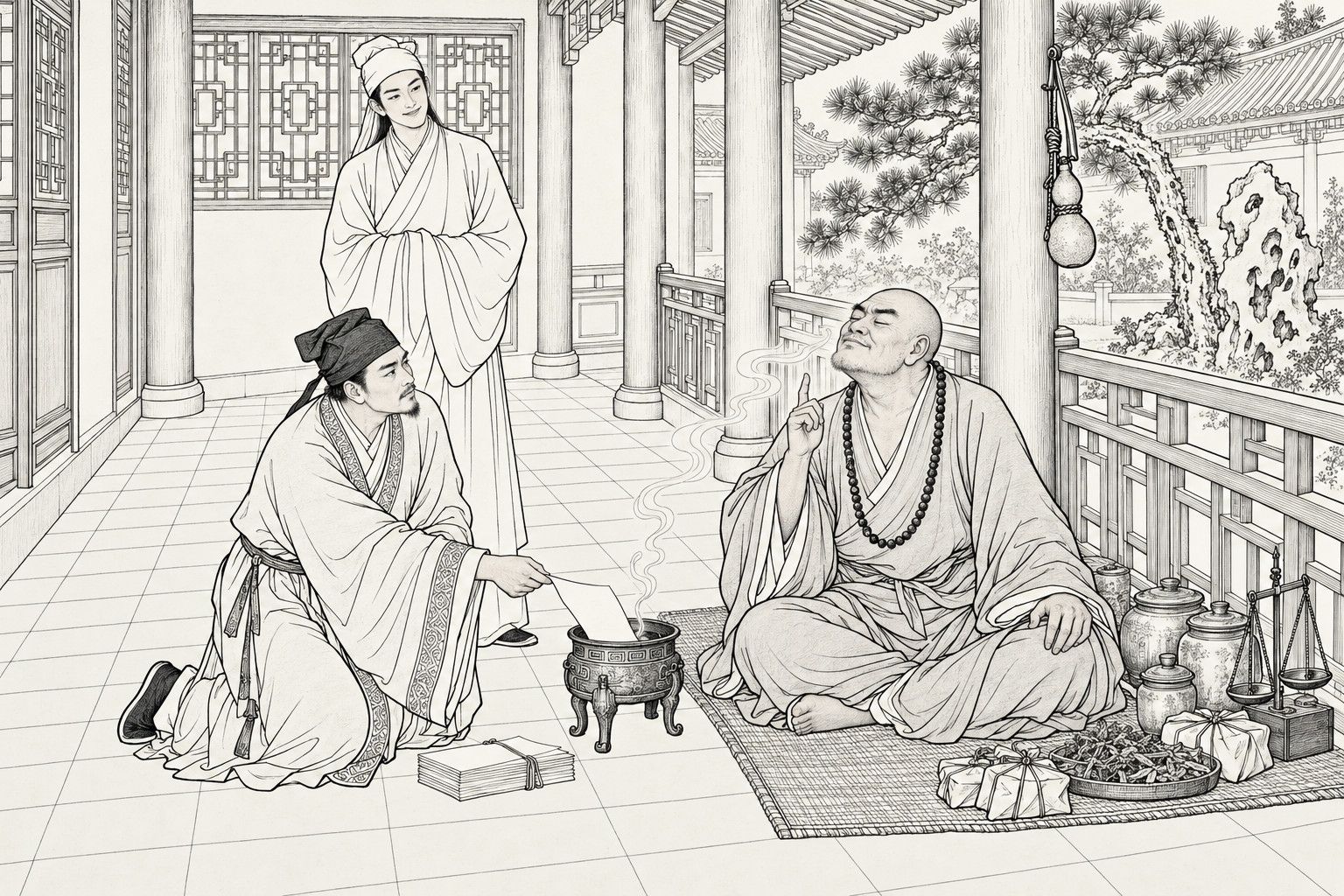
平陽王平子,赴試北闈,賃居報國寺。寺中有餘杭生先在,王以比屋居,投刺焉。生不之答。朝夕遇之,多無狀。王怒其狂悖,交往遂絕。一日,有少年遊寺中,白服裙帽,望之傀然。近與接談,言語諧妙。心愛敬之。展問邦族,云:「登州宋姓。」因命蒼頭設座,相對噱談。餘杭生適過,共起遜坐。生居然上座,更不撝挹。卒然問宋:「爾亦入闈者耶?」答曰:「非也。駑駘之才,無志騰驤久矣。」又問:「何省?」宋告之。生曰:「竟不進取,足知高明。山左、右並無一字通者。」宋曰:「北人固少通者,而不通者未必是小生;南人固多通者,然通者亦未必是足下。」言已,鼓掌;王和之,因而鬨堂。生慚忿,軒眉攘腕而大言曰:「敢當前命題,一校文藝乎?」宋他顧而哂曰:「有何不敢!」便趨寓所,出經授王。王隨手一翻,指曰:「『闕黨童子將命。』」生起,求筆札。宋曳之曰:「口占可也。我破已成:『於賓客往來之地,而見一無所知之人焉。』」王捧腹大笑。生怒曰:「全不能文,徒事嫚罵,何以為人!」王力為排難,請另命佳題。又翻曰:「『殷有三仁焉。』」宋立應曰:「三子者不同道,其趨一也。夫一者何也?曰:仁也。君子亦仁而已矣,何必同?」生遂不作,起曰:「其為人也小有才。」遂去。王以此益重宋。邀入寓室,款言移晷,盡出所作質宋。宋流覽絕疾,踰刻已盡百首。曰:「君亦沉深於此道者;然命筆時,無求必得之念,而尚有冀倖得之心,即此,已落下乘。」遂取閱過者一一詮說。王大悅,師事之。使庖人以蔗糖作水角。宋啗而甘之,曰:「生平未解此味,煩異日更一作也。」由此相得甚懽。宋三五日輒一至,王必為之設水角焉。餘杭生時一遇之,雖不甚傾談,而傲睨之氣頓減。一日,以窗藝示宋。宋見諸友圈贊已濃,目一過,推置案頭,不作一語。生疑其未閱,復請之。答已覽竟。生又疑其不解。宋曰:「有何難解?但不佳耳!」生曰:「一覽丹黃,何知不佳?」宋便誦其文,如夙讀者,且誦且訾。生跼蹐汗流,不言而去。移時,宋去,生入,堅請王作。王拒之。生強搜得,見文多圈點,笑曰:「此大似水角子!」王故樸訥,靦然而已。次日,宋至,王具以告。宋怒曰:「我謂『南人不復反矣』,傖楚何敢乃爾!必當有以報之!」王力陳輕薄之戒以勸之,宋深感佩。既而場後,以文示宋,宋頗相許。偶與涉歷殿閣,見一瞽僧坐廊下,設藥賣醫。宋訝曰:「此奇人也!最能知文,不可不一請教。」因命歸寓取文。遇餘杭生,遂與俱來。王呼師而參之。僧疑其問醫者,便詰症候。王具白請教之意。僧笑曰:「是誰多口?無目何以論文?」王請以耳代目。僧曰:「三作兩千餘言,誰耐久聽!不如焚之,我視以鼻可也。」王從之。每焚一作,僧嗅而頷之曰:「君初法大家,雖未逼真,亦近似矣。我適受之以脾。」問:「可中否?」曰:「亦中得。」餘杭生未深信,先以古大家文燒試之。僧再嗅曰:「妙哉!此文我心受之矣,非歸、胡何解辦此!」生大駭,始焚己作。僧曰:「適領一藝,未窺全豹,何忽另易一人來也?」生託言:「朋友之作,止彼一首;此乃小生作也。」僧嗅其餘灰,咳逆數聲,曰:「勿再投矣!格格而不能下,強受之以鬲;再焚,則作惡矣。」生慚而退。數日榜放,生竟領薦;王下第。生與王走告僧。僧歎曰:「僕雖盲於目,而不盲於鼻;簾中人並鼻盲矣。」俄餘杭生至,意氣發舒,曰:「盲和尚,汝亦啖人水角耶?今竟何如?」僧曰:「我所論者文耳,不謀與君論命。君試尋諸試官之文,各取一首焚之,我便知孰為爾師。」生與王並搜之,止得八九人。生曰:「如有舛錯,以何為罰?」僧憤曰:「剜我盲瞳去!」生焚之,每一首,都言非是;至第六篇,忽向壁大嘔,下氣如雷。眾皆粲然。僧拭目向生曰:「此真汝師也!初不知而驟嗅之,刺於鼻,棘於腹,膀胱所不能容,直自下部出矣!」生大怒,去,曰:「明日自見,勿悔!勿悔!」越二三日,竟不至;視之,已移去矣。──乃知即某門生也。宋慰王曰:「凡吾輩讀書人,不當尤人,但當克己:不尤人則德益弘,能克己則學益進。當前踧落,固是數之不偶;平心而論,文亦未便登峰,其由此砥礪,天下自有不盲之人。」王肅然起敬。又聞次年再行鄉試,遂不歸,止而受教。宋曰:「都中薪桂米珠,勿憂資斧。舍後有窖鏹,可以發用。」即示之處。王謝曰:「昔竇、范貧而能廉,今某幸能自給,敢自污乎?」王一日醉眠,僕及庖人竊發之。王忽覺,聞舍後有聲;窺出,則金堆地上。情見事露,並相慴伏。方訶責間,見有金爵,類多鐫款,審視,皆大父字諱。──蓋王祖曾為南部郎,入都寓此,暴病而卒,金其所遺也。王乃喜,稱得金八百餘兩。明日告宋,且示之爵,欲與瓜分,固辭乃已。以百金往贈瞽僧,僧已去。積數月,敦習益苦。及試,宋曰:「此戰不捷,始真是命矣!」俄以犯規被黜。王尚無言;宋大哭,不能止。王反慰解之。宋曰:「僕為造物所忌,困頓至於終身,今又累及良友。其命也夫!其命也夫!」王曰:「萬事固有數在。如先生乃無志進取,非命也。」宋拭淚曰:「久欲有言,恐相驚怪。某非生人,乃飄泊之游魂也。少負才名,不得志於場屋。佯狂至都,冀得知我者,傳諸著作。甲申之年,竟罹於難,歲歲飄蓬。幸相知愛,故極力為『他山』之攻,生平未酬之願,實欲借良朋一快之耳。今文字之厄若此,誰復能漠然哉!」王亦感泣。問:「何淹滯?」曰:「去年上帝有命,委宣聖及閻羅王核查劫鬼,上者備諸曹任用,餘者即俾轉輪。賤名已錄,所未投到者,欲一見飛黃之快耳,今請別矣。」王問:「所考何職?」曰:「梓潼府中缺一司文郎,暫令聾僮署篆,文運所以顛倒。萬一倖得此秩,當使聖教昌明。」明日,忻忻而至,曰:「願遂矣!宣聖命作『性道論』,視之色喜,謂可司文。閻羅稽簿,欲以『口孽』見棄。宣聖爭之,乃得就。某伏謝已。又呼近案下,囑云:『今以憐才,拔充清要;宜洗心供職,勿蹈前愆。』此可知冥中重德行更甚於文學也。君必修行未至,但積善勿懈可耳。」王曰:「果爾,餘杭其德行何在?」曰:「此即不知。要冥司賞罰,皆無少爽。即前日瞽僧,亦一鬼也,是前朝名家。以生前拋棄字紙過多,罰作瞽。彼自欲醫人疾苦,以贖前愆,故託游廛肆耳。」王命置酒。宋曰:「無須;終歲之擾,盡此一刻,再為我設水角足矣。」王悲愴不食。坐令自噉,頃刻,已過三盛。捧腹曰:「此餐可飽三日,吾以志君德耳。向所食,都在舍後,已成菌矣。藏作藥餌,可益兒慧。」王問後會,曰:「既有官責,當引嫌也。」又問:「梓潼祠中,一相酹祝,可能達否?」曰:「此都無益。九天甚遠,但潔身力行,自有地司牒報,則某必與知之。」言已,作別而沒。王視舍後,果生紫菌,采而藏之。旁有新土墳起,則水角宛然在焉。王歸,彌自刻厲。一夜,夢宋輿蓋而至,曰:「君向以小忿,誤殺一婢,削去祿籍;今篤行已折除矣。然命薄不足任仕進也。」是年,捷於鄉;明年,春闈又捷。遂不復仕。生二子,其一絕鈍,啖以菌,遂大慧。後以故詣金陵,遇餘杭生於旅次,極道契闊,深自降抑,然鬢毛斑矣。
平阳王平子,赴试北闱,赁居报国寺。寺中有余杭生先在,王以比屋居,投刺焉。生不之答。朝夕遇之,多无状。王怒其狂悖,交往遂绝。一日,有少年游寺中,白服裙帽,望之傀然。近与接谈,言语谐妙。心爱敬之。展问邦族,云:「登州宋姓。」因命苍头设座,相对噱谈。余杭生适过,共起逊坐。生居然上座,更不㧑挹。卒然问宋:「尔亦入闱者耶?」答曰:「非也。驽骀之才,无志腾骧久矣。」又问:「何省?」宋告之。生曰:「竟不进取,足知高明。山左、右并无一字通者。」宋曰:「北人固少通者,而不通者未必是小生;南人固多通者,然通者亦未必是足下。」言已,鼓掌;王和之,因而哄堂。生惭忿,轩眉攘腕而大言曰:「敢当前命题,一校文艺乎?」宋他顾而哂曰:「有何不敢!」便趋寓所,出经授王。王随手一翻,指曰:「『阙党童子将命。』」生起,求笔札。宋曳之曰:「口占可也。我破已成:『于宾客往来之地,而见一无所知之人焉。』」王捧腹大笑。生怒曰:「全不能文,徒事嫚骂,何以为人!」王力为排难,请另命佳题。又翻曰:「『殷有三仁焉。』」宋立应曰:「三子者不同道,其趋一也。夫一者何也?曰:仁也。君子亦仁而已矣,何必同?」生遂不作,起曰:「其为人也小有才。」遂去。王以此益重宋。邀入寓室,款言移晷,尽出所作质宋。宋流览绝疾,逾刻已尽百首。曰:「君亦沉深于此道者;然命笔时,无求必得之念,而尚有冀幸得之心,即此,已落下乘。」遂取阅过者一一诠说。王大悦,师事之。使庖人以蔗糖作水角。宋啗而甘之,曰:「生平未解此味,烦异日更一作也。」由此相得甚懽。宋三五日辄一至,王必为之设水角焉。余杭生时一遇之,虽不甚倾谈,而傲睨之气顿减。一日,以窗艺示宋。宋见诸友圈赞已浓,目一过,推置案头,不作一语。生疑其未阅,复请之。答已览竟。生又疑其不解。宋曰:「有何难解?但不佳耳!」生曰:「一览丹黄,何知不佳?」宋便诵其文,如夙读者,且诵且訾。生跼蹐汗流,不言而去。移时,宋去,生入,坚请王作。王拒之。生强搜得,见文多圈点,笑曰:「此大似水角子!」王故朴讷,腼然而已。次日,宋至,王具以告。宋怒曰:「我谓『南人不复反矣』,伧楚何敢乃尔!必当有以报之!」王力陈轻薄之戒以劝之,宋深感佩。既而场后,以文示宋,宋颇相许。偶与涉历殿阁,见一瞽僧坐廊下,设药卖医。宋讶曰:「此奇人也!最能知文,不可不一请教。」因命归寓取文。遇余杭生,遂与俱来。王呼师而参之。僧疑其问医者,便诘症候。王具白请教之意。僧笑曰:「是谁多口?无目何以论文?」王请以耳代目。僧曰:「三作两千余言,谁耐久听!不如焚之,我视以鼻可也。」王从之。每焚一作,僧嗅而颔之曰:「君初法大家,虽未逼真,亦近似矣。我适受之以脾。」问:「可中否?」曰:「亦中得。」余杭生未深信,先以古大家文烧试之。僧再嗅曰:「妙哉!此文我心受之矣,非归、胡何解办此!」生大骇,始焚己作。僧曰:「适领一艺,未窥全豹,何忽另易一人来也?」生托言:「朋友之作,止彼一首;此乃小生作也。」僧嗅其余灰,咳逆数声,曰:「勿再投矣!格格而不能下,强受之以鬲;再焚,则作恶矣。」生惭而退。数日榜放,生竟领荐;王下第。生与王走告僧。僧叹曰:「仆虽盲于目,而不盲于鼻;帘中人并鼻盲矣。」俄余杭生至,意气发舒,曰:「盲和尚,汝亦啖人水角耶?今竟何如?」僧曰:「我所论者文耳,不谋与君论命。君试寻诸试官之文,各取一首焚之,我便知孰为尔师。」生与王并搜之,止得八九人。生曰:「如有舛错,以何为罚?」僧愤曰:「剜我盲瞳去!」生焚之,每一首,都言非是;至第六篇,忽向壁大呕,下气如雷。众皆粲然。僧拭目向生曰:「此真汝师也!初不知而骤嗅之,刺于鼻,棘于腹,膀胱所不能容,直自下部出矣!」生大怒,去,曰:「明日自见,勿悔!勿悔!」越二三日,竟不至;视之,已移去矣。──乃知即某门生也。宋慰王曰:「凡吾辈读书人,不当尤人,但当克己:不尤人则德益弘,能克己则学益进。当前踧落,固是数之不偶;平心而论,文亦未便登峰,其由此砥砺,天下自有不盲之人。」王肃然起敬。又闻次年再行乡试,遂不归,止而受教。宋曰:「都中薪桂米珠,勿忧资斧。舍后有窖镪,可以发用。」即示之处。王谢曰:「昔窦、范贫而能廉,今某幸能自给,敢自污乎?」王一日醉眠,仆及庖人窃发之。王忽觉,闻舍后有声;窥出,则金堆地上。情见事露,并相慴伏。方诃责间,见有金爵,类多镌款,审视,皆大父字讳。──盖王祖曾为南部郎,入都寓此,暴病而卒,金其所遗也。王乃喜,称得金八百余两。明日告宋,且示之爵,欲与瓜分,固辞乃已。以百金往赠瞽僧,僧已去。积数月,敦习益苦。及试,宋曰:「此战不捷,始真是命矣!」俄以犯规被黜。王尚无言;宋大哭,不能止。王反慰解之。宋曰:「仆为造物所忌,困顿至于终身,今又累及良友。其命也夫!其命也夫!」王曰:「万事固有数在。如先生乃无志进取,非命也。」宋拭泪曰:「久欲有言,恐相惊怪。某非生人,乃飘泊之游魂也。少负才名,不得志于场屋。佯狂至都,冀得知我者,传诸著作。甲申之年,竟罹于难,岁岁飘蓬。幸相知爱,故极力为『他山』之攻,生平未酬之愿,实欲借良朋一快之耳。今文字之厄若此,谁复能漠然哉!」王亦感泣。问:「何淹滞?」曰:「去年上帝有命,委宣圣及阎罗王核查劫鬼,上者备诸曹任用,余者即俾转轮。贱名已录,所未投到者,欲一见飞黄之快耳,今请别矣。」王问:「所考何职?」曰:「梓潼府中缺一司文郎,暂令聋僮署篆,文运所以颠倒。万一幸得此秩,当使圣教昌明。」明日,忻忻而至,曰:「愿遂矣!宣圣命作『性道论』,视之色喜,谓可司文。阎罗稽簿,欲以『口孽』见弃。宣圣争之,乃得就。某伏谢已。又呼近案下,嘱云:『今以怜才,拔充清要;宜洗心供职,勿蹈前愆。』此可知冥中重德行更甚于文学也。君必修行未至,但积善勿懈可耳。」王曰:「果尔,余杭其德行何在?」曰:「此即不知。要冥司赏罚,皆无少爽。即前日瞽僧,亦一鬼也,是前朝名家。以生前抛弃字纸过多,罚作瞽。彼自欲医人疾苦,以赎前愆,故托游廛肆耳。」王命置酒。宋曰:「无须;终岁之扰,尽此一刻,再为我设水角足矣。」王悲怆不食。坐令自噉,顷刻,已过三盛。捧腹曰:「此餐可饱三日,吾以志君德耳。向所食,都在舍后,已成菌矣。藏作药饵,可益儿慧。」王问后会,曰:「既有官责,当引嫌也。」又问:「梓潼祠中,一相酹祝,可能达否?」曰:「此都无益。九天甚远,但洁身力行,自有地司牒报,则某必与知之。」言已,作别而没。王视舍后,果生紫菌,采而藏之。旁有新土坟起,则水角宛然在焉。王归,弥自刻厉。一夜,梦宋舆盖而至,曰:「君向以小忿,误杀一婢,削去禄籍;今笃行已折除矣。然命薄不足任仕进也。」是年,捷于乡;明年,春闱又捷。遂不复仕。生二子,其一绝钝,啖以菌,遂大慧。后以故诣金陵,遇余杭生于旅次,极道契阔,深自降抑,然鬓毛斑矣。
Wang Pingzi of Pingyang went to sit the provincial examination in the capital, and rented lodgings in the Baoguo Temple. A scholar from Yuhang was already staying there. Since they had neighbouring rooms, Wang sent in his card. The scholar did not return the call. When they met morning or evening, he was often rude. Wang was angered by his arrogance and had nothing more to do with him. One day a young man came wandering through the temple, dressed in white, in a skirt and cap — a striking figure. Wang went up and talked with him, and found his conversation witty and delightful. He took a liking to him and respected him. When Wang asked about his home and family, he said, “I am from Dengzhou; my name is Song.” Wang had his old servant set out seats, and they sat facing each other, laughing and talking. The scholar from Yuhang happened to pass by, and they both rose to offer him a seat. He took the place of honour as if it were his due, without the least show of modesty. Abruptly he asked Song, “Are you sitting the examination too?” “No,” Song answered. “I have the talents of a broken-down nag, and gave up all hope of galloping long ago.” “Which province?” the scholar asked. Song told him. “So you’re not trying for advancement at all,” said the scholar. “That shows good sense. East of the mountains or west, there isn’t one man who can write a sentence that makes sense.” “It’s true that few northerners can write sense,” said Song, “but the one who can’t may not be me. And it’s true that many southerners can, but the one who can may not be you.” With that he clapped his hands; Wang joined in, and the whole room roared with laughter. The scholar, ashamed and furious, raised his eyebrows, pushed up his sleeves and said loudly, “Do you dare to set a topic here and now, and compete in composition?” Song looked away and smiled scornfully. “Why should I not dare?” He hurried to Wang’s rooms, took out a book of the Classics and handed it to Wang. Wang opened it at random and pointed: “‘A boy from the village of Que carried messages.’” The scholar rose and asked for brush and paper. Song held him back. “Just say it aloud. I already have my opening: ‘In a place where guests come and go, one sees a person who knows nothing at all.’” Wang held his belly with laughter. “You can’t write at all,” the scholar said angrily. “All you can do is hurl insults. What kind of a man are you?” Wang did his best to make peace, and asked to set another, better topic. He opened the book again: “‘The Yin had three men of humaneness.’” Song answered at once: “The three gentlemen did not walk the same way, but they were heading for one thing. And what is that one thing? It is humaneness. A gentleman need only be humane; why must they be the same?” At that the scholar composed nothing. He rose, said, “‘He is a man of small talent,’” and went off. After this Wang thought all the more of Song. He invited him into his rooms, and they talked earnestly for a long time; Wang brought out everything he had written for Song to judge. Song read through them at great speed; in little more than a quarter of an hour he had gone through a hundred pieces. “You too have gone deep into this art,” he said. “But when you take up your brush, you have no resolve that says ‘I must win’ — only a hope that you may win by luck. That alone puts you in the lower ranks.” Then he took the pieces he had read and explained each one in turn. Wang was overjoyed, and treated him as his teacher. He had his cook make boiled dumplings with cane sugar. Song ate them with relish. “I have never tasted anything like this in my life,” he said. “Please make them again another day.” From then on they got on famously. Every three or five days Song would come, and Wang always had dumplings made for him. When the scholar from Yuhang met Song now and then, he did not talk much with him, but his haughty air was much reduced. One day he showed Song his practice essays. Song saw that they were already thick with his friends’ circles and words of praise. He ran his eye over them once, pushed them aside on the table and said not a word. The scholar suspected he had not read them, and asked again. Song said he had read them all. Then the scholar suspected he had not understood them. “What is hard to understand?” said Song. “They are just not good!” “You glanced once at the red marks,” said the scholar. “How do you know they’re not good?” Song then recited the essay as though he had read it long ago, finding fault as he went. The scholar squirmed and sweated, and left without a word. After a while Song left, and the scholar came in and insisted on seeing Wang’s essays. Wang refused. The scholar searched them out by force, and seeing that they were covered with circles and dots, he laughed. “These look just like dumplings!” Wang was a plain, slow-spoken man, and could only blush. The next day, when Song came, Wang told him everything. Song was angry. “I thought ‘the southerner will not rebel again.’ How dare this southern boor do such a thing! I must pay him back!” Wang urged him earnestly against spiteful mockery, and Song was deeply moved and admired him for it. When the examination was over, Wang showed his essays to Song, who thought well of them. One day, as they were wandering together through the temple halls, they saw a blind monk sitting in a corridor, selling medicines and treating the sick. Song was surprised. “This is a remarkable man! No one knows writing better. You must ask his advice.” So he told Wang to go back to his rooms for his essays. Wang ran into the scholar from Yuhang, and they came back together. Wang called the monk “Master” and paid his respects. The monk thought he had come about some illness and asked about his symptoms. Wang explained that he wanted advice on his writing. The monk laughed. “Who has been talking? How can a man with no eyes judge writing?” Wang asked him to use his ears in place of his eyes. “Three essays, over two thousand words,” said the monk. “Who has the patience to listen to all that? Better burn them. I can look at them with my nose.” Wang did so. As each essay burned, the monk sniffed and nodded. “You have been modelling yourself on the great masters. You haven’t caught them yet, but you are close. I took that in with my spleen.” “Can I pass?” Wang asked. “You can pass.” The scholar from Yuhang did not quite believe it. To test the monk, he first burned an essay by one of the old great masters. The monk sniffed it twice. “Wonderful! This one I take in with my heart. Who but Gui or Hu could have written it?” The scholar was thunderstruck, and only then burned his own. “I had just taken in one piece,” said the monk, “but I haven’t seen the whole leopard yet. Why have you suddenly switched to someone else?” The scholar made an excuse. “That was a friend’s work; he only had the one. This one is mine.” The monk sniffed the rest of the ashes, coughed and choked several times. “Don’t burn any more! It sticks and won’t go down. I forced it as far as my diaphragm. Burn any more and I shall be sick.” The scholar withdrew in shame. Some days later the list was posted. The scholar from Yuhang had passed after all, and Wang had failed. Song and Wang hurried to tell the monk. The monk sighed. “I may be blind in my eyes, but I am not blind in my nose. The men behind the curtain are blind in their noses as well.” Presently the scholar from Yuhang arrived, in high spirits. “Blind monk, have you been eating people’s dumplings too? So how does it look now?” “What I judged was the writing,” said the monk. “I never meant to judge your fate. Go and find the writings of all the examiners, and burn one piece by each, and I shall tell you which one is your master.” The scholar and Wang searched for them together, but could only find those of eight or nine. “If you’re wrong,” said the scholar, “what’s the penalty?” “Gouge out my blind eyes!” said the monk indignantly. The scholar burned them. At each one the monk said it was not the man; but at the sixth piece he suddenly turned to the wall and vomited violently, and broke wind like thunder. Everyone burst out laughing. The monk wiped his eyes and turned to the scholar. “This truly is your master! I didn’t know, and took it in at one great sniff. It stung my nose, it pricked my belly, my bladder could not hold it, and it went straight out through my bottom!” The scholar flew into a rage and went off, saying, “Tomorrow you’ll see! Don’t be sorry! Don’t be sorry!” Two or three days passed and he never came; when they looked, he had moved out. Then they learned he was that very examiner’s student. Song comforted Wang. “We who study books should not blame others, but master ourselves. If you do not blame others, your virtue grows; if you can master yourself, your learning advances. This setback is of course bad luck; but to be fair, your writing has not quite reached the summit either. Keep sharpening yourself from here on: there are men in the world who are not blind.” Wang rose in respect. He heard that another provincial examination would be held the following year, so he did not go home, but stayed on to be taught. “In the capital firewood costs as much as cassia and rice as much as pearls,” said Song, “but don’t worry about money. Behind your rooms there is silver buried in a pit, which you can dig up and use.” And he showed him the spot. Wang declined. “In the old days Dou and Fan were poor, yet kept their hands clean. I am lucky enough to be able to support myself. How dare I soil them?” One day, when Wang was sleeping off his wine, his servant and the cook dug it up in secret. Wang woke suddenly and heard noises behind the house. He peeped out: there was gold heaped on the ground. Caught in the act, they both cowered before him. While he was scolding them, he noticed some gold wine cups, many of them engraved with inscriptions. Looking closely, he saw that they all bore his grandfather’s name. — It turned out that Wang’s grandfather had been a secretary in one of the Nanjing ministries; he had come to the capital and lodged here, and died of a sudden illness, and the gold was what he had left. Now Wang was glad, and weighed out more than eight hundred taels. The next day he told Song, showed him the cups and wanted to share it with him; only Song’s firm refusal stopped him. He took a hundred taels to give to the blind monk, but the monk was gone. For several months Wang studied harder than ever. When the examination came, Song said, “If you don’t win this battle, then truly it is fate.” Before long Wang was struck off for breaking the rules. Wang himself said nothing; but Song wept aloud and could not stop, and it was Wang who had to comfort him. “The Creator has it in for me,” said Song. “I was kept down all my life, and now I have dragged my good friend down too. It is fate! It is fate!” “All things have their fixed lot,” said Wang. “But you, sir, have no wish to advance yourself; it is not fate.” Song wiped away his tears. “I have long wanted to tell you something, but was afraid of startling you. I am not a living man. I am a wandering ghost. In my youth I had a name for talent, but I never got anywhere in the examination halls. I came to the capital feigning madness, hoping to find someone who understood me and to pass my writing on through him. In the jiashen year I died in the calamity, and year after year since I have drifted like tumbleweed. Luckily I found your friendship, and so I did all I could to be the stone from another hill that polishes your jade. The wish I never fulfilled in my own life I truly hoped to see fulfilled through a good friend, for the joy of it. Now that your writing has met such a disaster, who could take it calmly?” Wang too was moved to tears. “Why have you lingered here?” he asked. “Last year the Lord on High issued a command charging the Sage Proclaimer and King Yama to examine the ghosts of the calamity. The best were to be held ready for appointment in the various bureaus, and the rest were to be sent on to the wheel of rebirth. My humble name is already on the list. I have not yet reported because I wanted to enjoy seeing you soar. Now I must say goodbye.” “What post are you being examined for?” Wang asked. “In the court of Zitong there is a vacancy for an Officer of Letters. For the time being a deaf boy has been told to hold the seal, and that is why the fortunes of letters are turned upside down. If I am lucky enough to get the post, I shall make the Sage’s teaching shine bright.” The next day he came, beaming. “My wish has come true! The Sage Proclaimer had me write ‘An Essay on Nature and the Way.’ When he read it his face lit up, and he said I could take charge of letters. King Yama checked the register and wanted to reject me for ‘sins of the tongue,’ but the Sage Proclaimer argued for me, and so I got it. I bowed my thanks. Then he called me up close to his desk and charged me: ‘Now, out of pity for your talent, you are raised to a pure and important office. Cleanse your heart and serve faithfully; do not repeat your past faults.’ From this you can see that the world below values virtue even more than learning. Your own cultivation must still fall short. Only go on doing good, and do not slacken.” “If that is so,” said Wang, “where is the virtue of the man from Yuhang?” “That I don’t know. But the rewards and punishments of the court below are never the least bit off. Even the blind monk the other day was a ghost too, a famous writer of the last dynasty. Because he threw away too much paper with writing on it while he was alive, he was punished with blindness. He wanted to cure people’s sufferings to atone for his past faults, and so he was wandering the markets.” Wang ordered wine. “No need,” said Song. “A whole year of troubling you ends with this moment. Just make me dumplings once more; that is enough.” Wang was too grief-stricken to eat, and sat while Song ate alone. In no time he had finished three bowls. Patting his belly, he said, “This meal will keep me full for three days. I eat it to remember your kindness. Everything I ate before is behind your house, and has turned into mushrooms. Keep them and use them as medicine: they will make a child clever.” Wang asked when they would meet again. “Now that I hold office, I must keep clear of any suspicion of favour.” “If I pour a libation and pray at the Zitong shrine, will it reach you?” “That will do no good at all. The Nine Heavens are very far away. Only keep yourself clean and work hard at doing right, and the officers of the earth will report it in their dispatches. Then I am sure to know.” With that he said goodbye and vanished. Wang looked behind the house: purple mushrooms had indeed sprung up there. He gathered them and stored them away. Beside them was a mound of fresh earth, and there were the dumplings, just as they had been. Wang went home and drove himself harder than ever. One night he dreamed that Song came in a canopied carriage and said, “Some time ago, in a moment of petty anger, you killed a maid by mistake, and you were struck off the register of office. Now your earnest conduct has cancelled that out. But your fate is too thin to bear an official career.” That year Wang passed the provincial examination, and the next year he passed the spring examination in the capital as well. But he never took office. He had two sons. One was extremely slow; he was fed the mushrooms, and became very clever. Later, going to Jinling on some business, Wang met the scholar from Yuhang at an inn. The scholar talked at length of all the years apart, very humble and self-effacing — but his temples had turned grey.