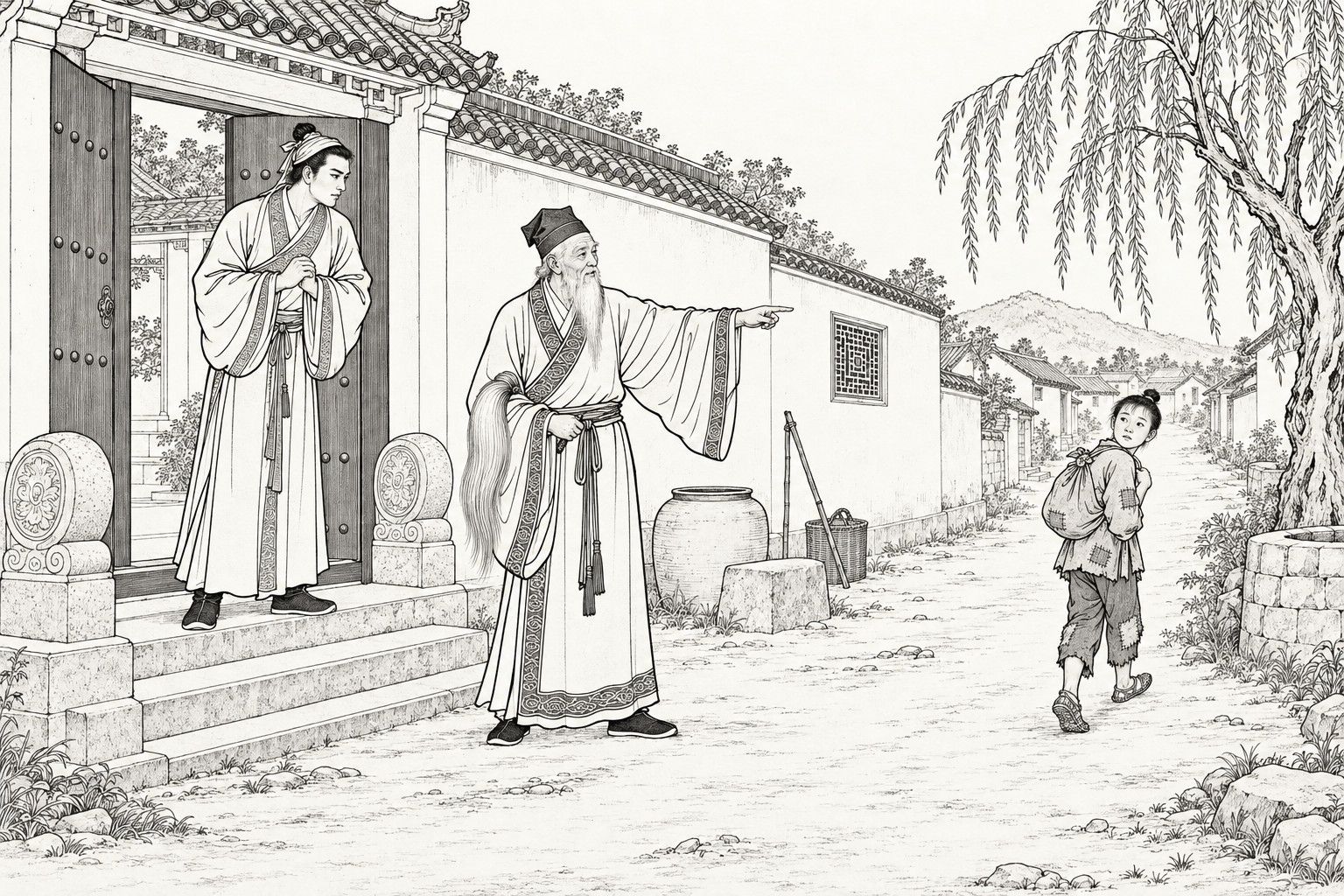
崔猛,字勿猛,建昌世家子。性剛毅,幼在塾中,諸童稍有所犯,輒奮拳毆擊,師屢戒不悛;名、字,皆先生所賜也。至十六七,強武絕倫。又能持長竿躍登夏屋。喜雪不平,以是鄉人共服之,求訴稟白者盈階滿室。崔抑強扶弱,不避怨嫌;稍逆之,石杖交加,支體為殘。每盛怒,無敢勸者。惟事母孝,母至則解。母譴責備至,崔唯唯聽命,出門輒忘。比鄰有悍婦,日虐其姑。姑餓瀕死,子竊啖之;婦知,詬厲萬端,聲聞四院。崔怒,逾垣而過,鼻耳脣舌盡割之,立斃。母聞大駭,呼鄰子,極意溫卹,配以少婢,事乃寢。母憤泣不食。崔懼,跪請受杖,且告以悔。母泣不顧。崔妻周,亦與並跪。母乃杖子,而又針刺其臂,作十字紋,朱塗之,俾勿滅。崔並受之,母乃食。母喜飯僧道,往往饜飽之。適一道士在門,崔過之。道士目之曰:「郎君多凶橫之氣,恐難保其令終。積善之家,不宜有此。」崔新受母戒,聞之,起敬曰:「某亦自知;但一見不平,苦不自禁。力改之,或可免否?」道士笑曰:「姑勿問可免不可免,請先自問能改不能改。但當痛自抑;如有萬分之一,我告君以解死之術。」崔生平不信厭禳,笑而不言。道士曰:「我固知君不信。但我所言,不類巫覡,行之亦盛德;即或不效,亦無妨礙。」崔請教,乃曰:「適門外一後生,宜厚結之,即犯死罪,彼亦能活之也。」呼崔出,指示其人。蓋趙氏兒,名僧哥。趙,南昌人,以歲祲饑,僑寓建昌。崔由是深相結,請趙館於其家,供給優厚。僧哥年十二,登堂拜母,約為弟昆。踰歲東作,趙攜家去,音問遂絕。崔母自鄰婦死,戒子益切,有赴訴者,輒擯斥之。一日,崔母弟卒,從母往弔。途遇數人,縶一男子,呵罵促步,加以捶扑。觀者塞途,輿不得進。崔問之。識崔者競相擁告。先是,有巨紳子某甲者,豪橫一鄉,窺李申妻有色,欲奪之,道無由。因命家人誘與博賭,貸以貲而重其息,要使署妻於券,貲盡復給。終夜,負債數千;積半年,計子母三十餘千。申不能償,強以多人篡取其妻。申哭諸其門。某怒,拉繫樹上,榜笞刺剟,逼立「無悔狀」。崔聞之,氣涌如山,鞭馬前向,意將用武。母搴簾而呼曰:「唶!又欲爾耶!」崔乃止。既弔而歸,不語亦不食,兀坐直視,若有所嗔。妻詰之,不答。至夜,和衣臥榻上,輾轉達旦,次夜復然。忽啟戶出,輒又還臥。如此三四,妻不敢詰,惟慴息以聽之。既而遲久乃反,掩扉熟寢矣。是夜,有人殺某甲於床上,刳腹流腸;申妻亦裸尸床下。官疑申,捕治之。橫被殘梏,踝骨皆見,卒無詞。積年餘,不堪刑,誣服,論辟。會崔母死,既殯,告妻曰:「殺甲者,實我也,徒以有老母故,不敢泄。今大事已了,奈何以一身之罪殃他人?我將赴有司死耳!」妻驚挽之,絕裾而去,自首於庭。官愕然,械送獄,釋申。申不可,堅以自承。官不能決,兩收之。戚屬皆誚讓申。申曰:「公子所為,是我欲為而不能者也。彼代我為之,而忍坐視其死乎?今日即謂公子未出也可。」執不異詞,固與崔爭。久之,衙門皆知其故,強出之,以崔抵罪,瀕就決矣。會卹刑官趙部郎,案臨閱囚,至崔名,屏人而喚之。崔入,仰視堂上,僧哥也。悲喜實訴。趙徘徊良久,仍令下獄,囑獄卒善視之。尋以自首減等,充雲南軍,申為服役而去;未期年,援赦而歸:皆趙力也。既歸,申終從不去,代為紀理生業。予之貲,不受。緣橦技擊之術,頗以關懷。崔厚遇之,買婦授田焉。崔由此力改前行,每撫臂上刺痕,泫然流涕。以故鄉鄰有事,申輒矯命排解,不相稟白。有王監生者,家豪富,四方無賴不仁之輩,出入其門。邑中殷實者,多被劫掠;或迕之,輒遣盜殺諸途。子亦淫暴。王有寡嬸,父子俱烝之。妻仇氏,屢沮王,王縊殺之。仇兄弟質諸官,王賕囑,以告者坐誣。兄弟冤憤莫伸,詣崔求訴。申絕之使去。過數日,客至,適無僕,使申瀹茗。申默然出,告人曰:「我與崔猛朋友耳,從徙萬里,不可謂不至矣;曾無廩給,而役同廝養,所不甘也!」遂忿而去。或以告崔。崔訝其改節,而亦未之奇也。申忽訟於官,謂崔三年不給傭值。崔大異之,親與對狀,申忿相爭。官不直之,責逐而去。又數日,申忽夜入王家,將其父子嬸婦並殺之,黏紙於壁,自書姓名;及追捕之,則亡命無蹟。王家疑崔主使,官不信。崔始悟前此之訟,蓋恐殺人之累己也。關行附近州邑,追捕甚急。會闖賊犯順,其事遂寢。及明鼎革,申攜家歸,仍與崔善如初。時土寇嘯聚,王有從子得仁,集叔所招無賴,據山為盜,焚掠村疃。一夜,傾巢而至,以報仇為名。崔適他出;申破扉始覺,越牆伏暗中。賊搜崔、李不得,擄崔妻,括財物而去。申歸,止有一僕,忿極,乃斷繩數十段,以短者付僕,長者自懷之。囑僕越賊巢,登半山,以火爇繩,散挂荊棘,即反勿顧。僕應而去。申窺賊皆腰束紅帶,帽繫紅絹,遂傚其裝。有老牝馬初生駒,賊棄諸門外。申乃縛駒跨馬,銜枚而出,直至賊穴。賊據一大村,申縶馬村外,踰垣入。見賊眾紛紜,操戈未釋。申竊問諸賊,知崔妻在王某所。俄聞傳令,俾各休息,轟然噭應。忽一人報東山有火,眾賊共望之;初猶一二點,既而多類星宿。申坌息急呼東山有警。王大驚,束裝率眾而出。申乘間漏出其右,反身入內。見兩賊守帳,紿之曰:「王將軍遺佩刀。」兩賊競覓。申自後斫之,一賊踣;其一回顧,申又斬之。竟負崔妻越垣而出。解馬授轡,曰:「娘子不知途,縱馬可也。」馬戀駒奔駛,申從之。出一隘口,申灼火於繩,遍懸之,乃歸。次日,崔還,以為大辱,形神跳躁,欲單騎往平賊。申諫止之。集村人共謀,眾恇怯莫敢應。解諭再四,得敢往二十餘人,又苦無兵。適於得仁族姓家獲奸細二,崔欲殺之,申不可;命二十人各持白梃,具列於前,乃割其耳而縱之。眾怨曰:「此等兵旅,方懼賊知,而反示之。脫其傾隊而來,闔村不保矣!」申曰:「吾正欲其來也。」執匿盜者誅之。遣人四出,各假弓矢火銃,又詣邑借巨砲二。日暮,率壯士至隘口,置砲當其衝,使二人匿火而伏,囑見賊乃發。又至谷東口,伐樹置崖上。已而與崔各率十餘人,分岸伏之。一更向盡,遙聞馬嘶,賊果大至,繈屬不絕。俟盡入谷,乃推墮樹木,斷其歸路。俄而砲發,喧騰號叫之聲,震動山谷。賊驟退,自相踐踏;至東口,不得出,集無隙地。兩岸銃矢夾攻,勢如風雨,斷頭折足者,枕藉溝中。遺二十餘人,長跪乞命。乃遣人縶送以歸。乘勝直抵其巢。守巢者聞風奔竄,搜其輜重而還。崔大喜,問其設火之謀。曰:「設火於東,恐其西追也;短,欲其速盡,恐偵知其無人也;既而設於谷口,口甚隘,一夫可以斷之,彼即追來,見火必懼:皆一時犯險之下策也。」取賊鞫之,果追入谷,見火驚退。二十余賊,盡劓刖而放之。由此威聲大震,遠近避亂者從之如市,得土團三百余人。各處強寇無敢犯,一方賴之以安。
崔猛,字勿猛,建昌世家子。性刚毅,幼在塾中,诸童稍有所犯,辄奋拳殴击,师屡戒不悛;名、字,皆先生所赐也。至十六七,强武绝伦。又能持长竿跃登夏屋。喜雪不平,以是乡人共服之,求诉禀白者盈阶满室。崔抑强扶弱,不避怨嫌;稍逆之,石杖交加,支体为残。每盛怒,无敢劝者。惟事母孝,母至则解。母谴责备至,崔唯唯听命,出门辄忘。比邻有悍妇,日虐其姑。姑饿濒死,子窃啖之;妇知,诟厉万端,声闻四院。崔怒,逾垣而过,鼻耳唇舌尽割之,立毙。母闻大骇,呼邻子,极意温恤,配以少婢,事乃寝。母愤泣不食。崔惧,跪请受杖,且告以悔。母泣不顾。崔妻周,亦与并跪。母乃杖子,而又针刺其臂,作十字纹,朱涂之,俾勿灭。崔并受之,母乃食。母喜饭僧道,往往餍饱之。适一道士在门,崔过之。道士目之曰:「郎君多凶横之气,恐难保其令终。积善之家,不宜有此。」崔新受母戒,闻之,起敬曰:「某亦自知;但一见不平,苦不自禁。力改之,或可免否?」道士笑曰:「姑勿问可免不可免,请先自问能改不能改。但当痛自抑;如有万分之一,我告君以解死之术。」崔生平不信厌禳,笑而不言。道士曰:「我固知君不信。但我所言,不类巫觋,行之亦盛德;即或不效,亦无妨碍。」崔请教,乃曰:「适门外一后生,宜厚结之,即犯死罪,彼亦能活之也。」呼崔出,指示其人。盖赵氏儿,名僧哥。赵,南昌人,以岁祲饥,侨寓建昌。崔由是深相结,请赵馆于其家,供给优厚。僧哥年十二,登堂拜母,约为弟昆。逾岁东作,赵携家去,音问遂绝。崔母自邻妇死,戒子益切,有赴诉者,辄摈斥之。一日,崔母弟卒,从母往吊。途遇数人,絷一男子,呵骂促步,加以捶扑。观者塞途,舆不得进。崔问之。识崔者竞相拥告。先是,有巨绅子某甲者,豪横一乡,窥李申妻有色,欲夺之,道无由。因命家人诱与博赌,贷以赀而重其息,要使署妻于券,赀尽复给。终夜,负债数千;积半年,计子母三十余千。申不能偿,强以多人篡取其妻。申哭诸其门。某怒,拉系树上,榜笞刺剟,逼立「无悔状」。崔闻之,气涌如山,鞭马前向,意将用武。母搴帘而呼曰:「唶!又欲尔耶!」崔乃止。既吊而归,不语亦不食,兀坐直视,若有所嗔。妻诘之,不答。至夜,和衣卧榻上,辗转达旦,次夜复然。忽启户出,辄又还卧。如此三四,妻不敢诘,惟慴息以听之。既而迟久乃反,掩扉熟寝矣。是夜,有人杀某甲于床上,刳腹流肠;申妻亦裸尸床下。官疑申,捕治之。横被残梏,踝骨皆见,卒无词。积年余,不堪刑,诬服,论辟。会崔母死,既殡,告妻曰:「杀甲者,实我也,徒以有老母故,不敢泄。今大事已了,奈何以一身之罪殃他人?我将赴有司死耳!」妻惊挽之,绝裾而去,自首于庭。官愕然,械送狱,释申。申不可,坚以自承。官不能决,两收之。戚属皆诮让申。申曰:「公子所为,是我欲为而不能者也。彼代我为之,而忍坐视其死乎?今日即谓公子未出也可。」执不异词,固与崔争。久之,衙门皆知其故,强出之,以崔抵罪,濒就决矣。会恤刑官赵部郎,案临阅囚,至崔名,屏人而唤之。崔入,仰视堂上,僧哥也。悲喜实诉。赵徘徊良久,仍令下狱,嘱狱卒善视之。寻以自首减等,充云南军,申为服役而去;未期年,援赦而归:皆赵力也。既归,申终从不去,代为纪理生业。予之赀,不受。缘橦技击之术,颇以关怀。崔厚遇之,买妇授田焉。崔由此力改前行,每抚臂上刺痕,泫然流涕。以故乡邻有事,申辄矫命排解,不相禀白。有王监生者,家豪富,四方无赖不仁之辈,出入其门。邑中殷实者,多被劫掠;或迕之,辄遣盗杀诸途。子亦淫暴。王有寡婶,父子俱烝之。妻仇氏,屡沮王,王缢杀之。仇兄弟质诸官,王赇嘱,以告者坐诬。兄弟冤愤莫伸,诣崔求诉。申绝之使去。过数日,客至,适无仆,使申瀹茗。申默然出,告人曰:「我与崔猛朋友耳,从徙万里,不可谓不至矣;曾无廪给,而役同厮养,所不甘也!」遂忿而去。或以告崔。崔讶其改节,而亦未之奇也。申忽讼于官,谓崔三年不给佣值。崔大异之,亲与对状,申忿相争。官不直之,责逐而去。又数日,申忽夜入王家,将其父子婶妇并杀之,黏纸于壁,自书姓名;及追捕之,则亡命无迹。王家疑崔主使,官不信。崔始悟前此之讼,盖恐杀人之累己也。关行附近州邑,追捕甚急。会闯贼犯顺,其事遂寝。及明鼎革,申携家归,仍与崔善如初。时土寇啸聚,王有从子得仁,集叔所招无赖,据山为盗,焚掠村疃。一夜,倾巢而至,以报仇为名。崔适他出;申破扉始觉,越墙伏暗中。贼搜崔、李不得,掳崔妻,括财物而去。申归,止有一仆,忿极,乃断绳数十段,以短者付仆,长者自怀之。嘱仆越贼巢,登半山,以火爇绳,散挂荆棘,即反勿顾。仆应而去。申窥贼皆腰束红带,帽系红绢,遂傚其装。有老牝马初生驹,贼弃诸门外。申乃缚驹跨马,衔枚而出,直至贼穴。贼据一大村,申絷马村外,逾垣入。见贼众纷纭,操戈未释。申窃问诸贼,知崔妻在王某所。俄闻传令,俾各休息,轰然噭应。忽一人报东山有火,众贼共望之;初犹一二点,既而多类星宿。申坌息急呼东山有警。王大惊,束装率众而出。申乘间漏出其右,反身入内。见两贼守帐,绐之曰:「王将军遗佩刀。」两贼竞觅。申自后斫之,一贼踣;其一回顾,申又斩之。竟负崔妻越垣而出。解马授辔,曰:「娘子不知途,纵马可也。」马恋驹奔驶,申从之。出一隘口,申灼火于绳,遍悬之,乃归。次日,崔还,以为大辱,形神跳躁,欲单骑往平贼。申谏止之。集村人共谋,众恇怯莫敢应。解谕再四,得敢往二十余人,又苦无兵。适于得仁族姓家获奸细二,崔欲杀之,申不可;命二十人各持白梃,具列于前,乃割其耳而纵之。众怨曰:「此等兵旅,方惧贼知,而反示之。脱其倾队而来,阖村不保矣!」申曰:「吾正欲其来也。」执匿盗者诛之。遣人四出,各假弓矢火铳,又诣邑借巨砲二。日暮,率壮士至隘口,置砲当其冲,使二人匿火而伏,嘱见贼乃发。又至谷东口,伐树置崖上。已而与崔各率十余人,分岸伏之。一更向尽,遥闻马嘶,贼果大至,繈属不绝。俟尽入谷,乃推堕树木,断其归路。俄而砲发,喧腾号叫之声,震动山谷。贼骤退,自相践踏;至东口,不得出,集无隙地。两岸铳矢夹攻,势如风雨,断头折足者,枕藉沟中。遗二十余人,长跪乞命。乃遣人絷送以归。乘胜直抵其巢。守巢者闻风奔窜,搜其辎重而还。崔大喜,问其设火之谋。曰:「设火于东,恐其西追也;短,欲其速尽,恐侦知其无人也;既而设于谷口,口甚隘,一夫可以断之,彼即追来,见火必惧:皆一时犯险之下策也。」取贼鞫之,果追入谷,见火惊退。二十余贼,尽劓刖而放之。由此威声大震,远近避乱者从之如市,得土团三百余人。各处强寇无敢犯,一方赖之以安。
Cui Meng, courtesy name Wumeng, was the son of an old family of Jianchang. He was hard and unbending by nature. As a boy at the village school, whenever another child gave him the slightest offence he would lay into him with his fists, and no amount of warnings from the teacher could cure him. Both his name and his courtesy name were given him by that teacher. By sixteen or seventeen he was strong and skilled at arms beyond compare. He could vault onto the roof of a great house with a long pole. He loved to right wrongs, and so the local people all looked up to him; those who came to lay their grievances before him filled his steps and crowded his rooms. Cui put down the strong and lifted up the weak, and did not care whose hatred he earned. Anyone who crossed him in the least was set upon with stones and staves until he was crippled. When he was in a rage no one dared reason with him. Only he was a devoted son to his mother, and when she came his anger melted. She would scold him up and down, and he would say yes, yes, and promise to obey, and forget it the moment he was out of the door. Next door lived a shrewish woman who abused her mother-in-law day after day. The old woman was starving to death, and her son slipped her something to eat. When the wife found out she cursed and railed in every way she knew, so loud that the whole neighbourhood heard. Cui was furious. He went over the wall and cut off her nose, her ears, her lips and her tongue. She died on the spot. His mother was horrified when she heard. She sent for the neighbour’s son, did everything she could to comfort and compensate him, and gave him a young maid of hers for a wife, and so the matter was dropped. But she wept in anger and would not eat. Cui was frightened. He knelt and asked her to beat him, and told her he was sorry. She wept and would not look at him. Cui’s wife, Mrs. Zhou, knelt beside him. At last his mother beat her son, and then pricked a cross into his arm with a needle and rubbed red into it, so that it would never fade. Cui submitted to it all, and only then did his mother eat. His mother liked to feed Buddhist monks and Daoists, and often filled them to bursting. One day a Daoist was at the gate as Cui went by. The Daoist looked him over. “There is a great deal of violence and fury about you, young sir,” he said. “I fear you will not come to a good end. A house that has stored up good deeds should not have this in it.” Cui had just been disciplined by his mother, and when he heard this he spoke with respect. “I know it myself. But whenever I see a wrong, I simply cannot hold myself back. If I try hard to change, might I escape it?” The Daoist smiled. “Never mind whether you can escape it. First ask yourself whether you can change. You must master yourself with all your might. If there is one chance in ten thousand, I will tell you a way out of death.” Cui had never in his life believed in charms and exorcisms. He smiled and said nothing. “I knew you would not believe,” said the Daoist. “But what I have to say is nothing like a sorcerer’s tricks. Doing it is a great virtue in itself, and even if it does no good, it will do no harm.” Cui asked him to go on. “There was a youngster outside the gate just now,” he said. “Make a close friend of him. Even if you commit a crime worth death, he can save your life.” He called Cui outside and pointed the boy out. It was a son of the Zhao family named Sengge. The Zhaos were from Nanchang; a bad harvest had brought famine there, and they were living as strangers in Jianchang. From then on Cui made the boy his close friend. He invited the Zhaos to lodge in his house and provided for them generously. Sengge, who was twelve, came into the hall and bowed to Cui’s mother, and the two pledged themselves brothers. The next year, when the spring ploughing came round, Zhao took his family away, and nothing more was heard of them. Ever since the neighbour woman’s death Cui’s mother had watched her son more strictly than ever, and anyone who came to him with a grievance she sent away. One day, when her younger brother died, Cui went with her to the mourning. On the way they met several men leading a man on a rope, shouting and cursing at him to hurry and beating him with sticks. The onlookers blocked the road, and her sedan chair could not get through. Cui asked what was going on, and those who knew him crowded round, each eager to tell him. It seemed that a certain Jia, the son of a great official family, who lorded it over the whole district, had had his eye on Li Shen’s wife, a pretty woman, and wanted her for himself, but had no way of getting her. So he had his servants lure Li into gambling. They lent him money at a heavy rate of interest, made him write his wife into the bond as security, and when the money was gone lent him more. In a single night he owed several thousand cash; in half a year, principal and interest came to more than thirty thousand. Li Shen could not pay, and Jia sent a crowd of men to carry off his wife by force. Li went and wept at his gate. Jia, enraged, had him dragged off and tied to a tree, flogged and stabbed and cut, to force him to sign a paper swearing he would never go back on the deal. When Cui heard this his anger rose up like a mountain. He whipped his horse forward, meaning to use force. His mother lifted the curtain of her chair and cried, “Ha! At it again, are you?” Cui stopped. After the mourning they went home. He neither spoke nor ate, but sat stock-still staring straight ahead, as if something angered him. His wife asked him what was wrong; he did not answer. That night he lay on the bed in his clothes and tossed and turned till dawn, and the next night the same. Suddenly he opened the door and went out, but came straight back and lay down again. This happened three or four times. His wife did not dare ask, but lay holding her breath and listening. Then he was gone a long while before he came back, closed the door, and slept soundly. That night someone killed Jia in his bed, slitting his belly so that his guts spilled out. Li Shen’s wife lay naked and dead beneath the bed. The magistrate suspected Li Shen and had him arrested and put to the question. He was cruelly tortured until the bones of his ankles showed, but he confessed nothing. After more than a year he could bear the torture no longer and confessed falsely, and was sentenced to death. Then Cui’s mother died. When she had been laid in her coffin, Cui told his wife, “It was I who killed Jia. I only kept quiet because my old mother was alive. Now that the great duty is done, how can I let another man suffer for my crime? I am going to give myself up and die.” His wife, aghast, clung to him; he tore his robe free and went, and confessed in the magistrate’s hall. The magistrate was astonished. He had Cui put in irons and sent to prison, and ordered Li released. Li would not have it, and insisted the crime was his. The magistrate could not decide, so he held them both. Li’s relatives all reproached him. Li said, “What the young master did is what I wanted to do and could not. He did it for me. How could I sit and watch him die? You may as well say today that he never came forward.” He kept to his story without wavering and went on disputing with Cui. In time everyone in the magistrate’s office knew the truth. They forced Li out and made Cui answer for the crime, and he was close to execution. Just then an official sent to review death sentences, a Board secretary named Zhao, came on circuit to examine the prisoners. When he reached Cui’s name, he sent everyone out and called Cui in. Cui came in and looked up at the bench: it was Sengge. Torn between grief and joy, he told him the whole truth. Zhao turned it over for a long time; then he sent Cui back to prison, but told the jailers to treat him well. Soon, because he had given himself up, his sentence was reduced by a degree and he was sent to serve as a soldier in Yunnan. Li went with him as his servant. Before a year was out an amnesty brought him home. All of this was Zhao’s doing. After they came back Li stayed with him for good and managed his affairs for him. When Cui offered him money he would not take it. He took a keen interest in pole-climbing and the fighting arts. Cui treated him generously, bought him a wife and gave him land. From then on Cui worked hard to change his old ways. Whenever he stroked the tattoo on his arm, the tears came. So when the neighbours had some trouble, Li would settle it himself in Cui’s name, without telling him. There was an Imperial Academy student named Wang, of a very rich and powerful family, whose gate saw scoundrels and ruffians from every quarter coming and going. Many well-to-do families in the county were robbed; anyone who crossed him, he sent bandits to kill on the road. His son was as lecherous and violent as he was. Wang had a widowed aunt, and father and son both slept with her. Wang’s wife, Mrs. Qiu, tried more than once to stop him, and he strangled her. Her brothers took him to court, but Wang bribed and pulled strings, and it was the accusers who were punished for false charges. With no way to right the wrong, the brothers came to Cui to lay their grievance before him. Li turned them away. A few days later a guest arrived, and as there happened to be no servant at hand, Cui told Li to make the tea. Li went out without a word, and told people, “Cui Meng and I are only friends. I followed him ten thousand li into exile; no one can say I did not do enough. He has never paid me a wage, yet he works me like a menial. I won’t stand for it!” And he went off in a temper. Someone told Cui. Cui was surprised he had changed so, but thought no more of it. Then out of the blue Li brought a suit against him, claiming Cui owed him three years’ wages. Cui was amazed. He went to face him in court himself, and Li argued with him angrily. The magistrate found against Li, had him punished and threw him out. A few days later Li got into Wang’s house by night and killed father, son and the widowed aunt alike. He pasted a paper on the wall with his own name written on it. When they went after him he had fled without a trace. The Wang family suspected Cui had put him up to it, but the magistrate did not believe it. Only then did Cui understand that the lawsuit had been meant to keep the killing from falling on him. Warrants went out to all the neighbouring prefectures and counties, and the hunt was hot. Then the rebel Chuang rose against the throne, and the matter was dropped. When the Ming fell and a new dynasty came in, Li brought his family home and was as close to Cui as before. In those days local bandits were gathering in bands everywhere. Wang had a nephew, Deren, who rounded up the ruffians his uncle had kept, seized a mountain and turned bandit, burning and plundering the villages. One night the whole band came down, saying they had come for revenge. Cui happened to be away. Li only woke when they broke down the door; he went over the wall and hid in the dark. The bandits searched for Cui and Li and, failing to find them, carried off Cui’s wife, swept up the valuables, and left. When Li came back there was only one servant left. In a fury, he cut a rope into several dozen pieces, gave the short ones to the servant and kept the long ones himself. He told the servant to go past the bandits’ lair, climb halfway up the mountain, light the ropes and hang them here and there on the thornbushes, then come straight back without looking round. The servant went. Li had noticed that the bandits all wore red sashes round their waists and red silk tied to their caps, so he dressed the same way. There was an old mare that had just foaled; the bandits had left her outside the gate. Li tied up the foal, mounted the mare, and rode out without a sound, straight to the bandits’ den. The bandits had taken over a large village. Li tied the mare outside it and climbed over a wall. The bandits were milling about in a great crowd, still under arms. Li quietly asked some of them, and learned that Cui’s wife was with Wang. Soon an order came down for everyone to rest, and they roared their answer. Suddenly someone reported fire on the eastern hill. The bandits all looked: at first only one or two points of light, then as many as the stars. Li, panting, shouted that there was an attack from the eastern hill. Wang, much alarmed, armed himself and led his men out. Li took his chance, slipped out on their right, and doubled back inside. Seeing two bandits guarding the tent, he told them, “General Wang has left his sword behind.” The two of them hunted for it. Li struck from behind and one fell; the other turned round, and Li cut him down too. Then he carried Cui’s wife on his back over the wall and away. He untied the mare and handed her the reins. “You don’t know the way, madam. Just give the horse her head.” The mare, longing for her foal, galloped off, and Li followed. Coming out through a narrow pass, Li lit his ropes and hung them all about, and then went home. The next day Cui came back. He took it as a great disgrace and was in such a fury he could not keep still; he wanted to ride out alone and wipe out the bandits. Li talked him out of it. They called the villagers together to make a plan, but they were all too frightened to answer. After Li had reasoned with them again and again, some twenty men were willing to go, but they had no weapons. Just then they caught two spies in the house of one of Deren’s clansmen. Cui wanted to kill them, but Li would not allow it. He had the twenty men line up before the spies, each holding a bare stick, then cut off the spies’ ears and let them go. The men grumbled: “With soldiers like these we should be afraid of the bandits finding out, and instead you show us to them! If the whole band comes down on us, the village is lost!” “I want them to come,” said Li. He seized the man who had hidden the spies and put him to death. He sent men out in every direction to borrow bows and arrows and muskets, and went to the county town to borrow two big cannon. At dusk he led the men to the pass, set the cannon squarely across the way, and had two men lie in hiding with the match concealed, telling them not to fire until they saw the bandits. Then he went to the eastern mouth of the valley, felled trees and set them on the cliff top. After that he and Cui each took ten or so men and lay in wait on either side. Toward the end of the first watch they heard horses neighing in the distance. Sure enough, the bandits came in force, in an unbroken line. When they were all in the valley, the trees were pushed down to cut off their way back. A moment later the cannon went off, and the uproar and howling shook the hills. The bandits fell back in a rush, trampling one another. At the eastern mouth they could not get out, and packed together until there was no room to move. Muskets and arrows poured in on them from both sides like wind and rain, and the ditch was heaped with men whose heads were cut off and legs broken. Twenty-odd were left, kneeling and begging for their lives. They were tied up and sent back under guard. Following up the victory, Cui and Li went straight on to the lair. Those guarding it fled at the news, and they gathered up the bandits’ stores and came back. Cui was delighted and asked Li what the fires had been for. “I set fires to the east so they would not chase us west. The ropes were short so they would burn out quickly, in case they sent scouts and found no one there. Then I set them at the mouth of the valley: the pass is so narrow one man can hold it, so if they did come after us, they would see the fires and be afraid. They were all poor makeshifts for a desperate moment.” They questioned the captured bandits: they had indeed chased as far as the valley, seen the fires, and turned back in alarm. The twenty-odd bandits all had their noses and feet cut off and were let go. After this their name was feared far and wide. People fleeing the disorders flocked to them from near and far, as to a market, and they raised a local militia of more than three hundred men. No bandits anywhere dared attack them, and the whole region owed its peace to them.