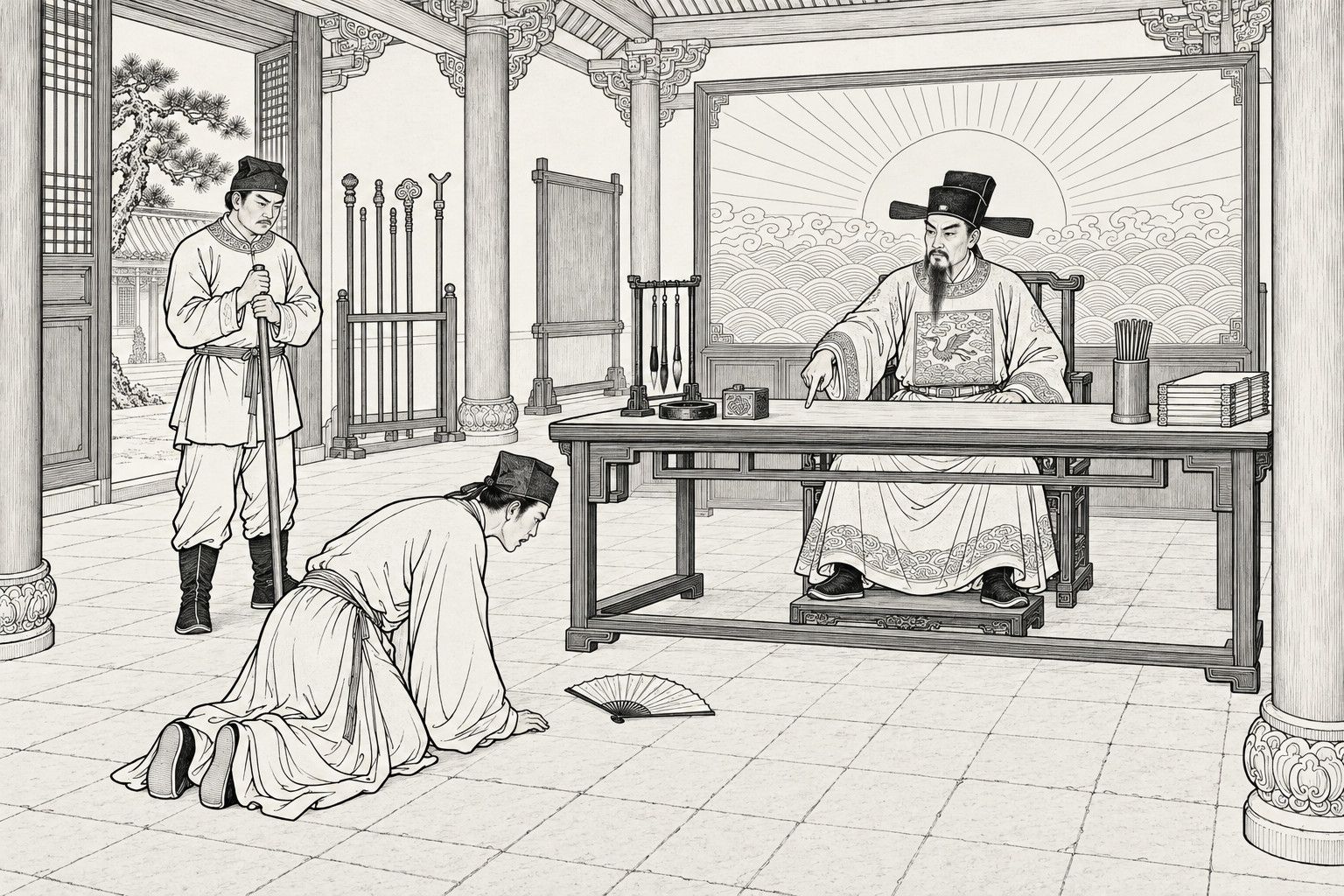
青州居民范小山,販筆為業,行賈未歸。四月間,妻賀氏獨居,夜為盜所殺。是夜微雨,泥中遺詩扇一柄,乃王晟之贈吳蜚卿者。晟,不知何人;吳,益都之素封,與范同里,平日頗有佻達之行,故里黨共信之。郡縣拘質,堅不伏,慘被械梏,誣以成案;駁解往復,歷十餘官,更無異議。吳亦自分必死,囑其妻罄竭所有,以濟煢獨。有向其門誦佛千者,給以絮袴;至萬者絮襖:於是乞丐如市,佛號聲聞十餘里。因而家驟貧,惟日貨田產,以給資斧。陰賂監者使市鴆。夜夢神人告之曰:「子勿死,曩日『外邊凶』,目下『裏邊吉』矣。」再睡,又言,以是不果死。無何,周元亮先生分守是道,錄囚至吳,若有所思。因問:「吳某殺人,有何確據?」范以扇對。先生熟視扇,便問:「王晟何人?」並云不知。又將爰書細閱一過,立命脫其死械,自監移之倉。范力爭之。怒曰:「爾欲妄殺一人便了卻耶?抑將得仇人而甘心耶?」眾疑先生私吳,俱莫敢言。先生標朱簽,立拘南郭某肆主人。主人懼,莫知所以。至則問曰:「肆壁有東莞李秀詩,何時題耶?」答云:「舊歲提學按臨,有日照二三秀才,飲醉留題,不知所居何里。」遂遣役至日照,坐拘李秀。數日,秀至。怒曰:「既作秀才,奈何謀殺人?」秀頓首錯愕,曰:「無之!」先生擲扇下,令其自視,曰:「明係爾作,何詭託王晟?」秀審視曰:「詩真某作,字實非某書。」曰:「既知汝詩,當即汝友。誰書者?」秀曰:「蹟似沂州王佐。」乃遣役關拘王佐。佐至,呵之如秀狀。佐供:「此益都鐵商張成索某書者,云晟其表兄也。」先生曰:「盜在此矣。」執成至,一訊遂伏。先是,成窺賀美,欲挑之,恐不諧。念託於吳,必人所共信,故偽為吳扇,執而往。諧則自認,不諧則嫁名於吳,而實不期至於殺也。踰垣入,逼婦。婦因獨居,常以刀自衛。既覺,捉成衣,操刀而起。成懼,奪其刀。婦力挽,令不得脫,且號。成益窘,遂殺之,委扇而去。三年冤獄,一朝而雪,無不誦神明者。吳始悟「裏邊吉」乃「周」字也。然終莫解其故。後邑紳乘間請之。笑曰:「此最易知。細閱爰書,賀被殺在四月上旬;是夜陰雨,天氣猶寒,扇乃不急之物,豈有忙迫之時,反攜此以增累者,其嫁禍可知。向避雨南郭,見題壁詩與箑頭之作,口角相類,故妄度李生,果因是而得真盜。」聞者歎服。
青州居民范小山,贩笔为业,行贾未归。四月间,妻贺氏独居,夜为盗所杀。是夜微雨,泥中遗诗扇一柄,乃王晟之赠吴蜚卿者。晟,不知何人;吴,益都之素封,与范同里,平日颇有佻达之行,故里党共信之。郡县拘质,坚不伏,惨被械梏,诬以成案;驳解往复,历十余官,更无异议。吴亦自分必死,嘱其妻罄竭所有,以济茕独。有向其门诵佛千者,给以絮袴;至万者絮袄:于是乞丐如市,佛号声闻十余里。因而家骤贫,惟日货田产,以给资斧。阴赂监者使市鸩。夜梦神人告之曰:「子勿死,曩日『外边凶』,目下『里边吉』矣。」再睡,又言,以是不果死。无何,周元亮先生分守是道,录囚至吴,若有所思。因问:「吴某杀人,有何确据?」范以扇对。先生熟视扇,便问:「王晟何人?」并云不知。又将爰书细阅一过,立命脱其死械,自监移之仓。范力争之。怒曰:「尔欲妄杀一人便了却耶?抑将得仇人而甘心耶?」众疑先生私吴,俱莫敢言。先生标朱签,立拘南郭某肆主人。主人惧,莫知所以。至则问曰:「肆壁有东莞李秀诗,何时题耶?」答云:「旧岁提学按临,有日照二三秀才,饮醉留题,不知所居何里。」遂遣役至日照,坐拘李秀。数日,秀至。怒曰:「既作秀才,奈何谋杀人?」秀顿首错愕,曰:「无之!」先生掷扇下,令其自视,曰:「明系尔作,何诡托王晟?」秀审视曰:「诗真某作,字实非某书。」曰:「既知汝诗,当即汝友。谁书者?」秀曰:「迹似沂州王佐。」乃遣役关拘王佐。佐至,呵之如秀状。佐供:「此益都铁商张成索某书者,云晟其表兄也。」先生曰:「盗在此矣。」执成至,一讯遂伏。先是,成窥贺美,欲挑之,恐不谐。念托于吴,必人所共信,故伪为吴扇,执而往。谐则自认,不谐则嫁名于吴,而实不期至于杀也。逾垣入,逼妇。妇因独居,常以刀自卫。既觉,捉成衣,操刀而起。成惧,夺其刀。妇力挽,令不得脱,且号。成益窘,遂杀之,委扇而去。三年冤狱,一朝而雪,无不诵神明者。吴始悟「里边吉」乃「周」字也。然终莫解其故。后邑绅乘间请之。笑曰:「此最易知。细阅爰书,贺被杀在四月上旬;是夜阴雨,天气犹寒,扇乃不急之物,岂有忙迫之时,反携此以增累者,其嫁祸可知。向避雨南郭,见题壁诗与箑头之作,口角相类,故妄度李生,果因是而得真盗。」闻者叹服。
Fan Xiaoshan, a townsman of Qingzhou, made his living selling writing brushes, and was away on his travels. In the fourth month his wife, Mrs. He, who was living alone, was killed one night by an intruder. It had rained a little that night, and in the mud lay a fan with a poem on it, a gift from Wang Sheng to Wu Feiqing. No one knew who Sheng was. Wu was a wealthy man of Yidu who held no office. He lived in the same neighbourhood as Fan and had always been rather loose in his ways, so everyone in the neighbourhood believed he had done it. The prefecture and the county arrested him and questioned him. He refused to confess, was cruelly put in fetters, and the false charge was made into a settled case. It went up for review and came back again, through more than ten officials, and not one of them dissented. Wu himself was sure he would die. He told his wife to spend everything they had on the widowed and the orphaned. Anyone who came to their gate and chanted the Buddha’s name a thousand times was given a pair of padded trousers; ten thousand times, a padded jacket. Beggars thronged there as at a market, and the sound of the Buddha’s name could be heard more than ten li away. The family quickly grew poor, and had to sell off land day after day to meet their needs. Wu secretly bribed his jailer to buy him poison. That night he dreamed that a god said to him, “Do not die. In days past it was ‘ill without’; now it is ‘luck within.’” He fell asleep again, and the god said it again, so in the end he did not kill himself. Before long Mr. Zhou Yuanliang came to take charge of the circuit. Reviewing the prisoners, he came to Wu and seemed lost in thought. He asked, “Wu is said to have killed someone. What firm proof is there?” Fan answered with the fan. Mr. Zhou looked hard at the fan, then asked, “Who is Wang Sheng?” They all said they did not know. He read through the case record carefully once more, and at once ordered Wu’s death shackles struck off and had him moved out of the prison into the holding house. Fan protested hard. Mr. Zhou said angrily, “Do you want to kill a man, any man, and be done with it? Or will you be satisfied only when you have the man who really killed her?” Everyone suspected Mr. Zhou of favouring Wu, but no one dared say so. He wrote out a warrant in red and at once had the owner of a certain shop by the south wall arrested. The shopkeeper was frightened and had no idea why. When he was brought in, Mr. Zhou asked, “On the wall of your shop there is a poem by Li Xiu of Dongguan. When was it written there?” “Last year, when the Education Commissioner came on his tour, two or three licentiates from Rizhao got drunk and wrote it there. I don’t know where they live.” So he sent runners to Rizhao to arrest Li Xiu. In a few days Li was brought in. Mr. Zhou said angrily, “You are a licentiate. How could you plot murder?” Li knocked his head on the floor, stunned. “I did no such thing!” Mr. Zhou threw the fan down to him and told him to look for himself. “This is plainly your work. Why pass it off under Wang Sheng’s name?” Li studied it. “The poem is truly mine, but the writing is not my hand.” “If he knew your poem, he must be your friend. Who wrote it?” “The hand looks like Wang Zuo’s, of Yizhou.” So he sent a warrant to Yizhou to have Wang Zuo arrested. When Wang was brought in, Mr. Zhou shouted at him as he had at Li. Wang testified: “Zhang Cheng, an iron merchant of Yidu, asked me to write it. He said Sheng was his cousin.” “Here is our culprit,” said Mr. Zhou. Zhang Cheng was seized and brought in, and at the first questioning he confessed. It turned out that Zhang had had his eye on Mrs. He’s beauty and wanted to seduce her, but was afraid she would not have him. He reckoned that if he passed himself off as Wu, everyone would believe it, so he faked a fan to look like Wu’s and took it with him. If she gave in, he would own up; if not, he would put it on Wu’s name. He never meant it to come to killing. He climbed over the wall and forced himself on her. Since she lived alone, she always kept a knife to protect herself. When she woke she caught hold of his clothes and rose up with the knife. Zhang was frightened and wrenched the knife away. She clung to him with all her strength so that he could not get free, and screamed. More desperate than ever, Zhang killed her, dropped the fan and fled. A wrongful case of three years was cleared in a single morning, and there was no one who did not call Mr. Zhou divine. Only then did Wu understand that “luck within” meant the character Zhou. But no one could work out how it had been done. Later a gentleman of the county found a chance to ask him. He laughed. “Nothing easier. Reading the record carefully, I saw that Mrs. He was killed in the first ten days of the fourth month. It rained that night and the weather was still cold. A fan is a thing nobody needs at such a time. Who, on urgent business, would carry one along only to burden himself? So it was plain that someone meant to lay the blame elsewhere. Some time before, I had sheltered from the rain by the south wall and seen the poem on the wall, and its turn of phrase was like the poem on the fan. So I made a wild guess at Li, and sure enough it led me to the real culprit.” Those who heard it sighed in admiration.