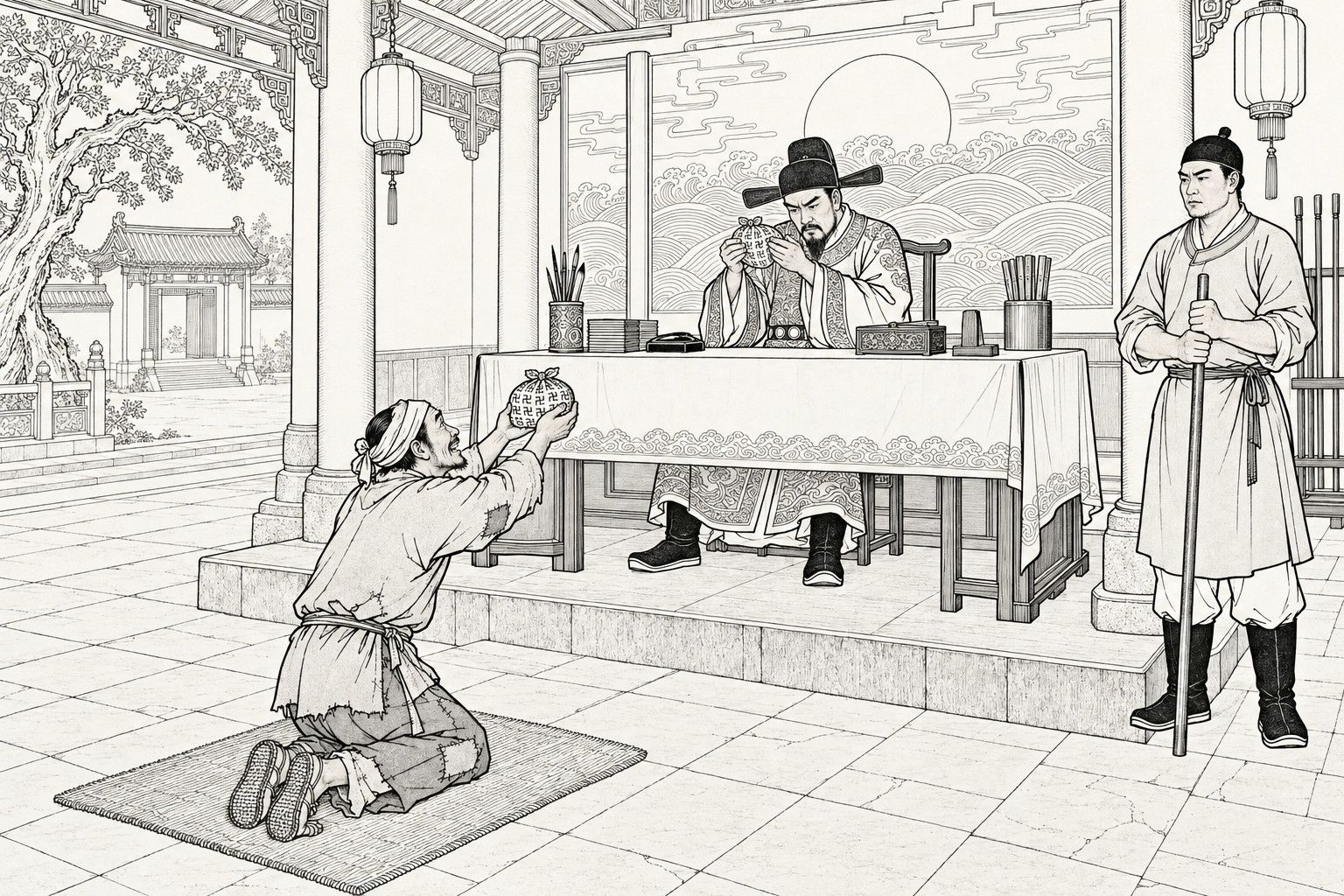
邑之西崖莊,有賈某被人殺於途;隔夜,其妻亦自經死。賈弟鳴於官。時浙江費公禕祉令淄,親詣驗之。見布袱裹銀五錢餘,尚在腰中,知非為財也者。拘兩村鄰保審質一過,殊少端緒,並未搒掠,釋散歸農;但命地約細察,十日一關白而已。踰半年,事漸懈。賈弟怨公仁柔,上堂屢聒。公怒曰:「汝既不能指名,欲我以桎梏加良民耶!」呵逐而出。賈弟無所伸訴,憤葬兄嫂。一日,以逋賦故,逮數人至。內一人周成,懼責,上言錢糧措辦已足,即於腰中出銀袱,稟公驗視。公驗已,便問:「汝家何里?」答云:「某村。」又問:「去西崖幾里?」答云:「五六里。」「去年被殺賈某,係汝何人?」答云:「不識其人。」公勃然曰:「汝殺之,尚云不識耶!」周力辨,不聽;嚴梏之,果伏其罪。先是,賈妻王氏,將詣姻家,慚無釵飾,聒夫使假於鄰。夫不肯;妻自假之,頗甚珍重。歸途,卸而裹諸袱,內袖中;既至家,探之已亡。不敢告夫,又無力償鄰,懊惱欲死。是日,周適拾之,知為賈妻所遺,窺賈他出,半夜踰牆,將執以求合。時溽暑,王氏臥庭中,周潛就淫之。王氏覺,大號。周急止之,留袱納釵。事已,婦囑曰:「後勿來,吾家男子惡,犯恐俱死!」周怒曰:「我挾勾欄數宿之貲,寧一度可償耶?」婦慰之曰:「我非不願相交,渠常善病,不如從容以待其死。」周乃去,於是殺賈,夜詣婦曰:「今某已被人殺,請如所約。」婦聞大哭,周懼而逃,天明則婦死矣。公廉得情,以周抵罪。共服其神,而不知所以能察之故。公曰:「事無難辦,要在隨處留心耳。初驗尸時,見銀袱刺萬字文,周袱亦然,是出一手也。及詰之,又云無舊,詞貌詭變,是以確知其真凶也。」
邑之西崖庄,有贾某被人杀于途;隔夜,其妻亦自经死。贾弟鸣于官。时浙江费公祎祉令淄,亲诣验之。见布袱裹银五钱余,尚在腰中,知非为财也者。拘两村邻保审质一过,殊少端绪,并未搒掠,释散归农;但命地约细察,十日一关白而已。逾半年,事渐懈。贾弟怨公仁柔,上堂屡聒。公怒曰:「汝既不能指名,欲我以桎梏加良民耶!」呵逐而出。贾弟无所伸诉,愤葬兄嫂。一日,以逋赋故,逮数人至。内一人周成,惧责,上言钱粮措办已足,即于腰中出银袱,禀公验视。公验已,便问:「汝家何里?」答云:「某村。」又问:「去西崖几里?」答云:「五六里。」「去年被杀贾某,系汝何人?」答云:「不识其人。」公勃然曰:「汝杀之,尚云不识耶!」周力辨,不听;严梏之,果伏其罪。先是,贾妻王氏,将诣姻家,惭无钗饰,聒夫使假于邻。夫不肯;妻自假之,颇甚珍重。归途,卸而裹诸袱,内袖中;既至家,探之已亡。不敢告夫,又无力偿邻,懊恼欲死。是日,周适拾之,知为贾妻所遗,窥贾他出,半夜逾墙,将执以求合。时溽暑,王氏卧庭中,周潜就淫之。王氏觉,大号。周急止之,留袱纳钗。事已,妇嘱曰:「后勿来,吾家男子恶,犯恐俱死!」周怒曰:「我挟勾栏数宿之赀,宁一度可偿耶?」妇慰之曰:「我非不愿相交,渠常善病,不如从容以待其死。」周乃去,于是杀贾,夜诣妇曰:「今某已被人杀,请如所约。」妇闻大哭,周惧而逃,天明则妇死矣。公廉得情,以周抵罪。共服其神,而不知所以能察之故。公曰:「事无难办,要在随处留心耳。初验尸时,见银袱刺万字文,周袱亦然,是出一手也。及诘之,又云无旧,词貌诡变,是以确知其真凶也。」
In Xiya Village in my county, a man named Jia was murdered on the road; the next night his wife hanged herself as well. Jia’s younger brother took the matter to the authorities. At that time Lord Fei Yizhi of Zhejiang was magistrate of Zichuan, and he went in person to examine the body. He saw that a cloth wrapper holding a little over five qian of silver was still at the dead man’s waist, and knew it had not been done for money. He had the neighbours and headmen of both villages brought in and questioned them once over, but there was little to go on. Without having anyone beaten, he let them all go home to their farming, and only ordered the village constables to look into it closely and report every ten days. After half a year the matter had grown slack. Jia’s brother resented the magistrate for being too soft and lenient, and came to court again and again to pester him. Fei said angrily, “You cannot even name anyone. Do you want me to put innocent people in fetters?” and had him shouted out of the hall. With nowhere left to take his grievance, Jia’s brother buried his brother and sister-in-law in bitterness. One day several people were arrested and brought in for arrears of tax. One of them, Zhou Cheng, afraid of a beating, stepped forward and said the money he owed had all been raised; he took a cloth wrapper of silver from his waist and asked the magistrate to inspect it. When Fei had looked it over, he asked, “What village are you from?” “Such-and-such village.” “How far is it from Xiya?” “Five or six li.” “The man Jia who was murdered last year — what was he to you?” “I didn’t know the man.” Fei flared up. “You killed him, and you say you didn’t know him?” Zhou protested hard, but Fei would not listen. Put to harsh torture, Zhou did confess to the crime. Earlier, Jia’s wife, Mrs. Wang, was about to visit her relatives by marriage and was ashamed that she had no hairpins or ornaments. She pestered her husband to borrow some from a neighbour. He refused, so she borrowed them herself and took great care of them. On the way home she took them off, wrapped them in a cloth and put them in her sleeve; when she got home she felt for them and they were gone. She dared not tell her husband and had no means to repay the neighbour; she was so wretched she wanted to die. That day Zhou happened to pick them up and knew Jia’s wife had lost them. He waited until Jia was away, then climbed over the wall at midnight, meaning to use them to make her sleep with him. It was the sticky heat of summer, and Mrs. Wang was sleeping in the courtyard. Zhou stole over and forced himself on her. She woke and screamed. Zhou hurriedly quieted her, keeping the wrapper and handing over the hairpins. When it was over, the woman urged him, “Don’t come again. My man is a hard one — if he catches us, I’m afraid we’ll both be killed.” Zhou said angrily, “What I brought you would have paid for several nights in a brothel. Is one time supposed to settle it?” She soothed him. “It isn’t that I don’t want to be with you. He’s often ill. Better to wait patiently till he dies.” So Zhou left, and then he killed Jia. That night he came to the woman and said, “Now he’s been killed by someone. Keep your promise.” When she heard this she wept bitterly. Zhou took fright and fled, and by daybreak she was dead. Having found out the truth, the magistrate made Zhou answer for the crime. Everyone marvelled at his almost divine insight, but nobody knew how he had seen it. Fei said, “There was nothing hard about it. The point is simply to keep your eyes open at every turn. When I first examined the body, I saw that the silver wrapper was embroidered with the wan pattern, 卍. Zhou’s wrapper was the same — both had come from one hand. When I questioned him, he said he had never known the man, and his words and his face were shifty. That is how I knew for certain he was the real killer.”
異史氏曰:「世之折獄者,非悠悠置之,則縲繫數十人而狼藉之耳。堂上肉鼓吹,喧闐旁午,遂嚬蹙曰:『我勞心民事也。』雲板三敲,則聲色並進,難決之詞,不復置念;耑待升堂時,禍桑樹以烹老龜耳。嗚呼!民情何由得哉!余每曰:『智者不必仁,而仁者則必智;蓋用心苦則機關出也。』『隨在留心』之言,可以教天下之宰民社者矣。」
异史氏曰:「世之折狱者,非悠悠置之,则缧系数十人而狼藉之耳。堂上肉鼓吹,喧阗旁午,遂嚬蹙曰:『我劳心民事也。』云板三敲,则声色并进,难决之词,不复置念;耑待升堂时,祸桑树以烹老龟耳。呜呼!民情何由得哉!余每曰:『智者不必仁,而仁者则必智;盖用心苦则机关出也。』『随在留心』之言,可以教天下之宰民社者矣。」
The Historian of the Strange says: Those in this world who judge cases either let them drift, or else lock up dozens of people and beat them black and blue. Up in the hall the drums and pipes of flesh play on, a clamorous din of overlapping cries, and the judge knits his brows and says, ‘I wear my heart out over the people’s affairs.’ At three strokes of the cloud gong, music and women are brought in together, and the hard cases are put out of mind entirely; he simply waits until he takes his seat in the hall again, and then brings ruin on the mulberry tree to boil the old turtle. Alas! How is he ever to get at the truth of the people’s affairs? I often say: ‘The wise are not always kind, but the kind are always wise; for when the heart takes pains, the way through appears.’ The words ‘keep your eyes open at every turn’ could teach every official in the land who governs the people.