王成,平原故家子,性最懶。生涯日落,惟剩破屋數間,與妻臥牛衣中,交謫不堪。時盛夏燠熱,村外故有周氏園,牆宇盡傾,惟存一亭;村人多寄宿其中,王亦在焉。既曉,睡者盡去;紅日三竿,王始起,逡巡欲歸。見草際金釵一股,拾視之,鐫有細字云:「儀賓府造」。王祖為衡府儀賓,家中故物,多此款式,因把釵躊躇。 欻一嫗來尋釵。王雖故貧,然性介,遽出授之。嫗喜,極贊盛德,曰:「釵值幾何,先夫之遺澤也。」問:「夫君伊誰?」答云:「故儀賓王柬之也。」王驚曰:「吾祖也。何以相遇?」嫗亦驚曰:「汝即王柬之之孫耶?我乃狐仙。百年前,與君祖繾綣。君祖歿,老身遂隱。過此遺釵,適入子手,非天數耶!」王亦曾聞祖有狐妻,信其言,便邀臨顧。嫗從之。王呼妻出見,負敗絮,菜色黯焉。嫗嘆曰:「嘻!王柬之孫子,非乃一貧至此哉!」又顧敗灶無煙,曰:「家計若此,何以聊生?」妻因細述貧狀,嗚咽飲泣。嫗以釵授婦,使姑質錢市米,三日外請復相見。王挽留之。嫗曰:「汝一妻不能自存活;我在,仰屋而居,復何裨益?」遂徑去。王為妻言其故,妻大怖。王誦其義,使姑事之,妻諾。逾三日,果至。出數金,糴粟麥各石。夜與婦共短榻。婦初懼之;然察其意殊拳拳,遂不之疑。
王成,平原故家子,性最懒。生涯日落,惟剩破屋数间,与妻卧牛衣中,交谪不堪。时盛夏燠热,村外故有周氏园,墙宇尽倾,惟存一亭;村人多寄宿其中,王亦在焉。既晓,睡者尽去;红日三竿,王始起,逡巡欲归。见草际金钗一股,拾视之,镌有细字云:「仪宾府造」。王祖为衡府仪宾,家中故物,多此款式,因把钗踌躇。 欻一妪来寻钗。王虽故贫,然性介,遽出授之。妪喜,极赞盛德,曰:「钗值几何,先夫之遗泽也。」问:「夫君伊谁?」答云:「故仪宾王柬之也。」王惊曰:「吾祖也。何以相遇?」妪亦惊曰:「汝即王柬之之孙耶?我乃狐仙。百年前,与君祖缱绻。君祖殁,老身遂隐。过此遗钗,适入子手,非天数耶!」王亦曾闻祖有狐妻,信其言,便邀临顾。妪从之。王呼妻出见,负败絮,菜色黯焉。妪叹曰:「嘻!王柬之孙子,非乃一贫至此哉!」又顾败灶无烟,曰:「家计若此,何以聊生?」妻因细述贫状,呜咽饮泣。妪以钗授妇,使姑质钱市米,三日外请复相见。王挽留之。妪曰:「汝一妻不能自存活;我在,仰屋而居,复何裨益?」遂径去。王为妻言其故,妻大怖。王诵其义,使姑事之,妻诺。逾三日,果至。出数金,籴粟麦各石。夜与妇共短榻。妇初惧之;然察其意殊拳拳,遂不之疑。
Wang Cheng came of an old family of Pingyuan, and he was the laziest of men. His fortunes sank day by day until all that was left was a few rooms of a broken-down house, where he and his wife lay under an ox-blanket and nagged at each other past bearing. It was the height of summer and sweltering hot. Outside the village there had long been a garden belonging to the Zhou family. Its walls and buildings had all fallen in, and only a pavilion was left standing. Many of the villagers went there to sleep, and Wang was among them. At daybreak the sleepers all left. When the red sun was three poles high, Wang at last got up and dawdled about, meaning to go home. In the grass he saw a gold hairpin. He picked it up and looked at it: it was engraved in small characters, “Made for the Consort’s Household.” Wang’s grandfather had been Consort in the house of the Prince of Heng, and many of the old things in the family were of this pattern. So he stood holding the hairpin, uncertain what to do. Suddenly an old woman came looking for it. Poor as he was, Wang was a scrupulous man, and he handed it to her at once. The old woman was delighted and praised his virtue to the skies. “The hairpin is worth little,” she said, “but it was left to me by my late husband.” “Who was your husband?” asked Wang. “The late Consort, Wang Jianzhi.” Wang was startled. “He was my grandfather! How did you come to meet him?” The old woman was startled too. “You are Wang Jianzhi’s grandson? I am a fox immortal. A hundred years ago your grandfather and I were lovers. When he died, I went into hiding. I passed this way and dropped my hairpin, and it fell into your hands. Is that not fate?” Wang had heard that his grandfather had a fox wife, so he believed her and invited her to his house. She went with him. Wang called his wife out to meet her. She came wrapped in tattered cotton wadding, her face grey and sallow with hunger. The old woman sighed. “Ah! That a grandson of Wang Jianzhi should be as poor as this!” Then, looking at the broken stove with no smoke rising from it, she said, “With your household in this state, how do you live at all?” The wife told her every detail of their poverty, sobbing and choking back tears. The old woman gave her the hairpin and told her to pawn it for now and buy rice; in three days she would come to see them again. Wang begged her to stay. “You can’t even keep one wife alive,” she said. “If I stayed, I would only sit here staring at your rafters. What good would that do?” And she left straight away. Wang told his wife what the old woman was, and his wife was terrified. Wang spoke of the old woman’s goodness and told his wife to wait on her for the time being. His wife agreed. Three days later the old woman came, as she had said. She took out several taels of silver and bought a picul each of millet and wheat. At night she shared the narrow couch with the wife. At first the wife was afraid of her, but she saw that the old woman meant them nothing but kindness, and stopped suspecting her.
翌日,謂王曰:「孫勿惰,宜操小生業,坐食烏可長也?」王告以無資。曰:「汝祖在時,金帛憑所取;我以世外人,無需是物,故未嘗多取。積花粉之金四十兩,至今猶存。久貯亦無所用,可將去悉以市葛,刻日赴都,可得微息。」王從之,購五十餘端以歸。嫗命趣裝,計六七日可達燕都。囑曰:「宜勤勿懶,宜急勿緩;遲之一日,悔之已晚。」王敬諾,囊貨就路。中途遇雨,衣履浸濡。王生平未歷風霜,委頓不堪,因暫休旅舍。不意淙淙徹暮,檐雨如繩。過宿,濘益甚。見往來行人,踐淖沒脛,心畏苦之。待至停午,始漸燥,而陰雲複合,雨又大作。信宿乃行。將近京,傳聞葛價翔貴,心竊喜。入都,解裝客店,主人深惜其晚。先是,南道初通,葛至絕少。貝勒府購致甚急,價頓昂,較常可三倍。前一日方購足,後來者並皆失望。主人以故告王。王鬱鬱不得志。越日,葛至愈多,價益下。王以無利不肯售。遲十餘日,計食耗煩多,倍益懮悶。主人勸令賤鬻,改而他圖。從之。虧資十餘兩,悉脫去。早起,將作歸計,啟視囊中,則金亡矣。驚告主人。主人無所為計。或勸鳴官,責主人償。王嘆曰:「此我數也,于主人何尤?」主人聞而德之,贈金五兩,慰之使歸。自念無以見祖母,蹀躞內外,進退維谷。
翌日,谓王曰:「孙勿惰,宜操小生业,坐食乌可长也?」王告以无资。曰:「汝祖在时,金帛凭所取;我以世外人,无需是物,故未尝多取。积花粉之金四十两,至今犹存。久贮亦无所用,可将去悉以市葛,刻日赴都,可得微息。」王从之,购五十余端以归。妪命趣装,计六七日可达燕都。嘱曰:「宜勤勿懒,宜急勿缓;迟之一日,悔之已晚。」王敬诺,囊货就路。中途遇雨,衣履浸濡。王生平未历风霜,委顿不堪,因暂休旅舍。不意淙淙彻暮,檐雨如绳。过宿,泞益甚。见往来行人,践淖没胫,心畏苦之。待至停午,始渐燥,而阴云复合,雨又大作。信宿乃行。将近京,传闻葛价翔贵,心窃喜。入都,解装客店,主人深惜其晚。先是,南道初通,葛至绝少。贝勒府购致甚急,价顿昂,较常可三倍。前一日方购足,后来者并皆失望。主人以故告王。王郁郁不得志。越日,葛至愈多,价益下。王以无利不肯售。迟十余日,计食耗烦多,倍益懮闷。主人劝令贱鬻,改而他图。从之。亏资十余两,悉脱去。早起,将作归计,启视囊中,则金亡矣。惊告主人。主人无所为计。或劝鸣官,责主人偿。王叹曰:「此我数也,于主人何尤?」主人闻而德之,赠金五两,慰之使归。自念无以见祖母,蹀躞内外,进退维谷。
The next day the old woman said to Wang, “Grandson, don’t be idle. You ought to take up some small trade. How can you sit and eat for ever?” Wang told her he had no capital. “When your grandfather was alive,” she said, “I could take as much gold and silk as I liked. But I am outside the world and had no need of such things, so I never took much. I saved forty taels as pin money, and I still have it. Kept by me it is no use to anyone. Take it all and buy grass-cloth, then go straight to the capital, and you will make a small profit.” Wang did as she said and came home with more than fifty bolts. The old woman told him to pack at once; she reckoned he could reach Yanjing, the capital, in six or seven days. “Be diligent, not lazy,” she warned him. “Be quick, not slow. Be one day late, and it will be too late to be sorry.” Wang respectfully promised, packed his goods and set out. On the way he was caught in the rain and soaked, clothes and shoes. Never in his life had he known wind and frost, and he was worn out past bearing, so he stopped to rest at an inn. He did not expect the rain to pour on till nightfall, running off the eaves in ropes. By the next morning the mud was worse. He watched the travellers on the road sink to the shins in the mire, and he shrank from the hardship. At noon the road began to dry, but the clouds closed in again and the rain came down harder than ever. He waited two nights before he set off. As he neared the capital, he heard that the price of grass-cloth had soared, and he was secretly pleased. When he reached the city and unpacked at an inn, the innkeeper was very sorry he had come so late. The southern roads had only just reopened, and very little grass-cloth had come up. The household of a beile wanted it urgently, and the price had shot up to about three times the usual. Only the day before, they had bought all they needed, and those who came after were disappointed. The innkeeper told Wang this. Wang was downcast. The next day still more grass-cloth arrived, and the price fell further. Wang would not sell without a profit. He held on for more than ten days, until he reckoned his board had eaten up a great deal, and he grew more worried and gloomy than ever. The innkeeper urged him to sell cheap and try something else. He did so, lost more than ten taels on his outlay, and sold off everything. He rose early, meaning to go home, opened his bag, and found the money gone. He was horrified and told the innkeeper, but the innkeeper could think of nothing to do. Someone urged him to go to the authorities and make the innkeeper pay. Wang sighed. “It is my fate. What has the innkeeper to do with it?” The innkeeper heard this and was grateful. He gave Wang five taels, comforted him and sent him home. But Wang felt he could not face his grandmother, and he paced in and out, stuck whichever way he turned.
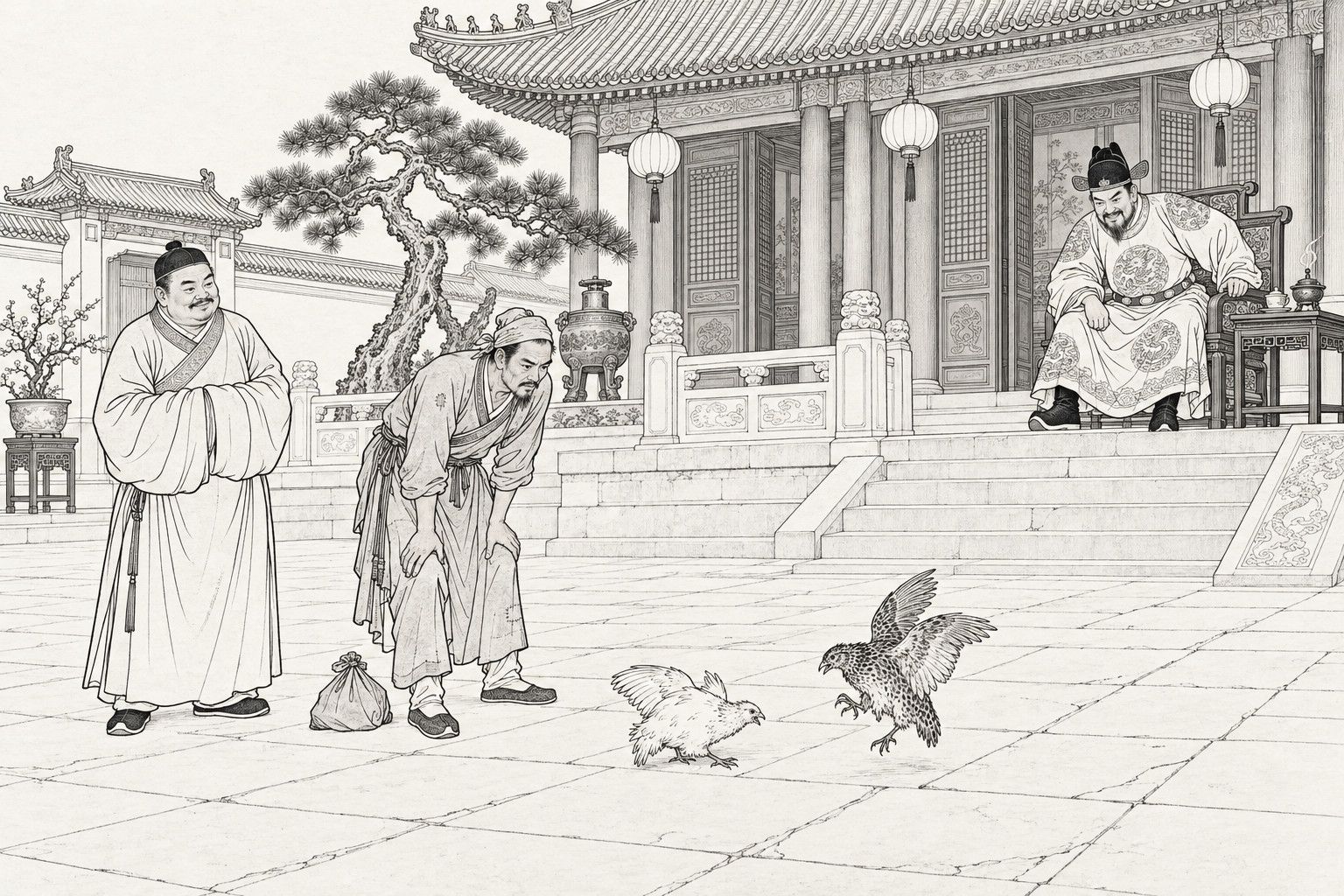
適見斗鶉者,一賭輒數千;每市一鶉,恆百錢不止。意忽動,計囊中資,僅足販鶉,以商主人。主人亟慫恿之,且約假寓飲食,不取其直。王喜,遂行。購鶉盈儋,復入都。主人喜,賀其速售。至夜,大雨徹曙。天明,衢水如河,淋零猶未休也。居以待晴,連綿數日,更無休止。起視籠中,鶉漸死。王大懼,不知計之所出。越日,死愈多;僅余數頭,並一籠飼之;經宿往窺,則一鶉僅存。因告主人,不覺涕墮。主人亦為扼腕。王自度金盡罔歸,但欲覓死,主人勸慰之。共往視鶉,審諦之曰:「此似英物。諸鶉之死,未必非此之斗殺之也。君暇亦無所事,請把之;如其良也,賭亦可以謀生。」王如其教。既馴,主人令持向街頭,賭酒食。鶉健甚,輒贏。主人喜,以金授王,使復與子弟決賭;三戰三勝。半年許,積二十金。心益慰,視鶉如命。先是,大親王好鶉,每值上元,輒放民間把鶉者入邸相角。主人謂王曰:「今大富宜可立致;所不可知者,在子之命矣。」因告以故,導與俱往。囑曰:「脫敗,則喪氣出耳。倘有萬分一,鶉斗勝,王必欲市之,君勿應;如固強之,惟予首是瞻,待首肯而後應之。」王曰:「諾。」至邸,則鶉人肩摩于墀下。頃之,王出御殿。左右宣言:「有願斗者上。」即有一人把鶉,趨而進。王命放鶉,客亦放;略一騰踔,客鶉已敗。王大笑。俄頃,登而敗者數人。主人曰:「可矣。」相將俱登。王相之,曰:「睛有怒脈,此健羽也,不可輕敵。」命取鐵喙者當之。一再騰躍,而王鶉鎩羽。更選其良,再易再敗。王急命取宮中玉鶉。片時把出,素羽如鷺,神駿不凡。王成意餒,跪而求罷,曰:「大王之鶉,神物也,恐傷吾禽,喪吾業矣。」王笑曰:「縱之。脫斗而死,當厚爾償。」成乃縱之。玉鶉直奔之。而玉鶉方來,則伏如怒雞以待之;玉鶉健啄,則起如翔鶴以擊之;進退頡頏,相持約一伏時。玉鶉漸懈,而其怒益烈,其斗益急。未幾,雪毛摧落,垂翅而逃。觀者千人,罔不嘆羨。王乃索取而親把之,自喙至爪,審週一過,問成曰:「鶉可貨否?」答云:「小人無恆產,與相依為命,不願售也。」王曰:「賜爾重值,中人之產可致。頗願之乎?」成俯思良久,曰:「本不樂置;顧大王既愛好之,苟使小人得衣食業,又何求?」王問直,答以千金。王笑曰:「痴男子!此何珍寶,而千金直也?」成曰:「大王不以為寶,臣以為連城之璧不過也。」王曰:「如何?」曰:「小人把向市廛,日得數金,易升斗粟,一家十餘口食指,無凍餒懮,是何寶如之?」王言:「予不相虧,便與二百金。」成搖首。又增百數。成目視主人,主人色不動。乃曰:「承大王命,請減百價。」王曰:「休矣!誰肯以九百易一鶉者!」成囊鶉欲行。王呼曰:「鶉人來,鶉人來!實給六百,肯則售,否則已耳。」成又目主人,主人仍自若。成心願盈溢,惟恐失時,曰:「以此數售,心實怏怏;但交而不成,則獲戾滋大。無已,即如王命。」王喜,即秤付之。成囊金,拜賜而出。主人懟曰:「我言如何,子乃急自鬻也?再少靳之,八百金在掌中矣。」成歸,擲金案上,請主人自取之,主人不受。又固讓之,乃盤計飯直而受之。
适见斗鹑者,一赌辄数千;每市一鹑,恒百钱不止。意忽动,计囊中资,仅足贩鹑,以商主人。主人亟怂恿之,且约假寓饮食,不取其直。王喜,遂行。购鹑盈儋,复入都。主人喜,贺其速售。至夜,大雨彻曙。天明,衢水如河,淋零犹未休也。居以待晴,连绵数日,更无休止。起视笼中,鹑渐死。王大惧,不知计之所出。越日,死愈多;仅余数头,并一笼饲之;经宿往窥,则一鹑仅存。因告主人,不觉涕堕。主人亦为扼腕。王自度金尽罔归,但欲觅死,主人劝慰之。共往视鹑,审谛之曰:「此似英物。诸鹑之死,未必非此之斗杀之也。君暇亦无所事,请把之;如其良也,赌亦可以谋生。」王如其教。既驯,主人令持向街头,赌酒食。鹑健甚,辄赢。主人喜,以金授王,使复与子弟决赌;三战三胜。半年许,积二十金。心益慰,视鹑如命。先是,大亲王好鹑,每值上元,辄放民间把鹑者入邸相角。主人谓王曰:「今大富宜可立致;所不可知者,在子之命矣。」因告以故,导与俱往。嘱曰:「脱败,则丧气出耳。倘有万分一,鹑斗胜,王必欲市之,君勿应;如固强之,惟予首是瞻,待首肯而后应之。」王曰:「诺。」至邸,则鹑人肩摩于墀下。顷之,王出御殿。左右宣言:「有愿斗者上。」即有一人把鹑,趋而进。王命放鹑,客亦放;略一腾踔,客鹑已败。王大笑。俄顷,登而败者数人。主人曰:「可矣。」相将俱登。王相之,曰:「睛有怒脉,此健羽也,不可轻敌。」命取铁喙者当之。一再腾跃,而王鹑铩羽。更选其良,再易再败。王急命取宫中玉鹑。片时把出,素羽如鹭,神骏不凡。王成意馁,跪而求罢,曰:「大王之鹑,神物也,恐伤吾禽,丧吾业矣。」王笑曰:「纵之。脱斗而死,当厚尔偿。」成乃纵之。玉鹑直奔之。而玉鹑方来,则伏如怒鸡以待之;玉鹑健啄,则起如翔鹤以击之;进退颉颃,相持约一伏时。玉鹑渐懈,而其怒益烈,其斗益急。未几,雪毛摧落,垂翅而逃。观者千人,罔不叹羡。王乃索取而亲把之,自喙至爪,审周一过,问成曰:「鹑可货否?」答云:「小人无恒产,与相依为命,不愿售也。」王曰:「赐尔重值,中人之产可致。颇愿之乎?」成俯思良久,曰:「本不乐置;顾大王既爱好之,苟使小人得衣食业,又何求?」王问直,答以千金。王笑曰:「痴男子!此何珍宝,而千金直也?」成曰:「大王不以为宝,臣以为连城之璧不过也。」王曰:「如何?」曰:「小人把向市廛,日得数金,易升斗粟,一家十余口食指,无冻馁懮,是何宝如之?」王言:「予不相亏,便与二百金。」成摇首。又增百数。成目视主人,主人色不动。乃曰:「承大王命,请减百价。」王曰:「休矣!谁肯以九百易一鹑者!」成囊鹑欲行。王呼曰:「鹑人来,鹑人来!实给六百,肯则售,否则已耳。」成又目主人,主人仍自若。成心愿盈溢,惟恐失时,曰:「以此数售,心实怏怏;但交而不成,则获戾滋大。无已,即如王命。」王喜,即秤付之。成囊金,拜赐而出。主人怼曰:「我言如何,子乃急自鬻也?再少靳之,八百金在掌中矣。」成归,掷金案上,请主人自取之,主人不受。又固让之,乃盘计饭直而受之。
Just then he saw men fighting quails. A single wager often ran to several thousand cash, and a quail always sold for more than a hundred. A thought struck him. He counted the money in his bag: it was just enough to deal in quails. He talked it over with the innkeeper. The innkeeper eagerly urged him on, and offered him lodging and meals on credit, without charge. Wang was glad and set off. He bought a full carrying-pole load of quails and came back to the capital. The innkeeper was pleased and wished him a quick sale. That night it rained hard until dawn. When it was light, the streets ran like rivers, and the rain was still falling. He stayed in to wait for it to clear, but it went on for days without stopping. He got up to look in the cages: the quails were beginning to die. Wang was terrified and did not know what to do. The next day more died. Only a few were left; he put them all in one cage to feed them, and when he went to look the next morning, only one quail was still alive. He told the innkeeper, and the tears fell before he knew it. The innkeeper too wrung his hands for him. Wang reckoned that his money was gone and he could not go home, and he wanted only to die. The innkeeper comforted him. Together they went to look at the quail. The innkeeper studied it closely and said, “This looks like a champion. It may be that the others died because this one fought them to death. You have nothing to do with your time. Train it. If it is good, you can make a living by betting on it too.” Wang did as he was told. When the bird was trained, the innkeeper told him to take it into the streets and bet it for food and wine. The quail was very strong and always won. The innkeeper was pleased and gave Wang money to take on the young gentlemen of the city for stakes; he fought three times and won three times. In half a year or so he had saved twenty taels. He felt much easier, and he loved the quail as his own life. Now a certain great prince of the blood was fond of quails, and every year at the Lantern Festival he let the common folk who kept quails into his palace to match their birds. The innkeeper said to Wang, “Now a great fortune may be yours in a day. The one thing nobody can know is your luck.” He told him why, and took him along. On the way he warned him, “If you lose, just walk out crestfallen. But if, by one chance in ten thousand, your quail wins, the Prince will be sure to want to buy it. Don’t agree. If he presses you, watch my head, and don’t agree until I nod.” “Very well,” said Wang. At the palace the quail men were crowded shoulder to shoulder below the steps. Presently the Prince came out and took his seat in the hall. His attendants called, “Whoever wishes to fight, come up!” At once a man came hurrying forward with a quail in his hand. The Prince ordered his own quail released, and the man released his. After a leap or two the man’s quail was beaten. The Prince laughed aloud. Before long several more had gone up and been beaten. “Now,” said the innkeeper, and they went up together. The Prince looked the bird over. “There are angry veins in its eyes. This is a strong one; we must not take it lightly.” He ordered Iron Beak brought out to face it. After a leap or two the Prince’s quail was beaten, its feathers broken. He chose a better one; he changed it again, and again it lost. The Prince hastily ordered the Jade Quail brought from the inner palace. In a moment it was carried out: its feathers were white as an egret’s, and it had an uncommon, splendid spirit. Wang Cheng lost heart. He knelt and begged to withdraw. “Your Highness’s quail is a divine creature,” he said. “I am afraid it will maim my bird and ruin my livelihood.” The Prince laughed. “Let it go. If it dies in the fight, I will pay you well.” So Wang Cheng let it go. The Jade Quail charged straight at it. As the Jade Quail came on, Wang’s quail crouched like an angry gamecock to meet it; when the Jade Quail pecked hard, it rose like a soaring crane to strike. They darted in and out, evenly matched, and held each other off for a long while. The Jade Quail began to tire, while the other grew fiercer in its anger and faster in its fighting. Before long the snowy feathers were flying, and the Jade Quail fled with drooping wings. Of the thousand who watched, there was not one who did not sigh in admiration. The Prince asked for the bird and held it in his own hand, looking it over from beak to claw. Then he asked Wang Cheng, “Will you sell this quail?” “I have no fixed property,” he answered. “The bird and I live by each other. I would rather not sell.” “I will give you a handsome price,” said the Prince, “enough to make you a man of middling means. Would that please you?” Wang Cheng bowed his head and thought for a long time. “I did not want to part with it,” he said. “But since Your Highness loves it so, if it only brings me a living in food and clothes, what more could I ask?” The Prince asked his price, and he said a thousand taels. The Prince laughed. “You fool! What sort of treasure is this, to be worth a thousand taels?” “Your Highness may not think it a treasure,” said Wang Cheng, “but to me a jade disc worth fifteen cities is worth no more.” “How so?” said the Prince. “I take it into the market and every day I win several taels. With them I buy a few pecks of grain, and my household of more than ten mouths need never fear cold or hunger. What treasure is worth as much as that?” “I shall not do you wrong,” said the Prince. “I will give you two hundred taels.” Wang Cheng shook his head. The Prince added another hundred. Wang Cheng looked at the innkeeper, but the innkeeper’s face did not move. So Wang Cheng said, “In deference to Your Highness’s command, I will take a hundred off the price.” “Enough!” said the Prince. “Who would give nine hundred for one quail?” Wang Cheng put the quail in his bag and made to leave. The Prince called after him, “Quail man, come back! Come back! Six hundred, and that is my real price. Sell if you will; if not, we are done.” Wang Cheng looked at the innkeeper again, and the innkeeper was still unmoved. But this was more than Wang Cheng had ever hoped for, and he was afraid of missing his chance. “To sell at this price leaves me truly unhappy,” he said. “But if a bargain is struck and then falls through, I shall have given far greater offence. There is nothing else for it: as Your Highness commands.” The Prince was pleased and had the silver weighed out at once. Wang Cheng bagged the money, bowed his thanks and went out. The innkeeper was annoyed. “What did I tell you? Why were you in such a hurry to sell yourself short? If you had held out a little longer, you would have had eight hundred taels in your hand.” When they got back, Wang Cheng threw the money on the table and asked the innkeeper to take what he liked. The innkeeper would not. Wang Cheng pressed him again, and at last he reckoned up the cost of Wang’s meals and took that.
王治裝歸,至家,歷述所為,出金相慶。嫗命置良田三百畝,起屋作器,居然世家。嫗早起,使成督耕,婦督織;稍惰,輒訶之。夫婦相安,不敢有怨詞。過三年,家益富。嫗辭欲去。夫妻共挽之,至泣下。嫗亦遂止。旭旦候之,已杳矣。
王治装归,至家,历述所为,出金相庆。妪命置良田三百亩,起屋作器,居然世家。妪早起,使成督耕,妇督织;稍惰,辄诃之。夫妇相安,不敢有怨词。过三年,家益富。妪辞欲去。夫妻共挽之,至泣下。妪亦遂止。旭旦候之,已杳矣。
Wang packed and went home. When he arrived, he told them all he had done and brought out the money to celebrate. The old woman had him buy three hundred mu of good farmland, build a house and furnish it, and they were now, to all appearances, an old established family. The old woman rose early and set Wang Cheng to oversee the ploughing and his wife the weaving; at the least slackness she scolded them. Husband and wife settled into it and dared not grumble. After three years the family was richer still. The old woman said she wished to leave. Husband and wife both begged her to stay, until they were in tears, and so she stayed. At sunrise the next day they went to wait on her, and she was gone without a trace.
異史氏曰:「富皆得于勤,此獨得于惰,亦創聞也。不知一貧徹骨,而至性不移,此天所以始棄之而終憐之也。懶中豈果有富貴乎哉!」
异史氏曰:「富皆得于勤,此独得于惰,亦创闻也。不知一贫彻骨,而至性不移,此天所以始弃之而终怜之也。懒中岂果有富贵乎哉!」
The Historian of the Strange says: Wealth always comes from hard work; this man alone got it from idleness, a thing never heard of before. What people do not see is that though he was poor to the bone, his true nature never changed. That is why Heaven cast him off at first and took pity on him in the end. Is there really wealth and honour to be found in laziness?