太原耿氏,故大家,第宅弘闊。後凌夷,樓舍連亙,半曠廢之。因生怪異,堂門輒自開掩,家人恆中夜駭嘩。耿患之,移居別墅,留老翁門焉。由此荒落益甚。或聞笑語歌吹聲。耿有從子去病,狂放不羈,囑翁有所聞見,奔告之。至夜,見樓上燈光明滅,走報生。生欲入覘其異。止之,不聽。門戶素所習識,竟撥蒿蓬,曲折而入。登樓,殊無少異。穿樓而過,聞人語切切。潛窺之,見巨燭雙燒,其明如晝。一叟儒冠南面坐,一媼相對,俱年四十餘。東向一少年,可二十許;右一女郎,裁及笄耳。胾肉滿案,團坐笑語。生突入,笑呼曰:「有不速之客一人來!」群驚奔匿。獨叟出,叱問:「誰何入人閨闥?」生曰:「此我家閨闥,君佔之。旨酒自飲,不一邀主人,毋乃太吝?」叟審諦,曰:「非主人也。」生曰:「我狂生耿去病,主人之從子耳。」叟致敬曰:「久仰山斗!」乃揖生入,便呼家人易饌。生止之。叟乃酌客。生曰:「吾輩通家,座客無庸見避,還祈招飲。」叟呼:「孝兒!」俄少年自外入。叟曰:「此豚兒也。」揖而坐,略審門閥。叟自言:「義君姓胡。」生素豪,談議風生,孝兒亦倜儻;傾吐間,雅相愛悅。生二十一,長孝兒二歲,因弟之。叟曰:「聞君祖纂涂山外傳,知之乎?」答:「知之。」叟曰:「我涂山氏之苗裔也。唐以後,譜系猶能憶之;五代而上無傳焉。幸公子一垂教也。」生略述涂山女佐禹之功,粉飾多詞,妙緒泉涌。叟大喜,謂子曰:「今幸得聞所未聞。公子亦非他人,可請阿母及青鳳來,共聽之,亦令知我祖德也。」孝兒入幃中。少時,媼偕女郎出。審顧之,弱態生嬌,秋波流慧,人間無其麗也。叟指婦云:「此為老荊。」又指女郎:「此青鳳,鄙人之猶女也。頗惠,所聞見,輒記不忘,故喚令聽之。」生談竟而飲,瞻顧女郎,停睇不轉。女覺之,輒俯其首。生隱躡蓮鉤,女急斂足,亦無慍怒。生神志飛揚,不能自主,拍案曰:「得婦如此,南面王不易也!」媼見生漸醉,益狂,與女俱起,遽搴幃去。生失望,乃辭叟出。而心縈縈,不能忘情于青鳳也。
太原耿氏,故大家,第宅弘阔。后凌夷,楼舍连亘,半旷废之。因生怪异,堂门辄自开掩,家人恒中夜骇哗。耿患之,移居别墅,留老翁门焉。由此荒落益甚。或闻笑语歌吹声。耿有从子去病,狂放不羁,嘱翁有所闻见,奔告之。至夜,见楼上灯光明灭,走报生。生欲入觇其异。止之,不听。门户素所习识,竟拨蒿蓬,曲折而入。登楼,殊无少异。穿楼而过,闻人语切切。潜窥之,见巨烛双烧,其明如昼。一叟儒冠南面坐,一媪相对,俱年四十余。东向一少年,可二十许;右一女郎,裁及笄耳。胾肉满案,团坐笑语。生突入,笑呼曰:「有不速之客一人来!」群惊奔匿。独叟出,叱问:「谁何入人闺闼?」生曰:「此我家闺闼,君占之。旨酒自饮,不一邀主人,毋乃太吝?」叟审谛,曰:「非主人也。」生曰:「我狂生耿去病,主人之从子耳。」叟致敬曰:「久仰山斗!」乃揖生入,便呼家人易馔。生止之。叟乃酌客。生曰:「吾辈通家,座客无庸见避,还祈招饮。」叟呼:「孝儿!」俄少年自外入。叟曰:「此豚儿也。」揖而坐,略审门阀。叟自言:「义君姓胡。」生素豪,谈议风生,孝儿亦倜傥;倾吐间,雅相爱悦。生二十一,长孝儿二岁,因弟之。叟曰:「闻君祖纂涂山外传,知之乎?」答:「知之。」叟曰:「我涂山氏之苗裔也。唐以后,谱系犹能忆之;五代而上无传焉。幸公子一垂教也。」生略述涂山女佐禹之功,粉饰多词,妙绪泉涌。叟大喜,谓子曰:「今幸得闻所未闻。公子亦非他人,可请阿母及青凤来,共听之,亦令知我祖德也。」孝儿入帏中。少时,媪偕女郎出。审顾之,弱态生娇,秋波流慧,人间无其丽也。叟指妇云:「此为老荆。」又指女郎:「此青凤,鄙人之犹女也。颇惠,所闻见,辄记不忘,故唤令听之。」生谈竟而饮,瞻顾女郎,停睇不转。女觉之,辄俯其首。生隐蹑莲钩,女急敛足,亦无愠怒。生神志飞扬,不能自主,拍案曰:「得妇如此,南面王不易也!」媪见生渐醉,益狂,与女俱起,遽搴帏去。生失望,乃辞叟出。而心萦萦,不能忘情于青凤也。
The Geng family of Taiyuan had once been a great house, with mansions broad and spacious. Later it went into decline, and of its long rows of towers and halls, half stood empty and abandoned. Then strange things began to happen there: the doors of the main hall would open and shut by themselves, and the household was forever waking in the night and crying out in alarm. Troubled by this, Geng moved to another estate and left an old man to keep the gate. After that the place grew more desolate still. Now and then sounds of laughter and talk, of singing and piping, were heard. Geng had a nephew, Qubing, a wild young man who knew no restraint. He told the old gatekeeper to come running and tell him if he saw or heard anything. That night the old man saw lights flickering in the upper storey of a tower and ran to tell the young scholar. Qubing wanted to go in and see what the strange thing was. The old man tried to stop him, but he would not listen. He had always known the doors and passages well, and he pushed his way through the mugwort and weeds and wound his way in. He climbed the tower and found nothing out of the ordinary at all. He went on through the tower and heard people talking in low voices. He crept up and peered in. Two huge candles were burning, as bright as day. An old man in a scholar’s cap sat facing south, and an old woman sat across from him, both in their forties. Facing east was a young man of about twenty, and on the right a girl of barely fifteen. The table was loaded with meat, and they sat around it laughing and talking. Qubing burst in and called out with a laugh, “One uninvited guest has arrived!” They all scattered in fright and hid. Only the old man came out. “Who are you,” he demanded, “to break into a family’s private rooms?” “These are my family’s private rooms,” said Qubing, “and you have taken them over. You drink your fine wine by yourselves and never once invite the host. Isn’t that rather stingy?” The old man looked him over carefully. “You are not the master,” he said. “I am Geng Qubing, the wild scholar,” said Qubing, “the master’s nephew.” The old man said respectfully, “I have long looked up to you as to Mount Tai and the Northern Dipper!” He bowed and invited Qubing in, and called to his household to bring fresh dishes. Qubing stopped him. So the old man poured wine for his guest. “Our families are as good as one,” said Qubing. “Your company need not hide from me. Pray call them back to drink with us.” “Xiao’er!” the old man called. In a moment the young man came in from outside. “This is my good-for-nothing son,” said the old man. The young man bowed and sat down, and they asked a little about each other’s families. “I am Yijun,” the old man said, “of the Hu family.” Qubing had always been bold, and his talk flowed like the wind. Xiao’er too was free and easy, and as they poured out their thoughts they took a great liking to each other. Qubing was twenty-one, two years older than Xiao’er, so he treated him as a younger brother. “I hear your grandfather compiled An Unofficial History of Tushan,” said the old man. “Do you know it?” “I do,” Qubing answered. “I am descended from the Tushan clan,” said the old man. “From the Tang onward I can still recall our family tree, but before the Five Dynasties nothing has come down to us. I would be grateful, young sir, if you would instruct me.” Qubing told briefly how the Tushan girl helped Yu the Great in his labours, embroidering it with many words, his fine ideas welling up like a spring. The old man was delighted. “Today we have the good fortune to hear what we never heard before,” he said to his son. “The young gentleman is no stranger. Ask your mother and Qingfeng to come and listen with us, so that they too may know our ancestors’ virtue.” Xiao’er went in behind the curtain. Soon the old woman came out with the girl. Qubing looked her over closely. Her slender grace was full of charm, and wit flowed in her clear autumn eyes; there was no such beauty in the world of men. The old man pointed to the woman and said, “This is my old wife.” And pointing to the girl: “This is Qingfeng, my niece. She is quite clever, and whatever she hears or sees she remembers, so I called her in to listen.” When Qubing had finished his talk he drank, gazing at the girl, his eyes fixed on her and never turning away. She noticed, and kept her head lowered. Under the table he slyly trod on her little lotus foot. She quickly drew her feet back, but showed no anger. Qubing’s spirits soared until he was no longer his own master. He slapped the table. “Give me a wife like this, and I wouldn’t trade places with a king on his throne!” Seeing that he was growing drunk and wilder by the moment, the old woman rose with the girl, swept aside the curtain and was gone. Qubing was disappointed, and he took his leave of the old man and went out. But his heart was in a tangle, and he could not stop thinking of Qingfeng.
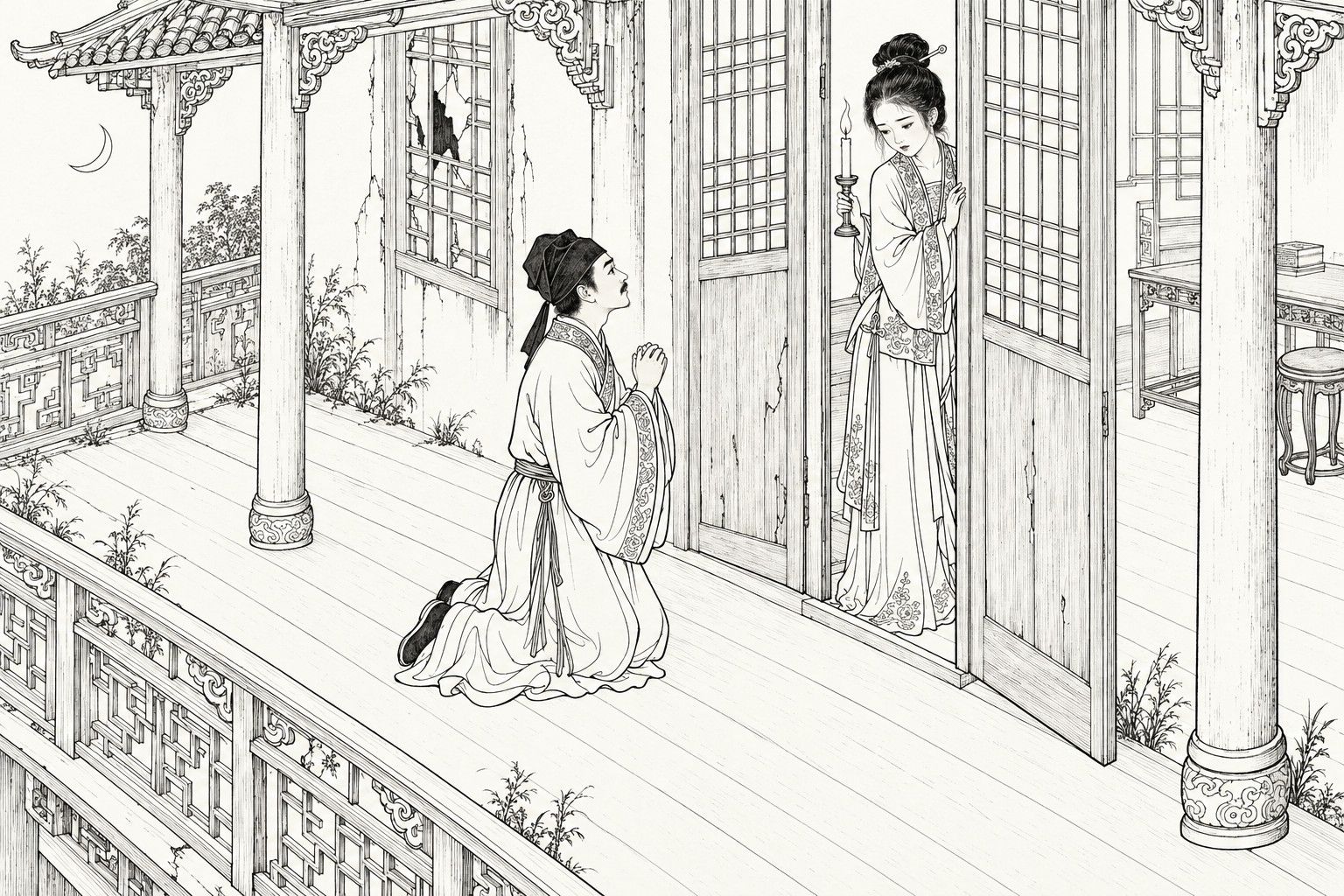
至夜,復往,則蘭麝猶芳,而凝待終宵,寂無聲咳。歸與妻謀,欲攜家而居之,冀得一遇。妻不從,生乃自往,讀于樓下。夜方憑幾,一鬼披髮入,面黑如漆,張目視生。生笑,染指研墨自涂,灼灼然相與對視。鬼慚而去。次夜,更既深,滅燭欲寢,聞樓後發扃,闢之外閛然。急起窺覘,則扉半啟。俄聞履聲細碎,有燭光自房中出。視之,則青鳳也。驟見生,駭而卻退,遽闔雙扉。生長跽而致詞曰:「小生不避險惡,實以卿故。幸無他人,得一握手為笑,死不憾耳。」女遙語曰:「惓惓深情,妾豈不知?但叔閨訓嚴,不敢奉命。」生固哀之,云:「亦不敢望肌膚之親,但一見顏色足矣。」女似肯可,啟關出,捉之臂而曳之。生狂喜,相將入樓下,擁而加諸膝。女曰:「幸有夙分,過此一夕,即相思無用矣。」問:「何故?」曰:「阿叔畏君狂,故化厲鬼以相嚇,而君不動也。今已卜居他所,一家皆移什物赴新居,而妾留守,明日即發矣。」言已,欲去,云:「恐叔歸。」生強止之,欲與為歡。方持論間,叟掩入。女羞懼無以自容,俯首倚床,拈帶不語。叟怒曰:「賤婢辱吾門戶!不速去,鞭撻且從其後!」女低頭急去,叟亦出。尾而聽之,訶詬萬端。聞青鳳嚶嚶啜泣,生心意如割,大聲曰:「罪在小生,于青鳳何與?倘宥鳳也,刀鋸斧鉞,小生願身受之!」良久寂然,生乃歸寢。自此第內絕不復聲息矣。生叔聞而奇之,願售以居,不較直。生喜,攜家口而遷焉。居逾年,甚適,而未嘗須臾忘鳳也。
至夜,复往,则兰麝犹芳,而凝待终宵,寂无声咳。归与妻谋,欲携家而居之,冀得一遇。妻不从,生乃自往,读于楼下。夜方凭几,一鬼披发入,面黑如漆,张目视生。生笑,染指研墨自涂,灼灼然相与对视。鬼惭而去。次夜,更既深,灭烛欲寝,闻楼后发扃,辟之外閛然。急起窥觇,则扉半启。俄闻履声细碎,有烛光自房中出。视之,则青凤也。骤见生,骇而却退,遽阖双扉。生长跽而致词曰:「小生不避险恶,实以卿故。幸无他人,得一握手为笑,死不憾耳。」女遥语曰:「惓惓深情,妾岂不知?但叔闺训严,不敢奉命。」生固哀之,云:「亦不敢望肌肤之亲,但一见颜色足矣。」女似肯可,启关出,捉之臂而曳之。生狂喜,相将入楼下,拥而加诸膝。女曰:「幸有夙分,过此一夕,即相思无用矣。」问:「何故?」曰:「阿叔畏君狂,故化厉鬼以相吓,而君不动也。今已卜居他所,一家皆移什物赴新居,而妾留守,明日即发矣。」言已,欲去,云:「恐叔归。」生强止之,欲与为欢。方持论间,叟掩入。女羞惧无以自容,俯首倚床,拈带不语。叟怒曰:「贱婢辱吾门户!不速去,鞭挞且从其后!」女低头急去,叟亦出。尾而听之,诃诟万端。闻青凤嘤嘤啜泣,生心意如割,大声曰:「罪在小生,于青凤何与?倘宥凤也,刀锯斧钺,小生愿身受之!」良久寂然,生乃归寝。自此第内绝不复声息矣。生叔闻而奇之,愿售以居,不较直。生喜,携家口而迁焉。居逾年,甚适,而未尝须臾忘凤也。
The next night he went again. The scent of orchid and musk still lingered, but though he waited intently all night long, there was not a sound, not so much as a cough. He went home and talked it over with his wife: he wanted to move the family there, in the hope of meeting the girl. His wife would not agree, so Qubing went alone and did his reading downstairs in the tower. One night, as he was leaning on his desk, a ghost came in with its hair hanging loose and its face black as lacquer, and stared at him with wide eyes. Qubing laughed, dipped his fingers in his inkstone and smeared his own face, and stared back at it, eyes blazing. The ghost was abashed and went away. The next night, when it was very late and he had blown out the candle and was about to go to bed, he heard a bolt drawn at the back of the tower, and a door outside swung open with a bang. He got up quickly to look, and found the door half open. Soon he heard light, quick footsteps, and candlelight came out of a room. He looked: it was Qingfeng. Seeing him so suddenly, she started back in fright and quickly shut both leaves of the door. Qubing knelt upright and spoke to her. “I braved danger and terror for your sake alone. Now, by good luck, no one else is here. If I could only hold your hand and see you smile, I would die without regret.” She answered from behind the door, “Do you think I don’t know how deep and true your feelings are? But my uncle keeps strict rules for the women of the house. I dare not do as you ask.” Qubing pleaded with her all the harder. “I don’t dare hope to touch you,” he said. “Only to see your face would be enough.” She seemed to give in. She opened the door and came out, and he caught her by the arm and drew her to him. Wild with joy, he led her downstairs, took her in his arms and set her on his knee. “We are lucky to have a bond from some former life,” she said. “But after tonight, longing will do no good.” “Why?” he asked. “My uncle was afraid of your wildness, so he turned himself into a fiend to frighten you, but you did not flinch. Now he has found a place to live elsewhere. The whole family has moved our things to the new house. I stayed behind to watch over this one, and tomorrow I leave too.” When she had said this she wanted to go. “I’m afraid my uncle will come back,” she said. Qubing held her back by force and wanted to make love to her. While they were still arguing, the old man slipped in. The girl was so ashamed and frightened she did not know where to put herself. She hung her head and leaned against the bed, twisting her sash and saying nothing. “Worthless wench!” the old man said in a rage. “You disgrace my house! Get out this instant, or the whip will follow you!” The girl hung her head and hurried off, and the old man went out too. Qubing followed and listened. The old man was berating her endlessly. When he heard Qingfeng sobbing softly, Qubing felt as if his heart were being cut. “The fault is mine,” he shouted. “What has it to do with Qingfeng? If you will only pardon her, I will suffer the knife, the saw, the axe, the halberd — I will take them all on my own body!” For a long while all was still, and Qubing went back to bed. From then on not a sound was heard in the house again. His uncle heard of it and marvelled. He offered to sell Qubing the house to live in, without haggling over the price. Qubing was glad, and moved there with his family. He lived there more than a year, very contentedly, but he never forgot Qingfeng for a moment.
會清明上墓歸,見小狐二,為犬逼逐。其一投荒竄去,一則皇急道上。望見生,依依哀啼,闒耳輯首,似乞其援。生憐之,啟裳衿,提抱以歸。閉門,置床上,則青鳳也。大喜,慰問。女曰:「適與婢子戲,遘此大厄。脫非郎君,必葬犬腹。望無以非類見憎。」生曰:「日切懷思,系于魂夢。見卿如獲異寶,何憎之云!」女曰:「此天數也,不因顛覆,何得相從?然幸矣,婢子必以妾為已死,可與君堅永約耳。」生喜,另舍舍之。積二年餘,生方夜讀,孝兒忽入。生輟讀,訝詰所來。孝兒伏地,愴然曰:「家君有橫難,非君莫拯。將自詣懇,恐不見納,故以某來。」問:「何事?」曰:「公子識莫三郎否?」曰:「此吾年家子也。」孝兒曰:「明日將過,倘攜有獵狐,望君之留之也。」生曰:「樓下之羞,耿耿在念,他事不敢預聞。必欲僕效綿薄,非青鳳來不可!」孝兒零涕曰:「鳳妹已野死三年矣!」生拂衣曰:「既爾,則恨滋深耳!」執卷高吟,殊不顧瞻。孝兒起,哭失聲,掩面而去。生如青鳳所,告以故。女失色曰:「果救之否?」曰:「救則救之;適不之諾者,亦聊以報前橫耳。」女乃喜曰:「妾少孤,依叔成立。昔雖獲罪,乃家範應爾。」生曰:「誠然,但使人不能無介介耳。卿果死,定不相援。」女笑曰:「忍哉!」次日,莫三郎果至,鏤膺虎韔,僕從甚赫。生門逆之。見獲禽甚多,中一黑狐,血殷毛革;撫之,皮肉猶溫。便托裘敝,乞得綴補。莫慨然解贈。生即付青鳳,乃與客飲。客既去,女抱狐于懷,三日而蘇,展轉復化為叟。喜顧女曰:「我固謂汝不死,今果然矣。」女謂生曰:「君如念妾,還乞以樓宅相假,使妾得以申返哺之私。」生諾之。叟赧然謝別而去。入夜,果舉家來。由此如家人父子,無復猜忌矣。生齋居,孝兒時共談宴。生嫡出子漸長,遂使傅之;蓋循循善教,有師範焉。
会清明上墓归,见小狐二,为犬逼逐。其一投荒窜去,一则皇急道上。望见生,依依哀啼,阘耳辑首,似乞其援。生怜之,启裳衿,提抱以归。闭门,置床上,则青凤也。大喜,慰问。女曰:「适与婢子戏,遘此大厄。脱非郎君,必葬犬腹。望无以非类见憎。」生曰:「日切怀思,系于魂梦。见卿如获异宝,何憎之云!」女曰:「此天数也,不因颠覆,何得相从?然幸矣,婢子必以妾为已死,可与君坚永约耳。」生喜,另舍舍之。积二年余,生方夜读,孝儿忽入。生辍读,讶诘所来。孝儿伏地,怆然曰:「家君有横难,非君莫拯。将自诣恳,恐不见纳,故以某来。」问:「何事?」曰:「公子识莫三郎否?」曰:「此吾年家子也。」孝儿曰:「明日将过,倘携有猎狐,望君之留之也。」生曰:「楼下之羞,耿耿在念,他事不敢预闻。必欲仆效绵薄,非青凤来不可!」孝儿零涕曰:「凤妹已野死三年矣!」生拂衣曰:「既尔,则恨滋深耳!」执卷高吟,殊不顾瞻。孝儿起,哭失声,掩面而去。生如青凤所,告以故。女失色曰:「果救之否?」曰:「救则救之;适不之诺者,亦聊以报前横耳。」女乃喜曰:「妾少孤,依叔成立。昔虽获罪,乃家范应尔。」生曰:「诚然,但使人不能无介介耳。卿果死,定不相援。」女笑曰:「忍哉!」次日,莫三郎果至,镂膺虎韔,仆从甚赫。生门逆之。见获禽甚多,中一黑狐,血殷毛革;抚之,皮肉犹温。便托裘敝,乞得缀补。莫慨然解赠。生即付青凤,乃与客饮。客既去,女抱狐于怀,三日而苏,展转复化为叟。喜顾女曰:「我固谓汝不死,今果然矣。」女谓生曰:「君如念妾,还乞以楼宅相假,使妾得以申返哺之私。」生诺之。叟赧然谢别而去。入夜,果举家来。由此如家人父子,无复猜忌矣。生斋居,孝儿时共谈宴。生嫡出子渐长,遂使傅之;盖循循善教,有师范焉。
It happened that he was coming home from sweeping the family graves at the Qingming festival when he saw two little foxes being chased by a dog. One of them bolted off into the wilds; the other was running frantically about on the road. Seeing Qubing, it whimpered piteously and clung near him, ears drooping and head bowed, as if begging for help. He took pity on it, opened the front of his robe, lifted it in and carried it home. He shut the door and set it on the bed — and it was Qingfeng. He was overjoyed and asked tenderly how she was. “I was just playing with my maid,” she said, “and met with this terrible danger. If it weren’t for you, I would have ended up in a dog’s belly. I hope you won’t hate me now that you know I am not your kind.” “I have longed for you every day,” said Qubing. “You have been bound up in my very dreams. Finding you is like finding a rare treasure. How could I hate you?” “This is Heaven’s will,” she said. “If I had not been thrown into such peril, how could I ever have come to you? And it is lucky too: my maid is sure to think I’m dead, so now you and I can be together for good.” Qubing was delighted and gave her rooms of her own. More than two years passed. One night Qubing was reading when Xiao’er suddenly came in. Qubing put down his book and asked in surprise what had brought him. Xiao’er threw himself on the ground. “My father is in sudden peril,” he said in great distress, “and no one but you can save him. He wanted to come and beg you himself, but feared you would not receive him, so he sent me.” “What is it?” asked Qubing. “Do you know Mo Sanlang, sir?” said Xiao’er. “He is the son of one of my family’s examination friends,” said Qubing. “Tomorrow he will pass this way,” said Xiao’er. “If he has a fox among his game, I hope you will keep it back.” “The shame I suffered in the tower still burns in my mind,” said Qubing. “I dare not concern myself with anything else. If you must have my poor help, nothing will do unless Qingfeng comes!” Xiao’er wept. “Sister Feng died in the wilds three years ago!” Qubing angrily shook out his robe. “In that case my grudge is all the deeper!” He picked up his book and began to chant aloud, and did not so much as glance at him. Xiao’er got up, sobbing aloud, covered his face and left. Qubing went to Qingfeng and told her what had happened. She went pale. “Will you really save him or not?” “Save him I will,” said Qubing. “I refused just now only to pay him back a little for how he treated me before.” Then she was happy. “I was orphaned young,” she said, “and my uncle raised me. He punished me then, but only as our family’s rules required.” “True,” said Qubing. “But it still leaves a man feeling sore. If you really had died, I would certainly not have helped him.” Qingfeng laughed. “How hard-hearted you are!” The next day Mo Sanlang did come, his horse in a carved breastplate and his bow in a tiger-skin case, with a grand train of servants. Qubing met him at the gate. He saw that they had taken a great deal of game, and among it was a black fox, its fur dark with blood. He stroked it: the flesh under the skin was still warm. At once he pretended that his fur coat was worn and begged for the fox to patch it. Mo generously untied it and gave it to him. Qubing handed it straight to Qingfeng, then sat down to drink with his guest. When the guest had gone, Qingfeng held the fox in her arms. After three days it came to, rolled over, and turned back into the old man. He looked at her with joy. “I always said you were not dead, and now I see it is true.” “If you care for me,” Qingfeng said to Qubing, “please lend us the tower and the house again, so that I can repay my uncle as the young crow feeds its parent.” Qubing agreed. The old man thanked him, red in the face, said goodbye and left. That night, as she had said, the whole family came. From then on they were like one family, fathers and sons, with no more mistrust between them. Qubing lived in his study, and Xiao’er often came to talk and feast with him. When Qubing’s son by his wife was growing up, he had Xiao’er tutor him. Xiao’er taught him patiently and well, a true model of a teacher.