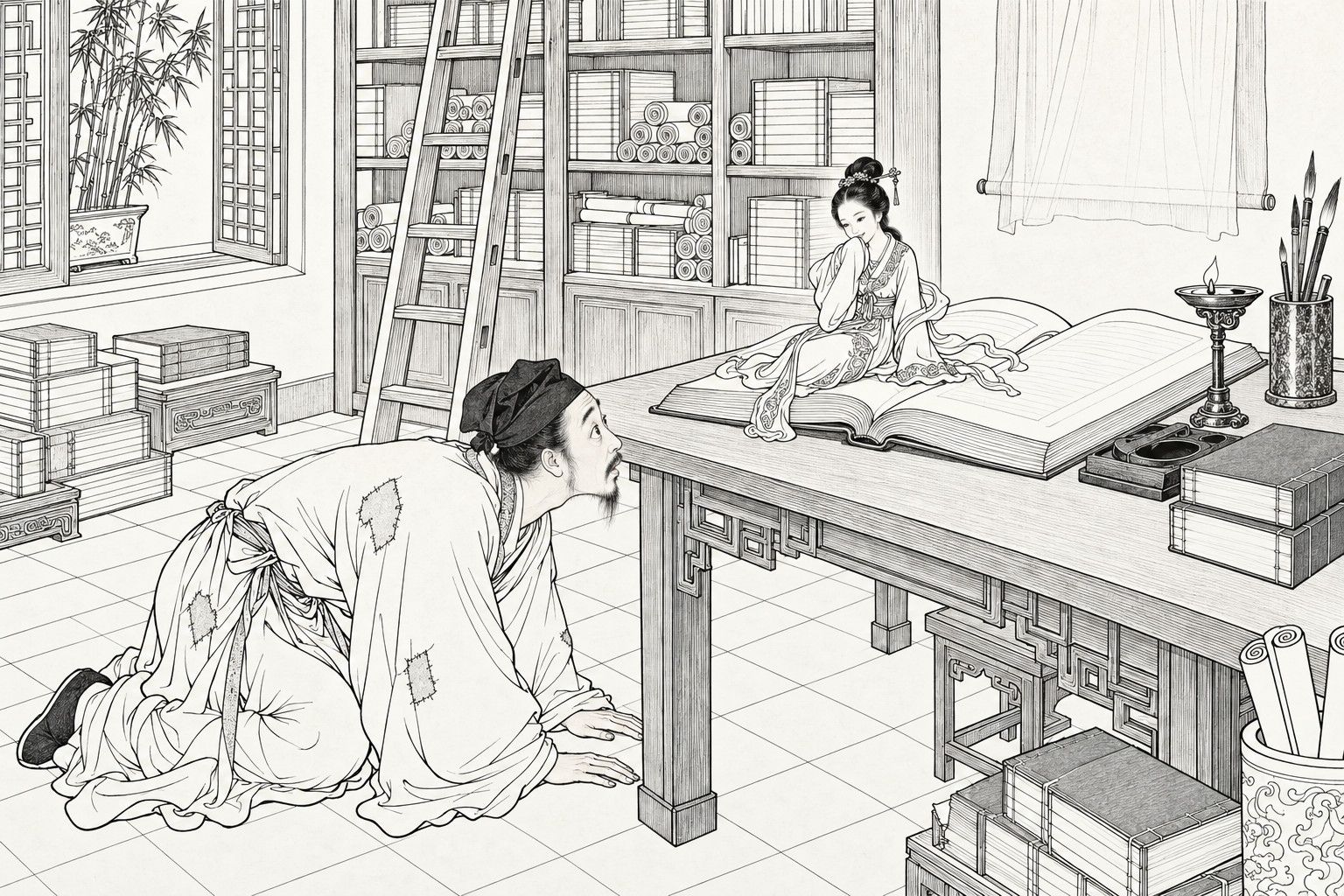
彭城郎玉柱,其先世官至太守,居官廉,得俸不治生產,積書盈屋。至玉柱,尤癡:家苦貧,無物不鬻,惟父藏書,一卷不忍置。父在時,曾書「勸學篇」黏其座右,郎日諷誦;又幛以素紗,惟恐磨滅。非為干祿,實信書中真有金粟。晝夜研讀,無間寒暑。年二十餘,不求婚配,冀卷中麗人自至。見賓親,不知溫涼,三數語後,則誦聲大作,客逡巡自去。每文宗臨試,輒首拔之,而苦不得售。一日,方讀,忽大風飄卷去。急逐之,踏地陷足;探之,穴有腐草;掘之,乃古人窖粟,朽敗已成糞土。雖不可食,而益信「千鍾」之說不妄,讀益力。一日,梯登高架,於亂卷中得金輦徑尺,大喜,以為「金屋」之驗。出以示人,則鍍金而非真金。心竊怨古人之誑己也。居無何,有父同年,觀察是道,性好佛。或勸郎獻輦為佛龕。觀察大悅,贈金三百、馬二匹。郎喜,以為金屋、車馬皆有驗,因益刻苦。然行年已三十矣。或勸其娶,曰:「『書中自有顏如玉』,我何憂無美妻乎?」又讀二三年,迄無效;人咸揶揄之。時民間訛言,天上織女私逃。或戲郎:「天孫竊奔,蓋為君也。」郎知其戲,置不辯。一夕,讀漢書至八卷,卷將半,見紗翦美人夾藏其中。駭曰:「書中顏如玉,其以此應之耶?」心悵然自失。而細視美人,眉目如生;背隱隱有細字云:「織女。」大異之。日置卷上,反復瞻玩,至忘食寢。一日,方注目間,美人忽折腰起,坐卷上微笑。郎驚絕,伏拜案下。既起,已盈尺矣。益駭,又叩之。下几亭亭,宛然絕代之姝。拜問:「何神?」美人笑曰:「妾顏氏,字如玉,君固相知已久。日垂青盼,脫不一至,恐千載下無復有篤信古人者。」郎喜,遂與寢處。然枕席間親愛倍至,而不知為人。每讀,必使女坐其側。女戒勿讀,不聽。女曰:「君所以不能騰達者,徒以讀耳。試觀春秋榜上,讀如君者幾人?若不聽,妾行去矣。」郎暫從之。少頃,忘其教,吟誦復起。踰刻,索女,不知所在。神志喪失,囑而禱之,殊無影跡。忽憶女所隱處,取漢書細檢之,直至舊所,果得之。呼之不動,伏以哀祝。女乃下曰:「君再不聽,當相永絕!」因使治棋枰、摴蒱之具,日與遨戲。而郎意殊不屬。覷女不在,則竊卷流覽。恐為女覺,陰取漢書第八卷,雜溷他所以迷之。一日,讀酣,女至,竟不之覺;忽睹之,急掩卷,而女已亡矣。大懼,冥搜諸卷,渺不可得;既,仍於漢書八卷中得之,葉數不爽。因再拜祝,矢不復讀。女乃下,與之弈,曰:「三日不工,當復去。」至三日,忽一局贏女二子。女乃喜,授以絃索,限五日工一曲。郎手營目注,無暇他及;久之,隨指應節,不覺鼓舞。女乃日與飲博,郎遂樂而忘讀。女又縱之出門,使結客,由此倜儻之名暴著。女曰:「子可以出而試矣。」郎一夜謂女曰:「凡人男女同居則生子;今與卿居久,何不然也?」女笑曰:「君日讀書,妾固謂無益。今即夫婦一章,尚未了悟,枕席二字有工夫。」郎驚問:「何工夫?」女笑不言。少間,潛迎就之。郎樂極,曰:「我不意夫婦之樂,有不可言傳者。」於是逢人輒道,無有不掩口者。女知而責之。郎曰:「鑽穴踰隙者,始不可以告人;天倫之樂,人所皆有,何諱焉。」過八九月,女果舉一男,買媼撫字之。一日,謂郎曰:「妾從君二年,業生子,可以別矣。久恐為君禍,悔之已晚。」郎聞言,泣下,伏不起,曰:「卿不念呱呱者耶?」女亦悽然,良久曰:「必欲妾留,當舉架上書盡散之。」郎曰:「此卿故鄉,乃僕性命,何出此言!」女不之強,曰:「妾亦知其有數,不得不預告耳。」先是,親族或窺見女,無不駭絕,而又未聞其締姻何家,共詰之。郎不能作偽語,但默不言。人益疑,郵傳幾遍,聞於邑宰史公。史,閩人,少年進士。聞聲傾動,竊欲一睹麗容,因而拘郎及女。女聞知,遁匿無跡。宰怒,收郎,斥革衣衿,梏械備加,務得女所自往。郎垂死,無一言。械其婢,略能道其彷彿。宰以為妖,命駕親臨其家。見書卷盈屋,多不勝搜,乃焚之;庭中煙結不散,瞑若陰霾。郎既釋,遠求父門人書,得從辨復。是年秋捷,次年舉進士。而啣恨切於骨髓。為顏如玉之位,朝夕而祝曰:「卿如有靈,當佑我官於閩。」後果以直指巡閩。居三月,訪史惡款,籍其家。時有中表為司理,逼納愛妾,託言買婢寄署中。案既結,郎即日自劾,取妾而歸。
彭城郎玉柱,其先世官至太守,居官廉,得俸不治生产,积书盈屋。至玉柱,尤痴:家苦贫,无物不鬻,惟父藏书,一卷不忍置。父在时,曾书「劝学篇」黏其座右,郎日讽诵;又幛以素纱,惟恐磨灭。非为干禄,实信书中真有金粟。昼夜研读,无间寒暑。年二十余,不求婚配,冀卷中丽人自至。见宾亲,不知温凉,三数语后,则诵声大作,客逡巡自去。每文宗临试,辄首拔之,而苦不得售。一日,方读,忽大风飘卷去。急逐之,踏地陷足;探之,穴有腐草;掘之,乃古人窖粟,朽败已成粪土。虽不可食,而益信「千钟」之说不妄,读益力。一日,梯登高架,于乱卷中得金辇径尺,大喜,以为「金屋」之验。出以示人,则镀金而非真金。心窃怨古人之诳己也。居无何,有父同年,观察是道,性好佛。或劝郎献辇为佛龛。观察大悦,赠金三百、马二匹。郎喜,以为金屋、车马皆有验,因益刻苦。然行年已三十矣。或劝其娶,曰:「『书中自有颜如玉』,我何忧无美妻乎?」又读二三年,迄无效;人咸揶揄之。时民间讹言,天上织女私逃。或戏郎:「天孙窃奔,盖为君也。」郎知其戏,置不辩。一夕,读汉书至八卷,卷将半,见纱翦美人夹藏其中。骇曰:「书中颜如玉,其以此应之耶?」心怅然自失。而细视美人,眉目如生;背隐隐有细字云:「织女。」大异之。日置卷上,反复瞻玩,至忘食寝。一日,方注目间,美人忽折腰起,坐卷上微笑。郎惊绝,伏拜案下。既起,已盈尺矣。益骇,又叩之。下几亭亭,宛然绝代之姝。拜问:「何神?」美人笑曰:「妾颜氏,字如玉,君固相知已久。日垂青盼,脱不一至,恐千载下无复有笃信古人者。」郎喜,遂与寝处。然枕席间亲爱倍至,而不知为人。每读,必使女坐其侧。女戒勿读,不听。女曰:「君所以不能腾达者,徒以读耳。试观春秋榜上,读如君者几人?若不听,妾行去矣。」郎暂从之。少顷,忘其教,吟诵复起。逾刻,索女,不知所在。神志丧失,嘱而祷之,殊无影迹。忽忆女所隐处,取汉书细检之,直至旧所,果得之。呼之不动,伏以哀祝。女乃下曰:「君再不听,当相永绝!」因使治棋枰、摴蒱之具,日与遨戏。而郎意殊不属。觑女不在,则窃卷流览。恐为女觉,阴取汉书第八卷,杂溷他所以迷之。一日,读酣,女至,竟不之觉;忽睹之,急掩卷,而女已亡矣。大惧,冥搜诸卷,渺不可得;既,仍于汉书八卷中得之,叶数不爽。因再拜祝,矢不复读。女乃下,与之弈,曰:「三日不工,当复去。」至三日,忽一局赢女二子。女乃喜,授以弦索,限五日工一曲。郎手营目注,无暇他及;久之,随指应节,不觉鼓舞。女乃日与饮博,郎遂乐而忘读。女又纵之出门,使结客,由此倜傥之名暴着。女曰:「子可以出而试矣。」郎一夜谓女曰:「凡人男女同居则生子;今与卿居久,何不然也?」女笑曰:「君日读书,妾固谓无益。今即夫妇一章,尚未了悟,枕席二字有工夫。」郎惊问:「何工夫?」女笑不言。少间,潜迎就之。郎乐极,曰:「我不意夫妇之乐,有不可言传者。」于是逢人辄道,无有不掩口者。女知而责之。郎曰:「钻穴逾隙者,始不可以告人;天伦之乐,人所皆有,何讳焉。」过八九月,女果举一男,买媪抚字之。一日,谓郎曰:「妾从君二年,业生子,可以别矣。久恐为君祸,悔之已晚。」郎闻言,泣下,伏不起,曰:「卿不念呱呱者耶?」女亦凄然,良久曰:「必欲妾留,当举架上书尽散之。」郎曰:「此卿故乡,乃仆性命,何出此言!」女不之强,曰:「妾亦知其有数,不得不预告耳。」先是,亲族或窥见女,无不骇绝,而又未闻其缔姻何家,共诘之。郎不能作伪语,但默不言。人益疑,邮传几遍,闻於邑宰史公。史,闽人,少年进士。闻声倾动,窃欲一睹丽容,因而拘郎及女。女闻知,遁匿无迹。宰怒,收郎,斥革衣衿,梏械备加,务得女所自往。郎垂死,无一言。械其婢,略能道其仿佛。宰以为妖,命驾亲临其家。见书卷盈屋,多不胜搜,乃焚之;庭中烟结不散,瞑若阴霾。郎既释,远求父门人书,得从辨复。是年秋捷,次年举进士。而啣恨切于骨髓。为颜如玉之位,朝夕而祝曰:「卿如有灵,当佑我官于闽。」后果以直指巡闽。居三月,访史恶款,籍其家。时有中表为司理,逼纳爱妾,托言买婢寄署中。案既结,郎即日自劾,取妾而归。
Lang Yuzhu was a man of Pengcheng. One of his forebears had risen to be a prefect, an honest official who never spent his salary on land or property, but filled his house with books. Yuzhu was more bookish than any of them. The family was wretchedly poor, and there was nothing they had not sold; only his father’s books he could not bear to part with, not a single volume. While his father was alive he had written out the “Exhortation to Study” and pasted it up beside his seat. Lang recited it every day, and covered it with white gauze for fear it would wear away. It was not that he wanted an official’s salary: he truly believed there was gold and grain in books. He read day and night, winter and summer without a break. At twenty-odd he did not look for a wife, hoping a beauty would come to him out of his books. When he met guests or relatives he did not know how to make small talk; after a few words he would burst into loud recitation, and the guest would edge away and leave. Whenever the examiner came to hold the examinations he always placed Lang first, yet Lang could never pass the higher examinations. One day, as he was reading, a great wind suddenly blew his book away. He ran after it, and his foot sank into the ground. He felt about: there was rotten straw in a hole. He dug: it was grain some ancient had stored in a pit, rotted long since into dung and dirt. It could not be eaten, but it made him all the surer that the “thousand measures of grain” were no lie, and he read harder than ever. One day, climbing a ladder to a high shelf, he found among the jumbled books a golden carriage a foot across. He was overjoyed, taking it for proof of the “house of gold”. But when he showed it to people, it was gilt, not real gold. Privately he blamed the ancients for deceiving him. Not long after, a man who had passed the examinations in the same year as his father came to be intendant of the circuit. He was devoted to the Buddha. Someone advised Lang to present the carriage to him for a Buddha shrine. The intendant was delighted and gave him three hundred taels and two horses. Lang was glad, taking it that the house of gold and the carriages and horses had all come true, and he studied harder than ever. But by now he was thirty. When people urged him to marry, he said, “‘In books there is a girl with a face like jade.’ Why should I worry about finding a beautiful wife?” He read for another two or three years with no result, and everyone made fun of him. At that time a rumour went about among the common people that the Weaving Maid had run away from heaven. Someone teased Lang: “The Heavenly Granddaughter has eloped — it must be for you.” Lang knew it was a joke and did not bother to answer. One evening, reading the eighth volume of the History of the Han, about halfway through, he found a beauty cut out of gauze pressed between the pages. “So this is how the girl with a face like jade in books comes true?” he said in dismay, and felt crushed and lost. But looking closely at the beauty, he saw her brows and eyes were as if alive, and on her back, faintly, were tiny characters: “The Weaving Maid.” He marvelled. Every day he set her on his book and gazed at her over and over, forgetting to eat or sleep. One day, as he was gazing at her, the beauty suddenly bent at the waist and rose, and sat on the book, smiling. Lang was thunderstruck and prostrated himself under the desk. By the time he got up she was over a foot tall. More frightened than ever, he kowtowed again. She stepped down from the table, slender and graceful, a beauty without equal in her age. He bowed and asked, “What goddess are you?” She smiled. “My family name is Yan, and I am called Ruyu. You have known me for a long time. You looked on me with favour day after day; if I had not come even once, I fear that for a thousand years to come no one would ever again believe in the ancients.” Lang was delighted, and shared her room and bed. But though on the pillow and mat he was doubly loving, he did not know what to do as a man. Whenever he read, he made her sit beside him. She told him not to read, but he would not listen. “The only reason you cannot get ahead,” she said, “is that you read. Look at the lists of successful candidates, spring and autumn: how many of them read the way you do? If you won’t listen, I’ll be going.” For the time being Lang did as she said. But soon he forgot her advice, and the chanting started up again. A little later he looked for her, and she was nowhere to be found. Beside himself, he prayed to her, but there was no trace of her at all. Suddenly he remembered where she had been hidden. He took the History of the Han and searched through it page by page until he came to the old place, and there she was. He called her, but she did not move, so he prostrated himself and prayed and pleaded. Then she came down. “If you disobey me once more, I will leave you forever!” She had him get a Go board and the things for chupu, and played games with him every day. But Lang’s heart was not in it. Whenever he saw she was not there, he would sneak a book and leaf through it. Afraid she would find out, he secretly took the eighth volume of the History of the Han and hid it among the others to throw her off. One day, deep in his reading, he did not notice her come in; when he suddenly saw her he hurriedly shut the book, but she had already vanished. In terror he searched through all the books, but she could not be found; in the end he found her in the eighth volume of the History of the Han again, at exactly the same page. So he bowed twice and prayed, and swore he would never read again. Then she came down and played Go with him. “If you aren’t good at it in three days,” she said, “I’ll leave again.” On the third day he suddenly beat her by two stones in one game. She was pleased, and gave him a stringed instrument, allowing him five days to master a tune. Lang’s hands were busy and his eyes intent, with no time for anything else. After a while his fingers kept time without thinking, and before he knew it he was nodding and swaying to the music. Then she drank and gambled with him every day, and Lang enjoyed himself so much he forgot to read. She also let him go out and make friends, and from then on he was known everywhere as a free and easy fellow. “Now you can go out and sit the examinations,” she said. One night Lang said to her, “When a man and a woman live together they have children. I have lived with you a long time now — why haven’t we?” She laughed. “Every day you read your books, and I always said it did no good. Even now you have not understood the chapter on husband and wife. There is a craft to those two words, pillow and mat.” “What craft?” asked Lang in surprise. She smiled and said nothing. After a while she quietly drew him to her. Lang was overjoyed. “I never imagined that the joys of husband and wife were beyond words!” After that he told everyone he met, and there was no one who did not cover their mouth. When she learned of it, she scolded him. “It’s those who bore holes in walls and climb through gaps who mustn’t tell anyone,” said Lang. “The joys of husband and wife are something everyone has. Why hide them?” Eight or nine months later she did indeed bear a son, and they bought an old woman to nurse him. One day she said to Lang, “I have been with you two years and have borne you a son. It is time for us to part. If I stay long, I fear it will bring you disaster, and then it will be too late for regrets.” Lang wept at this and fell on the floor and would not get up. “Have you no thought for the crying baby?” She was sad too. After a long while she said, “If you really want me to stay, you must get rid of every book on the shelves.” “They are your old home, and they are my life!” said Lang. “How can you say such a thing?” She did not press him. “I know it is fated,” she said. “I had to warn you beforehand, that’s all.” Before this, relatives had sometimes caught a glimpse of her, and they were all astounded; nor had they heard what family he had married into. They all questioned him. Lang could not make up a lie, and only kept silent. People grew more suspicious, and the story spread almost everywhere until it reached the county magistrate, Shi. Shi was from Fujian, a young jinshi. Hearing of her, he was smitten and longed to see her beauty for himself, so he had Lang and the woman arrested. When she learned of it, she fled and hid without a trace. The magistrate was furious. He had Lang put in prison, stripped him of his licentiate’s robes, and put him to every kind of torture to find out where the woman had gone. Lang came near death but did not say a word. The magistrate tortured his maid, who could tell him something of what the woman was like. The magistrate decided she was an evil spirit and went to Lang’s house himself. Seeing the books filling the house, too many to search, he burned them. The smoke gathered over the courtyard and would not disperse, as dark as a gloomy fog. When Lang was released, he sought letters from his father’s old students far away and so got his rank restored. That autumn he passed the provincial examination, and the next year he became a jinshi. But his hatred cut him to the marrow. He set up a spirit tablet for Yan Ruyu and prayed to it morning and night: “If you have any power, help me to an office in Fujian.” And later he was indeed sent to tour Fujian as an imperial inspector. After three months there he looked into Shi’s crimes and had his property confiscated. At that time a cousin of Lang’s was serving as judge, and Lang forced Shi to surrender his favourite concubine, claimed that he had bought her as a maid, and lodged her temporarily at his cousin’s office. Once the case was closed, Lang impeached himself that same day, took the concubine and went home.