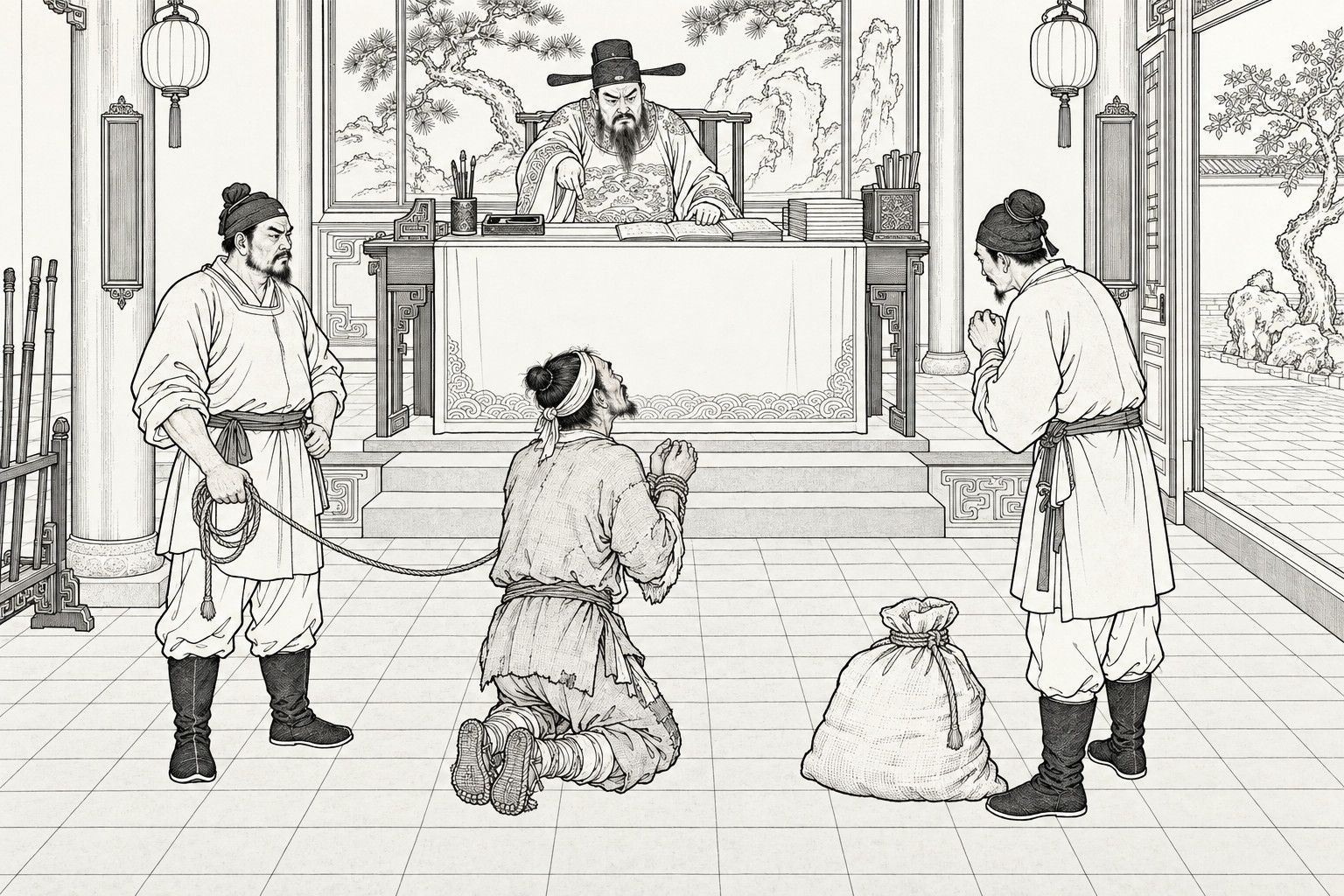
高苑民王十,負鹽於博興。夜為二人所獲。意為土商之邏卒也,舍鹽欲遁;足苦不前,遂被縛。哀之。二人曰:「我非鹽肆中人,乃鬼卒也。」十懼,乞一至家,別妻子。不許,曰:「此去亦未便即死,不過暫役耳。」十問:「何事?」曰:「冥中新閻王到任,見奈河淤平,十八獄坑廁俱滿,故捉三種人淘河:小偷、私鑄、私鹽;又一等人使滌廁:樂戶也。」十從去,入城郭,至一官署,見閻羅在上,方稽名籍。鬼稟曰:「捉一私販王十至。」閻羅視之,怒曰:「私鹽者,上漏國稅,下蠹民生者也。若世之暴官奸商所指為私鹽者,皆天下之良民。貧人揭錙銖之本,求升斗之息,何為私哉!」罰二鬼市鹽四斗,並十所負,代運至家。留十,授以蒺藜骨朵,令隨諸鬼督河工。鬼引十去,至奈河邊,見河內人夫,繈續如蟻。又視河水渾赤,臭不可聞。淘河者皆赤體持畚鍤,出沒其中。朽骨腐尸,盈筐負舁而出;深處則滅頂求之。惰者輒以骨朵攻背股。同監者以香綿丸如巨菽,使含口中,乃近岸。見高苑肆商,亦在其中,十獨苛遇之:入河楚背,上岸敲股。商懼,常沒身水中,十乃已。經三晝夜,河夫半死,河工亦竣。前二鬼仍送至家,豁然而蘇。先是,十負鹽未歸,天明,妻啟戶,則鹽兩囊置庭中,而十久不至。使人遍覓之,則死途中。舁之而歸,奄有微息,不解其故。及醒,始言之。肆商亦於前日死,至是始蘇。骨朵擊處,皆成巨疽,渾身腐潰,臭不可近。十故詣之。望見十,猶縮首衾中,如在奈河狀。一年,始愈,不復為商矣。
高苑民王十,负盐于博兴。夜为二人所获。意为土商之逻卒也,舍盐欲遁;足苦不前,遂被缚。哀之。二人曰:「我非盐肆中人,乃鬼卒也。」十惧,乞一至家,别妻子。不许,曰:「此去亦未便即死,不过暂役耳。」十问:「何事?」曰:「冥中新阎王到任,见奈河淤平,十八狱坑厕俱满,故捉三种人淘河:小偷、私铸、私盐;又一等人使涤厕:乐户也。」十从去,入城郭,至一官署,见阎罗在上,方稽名籍。鬼禀曰:「捉一私贩王十至。」阎罗视之,怒曰:「私盐者,上漏国税,下蠹民生者也。若世之暴官奸商所指为私盐者,皆天下之良民。贫人揭锱铢之本,求升斗之息,何为私哉!」罚二鬼市盐四斗,并十所负,代运至家。留十,授以蒺藜骨朵,令随诸鬼督河工。鬼引十去,至奈河边,见河内人夫,繈续如蚁。又视河水浑赤,臭不可闻。淘河者皆赤体持畚锸,出没其中。朽骨腐尸,盈筐负舁而出;深处则灭顶求之。惰者辄以骨朵攻背股。同监者以香绵丸如巨菽,使含口中,乃近岸。见高苑肆商,亦在其中,十独苛遇之:入河楚背,上岸敲股。商惧,常没身水中,十乃已。经三昼夜,河夫半死,河工亦竣。前二鬼仍送至家,豁然而苏。先是,十负盐未归,天明,妻启户,则盐两囊置庭中,而十久不至。使人遍觅之,则死途中。舁之而归,奄有微息,不解其故。及醒,始言之。肆商亦于前日死,至是始苏。骨朵击处,皆成巨疽,浑身腐溃,臭不可近。十故诣之。望见十,犹缩首衾中,如在奈河状。一年,始愈,不复为商矣。
Wang Shi, a commoner of Gaoyuan, was carrying a load of salt on his back to Boxing. At night he was seized by two men. Taking them for patrolmen of the local salt merchants, he dropped the salt and tried to run, but his feet were sore and would not carry him, and he was tied up. He begged them for mercy. “We are not from the salt shop,” the two men said. “We are ghost runners.” Wang was frightened. He begged to go home once to say goodbye to his wife and children. They would not allow it. “Going with us does not mean you will die right away,” they said. “It is only a spell of labour.” “What labour?” Wang asked. “A new King of the Underworld has taken office. He found the River Nai silted up level, and the pits and latrines of the eighteen hells all full. So he is rounding up three kinds of people to dredge the river: thieves, counterfeiters, and dealers in private salt. And one more kind to scour the latrines: the entertainer households.” Wang went with them. They entered a walled city and came to a government office, where Yama sat on high, going through the registers of names. The ghosts reported: “We have caught a private dealer, Wang Shi, and brought him here.” Yama looked at him and said angrily, “A dealer in private salt is one who cheats the state of its taxes above and gnaws away at the people’s living below. But those whom the cruel officials and crooked merchants of the world call dealers in private salt are all the good people of the empire. A poor man scrapes together a few coins of capital in hope of a pint or a peck of profit. What is private about that?” He fined the two ghosts four pecks of salt, to be bought with their own money and carried, together with the salt Wang had been carrying, to his home for him. Wang he kept back. He gave him a spiked mace and ordered him to go with the ghosts and oversee the river work. The ghosts led Wang off to the bank of the River Nai. In the river the labourers were strung out like ants. The water was a muddy red, and the stench was past bearing. The dredgers were all naked, with baskets and spades, bobbing up and going under. Rotting bones and decaying corpses they hauled out by the basketful, carrying them on poles; where the water was deep they went under over their heads to grope for them. Anyone who slacked was struck at once across the back or thighs with a mace. The other overseers gave Wang a ball of scented cotton the size of a big bean to hold in his mouth; only then could he go near the bank. Among the dredgers he saw the salt-shop merchant of Gaoyuan, and him alone Wang treated harshly: in the water he beat his back, on the bank he cudgelled his thighs. The merchant was so afraid that he kept his whole body under the water, and only then did Wang leave him alone. After three days and nights, half the dredgers were dead, and the river work was done. The same two ghosts took Wang home again, and he suddenly came back to life. Earlier, when Wang had not come home with his salt, his wife opened the door at daybreak and found two sacks of salt set in the courtyard, but Wang did not come for a long time. She sent people to look for him everywhere, and they found him dead on the road. They carried him home. There was still the faintest breath in him, and no one could understand it. When he woke, he told them for the first time. The salt merchant, too, had died the day before, and only now came back to life. Wherever the mace had struck him, great boils had formed; his whole body was rotting and running, and the stench was such that no one could go near him. Wang went to see him on purpose. At the sight of Wang, the merchant still pulled his head under the quilt, just as he had in the River Nai. It was a year before he recovered, and he never dealt in salt again.