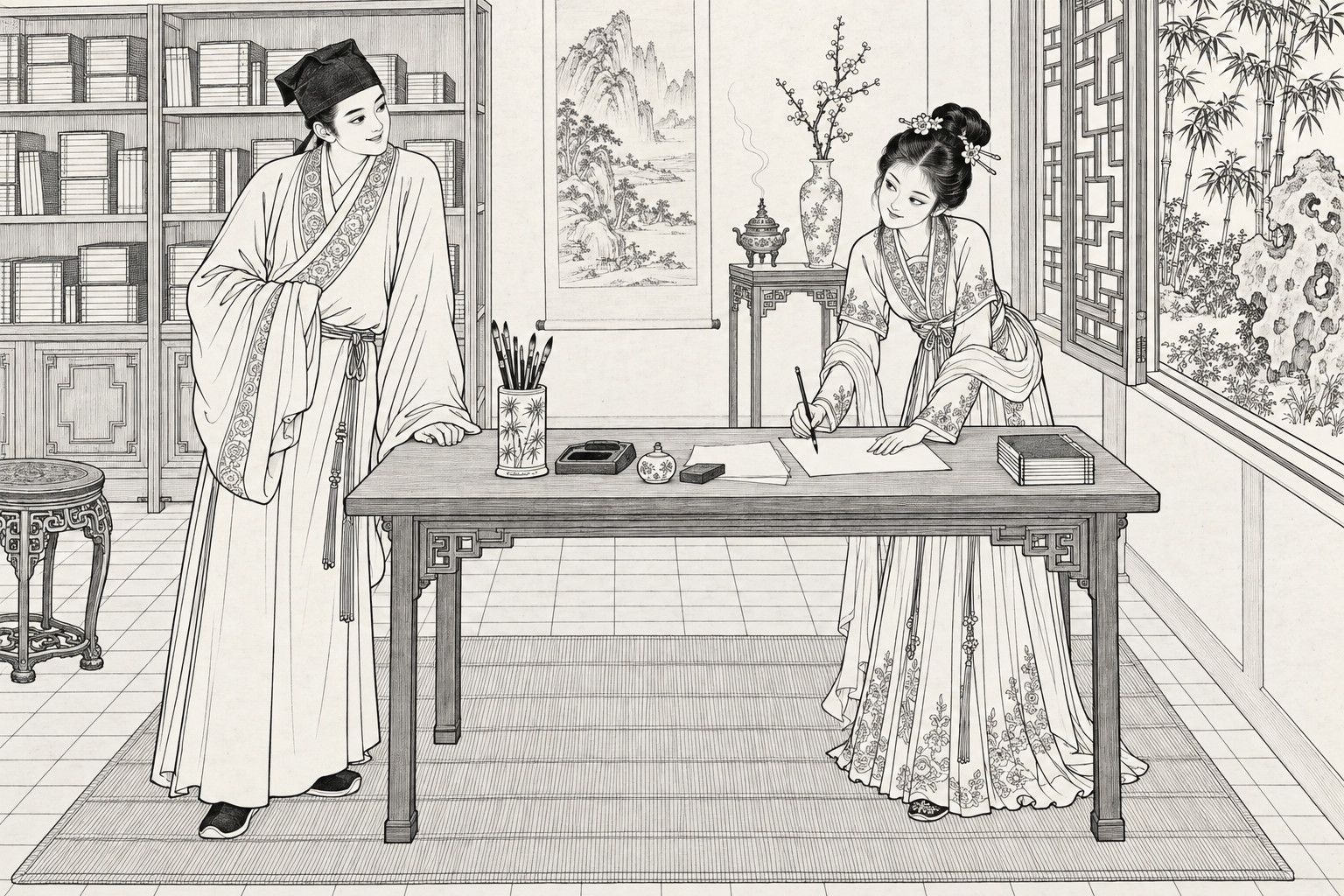
嘉平某公子,風儀秀美。年十七八,入郡赴童子試。偶過許娼之門,見內有二八麗人,因目注之。女微笑點首,公子近就與語。女問:「寓居何處?」具告之。問:「寓中有人否?」曰:「無。」女云:「妾晚間奉訪,勿使人知。」公子歸,及暮,屏去僮僕。女果至,自言:「小字溫姬。」且云:「妾慕公子風流,故背媼而來。區區之意,願奉終身。」公子亦喜。自此三兩夜輒一至。一夕,冒雨來,入門解去溼衣,罥諸椸上;又脫足上小靴,求公子代去泥塗。遂上床以被自覆。公子視其靴,乃五文新錦,沾濡殆盡,惜之。女曰:「妾非敢以賤物相役,欲使公子知妾之癡於情也。」聽窗外雨聲不止,遂吟曰:「淒風冷雨滿江城。」求公子續之。公子辭以不解。女曰:「公子如此一人,何乃不知風雅!使妾清興消矣!」因勸肄習,公子諾之。往來既頻,僕輩皆知。公子姊夫宋氏,亦世家子,聞之,竊求公子,一見溫姬。公子言之,女必不可。宋隱身僕舍,伺女至,伏窗窺之,顛倒欲狂。急排闥,女起,踰垣而去。宋嚮往甚殷,乃修贄見許媼,指名求之。媼曰:「果有溫姬,但死已久。」宋愕然退,告公子,公子始知為鬼。至夜,因以宋言告女。女曰:「誠然。顧君欲得美女子,妾亦欲得美丈夫。各遂所願足矣,人鬼何論焉?」公子以為然。試畢而歸,女亦從之。他人不見,惟公子見之。至家,寄諸齋中。公子獨宿不歸,父母疑之。女歸寧,始隱以告母,母大驚,戒公子絕之,公子不能聽。父母深以為憂,百術驅之不能去。一日,公子有諭僕帖,置案上,中多錯謬:「椒」訛「菽」,「薑」訛「江」,「可恨」訛「可浪」。女見之,書其後:「何事『可浪』?『花菽生江。』有婿如此,不如為娼!」遂告公子曰:「妾初以公子世家文人,故蒙羞自薦。不圖虛有其表!以貌取人,毋乃為天下笑乎!」言已而沒。公子雖愧恨,猶不知所題,折帖示僕。聞者傳為笑談。
嘉平某公子,风仪秀美。年十七八,入郡赴童子试。偶过许娼之门,见内有二八丽人,因目注之。女微笑点首,公子近就与语。女问:「寓居何处?」具告之。问:「寓中有人否?」曰:「无。」女云:「妾晚间奉访,勿使人知。」公子归,及暮,屏去僮仆。女果至,自言:「小字温姬。」且云:「妾慕公子风流,故背媪而来。区区之意,愿奉终身。」公子亦喜。自此三两夜辄一至。一夕,冒雨来,入门解去湿衣,罥诸椸上;又脱足上小靴,求公子代去泥涂。遂上床以被自覆。公子视其靴,乃五文新锦,沾濡殆尽,惜之。女曰:「妾非敢以贱物相役,欲使公子知妾之痴于情也。」听窗外雨声不止,遂吟曰:「凄风冷雨满江城。」求公子续之。公子辞以不解。女曰:「公子如此一人,何乃不知风雅!使妾清兴消矣!」因劝肄习,公子诺之。往来既频,仆辈皆知。公子姊夫宋氏,亦世家子,闻之,窃求公子,一见温姬。公子言之,女必不可。宋隐身仆舍,伺女至,伏窗窥之,颠倒欲狂。急排闼,女起,逾垣而去。宋向往甚殷,乃修贽见许媪,指名求之。媪曰:「果有温姬,但死已久。」宋愕然退,告公子,公子始知为鬼。至夜,因以宋言告女。女曰:「诚然。顾君欲得美女子,妾亦欲得美丈夫。各遂所愿足矣,人鬼何论焉?」公子以为然。试毕而归,女亦从之。他人不见,惟公子见之。至家,寄诸斋中。公子独宿不归,父母疑之。女归宁,始隐以告母,母大惊,戒公子绝之,公子不能听。父母深以为忧,百术驱之不能去。一日,公子有谕仆帖,置案上,中多错谬:「椒」讹「菽」,「姜」讹「江」,「可恨」讹「可浪」。女见之,书其后:「何事『可浪』?『花菽生江。』有婿如此,不如为娼!」遂告公子曰:「妾初以公子世家文人,故蒙羞自荐。不图虚有其表!以貌取人,毋乃为天下笑乎!」言已而没。公子虽愧恨,犹不知所题,折帖示仆。闻者传为笑谈。
A young master of Jiaping, handsome and graceful in bearing, went to the prefectural city at seventeen or eighteen to sit the boys’ examination. He happened to pass the gate of a courtesan named Xu and saw a beauty of about sixteen inside. He fixed his eyes on her. She smiled and nodded, and he went up to speak to her. “Where are you lodging?” she asked. He told her. “Is anyone staying with you?” “No.” “I will call on you this evening,” she said. “Let no one know.” He went back, and when night fell he sent his servants away. She came, as she had said. “My pet name is Wen Ji,” she told him. “I admire your grace and charm, so I have slipped away from the old madam to come to you. My humble wish is to be yours for life.” The young master was delighted. From then on she came every two or three nights. One evening she came through the rain. Inside the door she took off her wet clothes and hung them on the clothes rack. Then she pulled off the little boots on her feet and asked him to clean the mud off them for her. Then she got into bed and pulled the quilt over herself. He looked at the boots: new brocade of five colours, soaked almost through. He thought it a pity. “I don’t presume to make you wait on my cheap things,” she said. “I wanted you to know what a fool I am for love.” Listening to the rain that would not stop outside the window, she chanted, “Bleak wind and cold rain fill the river town,” and asked him to add the next line. He excused himself: he didn’t know how. “A man like you,” she said, “and you know nothing of poetry! You have killed my mood!” She urged him to study, and he promised he would. As her visits grew frequent, the servants all came to know of them. The young master’s brother-in-law Song, his elder sister’s husband and also the son of a great family, heard about it and privately begged him for a look at Wen Ji. The young master asked her, and she flatly refused. Song hid in the servants’ quarters, waited for her to come, and crouched at the window to peep. He was beside himself, half mad. He burst through the door; she rose, went over the wall, and was gone. Song longed for her so ardently that he prepared a gift and went to see old Mother Xu, asking for Wen Ji by name. “There was a Wen Ji,” said the old woman, “but she died long ago.” Song withdrew, astonished, and told the young master. Only then did he realize she was a ghost. That night he told her what Song had said. “It’s true,” she said. “But you wanted a beautiful woman, and I wanted a handsome man. Each of us has what we wished, and that is enough. Why talk of human and ghost?” He thought she was right. When the examination was over he went home, and she went with him. No one else could see her; only he could. At home he lodged her in his study. He slept there alone and never came back to the house, and his parents grew suspicious. When the daughter of the family came home on a visit, she quietly told her mother. The mother was horrified and warned the young master to break it off, but he could not bring himself to obey. His parents were deeply worried. They tried a hundred ways to drive her out, but she would not go. One day the young master wrote a note of instructions for a servant and left it on his desk. It was full of mistakes: he had written “beans” for “pepper,” “river” for “ginger,” and “how wanton” for “how hateful.” Wen Ji saw it and wrote at the end: “What is so ‘wanton’? ‘Flower-beans and fresh river.’ Rather than a husband like this, I’d sooner be a whore!” Then she said to him, “I took you for a man of letters from a great family, so I swallowed my shame and offered myself. I never thought you were all show! To pick a man by his looks — won’t the whole world laugh at me?” With that she vanished. Ashamed and resentful as he was, he still did not know what she had written. He folded the note and gave it to the servant. Those who heard of it passed it round as a joke.
異史氏曰:「溫姬可兒!翩翩公子,何乃苛其中之所有哉!遂至悔不如娼,則妻妾羞泣矣。顧百計遣之不去,而見帖浩然,則『花菽生江』,何殊於杜甫之『子章髑髏』哉!」
异史氏曰:「温姬可儿!翩翩公子,何乃苛其中之所有哉!遂至悔不如娼,则妻妾羞泣矣。顾百计遣之不去,而见帖浩然,则『花菽生江』,何殊于杜甫之『子章髑髅』哉!」
The Historian of the Strange says: What a darling Wen Ji was! With so elegant a young master, why be so exacting about what was inside him? When it came to her saying she would sooner be a whore, wives and concubines might well weep for shame. Yet a hundred schemes could not send her away, and one look at the note sent her off for good. So how is “flower-beans and fresh river” any different from Du Fu’s “Zizhang’s skull”?