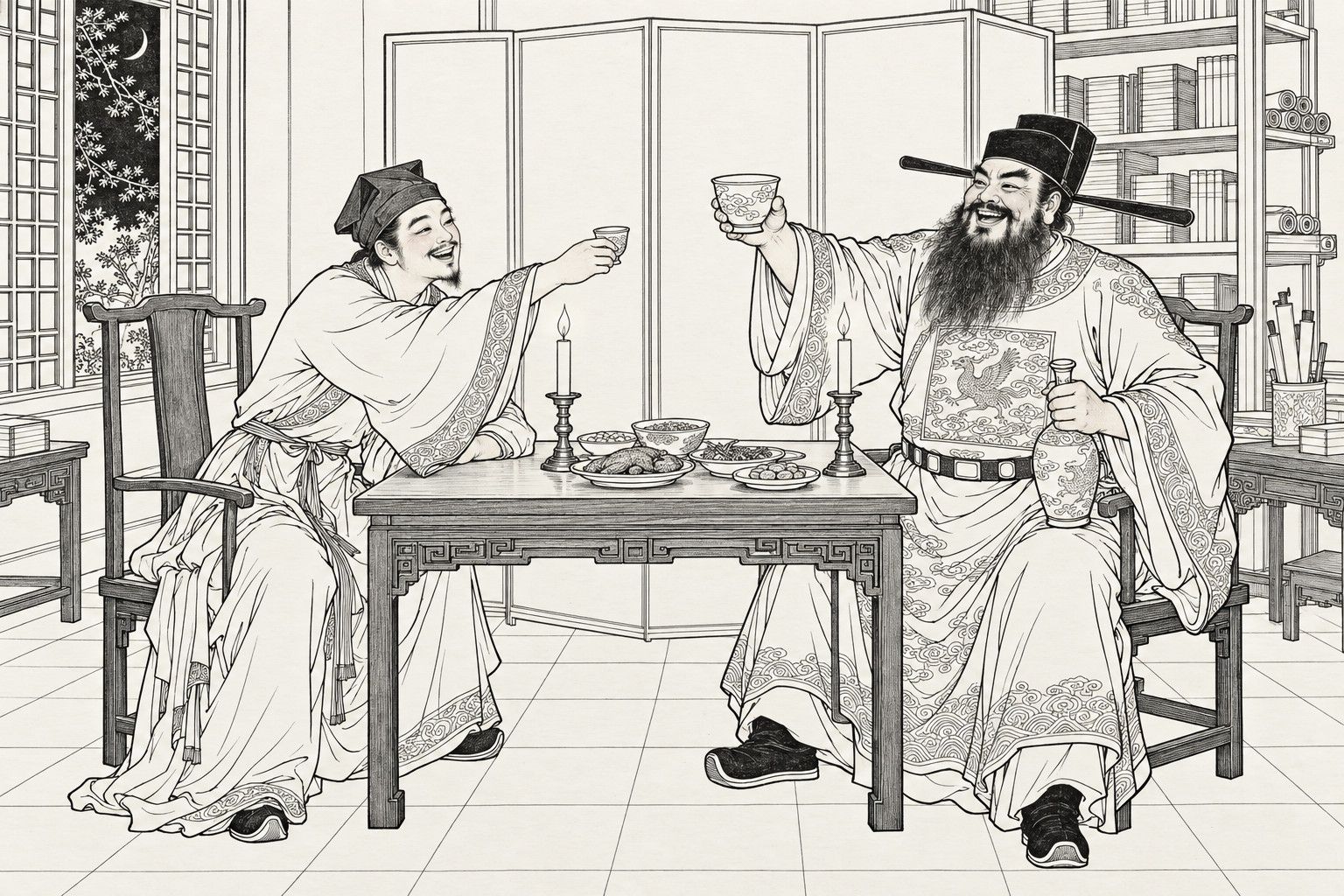
陵陽朱爾旦,字小明。性豪放。然素鈍,學雖篤,尚未知名。一日,文社眾飲。或戲之云:「君有豪名,能深夜赴十王殿,負得左廊判官來,眾當醵作筵。」蓋陵陽有十王殿,神鬼皆以木彫,妝飾如生。東廡有立判,綠面赤須,貌尤獰惡。或夜聞兩廊拷訊聲。入者,毛皆森豎。故眾以此難朱。朱笑起,徑去。居無何,門外大呼曰:「我請髯宗師至矣!」眾皆起。俄負判入,置幾上,奉觴,酹之三。眾睹之,瑟縮不安于座,仍請負去。朱又把酒灌地,祝曰:「門生狂率不文,大宗師應該不為怪。荒舍匪遙,合乘興來覓飲,幸勿為畛畦。」乃負之去。
陵阳朱尔旦,字小明。性豪放。然素钝,学虽笃,尚未知名。一日,文社众饮。或戏之云:「君有豪名,能深夜赴十王殿,负得左廊判官来,众当醵作筵。」盖陵阳有十王殿,神鬼皆以木雕,妆饰如生。东庑有立判,绿面赤须,貌尤狞恶。或夜闻两廊拷讯声。入者,毛皆森竖。故众以此难朱。朱笑起,径去。居无何,门外大呼曰:「我请髯宗师至矣!」众皆起。俄负判入,置几上,奉觞,酹之三。众睹之,瑟缩不安于座,仍请负去。朱又把酒灌地,祝曰:「门生狂率不文,大宗师应该不为怪。荒舍匪遥,合乘兴来觅饮,幸勿为畛畦。」乃负之去。
Zhu Erdan of Lingyang, styled Xiaoming, was bold and free by nature. But he had always been slow-witted, and though he studied hard, he had not yet made a name. One day the members of his literary society were drinking together, and someone teased him: “You have a name for daring. If you can go to the Hall of the Ten Kings in the dead of night and carry back the judge from the left-hand gallery, we will all chip in and stand you a feast.” For in Lingyang there was a Hall of the Ten Kings, where the gods and demons were all carved of wood and painted to the life. In the east gallery stood a judge with a green face and a red beard, more hideous and fierce than all the rest. Sometimes at night the sound of beatings and interrogations was heard from the two galleries, and anyone who went in felt every hair on his body stand on end. That was why they set Zhu this challenge. Zhu laughed, got up and went straight off. Before long a great shout came from outside the gate: “I have invited the Bearded Examiner, and here he is!” They all rose. In a moment Zhu came in with the judge on his back. He set it on the table, raised a cup and poured three libations to it. The others looked at it, shrank back and could not sit still in their seats, and begged him to carry it back. Zhu poured more wine on the ground and prayed: “Your student is wild and rash and has no manners. I trust, Great Examiner, you will not hold it against me. My humble house is not far. Come whenever the mood takes you and have a drink with me. Please don’t stand on ceremony.” Then he carried the judge away.
次日,眾果招飲。抵暮,半醉而歸,興未闌,挑燈獨酌。忽有人搴簾入,視之,則判官也。朱起曰:「意吾殆將死矣!前夕冒瀆,今來加斧鑕耶?」判啟濃髯微笑曰:「非也。昨蒙高義相訂,夜偶暇,敬踐達人之約。」朱大悅,牽衣促坐,自起滌器爇火。判曰:「天道溫和,可以冷飲。」朱如命,置瓶案上,奔告家人治肴果。妻聞,大駭,戒勿出。朱不聽,立俟治具以出。易琖交酬,始詢姓氏。曰:「我陸姓,無名字。」與談古典,應答如響。問:「知制藝否?」曰:「妍媸亦頗辨之。陰司誦讀,與陽世略同。」陸豪飲,一舉十觥。朱因竟日飲,遂不覺玉山傾頹,伏几醺睡。比醒,則殘燭昏黃,鬼客已去。
次日,众果招饮。抵暮,半醉而归,兴未阑,挑灯独酌。忽有人搴帘入,视之,则判官也。朱起曰:「意吾殆将死矣!前夕冒渎,今来加斧锧耶?」判启浓髯微笑曰:「非也。昨蒙高义相订,夜偶暇,敬践达人之约。」朱大悦,牵衣促坐,自起涤器爇火。判曰:「天道温和,可以冷饮。」朱如命,置瓶案上,奔告家人治肴果。妻闻,大骇,戒勿出。朱不听,立俟治具以出。易琖交酬,始询姓氏。曰:「我陆姓,无名字。」与谈古典,应答如响。问:「知制艺否?」曰:「妍媸亦颇辨之。阴司诵读,与阳世略同。」陆豪饮,一举十觥。朱因竟日饮,遂不觉玉山倾颓,伏几醺睡。比醒,则残烛昏黄,鬼客已去。
The next day, as promised, the others invited him to drink. At dusk he came home half drunk, and with his spirits not yet spent, he trimmed the lamp and drank alone. Suddenly someone lifted the door curtain and came in. He looked: it was the judge. Zhu stood up. “So I am going to die! I insulted you the other night — have you come to put me under the axe?” The judge parted his thick beard and smiled. “Not at all. Yesterday you kindly made an appointment with me. Tonight I happen to be free, so I have come to keep my promise to a man of open mind.” Zhu was delighted. He tugged him by the sleeve to sit down and got up himself to wash the cups and light the fire. “The weather is mild,” said the judge. “We can drink it cold.” Zhu did as he was told. He set the jar on the table and ran to tell his household to prepare food and fruit. His wife was terrified when she heard and told him not to go back out. Zhu would not listen, and stood waiting until the dishes were ready, then carried them out. They exchanged cups and toasted each other, and only then did Zhu ask his guest’s name. “My surname is Lu,” he said. “I have no given name.” Zhu talked with him of the classics, and his answers came back like echoes. “Do you know examination essays?” Zhu asked. “I can tell the fine from the ugly fairly well,” said Lu. “In the underworld we read and recite much as you do in the world of the living.” Lu drank hard, ten goblets at a go. Zhu had been drinking all day, and before he knew it he toppled over like a jade mountain and fell asleep drunk across the table. When he woke, the candle had burned down to a dim yellow stub, and his ghostly guest was gone.
自是三兩日輒一來,情益洽,時抵足臥。朱獻窗稿,陸輒紅勒之,都言不佳。一夜,朱醉,先寢,陸猶自酌。忽醉夢中,覺臟腹微痛;醒而視之,則陸危坐床前,破腔出腸胃,條條整理。愕曰:「夙無仇怨,何以見殺?」陸笑云:「勿懼,我為君易慧心耳。」從容納腸已,複合之,末以裹足布束朱腰。作用畢,視榻上亦無血跡。腹間覺少麻木。見陸置肉塊幾上。問之,曰:「此君心也。作文不快,知君之毛竅塞耳。適在冥間,于千萬心中,揀得佳者一枚,為君易之,留此以補闕數。」乃起,掩扉去。天明解視,則創縫已合,有線而赤者存焉。自是文思大進,過眼不忘。數日,又出文示陸。陸曰:「可矣。但君福薄,不能大顯貴,鄉﹑科而已。」問:「何時?」曰:「今歲必魁。」未幾,科試冠軍,秋闈果中經元。同社生素揶揄之;及見闈墨,相視而驚,細詢始知其異。共求朱先容,願納交陸。陸諾之。眾大設以待之。更初,陸至,赤髯生動,目炯炯如電。眾茫乎無色,齒欲相擊;漸引去。
自是三两日辄一来,情益洽,时抵足卧。朱献窗稿,陆辄红勒之,都言不佳。一夜,朱醉,先寝,陆犹自酌。忽醉梦中,觉脏腹微痛;醒而视之,则陆危坐床前,破腔出肠胃,条条整理。愕曰:「夙无仇怨,何以见杀?」陆笑云:「勿惧,我为君易慧心耳。」从容纳肠已,复合之,末以裹足布束朱腰。作用毕,视榻上亦无血迹。腹间觉少麻木。见陆置肉块几上。问之,曰:「此君心也。作文不快,知君之毛窍塞耳。适在冥间,于千万心中,拣得佳者一枚,为君易之,留此以补阙数。」乃起,掩扉去。天明解视,则创缝已合,有线而赤者存焉。自是文思大进,过眼不忘。数日,又出文示陆。陆曰:「可矣。但君福薄,不能大显贵,乡﹑科而已。」问:「何时?」曰:「今岁必魁。」未几,科试冠军,秋闱果中经元。同社生素揶揄之;及见闱墨,相视而惊,细询始知其异。共求朱先容,愿纳交陆。陆诺之。众大设以待之。更初,陆至,赤髯生动,目炯炯如电。众茫乎无色,齿欲相击;渐引去。
From then on Lu came every two or three days. They grew ever closer, and sometimes slept foot to foot in the same bed. Zhu showed Lu his practice essays, and Lu would always strike through them in red and say none of them was any good. One night Zhu got drunk and went to bed first, while Lu went on drinking by himself. In his drunken sleep Zhu suddenly felt a slight pain in his belly. He woke and looked. Lu was sitting bolt upright by the bed. He had opened Zhu’s body and taken out his bowels and stomach, and was putting them in order, strand by strand. “We have never had any quarrel,” cried Zhu in horror. “Why are you killing me?” Lu laughed. “Don’t be afraid. I am only giving you a cleverer heart.” Unhurriedly he put the bowels back, closed the body up again, and last of all bound Zhu’s waist with a foot-wrapping cloth. When he had finished, there was not a trace of blood on the bed. Zhu’s belly felt a little numb. He saw Lu put a lump of flesh on the table and asked what it was. “This is your heart,” said Lu. “Your writing was not fluent, and I knew the openings of your heart were blocked. Just now in the underworld I picked out a good one from among thousands upon thousands of hearts and changed it for yours. I am keeping this one to make up the number.” Then he got up, closed the door behind him and left. At daybreak Zhu untied the cloth and looked. The wound had already closed, and only a red line was left. From then on his writing made great strides, and whatever passed before his eyes he never forgot. A few days later he brought out his essays again to show Lu. “They will do,” said Lu. “But your luck is thin. You will never rise high. You will pass the provincial examinations, no more.” “When?” asked Zhu. “This year you will surely come out on top.” Before long Zhu took first place in the qualifying examination, and in the autumn provincial examination he did indeed come first in his classic. The members of his society had always mocked him. When they saw his examination essays in print, they looked at one another in amazement. Only when they questioned him closely did they learn of the strange thing that had happened. Together they begged Zhu to introduce them, for they wished to make Lu’s acquaintance. Lu agreed. They laid on a great feast to receive him. At the first watch Lu arrived, his red beard stirring as if alive, his eyes flashing like lightning. The others went blank and pale, their teeth chattering, and one by one they slipped away.
朱乃攜陸歸飲,既醺,朱曰:「湔腸伐胃,受賜已多。尚有一事欲相煩,不知可否?」陸便請命。朱曰:「心腸可易,面目想亦可更。山荊,予結髮人,下體頗亦不惡,但頭面不甚佳麗。尚欲煩君刀斧,如何?」陸笑曰:「諾,容徐圖之。」過數日,半夜來叩關。朱急起延入。燭之,見襟裹一物。詰之,曰:「君曩所囑,向艱物色。適得一美人首,敬報君命。」朱撥視,頸血猶溫。陸立促急入,勿驚禽犬。朱慮門戶夜扃。陸至,一手推扉,扉自外門內闢。引至臥室,見夫人側身眠。陸以頭授朱抱之;自于靴中出白刃如匕首,按夫人項,著力如切腐狀,迎刃而解,首落枕畔;急于生懷,取美人首合項上,詳審端正,而後按捺。已而移枕塞肩際,命朱瘞首靜所,乃去。朱妻醒,覺頸間微麻,而頰甲錯;搓之,得血片,甚駭。呼婢汲盥;婢見面血狼藉,驚絕。濯之,盆水盡赤。舉首則面目全非,又駭極。夫人引鏡自照,錯愕不能自解。朱入告之;因反覆細視,則長眉掩鬢,笑靨承顴,畫中人也。解領驗之,有紅線一周,上下肉色,判然而異。
朱乃携陆归饮,既醺,朱曰:「湔肠伐胃,受赐已多。尚有一事欲相烦,不知可否?」陆便请命。朱曰:「心肠可易,面目想亦可更。山荆,予结发人,下体颇亦不恶,但头面不甚佳丽。尚欲烦君刀斧,如何?」陆笑曰:「诺,容徐图之。」过数日,半夜来叩关。朱急起延入。烛之,见襟裹一物。诘之,曰:「君曩所嘱,向艰物色。适得一美人首,敬报君命。」朱拨视,颈血犹温。陆立促急入,勿惊禽犬。朱虑门户夜扃。陆至,一手推扉,扉自外门内辟。引至卧室,见夫人侧身眠。陆以头授朱抱之;自于靴中出白刃如匕首,按夫人项,着力如切腐状,迎刃而解,首落枕畔;急于生怀,取美人首合项上,详审端正,而后按捺。已而移枕塞肩际,命朱瘗首静所,乃去。朱妻醒,觉颈间微麻,而颊甲错;搓之,得血片,甚骇。呼婢汲盥;婢见面血狼藉,惊绝。濯之,盆水尽赤。举首则面目全非,又骇极。夫人引镜自照,错愕不能自解。朱入告之;因反复细视,则长眉掩鬓,笑靥承颧,画中人也。解领验之,有红线一周,上下肉色,判然而异。
Zhu then brought Lu home to drink. When he was tipsy, Zhu said, “You have washed my bowels and scraped my stomach — I have had much from you already. There is one more thing I would trouble you with. Would that be all right?” Lu asked what he wished. “If hearts and bowels can be changed,” said Zhu, “I suppose faces can be changed too. My wife has been with me since we were young. Below the neck she’s not bad at all, but her face is not very pretty. I’d like to trouble you to take your knife to it. What do you say?” Lu laughed. “Very well. Give me time to see to it.” A few days later he came knocking at the gate in the middle of the night. Zhu got up quickly and let him in. By candlelight he saw something wrapped in Lu’s robe, and asked what it was. “What you asked me for the other day,” said Lu. “It has been hard to find. Just now I got hold of a beautiful woman’s head, and I have come to report that your orders are carried out.” Zhu pushed the cloth aside and looked: the blood at the neck was still warm. Lu urged him to go in quickly and not to wake the chickens or the dogs. Zhu worried that the doors would be barred for the night. But when Lu reached the door, he pushed it with one hand and it swung open. Zhu led him to the bedroom, where his wife lay asleep on her side. Lu gave Zhu the head to hold. From his boot he drew a gleaming blade like a dagger, pressed it to the wife’s neck and bore down as if slicing bean curd. The flesh parted before the blade, and the head dropped beside the pillow. Quickly he took the beautiful head from Zhu’s arms, set it on her neck, studied it closely to see that it was straight, and then pressed it into place. After that he moved the pillow and packed it against her shoulders, told Zhu to bury the head somewhere quiet, and left. Zhu’s wife woke up. Her neck felt a little numb, and her cheeks were rough and scaly. She rubbed them and flakes of blood came off. Badly frightened, she called a maid to bring water to wash. The maid saw her face smeared with blood and nearly fainted with fright. When she washed, the water in the basin turned red. Then she raised her head, and her face was not her own at all, and the maid was more frightened still. The wife took up a mirror and looked at herself, stunned, unable to make anything of it. Zhu came in and told her what had happened. Then he looked her over closely, again and again: long eyebrows sweeping into her temples, dimples set below her cheekbones — a woman out of a painting. He opened her collar to look. A red line ran all the way round her neck, and the skin above and below it was plainly two different colours.
先是,吳侍御有女甚美,未嫁而喪二夫,故十九猶未醮也。上元游十王殿,時遊人甚雜,內有無賴賊窺而艷之,遂陰訪居里,乘夜梯入,穴寢門,殺一婢于床下,逼女與淫;女力拒聲喊,賊怒,亦殺之。吳夫人微聞鬧聲,呼婢往視,見尸駭絕。舉家盡起,停尸堂上,置首項側,一門啼號,紛騰終夜。詰旦啟衾,則身在而失其首。遍撻侍女,謂所守不恪,致葬犬腹。侍御告郡。郡嚴限捕賊,三月而罪人弗得。漸有以朱家換頭之異聞吳公者。吳疑之,遣媼探諸其家;入見夫人,駭走以告吳公。公視女尸故存,驚疑無以自決。猜朱以左道殺女,往詰朱。朱曰:「室人夢易其首,實不解其何故;謂僕殺之,則冤也。」吳不信,訟之。收家人鞠之,一如朱言。郡守不能決。朱歸,求計于陸。陸曰:「不難,當使伊女自言之。」吳夜夢女曰:「兒為蘇溪楊大年所賊,無與朱孝廉。彼不艷于其妻,陸判官取兒頭與之易之,是兒身死而頭生也。願勿相仇。」醒告夫人,所夢同。乃言于官。問,果有楊大年;執而械之,遂伏其罪。吳乃詣朱,請見夫人,由此為翁婿。乃以朱妻首合女尸而葬焉。
先是,吴侍御有女甚美,未嫁而丧二夫,故十九犹未醮也。上元游十王殿,时游人甚杂,内有无赖贼窥而艳之,遂阴访居里,乘夜梯入,穴寝门,杀一婢于床下,逼女与淫;女力拒声喊,贼怒,亦杀之。吴夫人微闻闹声,呼婢往视,见尸骇绝。举家尽起,停尸堂上,置首项侧,一门啼号,纷腾终夜。诘旦启衾,则身在而失其首。遍挞侍女,谓所守不恪,致葬犬腹。侍御告郡。郡严限捕贼,三月而罪人弗得。渐有以朱家换头之异闻吴公者。吴疑之,遣媪探诸其家;入见夫人,骇走以告吴公。公视女尸故存,惊疑无以自决。猜朱以左道杀女,往诘朱。朱曰:「室人梦易其首,实不解其何故;谓仆杀之,则冤也。」吴不信,讼之。收家人鞠之,一如朱言。郡守不能决。朱归,求计于陆。陆曰:「不难,当使伊女自言之。」吴夜梦女曰:「儿为苏溪杨大年所贼,无与朱孝廉。彼不艳于其妻,陆判官取儿头与之易之,是儿身死而头生也。愿勿相仇。」醒告夫人,所梦同。乃言于官。问,果有杨大年;执而械之,遂伏其罪。吴乃诣朱,请见夫人,由此为翁婿。乃以朱妻首合女尸而葬焉。
Before this, Censor Wu had a daughter who was very beautiful. Two men she was betrothed to had died before she could marry, so at nineteen she was still unwed. At the Lantern Festival she visited the Hall of the Ten Kings. The crowds there were very mixed, and among them was a ruffian who spied her and was struck by her beauty. He secretly found out where she lived. That night he climbed in by a ladder, dug through the bedroom door, killed a maid under the bed and tried to force himself on the girl. She fought him with all her strength and screamed, and in his rage he killed her too. Mrs. Wu faintly heard the commotion and called a maid to go and look. The maid saw the bodies and nearly fainted. The whole household rose. They laid the body out in the hall, with the head set beside the neck, and the family wept and wailed in turmoil all night long. In the morning they lifted the quilt: the body was there, but the head was gone. The Censor had all the maids flogged, saying they had kept such careless watch that the head had ended up in a dog’s belly. He reported the crime to the prefecture. The prefect set a strict deadline for the murderer’s capture, but three months passed and the culprit was not found. In time someone told Wu the strange story of the changed head in the Zhu household. He grew suspicious and sent an old woman to look into it at the house. She went in, saw Zhu’s wife, and ran back in fright to tell her master. Wu found his daughter’s body still where it had been, and was too shocked and puzzled to know what to think. Suspecting that Zhu had used black arts to kill his daughter, he went to confront him. “My wife’s head was changed in a dream,” said Zhu. “I truly do not understand how. But to say I killed your daughter — that is a false charge.” Wu did not believe him and took him to court. The household servants were arrested and questioned, and they said just what Zhu had said. The prefect could not decide the case. Zhu went home and asked Lu what to do. “That’s easy,” said Lu. “I will have the girl tell him herself.” That night Wu dreamed that his daughter said, “I was murdered by Yang Danian of Suxi. Zhu the provincial graduate had nothing to do with it. He did not find his wife beautiful, so Judge Lu took my head and gave it to her in exchange. So my body is dead, but my head lives on. Please don’t treat him as your enemy.” When Wu woke he told his wife, and she had dreamed the same. So he told the officials. They made inquiries, and there was indeed a Yang Danian. They arrested him and put him in irons, and he confessed. Wu then went to call on Zhu and asked to see his wife, and from then on they treated each other as father-in-law and son-in-law. And Zhu’s wife’s head was joined to the girl’s body, and they were buried together.
朱三入禮闈,皆以場規被放。於是灰心仕進,積三十年。一夕,陸告曰:「君壽不永矣。」問其期,對以五日。「能相救否?」曰:「惟天所命,人何能私?且自達人觀之,生死一耳,何必生之為樂,死之為悲?」朱以為然。即治衣衾棺槨;既竟,盛服而沒。翌日,夫人方扶柩哭,朱忽冉冉自外至。夫人懼。朱曰:「我誠鬼,不異生時。慮爾寡母孤兒,殊戀戀耳。」夫人大慟,涕垂膺;朱依依慰解之。夫人曰:「古有還魂之說,君既有靈,何不再生?」朱曰:「天數不可違也。」問:「在陰司作何務?」曰:「陸判薦我督案務,授有官爵,亦無所苦。」夫人欲再語,朱曰:「陸公與我同來,可設酒饌。」趨而出。夫人依言營備。但聞室中笑飲,亮氣高聲,宛若生前。半夜窺之,窅然已逝。自是三數日輒一來,時而留宿繾綣,家中事就便經紀。子瑋方五歲,來輒捉抱;至七八歲,則燈下教讀。子亦慧,九歲能文,十五入邑庠,竟不知無父也。從此來漸疏,日月至焉而已。又一夕來,謂夫人曰:「今與卿永訣矣。」問:「何往?」曰:「承帝命為太華卿,行將遠赴,事煩途隔,故不能來。」母子持之哭,曰:「勿爾!兒已成立,家計尚可存活,豈有百歲不拆之鸞鳳耶!」顧子曰:「好為人,勿墮父業。十年後一相見耳。」徑出門去,於是遂絕。
朱三入礼闱,皆以场规被放。于是灰心仕进,积三十年。一夕,陆告曰:「君寿不永矣。」问其期,对以五日。「能相救否?」曰:「惟天所命,人何能私?且自达人观之,生死一耳,何必生之为乐,死之为悲?」朱以为然。即治衣衾棺椁;既竟,盛服而没。翌日,夫人方扶柩哭,朱忽冉冉自外至。夫人惧。朱曰:「我诚鬼,不异生时。虑尔寡母孤儿,殊恋恋耳。」夫人大恸,涕垂膺;朱依依慰解之。夫人曰:「古有还魂之说,君既有灵,何不再生?」朱曰:「天数不可违也。」问:「在阴司作何务?」曰:「陆判荐我督案务,授有官爵,亦无所苦。」夫人欲再语,朱曰:「陆公与我同来,可设酒馔。」趋而出。夫人依言营备。但闻室中笑饮,亮气高声,宛若生前。半夜窥之,窅然已逝。自是三数日辄一来,时而留宿缱绻,家中事就便经纪。子玮方五岁,来辄捉抱;至七八岁,则灯下教读。子亦慧,九岁能文,十五入邑庠,竟不知无父也。从此来渐疏,日月至焉而已。又一夕来,谓夫人曰:「今与卿永诀矣。」问:「何往?」曰:「承帝命为太华卿,行将远赴,事烦途隔,故不能来。」母子持之哭,曰:「勿尔!儿已成立,家计尚可存活,岂有百岁不拆之鸾凤耶!」顾子曰:「好为人,勿堕父业。十年后一相见耳。」径出门去,于是遂绝。
Zhu went to the metropolitan examinations three times, and each time he was disqualified for breaking the rules of the examination hall. After that he lost heart for an official career. Thirty years went by. One evening Lu told him, “You have not long to live.” Zhu asked when it would be, and Lu answered, “In five days.” “Can you save me?” “What Heaven ordains, how can anyone bend for private ends? Besides, to a man who sees things clearly, life and death are one. Why must living be a joy and dying a grief?” Zhu thought he was right. At once he got ready his grave clothes and shroud, his inner and outer coffins. When everything was done, he dressed in his finest clothes and died. The next day, as his wife was weeping with her hands on the coffin, Zhu came drifting slowly in from outside. His wife was frightened. “I am truly a ghost,” said Zhu, “but no different from when I was alive. I worried about you, a widow with an orphan son, and could not bear to leave you.” His wife wept bitterly, her tears running down onto her breast, and Zhu tenderly comforted her. “In the old days there were stories of souls coming back to life,” she said. “Since your spirit still has power, why not live again?” “Heaven’s decree cannot be defied,” said Zhu. “What work do you do in the underworld?” she asked. “Judge Lu recommended me to oversee the records of cases. I have been given rank and office, and I suffer no hardship.” His wife wanted to say more, but Zhu said, “Lord Lu has come with me. You might lay out some wine and food.” And he hurried out. His wife did as he said and prepared it. From the room she heard them laughing and drinking, their voices loud and hearty, just as in his lifetime. At midnight she peeped in: they had vanished without a trace. From then on Zhu came every few days. Sometimes he stayed the night and was as loving as ever, and he saw to the household’s affairs as they came up. His son Wei was just five, and whenever Zhu came he would pick him up and hold him. When the boy was seven or eight, Zhu taught him to read by lamplight. The boy was clever too. At nine he could write essays, and at fifteen he entered the county school as a licentiate, never knowing that he had no father. After that Zhu came less and less often, only once in a long while. Then one evening he came and said to his wife, “Today I must say goodbye to you for ever.” “Where are you going?” she asked. “By command of the Emperor on High I am to be Minister of Mount Taihua. I must go far away. My duties will be heavy and the road is long, so I cannot come any more.” Mother and son clung to him weeping. “Don’t,” he said. “Our boy is grown now, and the family has enough to live on. What pair of phoenixes stays together a hundred years without parting?” He turned to his son. “Be a good man, and don’t let your father’s calling go to ruin. In ten years we shall meet once more.” And he went straight out of the gate, and that was the end of his visits.
後瑋二十五,舉進士,官行人。奉命祭西岳,道經華陰,忽有輿從羽葆,馳衝鹵簿。訝之。審視車中人,其父也。下馬哭伏道左。父停輿曰:「官聲好,我目瞑矣。」瑋伏不起。朱促輿行,火馳不顧。去數步,回望,解佩刀遣人持贈。遙語曰:「佩之當貴。」瑋欲追從,見輿馬人從,飄忽若風,瞬息不見。痛恨良久。抽刀視之,製極精工,鐫字一行,曰:「膽欲大而心欲小,智欲圓而行欲方。」瑋後官至司馬。生五子,曰沉,曰潛,曰沕,曰渾,曰深。一夕,夢父曰:「佩刀宜贈渾也。」從之。渾仕為總憲,有政聲。
后玮二十五,举进士,官行人。奉命祭西岳,道经华阴,忽有舆从羽葆,驰冲卤簿。讶之。审视车中人,其父也。下马哭伏道左。父停舆曰:「官声好,我目瞑矣。」玮伏不起。朱促舆行,火驰不顾。去数步,回望,解佩刀遣人持赠。遥语曰:「佩之当贵。」玮欲追从,见舆马人从,飘忽若风,瞬息不见。痛恨良久。抽刀视之,制极精工,镌字一行,曰:「胆欲大而心欲小,智欲圆而行欲方。」玮后官至司马。生五子,曰沉,曰潜,曰沕,曰浑,曰深。一夕,梦父曰:「佩刀宜赠浑也。」从之。浑仕为总宪,有政声。
Later, when Wei was twenty-five, he passed the palace examination and was made a Messenger. He was sent to offer sacrifice at the Western Peak. On the way he passed through Huayin, when suddenly a carriage with outriders and a feathered canopy came racing straight into his procession. He was astonished. He looked closely at the man in the carriage: it was his father. He got down from his horse and lay weeping at the side of the road. His father stopped the carriage. “You have a good name as an official,” he said. “Now I can close my eyes in peace.” Wei lay there and would not get up. Zhu urged his carriage on and sped off like fire, without looking back. When he had gone a few paces, he looked round, untied the sword at his belt and sent someone back to give it to Wei. “Wear it, and you will rise high,” he called from afar. Wei wanted to go after him, but the carriage, horses and men went swirling away like the wind and were gone in an instant. Wei grieved for a long time. He drew the sword and looked at it. It was exquisitely made, and a line of words was engraved on it: “Let your courage be great and your heart be careful; let your wisdom be round and your conduct square.” Wei later rose to be Minister of War. He had five sons, named Chen, Qian, Mi, Hun and Shen. One night he dreamed that his father said, “The sword should go to Hun.” He did as he was told. Hun rose to be Censor-in-Chief and was known for good government.
異史氏曰:「斷鶴續鳧,矯作者妄;移花接木,創始者奇;而況加鑿削于肝腸,施刀錐于頸項者哉!陸公者,可謂媸皮裹妍骨矣。明季至今,為歲不遠,陵陽陸公猶存乎?尚有靈焉否也?為之執鞭,所忻慕焉。」
异史氏曰:「断鹤续凫,矫作者妄;移花接木,创始者奇;而况加凿削于肝肠,施刀锥于颈项者哉!陆公者,可谓媸皮裹妍骨矣。明季至今,为岁不远,陵阳陆公犹存乎?尚有灵焉否也?为之执鞭,所忻慕焉。」
The Historian of the Strange says: To cut a crane’s legs and lengthen a duck’s is the folly of one who forces nature; to graft flowers and splice trees is the marvel of an inventor. How much more so, then, to chisel and pare at a man’s heart and bowels, and put knife and awl to his neck! Lord Lu may be called fine bones wrapped in an ugly skin. From the end of the Ming to now is not so many years. Is Lord Lu of Lingyang still there? Does his spirit still have power? To hold the whip for him would be my joy and my desire.