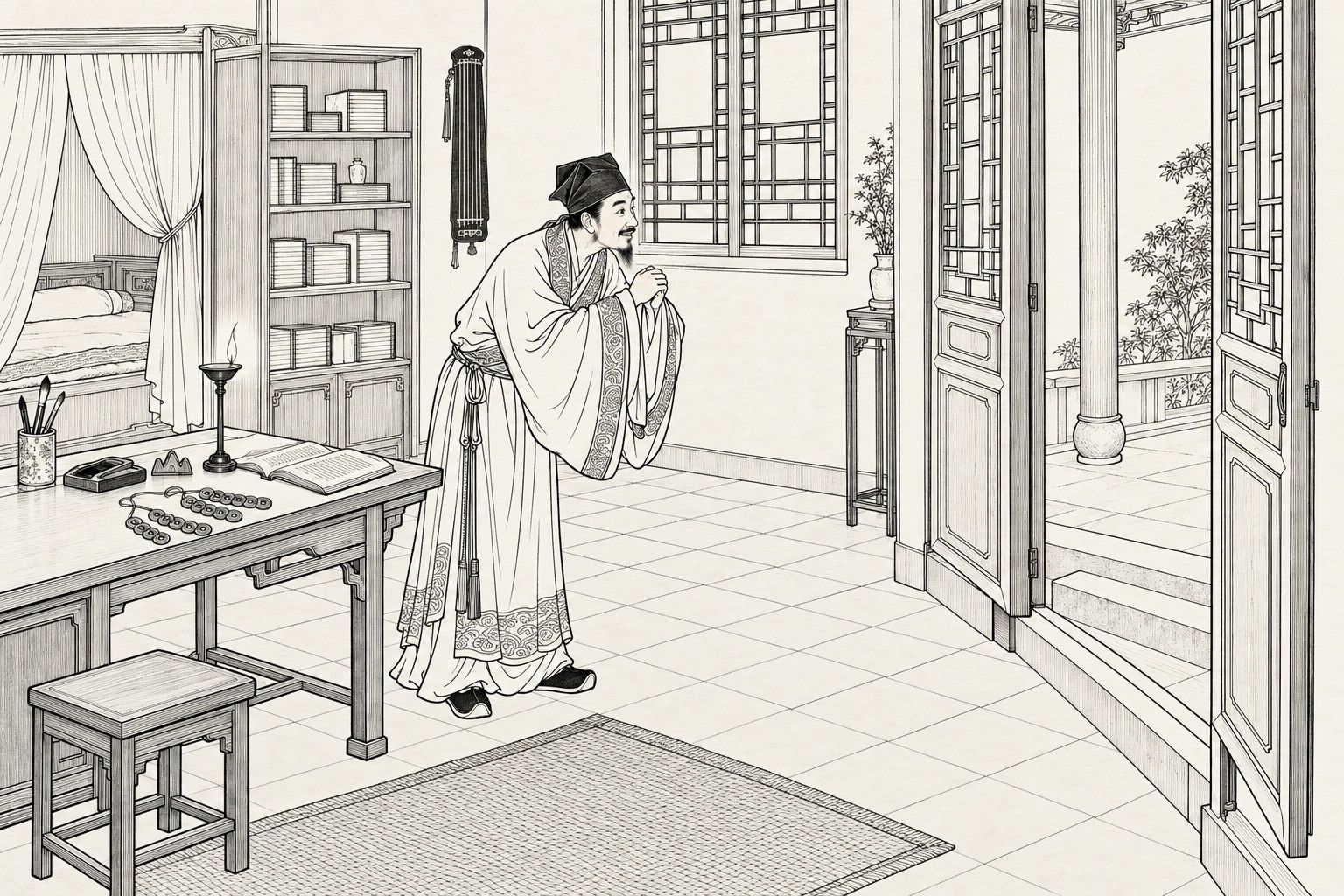
南陽鄂氏,患狐,金錢什物,輒被竊去。迕之,祟益甚。鄂有甥姬生,名士不羈,焚香代為禱免,卒不應;又祝舍外祖使臨己家,亦不應。眾笑之。生曰:「彼能幻變,必有人心。我固將引之,俾入正果。」數日輒一往祝之。雖不見驗,然生所至,狐遂不擾,以故,鄂常止生宿。生夜望空請見,邀益堅。一日,生歸,獨坐齋中,忽房門緩緩自開。生起致敬曰:「狐兄來耶?」殊寂無聲。一夜,門自開。生曰:「倘是狐兄降臨,固小生所禱祝而求者,何妨即賜光霽?」卻又寂然。案頭有錢二百,及明失之。生至夜,增以數百。中宵,聞布幄鏗然。生曰:「來耶?敬具時銅數百備用。僕雖不充裕,然非鄙吝者。若緩急有需,無妨質言,何必盜竊?」少間,視錢,脫去二百。生仍置故處,數夜不復失。有熟雞,欲供客而失之。生至夕,又益以酒,而狐從此絕跡矣。鄂家祟如故。生又往祝曰:「僕設錢而子不取,設酒而子不飲;我外祖衰邁,無為久祟之。僕備有不腆之物,夜當憑汝自取。」乃以錢十千、酒一罇,兩雞皆聶切,陳几上。生臥其傍,終夜無聲,錢物如故。狐怪從此亦絕。生一日晚歸,啟齋門,見案上酒一壺,燂雞盈盤,錢四百,以赤繩貫之,即前日所失物也。知狐之報。嗅酒而香,酌之色碧綠,飲之甚醇。壺盡半酣,覺心中貪念頓生,驀然欲作賊。便啟戶出。思村中一富室,遂往越其牆。牆雖高,一躍上下,如有翅翎。入其齋,竊取貂裘、金鼎而出。歸置床頭,始就枕眠。天明,攜入內室。妻驚問之,生囁嚅而告,有喜色。妻駭曰:「君素剛直,何忽作賊!」生恬然不為怪,因述狐之有情。妻恍然悟曰:「是必酒中之狐毒也。」因念丹砂可以卻邪,遂研入酒,飲生。少頃,生忽失聲曰:「我奈何做賊!」妻代解其故,爽然自失。又聞富室被盜,譟傳里黨。生終日不食,莫知所處。妻為之謀,使乘夜拋其牆內。生從之。富室復得故物,事亦遂寢。生歲試冠軍,又舉行優,應受倍賞。及發落之期,道署梁上黏一帖云:「姬某作賊,偷某家裘、鼎,何為行優?」梁最高,非跋足可黏。文宗疑之,執帖問生。生愕然,思此事除妻外無知者;況署中深密,何由而至?因悟曰:「此必狐之為也。」遂緬述無諱,文宗賞禮有加焉。生每自念:無所取罪於狐,所以屢陷之者,亦小人之恥獨為小人耳。
南阳鄂氏,患狐,金钱什物,辄被窃去。迕之,祟益甚。鄂有甥姬生,名士不羁,焚香代为祷免,卒不应;又祝舍外祖使临己家,亦不应。众笑之。生曰:「彼能幻变,必有人心。我固将引之,俾入正果。」数日辄一往祝之。虽不见验,然生所至,狐遂不扰,以故,鄂常止生宿。生夜望空请见,邀益坚。一日,生归,独坐斋中,忽房门缓缓自开。生起致敬曰:「狐兄来耶?」殊寂无声。一夜,门自开。生曰:「倘是狐兄降临,固小生所祷祝而求者,何妨即赐光霁?」却又寂然。案头有钱二百,及明失之。生至夜,增以数百。中宵,闻布幄铿然。生曰:「来耶?敬具时铜数百备用。仆虽不充裕,然非鄙吝者。若缓急有需,无妨质言,何必盗窃?」少间,视钱,脱去二百。生仍置故处,数夜不复失。有熟鸡,欲供客而失之。生至夕,又益以酒,而狐从此绝迹矣。鄂家祟如故。生又往祝曰:「仆设钱而子不取,设酒而子不饮;我外祖衰迈,无为久祟之。仆备有不腆之物,夜当凭汝自取。」乃以钱十千、酒一罇,两鸡皆聂切,陈几上。生卧其傍,终夜无声,钱物如故。狐怪从此亦绝。生一日晚归,启斋门,见案上酒一壶,燂鸡盈盘,钱四百,以赤绳贯之,即前日所失物也。知狐之报。嗅酒而香,酌之色碧绿,饮之甚醇。壶尽半酣,觉心中贪念顿生,蓦然欲作贼。便启户出。思村中一富室,遂往越其墙。墙虽高,一跃上下,如有翅翎。入其斋,窃取貂裘、金鼎而出。归置床头,始就枕眠。天明,携入内室。妻惊问之,生嗫嚅而告,有喜色。妻骇曰:「君素刚直,何忽作贼!」生恬然不为怪,因述狐之有情。妻恍然悟曰:「是必酒中之狐毒也。」因念丹砂可以却邪,遂研入酒,饮生。少顷,生忽失声曰:「我奈何做贼!」妻代解其故,爽然自失。又闻富室被盗,噪传里党。生终日不食,莫知所处。妻为之谋,使乘夜抛其墙内。生从之。富室复得故物,事亦遂寝。生岁试冠军,又举行优,应受倍赏。及发落之期,道署梁上黏一帖云:「姬某作贼,偷某家裘、鼎,何为行优?」梁最高,非跋足可黏。文宗疑之,执帖问生。生愕然,思此事除妻外无知者;况署中深密,何由而至?因悟曰:「此必狐之为也。」遂缅述无讳,文宗赏礼有加焉。生每自念:无所取罪于狐,所以屡陷之者,亦小人之耻独为小人耳。
The E family of Nanyang was troubled by a fox. Money and household things kept being stolen. If they crossed it, the haunting grew worse. E had a grandson by his daughter, a scholar named Ji, a man of some name and free ways. He burned incense and prayed on the family’s behalf for the fox to leave them alone, but in the end got no answer. He also prayed that it would leave his grandfather and come to his own house instead. Again no answer. Everyone laughed at him. Ji said, “A creature that can change its shape must have a human heart. I mean to lead it, so that it comes to the true path.” Every few days he went and prayed to it. Nothing came of it, but wherever Ji was, the fox did not make trouble, and so E often kept him to stay the night. At night Ji would gaze into the empty air and beg it to show itself, more and more earnestly. One day Ji went home and was sitting alone in his study when the door slowly opened by itself. Ji rose, bowed and said, “Have you come, brother fox?” There was utter silence. One night the door opened by itself. Ji said, “If it is you, brother fox, who have come down to me, this is just what I have prayed and begged for. Why not grant me the brightness of your presence?” Again silence. There were two hundred cash on his desk; by morning they were gone. That night Ji added several hundred more. In the middle of the night he heard a clink from the cloth bed-curtain. “Have you come?” said Ji. “I have respectfully set out a few hundred coppers for your use. I am not well off, but I am no miser. If you are ever in need, you have only to say so plainly. Why steal?” After a little he looked at the money: two hundred were gone. Ji left the rest where it was, and for several nights no more went missing. He had a cooked chicken meant for a guest, and it went missing. That evening Ji set out wine as well, but from then on the fox left no trace. At E’s house the haunting went on as before. Ji went again and prayed: “I set out money and you do not take it; I set out wine and you do not drink. My grandfather is old and frail. Do not keep haunting him. I have prepared some poor offerings; tonight you may help yourself as you please.” He laid ten thousand cash, a jar of wine and two chickens, sliced thin, on the table, and lay down beside them. All night there was no sound, and the money and food were untouched. From then on the fox’s mischief stopped there too. One day Ji came home late and opened the study door to find on the desk a pot of wine, a plate heaped with cooked chicken, and four hundred cash strung on a red cord — the very things he had lost before. He knew it was the fox repaying him. The wine smelled fragrant; poured out, it was jade green; drunk, it was very mellow. By the time the pot was empty he was half drunk, and he felt a sudden greed rise in his heart. All at once he wanted to go thieving. He opened the door and went out. He thought of a rich household in the village, went there and climbed its wall. High as the wall was, he went up and over at a single bound, as if he had wings. He got into the study, stole a sable coat and a gold tripod, and came away. He brought them home, put them by his bed, and only then lay down to sleep. At daybreak he carried them into the inner rooms. His wife, startled, asked about them. Ji, stammering, told her, and looked pleased. His wife was aghast. “You have always been upright. How can you suddenly turn thief?” Ji was perfectly calm and saw nothing strange in it, and told her how kind the fox had been. His wife suddenly understood. “It must be the fox’s poison in the wine.” Remembering that cinnabar drives off evil, she ground some into wine and made him drink it. In a moment Ji cried out, “How could I have turned thief!” His wife explained what had happened, and he was dazed with dismay. Then he heard that the rich household had been robbed; the whole neighbourhood was buzzing with it. Ji went all day without eating, not knowing what to do. His wife made a plan for him: under cover of night he should throw the things back over the wall. Ji did so. The rich household got its things back, and the matter was dropped. At the annual examination Ji came out first, and he was also recommended for outstanding conduct, which entitled him to a double reward. When the day came to announce the results, a notice was found pasted on a beam in the offices of the Examiner: “Ji So-and-so turned thief and stole a coat and a tripod from such-and-such a family. How is he outstanding in conduct?” The beam was very high; no one could have pasted it there standing on tiptoe. The Examiner was suspicious, and took the notice to question Ji. Ji was stunned. No one but his wife knew of this, he thought; and the offices lay deep inside and were closely guarded — how could anyone have got in? Then he understood. “This must be the fox’s doing.” So he told the whole story in detail, hiding nothing, and the Examiner treated him with even greater favour. Ji often thought it over: he had done nothing to offend the fox. That it kept trying to trap him was only the way of the petty man, who is ashamed to be petty alone.