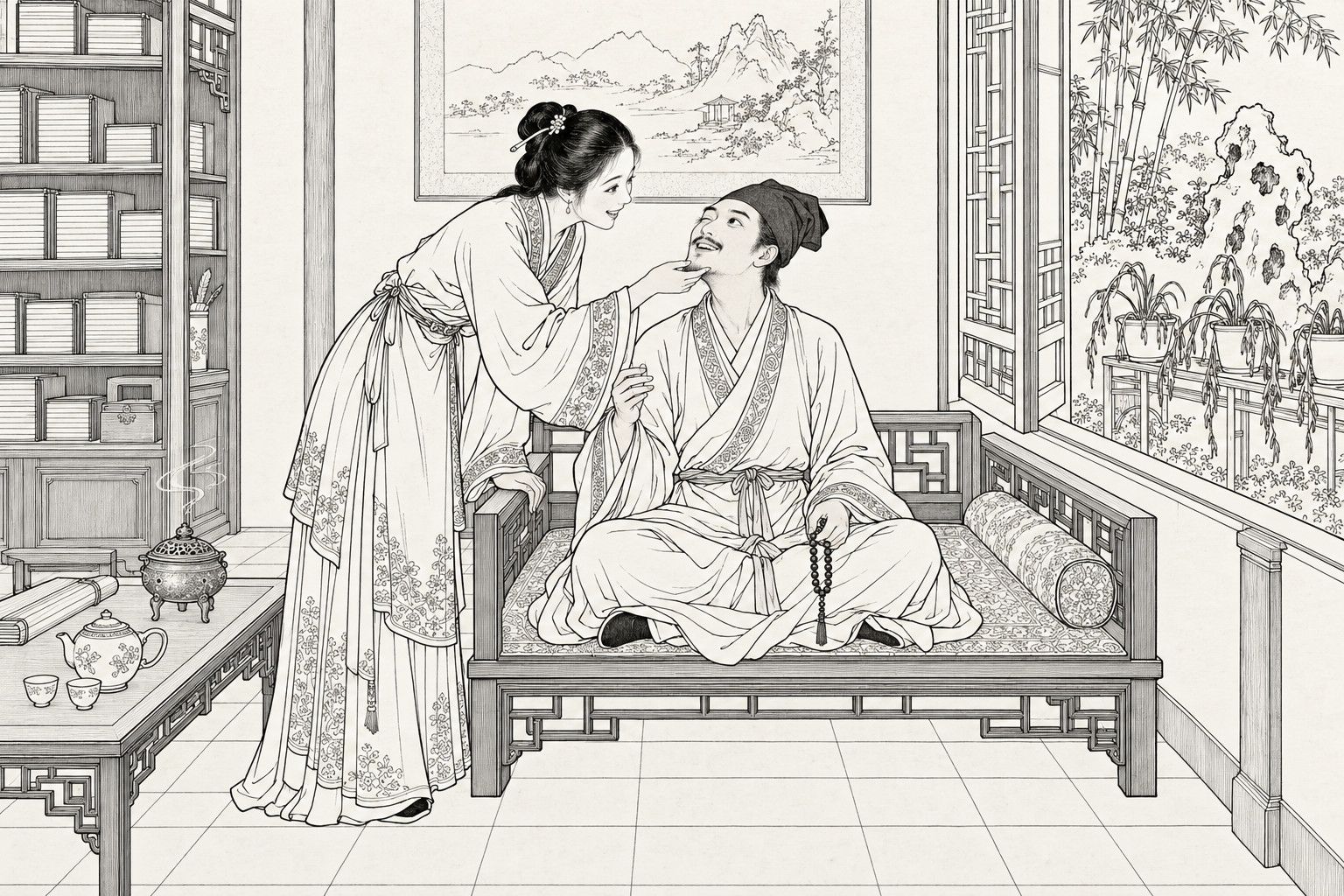
長安士方棟,頗有才名,而佻脫不持儀節。每陌上見游女,輒輕薄尾綴之。清明前一日,偶步郊郭,見一小車,朱茀繡幰,青衣數輩,款段以從。內一婢,乘小駟,容色絕美,稍稍近覘之,見車幔洞開,內坐二八女郎,紅妝艷麗,尤生平所未睹,目炫神奪,瞻戀弗舍,或先或後,從馳數里。忽聞女郎呼婢近車側,曰:「為我垂簾下!何處風狂兒郎,頻來窺瞻?」婢乃下簾,怒顧生曰:「此芙蓉城七郎子新婦歸寧,非同田舍娘子,放教秀才胡覷。」言已,掬轍土颺生,生瞇目不可開。纔一拭視,車馬已渺,驚疑而返;覺目終不快,倩人啟瞼撥視,則睛上生小翳,經宿益劇,淚簌簌不得止。翳漸大,數日厚如錢,右睛起旋螺,百藥無效。懊悶欲絕,頗思自懺悔。聞《光明經》能解厄,持一卷,浼人教誦。初猶煩躁,久漸自安,旦晚無事,惟趺坐捻珠,持之一年,萬緣俱靜。忽聞右目中,小語如蠅曰:「黑漆似,尀耐殺人。」左目中應曰:「可同小遨游,出此悶氣。」漸覺兩鼻中,蠕蠕作癢,似有物出,離孔而去,久之乃返,復自鼻入。眶中又言曰:「許時不窺園亭,珍珠蘭遽枯瘠死。」生素喜香蘭,園中多種植,日常灌溉,自失明,久置不問。忽聞其言,遽問妻:「蘭花何使憔悴死?」妻詰其所自知,告之故,妻趨驗之,花果槁矣,大異之。
长安士方栋,颇有才名,而佻脱不持仪节。每陌上见游女,辄轻薄尾缀之。清明前一日,偶步郊郭,见一小车,朱茀绣幰,青衣数辈,款段以从。内一婢,乘小驷,容色绝美,稍稍近觇之,见车幔洞开,内坐二八女郎,红妆艳丽,尤生平所未睹,目炫神夺,瞻恋弗舍,或先或后,从驰数里。忽闻女郎呼婢近车侧,曰:「为我垂帘下!何处风狂儿郎,频来窥瞻?」婢乃下帘,怒顾生曰:「此芙蓉城七郎子新妇归宁,非同田舍娘子,放教秀才胡觑。」言已,掬辙土飏生,生瞇目不可开。才一拭视,车马已渺,惊疑而返;觉目终不快,倩人启睑拨视,则睛上生小翳,经宿益剧,泪簌簌不得止。翳渐大,数日厚如钱,右睛起旋螺,百药无效。懊闷欲绝,颇思自忏悔。闻《光明经》能解厄,持一卷,浼人教诵。初犹烦躁,久渐自安,旦晚无事,惟趺坐捻珠,持之一年,万缘俱静。忽闻右目中,小语如蝇曰:「黑漆似,尀耐杀人。」左目中应曰:「可同小遨游,出此闷气。」渐觉两鼻中,蠕蠕作痒,似有物出,离孔而去,久之乃返,复自鼻入。眶中又言曰:「许时不窥园亭,珍珠兰遽枯瘠死。」生素喜香兰,园中多种植,日常灌溉,自失明,久置不问。忽闻其言,遽问妻:「兰花何使憔悴死?」妻诘其所自知,告之故,妻趋验之,花果槁矣,大异之。
Fang Dong, a scholar of Chang’an, had something of a name for his talent, but he was flippant and cared nothing for propriety. Whenever he saw women out walking in the country, he would trail after them with his impudent ways. On the day before the Qingming festival he happened to be strolling outside the city wall when he saw a small carriage with a red screen and embroidered curtains, followed by several maids riding at an easy pace. One of the maids, on a little pony, was a great beauty. He edged closer to look, and saw that the carriage curtain was wide open. Inside sat a girl of sixteen, beautifully made up in red, lovelier than anyone he had ever seen. Dazzled and bewitched, he gazed at her and could not tear himself away; now ahead of the carriage, now behind it, he followed it for several li. Suddenly he heard the girl call the maid to the side of the carriage. “Let the curtain down for me! Who is this mad young fellow who keeps coming to peer at me?” The maid let down the curtain and turned on Fang angrily. “This is the new bride of the Seventh Young Lord of the City of Hibiscus, going home to visit her parents. She is not some farm wife for any licentiate to gawk at as he likes!” With that she scooped up a handful of dirt from the wheel ruts and flung it at him. It got in his eyes and he could not open them. By the time he had wiped them and could look, the carriage and horses were gone. He went home, startled and puzzled. His eyes kept bothering him, so he had someone lift the lids and look: a small film had grown over the pupils. After a night it was worse, and tears streamed from his eyes and would not stop. The film grew bigger. In a few days it was as thick as a coin, and on the right eye a whorl like a snail shell had formed. No medicine did any good. In his misery and despair, he began to think he should repent. He had heard that the Sutra of Light could deliver a man from misfortune, so he got a copy and begged someone to teach him to recite it. At first he was restless and impatient, but in time he grew calm. Morning and evening, with nothing else to do, he only sat cross-legged telling his beads. After a year of this, every worldly care had fallen still. Suddenly he heard a small voice in his right eye, like a fly’s: “Black as lacquer in here — it’s enough to kill a person.” From his left eye came the answer: “Let’s go out for a little stroll together and get some air.” Then he felt a wriggling itch in both nostrils, as if something were coming out. It left his nose and went away, and after a long while it came back and went in through his nose again. Then a voice in his eye said, “It’s been so long since we looked in on the garden — and the pearl orchids have withered and died.” Fang had always loved fragrant orchids. He had planted many in his garden and used to water them every day, but since he lost his sight he had left them untended for a long time. Hearing these words, he asked his wife at once, “Why have you let the orchids wither and die?” She asked how he knew, and he told her. She hurried out to look, and the flowers were indeed dried up. She was astonished.
靜匿房中,見有小人自生鼻內出,大不及豆,營營然竟出門去,漸遠,遂迷所在,俄連臂歸,飛上面,如蜂蟻之投穴者,如此二三日。又聞左言曰:「隧道迂,還往非所甚便,不如自啟門。」右應云:「我壁子厚,大不易。」左曰:「我試闢,得與而俱。」遂覺左眶內,隱似抓裂,有頃,開視,豁見几物。喜告妻,妻審之,則脂膜破小竅,黑睛熒熒,纔如破椒。越一宿,障盡消,細視,竟重瞳也;但右目旋螺如故,乃知兩瞳人合居一眶矣。生雖一目眇,而較之雙目者,殊更了了。由是益自檢束,鄉中稱盛德焉。
静匿房中,见有小人自生鼻内出,大不及豆,营营然竟出门去,渐远,遂迷所在,俄连臂归,飞上面,如蜂蚁之投穴者,如此二三日。又闻左言曰:「隧道迂,还往非所甚便,不如自启门。」右应云:「我壁子厚,大不易。」左曰:「我试辟,得与而俱。」遂觉左眶内,隐似抓裂,有顷,开视,豁见几物。喜告妻,妻审之,则脂膜破小窍,黑睛荧荧,才如破椒。越一宿,障尽消,细视,竟重瞳也;但右目旋螺如故,乃知两瞳人合居一眶矣。生虽一目眇,而较之双目者,殊更了了。由是益自检束,乡中称盛德焉。
She hid quietly in the room and watched. Out of his nose came little people, no bigger than beans, who went buzzing out of the door. As they went farther off, she lost sight of them. Soon they came back arm in arm, flew up to his face and went in, like bees or ants going into their nest. This went on for two or three days. Then he heard the one on the left say, “This tunnel is so roundabout. Going in and out of it is not at all convenient. We would do better to open a door of our own.” The one on the right answered, “My wall is thick. It won’t be easy.” “I’ll try to open mine,” said the left, “and then we can both use it.” Then Fang felt something inside his left eye, as if it were faintly being scratched and torn. After a while he opened his eyes and could plainly see the table and the things on it. Overjoyed, he told his wife. She looked closely: a small hole had broken through the fatty film, and the black pupil shone in it, no bigger than a split peppercorn. After another night the film was entirely gone. Looking closely, they saw that it was a double pupil. But the whorl on the right eye was as before, and so they knew that the two pupil-people were now living together in one eye. Though Fang was blind in one eye, he saw more clearly than people with two. From then on he kept himself in check all the more, and the people of his district praised his virtue.
異史氏曰:鄉有士人,偕二友於途,遙見少婦,控驢出其前,戲而吟曰:「有美人兮,」顧二友曰:「驅之。」相與笑騁。俄追及,乃其子婦,心赧氣喪,默不復言,友偽為不知也者,評騭殊褻。士人忸怩,吃吃而言曰:「此長男婦也,」各隱笑而罷。輕薄者,往往自侮,良可笑也。至於眯目失明,又鬼神之慘報矣。芙蓉城主,不知何神,豈菩薩現身耶?然小郎君生闢門戶,鬼神雖惡,亦何嘗不許人自新哉。
异史氏曰:乡有士人,偕二友于途,遥见少妇,控驴出其前,戏而吟曰:「有美人兮,」顾二友曰:「驱之。」相与笑骋。俄追及,乃其子妇,心赧气丧,默不复言,友伪为不知也者,评骘殊亵。士人忸怩,吃吃而言曰:「此长男妇也,」各隐笑而罢。轻薄者,往往自侮,良可笑也。至于眯目失明,又鬼神之惨报矣。芙蓉城主,不知何神,岂菩萨现身耶?然小郎君生辟门户,鬼神虽恶,亦何尝不许人自新哉。
The Historian of the Strange says: In my district there was a gentleman walking along the road with two friends. Far off they saw a young woman riding a donkey ahead of them. He chanted in jest, “There is a beauty, oh —” and turned to his friends: “After her!” Laughing, they all spurred on together. Soon they caught up with her, and she was his own son’s wife. Mortified and crestfallen, he said not another word. His friends pretended not to know, and passed remarks about her that were most indecent. The gentleman squirmed and stammered, “That is my eldest son’s wife.” Each of them hid a smile, and that was the end of it. The frivolous often bring insult on themselves; it is laughable indeed. But to have dirt thrown in one’s eyes and go blind — that is a cruel retribution from ghosts and gods. The lord of the City of Hibiscus — I do not know what god he is. Could he have been a bodhisattva in disguise? Still, the little gentleman did break open a door. Harsh as ghosts and gods may be, when have they ever refused to let a man make a new start?