丁前溪,諸城人。富有錢穀。游俠好義,慕郭解之為人。御史行臺按訪之。丁亡去。至安丘,遇雨,避身逆旅。雨日中不止。有少年來,館穀豐隆。既而昏暮,止宿其家;莝豆飼畜,給食周至。問其姓字,少年云:「主人楊姓,我其內侄也。主人好交游,適他出,家惟娘子在。貧不能厚客給,幸能垂諒。」問主人何業,則家無資產,惟日設博場,以謀升斗。次日,雨仍不止,供給弗懈。至暮,剉芻,芻束濕,頗極參差。丁怪之。少年曰:「實告客:家貧無以飼畜,適娘子撤屋上茅草。」丁益異之,謂其意在得直。天明,付之金,不受;強付,少年持入。俄了,仍出以反客,云:「娘子言:我非業此獵食者。主人在外,嘗數日不攜一錢;客至吾家,何遂索償乎?」丁嘆贊而別。囑曰:「我諸城丁某,主人歸,宜告之。暇幸見顧。」
丁前溪,诸城人。富有钱谷。游侠好义,慕郭解之为人。御史行台按访之。丁亡去。至安丘,遇雨,避身逆旅。雨日中不止。有少年来,馆谷丰隆。既而昏暮,止宿其家;莝豆饲畜,给食周至。问其姓字,少年云:「主人杨姓,我其内侄也。主人好交游,适他出,家惟娘子在。贫不能厚客给,幸能垂谅。」问主人何业,则家无资产,惟日设博场,以谋升斗。次日,雨仍不止,供给弗懈。至暮,剉刍,刍束湿,颇极参差。丁怪之。少年曰:「实告客:家贫无以饲畜,适娘子撤屋上茅草。」丁益异之,谓其意在得直。天明,付之金,不受;强付,少年持入。俄了,仍出以反客,云:「娘子言:我非业此猎食者。主人在外,尝数日不携一钱;客至吾家,何遂索偿乎?」丁叹赞而别。嘱曰:「我诸城丁某,主人归,宜告之。暇幸见顾。」
Ding Qianxi was a man of Zhucheng, rich in money and grain. He played the knight-errant and loved to do the right thing, and he admired the kind of man Guo Xie had been. The censor’s regional office ordered an inquiry into him, and Ding fled. At Anqiu he was caught by rain and took shelter at an inn. By midday the rain had still not stopped. A young man came and took him in, and fed him generously. When dusk fell, Ding stayed the night at his house. His animals were given chopped straw and beans, and he himself was looked after in every way. When Ding asked his name, the young man said, “The master of the house is named Yang. I am his wife’s nephew. The master loves making friends, but he happens to be away, and only the mistress is at home. We are poor and cannot treat a guest handsomely. We hope you will forgive us.” Ding asked what the master did for a living. It turned out the family had no property at all; Yang simply kept a gambling table every day to earn a little grain. The next day it was still raining, and they looked after him as carefully as before. At dusk, when the fodder was chopped, the bundles were wet and of all different lengths. Ding thought this strange. “To tell you the truth, sir,” said the young man, “we are too poor to feed your animals, so the mistress has just pulled the thatch off the roof.” Ding thought this all the more remarkable, and supposed they were hoping to be paid. At daybreak he offered them money. They would not take it. He pressed it on them, and the young man carried it inside. In a moment he came out again and gave it back. “The mistress says: we don’t make our living off travellers. When the master is away, he often goes for days without a coin on him. When a guest comes to our house, why should we ask him to pay?” Ding sighed in admiration and took his leave. “I am Ding of Zhucheng,” he said. “When the master comes home, tell him so. I hope he will call on me when he has the time.”
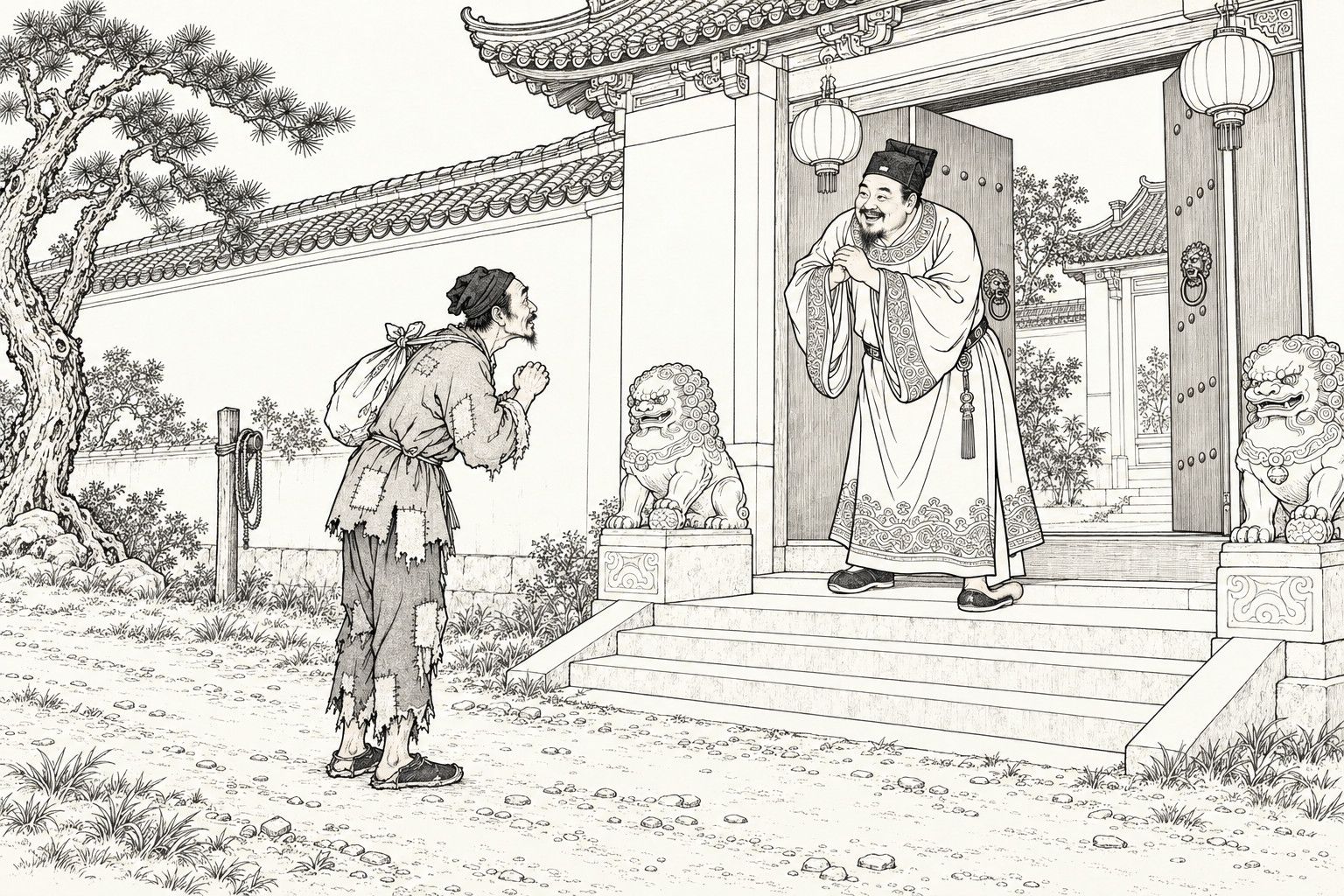
數年無耗。值歲大飢,楊困甚,無所為計。妻漫勸詣丁,從之。至諸城,通姓名于門者。丁茫不憶。申言始憶之。蹝履而出,揖客入。見其衣敝踵決,居之溫室,設筵相款,寵禮異常。明日,為制冠服,表裡溫暖。楊義之;而內顧增懮,褊心不能無少望。居數日,殊不言贈別。楊意甚亟,告丁曰:「顧不敢隱:僕來時,米不滿升。今過蒙推解,固樂;妻子如何矣!」丁曰:「是無煩慮,已代經紀矣。幸舒意少留,當助資斧。」走伻招諸博徒,使楊坐而抽頭,終夜得百金,乃送之還。歸見室人,衣履鮮整,小婢侍焉。驚問之。妻言:「自若去後,次日即有車徒齎送布帛菽粟,堆積滿屋,云是丁客所贈。又婢十指,為妾驅使。」楊感不自已。由此小康,不屑舊業矣。
数年无耗。值岁大饥,杨困甚,无所为计。妻漫劝诣丁,从之。至诸城,通姓名于门者。丁茫不忆。申言始忆之。蹝履而出,揖客入。见其衣敝踵决,居之温室,设筵相款,宠礼异常。明日,为制冠服,表里温暖。杨义之;而内顾增懮,褊心不能无少望。居数日,殊不言赠别。杨意甚亟,告丁曰:「顾不敢隐:仆来时,米不满升。今过蒙推解,固乐;妻子如何矣!」丁曰:「是无烦虑,已代经纪矣。幸舒意少留,当助资斧。」走伻招诸博徒,使杨坐而抽头,终夜得百金,乃送之还。归见室人,衣履鲜整,小婢侍焉。惊问之。妻言:「自若去后,次日即有车徒赍送布帛菽粟,堆积满屋,云是丁客所赠。又婢十指,为妾驱使。」杨感不自已。由此小康,不屑旧业矣。
Several years passed without any word. Then came a year of great famine. Yang was in dire straits and could think of nothing to do. His wife suggested, without much hope, that he go to Ding, and he did. At Zhucheng he gave his name to the gatekeeper. Ding had no memory of him; only when Yang explained further did he remember. He came hurrying out without stopping to pull his shoes on, bowed, and showed his guest in. Seeing that Yang’s clothes were in rags and his heels showed through his shoes, he lodged him in a warm room and laid on a feast, and treated him with extraordinary honour. The next day he had a hat and clothes made for him, warm inside and out. Yang was grateful for his generosity; but thinking of his family at home, he grew more and more anxious, and in his narrow heart he could not help a little resentment. Several days passed, and Ding said not a word about a parting gift. Yang grew desperate and said to Ding, “I dare not hide it from you: when I left home there was not a pint of rice in the house. You have shared your food and clothes with me, more than I deserve, and I am glad indeed — but what of my wife and children?” “Don’t trouble yourself about that,” said Ding. “I have already seen to it for you. Please set your mind at ease and stay a little longer. I will help you with money for the road.” He sent a servant to call in all the gamblers, and had Yang sit and take the house’s cut. In one night he made a hundred taels of silver. Then Ding sent him home. When Yang got home, he found his wife in fresh, neat clothes and shoes, with a little maid waiting on her. He asked her in astonishment what had happened. “The day after you left,” she said, “carts and men came bringing cloth and silk, beans and grain, and piled the house full. They said it was a gift from our guest Ding. And a maid besides, a pair of hands at my bidding.” Yang was moved beyond words. From then on they were comfortably off, and he would no longer stoop to his old trade.
異史氏曰:「貧而好客,飲博浮蕩者優為之;最異者,獨其妻耳。受之施而不報,豈人也哉?然一飯之德不忘,丁其有焉?
异史氏曰:「贫而好客,饮博浮荡者优为之;最异者,独其妻耳。受之施而不报,岂人也哉?然一饭之德不忘,丁其有焉?
The Historian of the Strange says: To be poor and yet love guests is something drinkers, gamblers and idlers do well enough. The truly remarkable one is his wife alone. To take a kindness and never repay it — is that being human? Yet never to forget the kindness of a single meal: Ding had that, did he not?