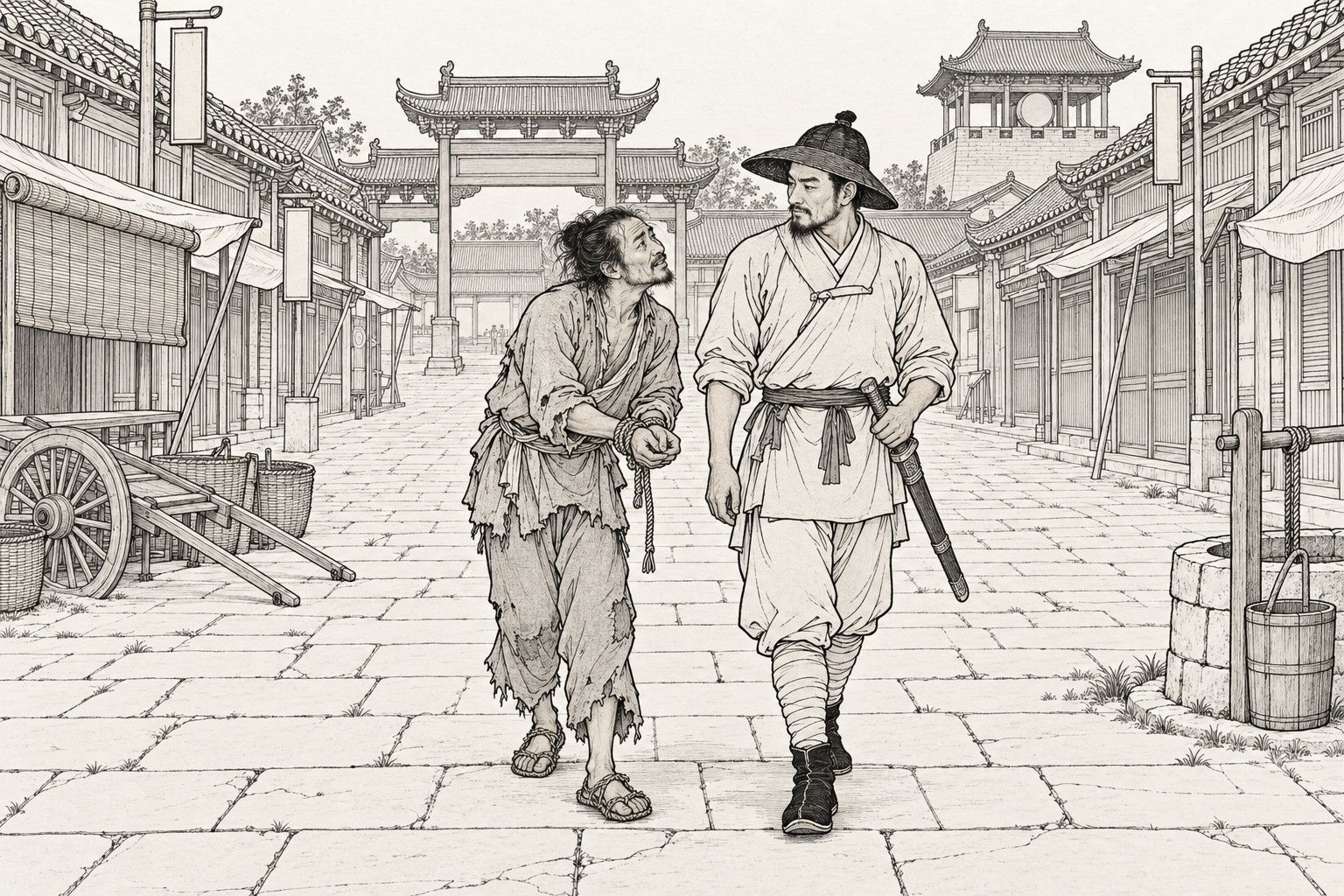
明末,濟屬多盜。邑各置兵,捕得輒殺之。章丘盜尤多。有一兵佩刀甚利,殺輒導窾。一日,捕盜十餘名,押赴市曹。內一盜識兵,逡巡告曰:「聞君刀最快,斬首無二割,求殺我。」兵曰:「諾,其謹依我,無離也。」盜從之刑處,出刀揮之,豁然頭落。數步之外,猶圓轉而大贊曰:「好快刀!」
明末,济属多盗。邑各置兵,捕得辄杀之。章丘盗尤多。有一兵佩刀甚利,杀辄导窾。一日,捕盗十余名,押赴市曹。内一盗识兵,逡巡告曰:「闻君刀最快,斩首无二割,求杀我。」兵曰:「诺,其谨依我,无离也。」盗从之刑处,出刀挥之,豁然头落。数步之外,犹圆转而大赞曰:「好快刀!」
At the end of the Ming, the districts of Jinan were overrun with bandits. Each county kept its own soldiers, and any bandits they caught were were always put to death. Zhangqiu had more bandits than anywhere. There was a soldier there who wore a very keen blade, and when he beheaded a man he always found the joint. One day more than ten bandits were caught and marched off to the execution ground in the marketplace. One of them knew the soldier. He edged up to him and said, “I hear your blade is the sharpest there is. It takes a head off without a second stroke. I beg you, let it be you who kills me.” “All right,” said the soldier. “Keep close to me, and don’t stray.” The bandit followed him to the place of execution. The soldier drew his blade and swung, and the head dropped clean off. Several paces away it was still rolling round and round, and it cried out in praise, “What a sharp blade!”