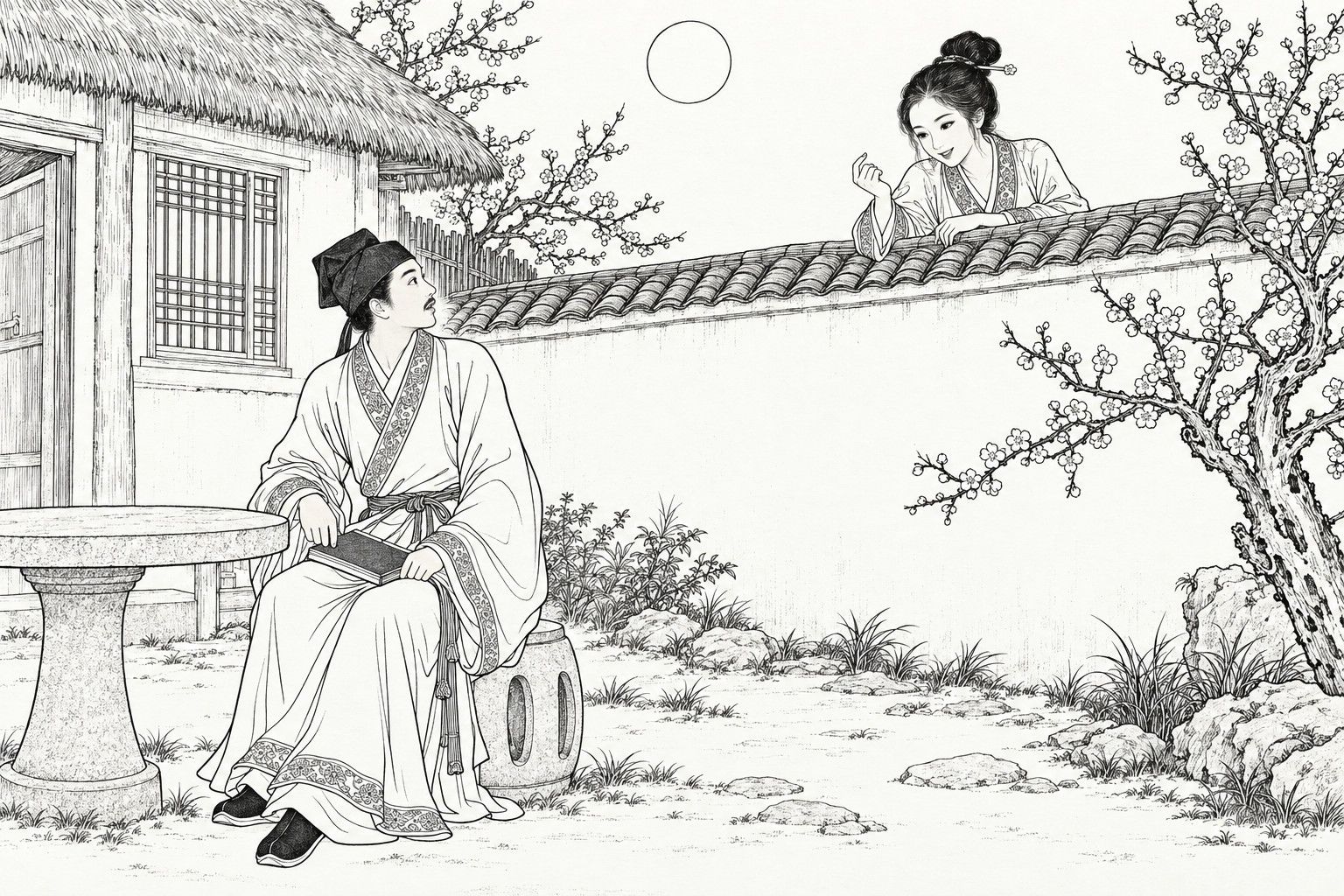
廣平馮翁有一子,字相如。父子俱諸生。翁年近六旬,性方鯁,而家屢空。數年間,媼與子婦又相繼逝,井臼自操之。一夜,相如坐月下,忽見東鄰女自牆上來窺。視之,美。近之,微笑。招以手,不來亦不去。固請之,乃梯而過,遂共寢處。問其姓名,曰:「妾鄰女紅玉也。」生大愛悅,與訂永好。女諾之。夜夜往來,約半年許。翁夜起,聞子舍笑語,窺之,見子,怒,喚出,罵曰:「畜產所為何事!如此落寞,尚不刻苦,乃學浮蕩耶?人知之,喪汝德;人不知,促汝壽!」生跪自投,泣言知悔。翁叱女曰:「女子不守閨戒,既自玷,而又以玷人。倘事一發,當不僅貽寒舍羞!」罵已,憤然歸寢。女流涕曰:「親庭罪責,良足愧辱!我二人緣份盡矣!」生曰:「父在不得自專。卿如有情,尚當含垢為好。」女言辭決絕。生乃灑涕。女止之曰:「妾與君無媒妁之言,父母之命,逾牆鑽隙,何能白首?此處有一佳耦,可聘也。」告以貧。女曰:「來宵相俟,妾為君謀之。」次夜,女果至,出白金四十兩贈生。曰:「去此六十里,有吳村衛氏,年十八矣。高其價,故未售也。君重啖之,必合諧允。」言已,別去。
广平冯翁有一子,字相如。父子俱诸生。翁年近六旬,性方鲠,而家屡空。数年间,媪与子妇又相继逝,井臼自操之。一夜,相如坐月下,忽见东邻女自墙上来窥。视之,美。近之,微笑。招以手,不来亦不去。固请之,乃梯而过,遂共寝处。问其姓名,曰:「妾邻女红玉也。」生大爱悦,与订永好。女诺之。夜夜往来,约半年许。翁夜起,闻子舍笑语,窥之,见子,怒,唤出,骂曰:「畜产所为何事!如此落寞,尚不刻苦,乃学浮荡耶?人知之,丧汝德;人不知,促汝寿!」生跪自投,泣言知悔。翁叱女曰:「女子不守闺戒,既自玷,而又以玷人。倘事一发,当不仅贻寒舍羞!」骂已,愤然归寝。女流涕曰:「亲庭罪责,良足愧辱!我二人缘份尽矣!」生曰:「父在不得自专。卿如有情,尚当含垢为好。」女言辞决绝。生乃洒涕。女止之曰:「妾与君无媒妁之言,父母之命,逾墙钻隙,何能白首?此处有一佳耦,可聘也。」告以贫。女曰:「来宵相俟,妾为君谋之。」次夜,女果至,出白金四十两赠生。曰:「去此六十里,有吴村卫氏,年十八矣。高其价,故未售也。君重啖之,必合谐允。」言已,别去。
Old Feng of Guangping had one son, styled Xiangru. Father and son were both licentiates. The old man was close on sixty, upright and unbending by nature, and the household often had nothing at all. Within a few years his wife and his son’s wife died one after the other, and he drew the water and pounded the grain himself. One night Xiangru was sitting in the moonlight when suddenly he saw the girl from next door to the east peeping at him over the wall. He looked at her: she was beautiful. He went closer: she smiled. He beckoned to her: she neither came nor went away. He begged her earnestly, and at last she came over on a ladder, and they slept together. When he asked her name, she said, “I am Hongyu, the girl next door.” Xiangru was enchanted with her and pledged to love her always, and she agreed. She came and went night after night for about half a year. One night the old man got up and heard laughter and talk in his son’s room. He peeped in and saw his son, and in a rage he called him out and cursed him. “You animal, what are you doing! We have come down so far in the world, and instead of working hard you take up loose ways? If people find out, your good name is lost; if no one finds out, it will shorten your life!” Xiangru knelt and threw himself down, weeping that he knew his fault and repented. The old man turned on the girl. “A girl who does not keep to the rules of the women’s quarters disgraces herself and disgraces others too. If this ever comes out, it will not be my poor house alone that is shamed!” When he had finished cursing, he went back to bed in a fury. The girl wept. “To be reproached by your father is shame enough! Our fate together is at an end.” “While my father lives I cannot decide things for myself,” said Xiangru. “If you care for me, you should bear the shame and stay with me.” But the girl spoke with finality. Xiangru shed tears. The girl stopped him. “We have no matchmaker’s word and no command from our parents. We climb over walls and creep through gaps — how could we ever grow old together? There is a good match near here. You could marry her.” He told her he was poor. “Wait for me tomorrow night,” she said. “I will find a way for you.” The next night she came as she had said, and gave him forty taels of silver. “Sixty li from here,” she said, “in Wu Village, there is a girl of the Wei family, eighteen years old. They have set a high price on her, so she has not been sold yet. If you tempt them with a large sum, they are sure to agree.” With that she said goodbye and left.
生乘間語父,欲往相之。而隱饋金不敢告。翁自度無資,以是故,止之。生又婉言:「試可乃已。」翁頷之。生遂假僕馬,詣衛氏。衛故田舍翁,生呼出,引與間語。衛知生望族,又見儀採軒豁,心許之,而慮其靳于資。生聽其詞意吞吐,會其旨,傾囊陳幾上。衛乃喜,浼鄰生居間,書紅箋而盟焉。生入拜媼,居室偪側,女依母自幛。微睨之,雖荊布之飾,而神情光艷,心竊喜。衛借舍款婿,便言:「公子無須親迎,待少作衣妝,即合舁送去。」生與期而歸。詭告翁,言衛愛清門,不責資,翁亦喜。至日,衛果送女至,女勤儉,有順德,琴瑟甚篤。逾二年,舉一男,名福兒。會清明抱子登墓,遇邑紳宋氏。宋官御史,坐行賕免,居林下,大煽威虐。是日亦上墓歸,見女艷之,問村人,知為生配。料馮貧士,誘以重賂,冀可搖,使家人風示之。生驟聞,怒形于色;既思勢不敵,斂怒為笑,歸告翁。翁大怒,奔出,對其家人,指天畫地,詬罵萬端。家人鼠竄而去。宋氏亦怒,竟遣數人入生家,毆翁及子,洶若沸鼎。女聞之,棄兒于床,披髮號救。群篡舁之,哄然便去。父子傷殘,呻吟在地。兒呱呱啼室中。鄰人共憐之,扶之榻上。經日,生杖而能起,翁忿不食,嘔血尋斃。生大哭,抱子興詞,上至督撫,訟幾遍,卒不得直。後聞婦不屈死,益悲。冤塞胸吭,無路可伸。每思要路刺殺宋,而慮其扈從繁,兒又罔托。日夜哀思,雙睫為不交。
生乘间语父,欲往相之。而隐馈金不敢告。翁自度无资,以是故,止之。生又婉言:「试可乃已。」翁颔之。生遂假仆马,诣卫氏。卫故田舍翁,生呼出,引与间语。卫知生望族,又见仪采轩豁,心许之,而虑其靳于资。生听其词意吞吐,会其旨,倾囊陈几上。卫乃喜,浼邻生居间,书红笺而盟焉。生入拜媪,居室偪侧,女依母自幛。微睨之,虽荆布之饰,而神情光艳,心窃喜。卫借舍款婿,便言:「公子无须亲迎,待少作衣妆,即合舁送去。」生与期而归。诡告翁,言卫爱清门,不责资,翁亦喜。至日,卫果送女至,女勤俭,有顺德,琴瑟甚笃。逾二年,举一男,名福儿。会清明抱子登墓,遇邑绅宋氏。宋官御史,坐行赇免,居林下,大煽威虐。是日亦上墓归,见女艳之,问村人,知为生配。料冯贫士,诱以重赂,冀可摇,使家人风示之。生骤闻,怒形于色;既思势不敌,敛怒为笑,归告翁。翁大怒,奔出,对其家人,指天画地,诟骂万端。家人鼠窜而去。宋氏亦怒,竟遣数人入生家,殴翁及子,汹若沸鼎。女闻之,弃儿于床,披发号救。群篡舁之,哄然便去。父子伤残,呻吟在地。儿呱呱啼室中。邻人共怜之,扶之榻上。经日,生杖而能起,翁忿不食,呕血寻毙。生大哭,抱子兴词,上至督抚,讼几遍,卒不得直。后闻妇不屈死,益悲。冤塞胸吭,无路可伸。每思要路刺杀宋,而虑其扈从繁,儿又罔托。日夜哀思,双睫为不交。
Xiangru found a moment to tell his father he wished to go and see the girl, but he kept the gift of silver hidden and dared not mention it. The old man, reckoning that they had no money, would not let him go for that reason. Xiangru said gently, “Let me just try. If it does not work, I will let it be.” The old man nodded. So Xiangru borrowed a servant and a horse and went to the Weis. Wei was an old farmer. Xiangru called him out and drew him aside for a private talk. Wei knew Xiangru came of a good family, and seeing how frank and handsome he looked, he agreed in his heart, but worried that he would be tight with money. Xiangru listened to him hemming and hawing, understood what he was after, and emptied his purse onto the table. Then Wei was pleased. He asked a young scholar from next door to act as go-between, and they wrote out the contract on red paper and pledged the match. Xiangru went in to pay his respects to the old woman. The room was cramped, and the girl hid behind her mother. He glanced at her from the corner of his eye: though she wore thorn hairpins and plain cloth, she was radiant, and secretly he was delighted. Wei borrowed a neighbour’s house to entertain his son-in-law, and said, “There is no need for you to come and fetch her yourself, young master. As soon as we have made her a few clothes, we will send her to you in a sedan chair.” Xiangru fixed a day with him and went home. He lied to his father, saying that Wei admired a family of scholars and asked for no money, and the old man too was pleased. On the day, Wei sent the girl as promised. She was hard-working and thrifty, gentle and obliging, and husband and wife were deeply devoted. After two years she bore a son, whom they named Fu’er. At the Qingming festival she carried the child up to the family graves, and there she met a gentleman of the county named Song. Song had been a censor, but had been dismissed for bribery, and now lived in retirement, where he threw his weight about with great cruelty. That day he too was on his way back from the graves. He saw the young woman and was struck by her beauty. He asked the villagers and learned that she was Xiangru’s wife. Reckoning that Feng was a poor scholar who might be swayed by a large bribe, he sent a servant to hint at it. When Xiangru heard this, anger flared in his face; but then he thought that he was no match for Song’s power, so he swallowed his anger and smiled, and went home and told his father. The old man flew into a rage. He rushed out to Song’s servant and, pointing at the sky and stabbing at the ground, cursed him every way he knew. The servant scurried off like a rat. Song was angry too, and actually sent several men into Xiangru’s house, who beat the old man and his son in an uproar like a boiling cauldron. When the young wife heard, she left the baby on the bed and, her hair flying loose, screamed for help. The gang seized her, carried her off and were gone in a clamour. Father and son lay hurt and maimed, groaning on the ground. The baby wailed in the room. The neighbours all pitied them and helped them onto their beds. After a day Xiangru could get up with a stick, but the old man, in his fury, would not eat, coughed up blood and soon died. Xiangru wept bitterly. With his son in his arms he brought suit, going all the way up to the provincial governors, pressing his case almost everywhere, but in the end he got no justice. Later he heard that his wife had refused to yield and had died, and he grieved all the more. The wrong choked his heart and throat, and there was no way to redress it. He often thought of lying in wait for Song on the road and stabbing him to death, but he worried about Song’s many attendants, and there was no one to leave the boy with. Day and night he brooded in grief, and his eyelashes never closed.
忽一丈夫吊諸其室,虯髯闊頷,曾與無素。挽坐,欲問邦族。客遽曰:「君有殺父之仇,奪妻之恨,而忘報乎?」生疑為宋人之偵,姑偽應之。客怒眦欲裂,遽出曰:「僕以君人也,今乃知不足齒之傖!」生察其異,跪而挽之,曰:「誠恐宋人餂我。今實布腹心;僕之臥薪嘗膽者,固有日矣。但憐此褓中物,恐墜宗祧。君義士,能為我杵臼否?」客曰:「此婦人女子之事,非所能。君所欲托諸人者,請自任之;所欲自任者,願得而代庖焉。」生聞,崩角在地。客不顧而出。生追問姓字,曰:「不濟,不任受怨;濟,亦不任受德。」遂去。生懼禍及,抱子亡去。至夜,宋家一門俱寢,有人越重垣入,殺御史父子三人及一媳一婢。宋家具狀告官。官大駭,宋執謂相如,於是遣役捕生,生遁不知所之,於是情益真。宋僕同官役諸處冥搜。夜至南山,聞兒啼,蹤得之,系縲而行。兒啼愈嗔,群奪兒拋棄之。生冤憤欲絕。見邑令。問:「何殺人?」生曰:「冤哉!某以夜死,我以晝出,且抱呱呱者,何能逾垣殺人?」令曰:「不殺人,何逃乎?」生詞窮,不能置辨。乃收諸獄,生泣曰:「我死無足惜,孤兒何罪?」令曰:「汝殺人子多矣;殺汝子,何怨?」生既褫革,屢受梏慘,卒無詞。令是夜方臥,聞有物擊床,震震有聲,大懼而號。舉家驚起,集而燭之,一短刀銛利如霜,剁床入木者寸餘,牢不可拔。令睹之,魂魄喪失。荷戈遍索,竟無蹤跡。心竊餒。又以宋人死,無可畏懼,乃詳諸憲,代生解免,竟釋生。
忽一丈夫吊诸其室,虬髯阔颔,曾与无素。挽坐,欲问邦族。客遽曰:「君有杀父之仇,夺妻之恨,而忘报乎?」生疑为宋人之侦,姑伪应之。客怒眦欲裂,遽出曰:「仆以君人也,今乃知不足齿之伧!」生察其异,跪而挽之,曰:「诚恐宋人餂我。今实布腹心;仆之卧薪尝胆者,固有日矣。但怜此褓中物,恐坠宗祧。君义士,能为我杵臼否?」客曰:「此妇人女子之事,非所能。君所欲托诸人者,请自任之;所欲自任者,愿得而代庖焉。」生闻,崩角在地。客不顾而出。生追问姓字,曰:「不济,不任受怨;济,亦不任受德。」遂去。生惧祸及,抱子亡去。至夜,宋家一门俱寝,有人越重垣入,杀御史父子三人及一媳一婢。宋家具状告官。官大骇,宋执谓相如,于是遣役捕生,生遁不知所之,于是情益真。宋仆同官役诸处冥搜。夜至南山,闻儿啼,踪得之,系缧而行。儿啼愈嗔,群夺儿抛弃之。生冤愤欲绝。见邑令。问:「何杀人?」生曰:「冤哉!某以夜死,我以昼出,且抱呱呱者,何能逾垣杀人?」令曰:「不杀人,何逃乎?」生词穷,不能置辨。乃收诸狱,生泣曰:「我死无足惜,孤儿何罪?」令曰:「汝杀人子多矣;杀汝子,何怨?」生既褫革,屡受梏惨,卒无词。令是夜方卧,闻有物击床,震震有声,大惧而号。举家惊起,集而烛之,一短刀铦利如霜,剁床入木者寸余,牢不可拔。令睹之,魂魄丧失。荷戈遍索,竟无踪迹。心窃馁。又以宋人死,无可畏惧,乃详诸宪,代生解免,竟释生。
Suddenly a man came to his house to offer condolences, a man with a curly beard and a broad jaw, whom he had never known. Xiangru drew him to a seat and was about to ask where he came from, when the stranger said abruptly, “Your father was killed and your wife was stolen from you. Have you forgotten to take revenge?” Xiangru suspected he was a spy of Song’s and gave him a false answer. The stranger glared till the corners of his eyes seemed about to split, and at once he made for the door. “I took you for a man,” he said. “Now I see you are a lout not worth mentioning!” Seeing that he was no ordinary man, Xiangru knelt and held him back. “I truly was afraid that Song had sent you to draw me out,” he said. “Now I will open my heart to you. I have been sleeping on brushwood and tasting gall for a long time. But I pity this child in swaddling clothes; I fear the ancestral line will die out. You are a man of honour. Will you be my Chujiu?” “That is work for women,” said the stranger. “It is not what I can do. What you would entrust to someone else, please take on yourself. What you would take on yourself, let me do it in your place.” At this Xiangru knocked his head on the ground. The stranger went out without looking back. Xiangru ran after him to ask his name. “If I fail, I will not take your blame. If I succeed, I will not take your thanks.” And he was gone. Xiangru, afraid the trouble would fall on him, fled with his son. That night, when the whole Song household was asleep, someone climbed over the double walls and killed the censor, his two sons, a daughter-in-law and a maid. The Song family brought a complaint to the authorities. The magistrate was badly shaken. The Songs insisted it was Xiangru, so he sent runners to arrest him; but Xiangru had fled, no one knew where, and that made the charge look all the truer. Song’s servants searched everywhere with the runners. At night they came to the southern hills, heard a child crying, followed the sound and found him, and led him off bound with ropes. The child cried harder and harder, so they snatched it from him and threw it away. Xiangru was so wronged and enraged he nearly died. He was brought before the county magistrate. “Why did you kill them?” the magistrate asked. “I am wronged!” said Xiangru. “They died at night, and I left by day — with a crying baby in my arms. How could I climb the walls and kill anyone?” “If you killed no one,” said the magistrate, “why did you run?” Xiangru had no answer and could not argue. So he was put in prison. Xiangru wept. “My death is nothing to regret, but what crime has my orphan son committed?” “You have killed plenty of other people’s sons,” said the magistrate. “If your son is killed, what have you to complain of?” Xiangru was stripped of his licentiate’s status and put to cruel torture again and again, but he never confessed. That night, just as the magistrate lay down, he heard something strike his bed with a thud that shook it. He howled in terror. The whole household woke in alarm and gathered with candles: a short knife, keen and bright as frost, had been driven into the bed more than an inch deep, so fast it could not be pulled out. At the sight of it the magistrate nearly lost his wits. Men took up spears and searched everywhere, but found no trace at all. Secretly his nerve failed him. Besides, now that Song was dead, there was no one left to fear. So he sent a full report to his superiors, pleading Xiangru’s case for him, and in the end Xiangru was set free.
生歸,瓮無升斗,孤影對四壁。幸鄰人憐饋食飲,苟且自度。念大仇已報,則囅然喜;思慘酷之禍,幾于滅門,則淚潸潸墮;及思半生貧徹骨,宗支不續,則于無人處大哭失聲,不復能自禁。如此半年,捕禁益懈。乃哀邑令,求判還衛氏之骨。及葬而歸,悲怛欲死。輾轉空床,竟無生路。忽有款門者,凝神寂聽,聞一人在門外,噥噥與小兒語。生急起窺覘,似一女子。扉初啟,便問:「大冤昭雪,可幸無恙?」其聲稔熟,而倉卒不能追憶。燭之,則紅玉也。挽一小兒,嬉笑胯下。生不暇問,抱女嗚哭。女亦慘然。既而推兒曰:「汝忘爾父耶?」兒牽女衣,目灼灼視生。細審之,福兒也。大驚,泣問:「兒那得來?」女曰:「實告君:昔言鄰女者,妄也。妾實狐。適宵行,見兒啼谷口,抱養于秦。聞大難既息,故攜來與君團聚耳。」生揮涕拜謝。兒在女懷,如依其母,竟不復能識父矣。天未明,女即遽起。問之,答曰:「奴欲去。」生裸跪床頭,涕不能仰。女笑曰:「妾誑君耳。今家道新創,非夙興夜寐不可。」乃剪莽擁篲,類男子操作。生懮貧乏,不自給。女曰:「但請下帷讀,勿問盈歉,或當不殍餓死。」遂出金治織具,租田數十畝,僱傭耕作。荷鑱誅茅,牽蘿補屋,日以為常。里黨聞婦賢,益樂資助之。約半年,人煙騰茂,類素封家。生曰:「灰燼之餘,卿白手再造矣。然一事未就安妥,如何?」詰之,答曰:「試期已迫,巾服尚未復也。」女笑曰:「妾前以四金寄廣文,已複名在案。若待君言,誤之已久。」生益神之。是科遂領鄉薦。時年三十六,腴田連阡,夏屋渠渠矣。女裊娜如隨風欲飄去,而操作過農家婦;雖嚴冬自苦,而手膩如脂。自言二十八歲,人視之,常若二十許人。
生归,瓮无升斗,孤影对四壁。幸邻人怜馈食饮,苟且自度。念大仇已报,则冁然喜;思惨酷之祸,几于灭门,则泪潸潸堕;及思半生贫彻骨,宗支不续,则于无人处大哭失声,不复能自禁。如此半年,捕禁益懈。乃哀邑令,求判还卫氏之骨。及葬而归,悲怛欲死。辗转空床,竟无生路。忽有款门者,凝神寂听,闻一人在门外,哝哝与小儿语。生急起窥觇,似一女子。扉初启,便问:「大冤昭雪,可幸无恙?」其声稔熟,而仓卒不能追忆。烛之,则红玉也。挽一小儿,嬉笑胯下。生不暇问,抱女呜哭。女亦惨然。既而推儿曰:「汝忘尔父耶?」儿牵女衣,目灼灼视生。细审之,福儿也。大惊,泣问:「儿那得来?」女曰:「实告君:昔言邻女者,妄也。妾实狐。适宵行,见儿啼谷口,抱养于秦。闻大难既息,故携来与君团聚耳。」生挥涕拜谢。儿在女怀,如依其母,竟不复能识父矣。天未明,女即遽起。问之,答曰:「奴欲去。」生裸跪床头,涕不能仰。女笑曰:「妾诳君耳。今家道新创,非夙兴夜寐不可。」乃剪莽拥篲,类男子操作。生懮贫乏,不自给。女曰:「但请下帷读,勿问盈歉,或当不殍饿死。」遂出金治织具,租田数十亩,雇佣耕作。荷镵诛茅,牵萝补屋,日以为常。里党闻妇贤,益乐资助之。约半年,人烟腾茂,类素封家。生曰:「灰烬之余,卿白手再造矣。然一事未就安妥,如何?」诘之,答曰:「试期已迫,巾服尚未复也。」女笑曰:「妾前以四金寄广文,已复名在案。若待君言,误之已久。」生益神之。是科遂领乡荐。时年三十六,腴田连阡,夏屋渠渠矣。女袅娜如随风欲飘去,而操作过农家妇;虽严冬自苦,而手腻如脂。自言二十八岁,人视之,常若二十许人。
Xiangru went home. There was not a pint of grain in the jar, and his lonely shadow faced four bare walls. Happily the neighbours pitied him and brought him food and drink, and he scraped by. When he thought that his great enemy had been paid back, he would brighten and smile. When he thought of the cruel disaster that had all but wiped out his family, the tears would stream down. And when he thought how he had been poor to the bone half his life, and his line would not go on, he would weep aloud where no one could see him, unable to stop himself. After half a year of this, the hunt for the killer slackened. Then he begged the county magistrate to order his wife’s remains returned. When he had buried her and come home, he was so grief-stricken he wished to die. He tossed and turned on his empty bed and could see no way to go on living. Suddenly someone knocked at the door. He listened intently and heard a person outside murmuring to a small child. He got up quickly and peeped out: it looked like a woman. As soon as the door opened, she asked, “Your great wrong has been righted — are you well?” The voice was very familiar, but in his haste he could not place it. He held up a light: it was Hongyu. She had a little boy by the hand, laughing and playing about her legs. Xiangru had no time for questions; he took her in his arms and sobbed. She too was full of sorrow. Then she pushed the boy forward: “Have you forgotten your father?” The boy clung to her clothes and stared at Xiangru with bright eyes. Looking closely, he saw it was Fu’er. He was astounded, and asked through his tears, “How did the boy come here?” “I will tell you the truth,” she said. “When I said I was the girl next door, it was a lie. I am really a fox. I happened to be out at night and saw the child crying at the mouth of a valley, so I took him and raised him in Qin. When I heard your great trouble was over, I brought him to be with you again.” Xiangru wiped away his tears and bowed his thanks. The boy clung to her as to his own mother, and no longer even knew his father. Before it was light she got up in haste. When he asked why, she said, “I want to go.” Xiangru knelt naked at the head of the bed, weeping so that he could not lift his face. She laughed. “I was only teasing you. Now the household is starting anew, and we must be up early and late to bed.” Then she cut back the weeds and swept with a broom, working like a man. Xiangru worried that they were too poor to support themselves. “Just draw your curtain and study,” she said. “Never mind whether we have too much or too little. I dare say we will not starve to death.” She brought out money and set up a loom, rented several dozen mu of land and hired men to farm it. She shouldered a hoe to clear the thatch-grass and pulled down creepers to patch the roof, and this was her daily round. When the neighbours heard what a good wife she was, they were all the readier to help. In about half a year the house was full of life and thriving, like that of a rich family without office or rank. Xiangru said, “From the ashes you have built it all again with your bare hands. But there is one thing still not settled. What can we do?” When she asked what he meant, he said, “The examinations are close, and I still have not got back my scholar’s cap and gown.” She laughed. “Some time ago I sent four taels to the director of studies, and your name is back on the rolls already. If I had waited for you to speak, it would have been too late long ago.” Xiangru thought her more wonderful than ever. That year he passed the provincial examination. He was thirty-six then, with rich fields stretching far and wide and a great, lofty house. She was so slender and willowy she seemed about to float away on the wind, yet she worked harder than any farmer’s wife. Though she toiled through the bitter winters, her hands stayed smooth as cream. She said she was twenty-eight, but to anyone who saw her she always looked about twenty.
異史氏曰:「其子賢,其父德,故其報之也俠。非特人俠,狐亦俠也。遇亦奇矣!然官宰悠悠,豎人毛髮,刀震震入木,何惜不略移床上半尺許哉?使蘇子美讀之,必浮白曰:「惜乎擊之不中!」」
异史氏曰:「其子贤,其父德,故其报之也侠。非特人侠,狐亦侠也。遇亦奇矣!然官宰悠悠,竖人毛发,刀震震入木,何惜不略移床上半尺许哉?使苏子美读之,必浮白曰:「惜乎击之不中!」」
The Historian of the Strange says: The son was worthy and the father virtuous, and so the help that repaid them was a knight-errant’s. And it was not only the man who was a knight-errant; the fox was one too. A strange meeting indeed! But that magistrate, so careless of justice — it makes one’s hair stand on end. The knife thudded into the wood: why grudge moving it half a foot or so further up the bed? Had Su Zimei read this, he would surely have drained a cup and said, “What a pity the blow missed!”