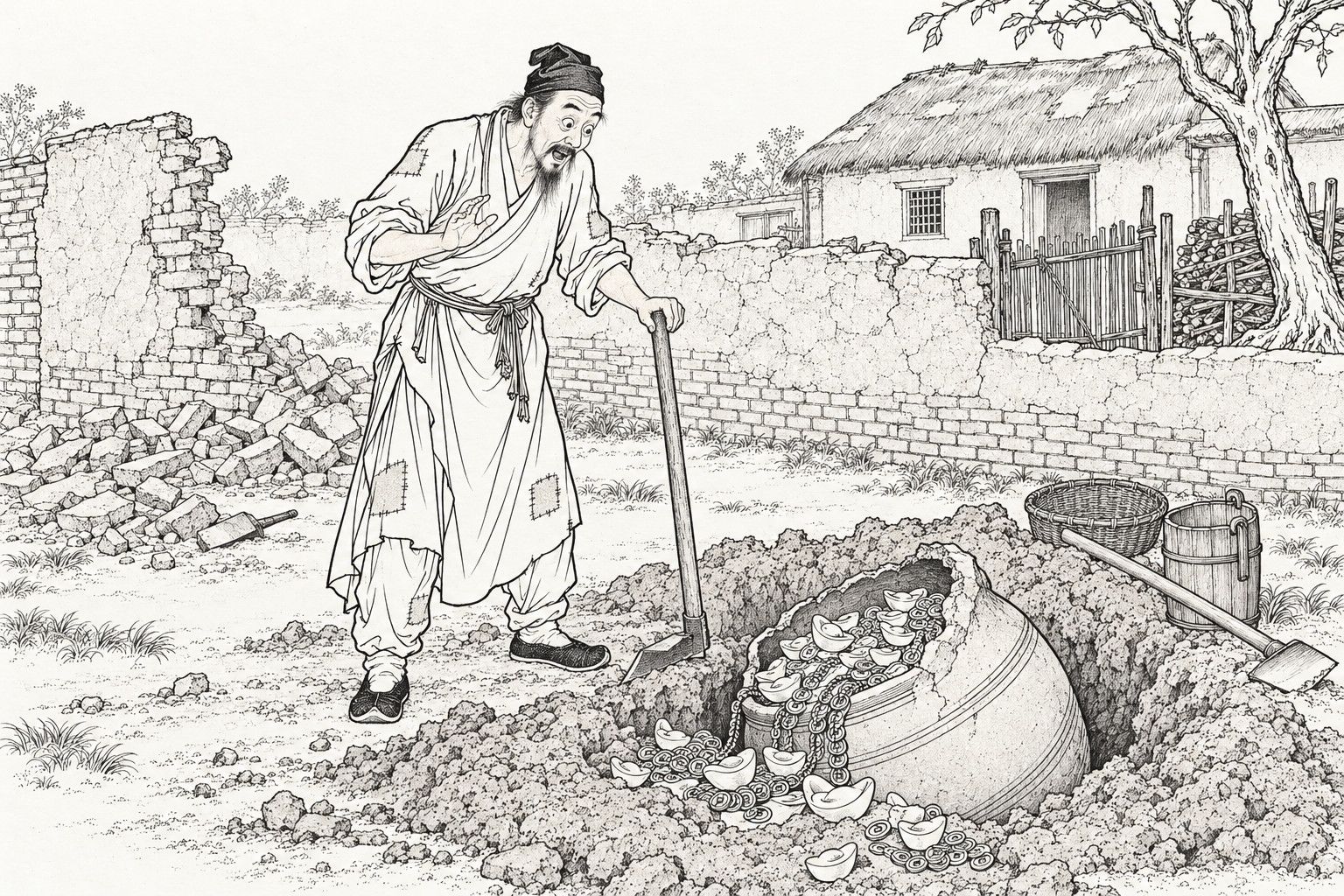
太學李月生,升宇翁之次子也。翁最富,以缸貯金,里人稱之「八缸」。翁寢疾,呼子分金:兄八之,弟二之。月生觖望。翁曰:「我非偏有愛憎,藏有窖鏹,必待無多人時,方以畀汝,勿急也。」過數日,翁益彌留。月生慮一旦不虞,覷無人,即床頭祕訊之。翁曰:「人生苦樂,皆有定數。汝方享妻賢之福,故不宜再助多金,以增汝過。」蓋月生妻車氏,最賢,有桓、孟之德,故云。月生固哀之。怒曰:「汝尚有二十餘年坎壈未歷,即予千金,亦立盡耳。苟不至山窮水盡時,勿望給與也!」月生孝友敦篤,亦即不敢復言。無何,翁大漸,尋卒。幸兄賢,齋葬之謀,勿與校計。月生又天真爛漫,不較錙銖,且好客善飲,炊黍治具,日促妻三四作,不甚理家人生產。里中無賴窺其懦,輒魚肉之。踰數年,家漸落。窘急時,賴兄小周給,不至大困。無何,兄以老病卒,益失所助,至絕糧食。春貸秋償,田所出,登場輒盡。乃割畝為活,業益消減。又數年,妻及長子相繼殂謝,無聊益甚。尋買販羊者之妻徐,翼得其小阜;而徐性剛烈,日凌藉之,至不敢與親朋通弔慶禮。忽一夜夢父曰:「今汝所遭,可謂山窮水盡矣。嘗許汝窖金,今其可矣。」問:「何在?」曰:「明日畀汝。」醒而異之,猶謂是貧中之積想也。次日,發土葺墉,掘得巨金,始悟向言「無多人」,乃死亡將半也。
太學生李月生,是升宇老人的第二個兒子。老人十分富有,用缸儲存錢財,鄉里人稱他為「八缸」。老人臥病在床,叫來兒子們分家產,哥哥得八成,弟弟得兩成。月生很失望。老人說:「我不是偏愛一個、厭惡另一個。我還藏著一窖錢,必須等到沒有多少人的時候,才給你,不要著急。」過了幾天,老人病情越發危重。月生怕他忽然去世,便趁沒有人在,在床頭悄悄問他藏錢的事。老人說:「人生的苦和樂,都有定數。你如今正享著妻子賢惠的福,就不該再給你許多錢財,增加你的過錯。」原來月生的妻子車氏十分賢惠,有桓、孟那樣的美德,所以老人這樣說。月生仍苦苦哀求。老人怒道:「你還有二十多年的坎坷沒有經歷,即使給你千金,也會立刻花光。不到走投無路的時候,就別指望我給你!」月生孝順父親,友愛兄長,為人厚道,也就不敢再說。不久,老人病勢加重,很快便去世了。幸好哥哥賢厚,辦理祭祀和安葬的事,沒有和他計較費用。月生又天真坦率,不計較小錢,還喜歡待客喝酒,每天催妻子做飯備酒菜三四次,不太操心家裡的生計。村裡的無賴看出他軟弱,便常常欺負、盤剝他。過了幾年,家境漸漸衰落。手頭緊時,靠哥哥稍加接濟,才不至於陷入嚴重的困境。不久,哥哥年老病故,他更加失去了幫助,竟到了斷糧的地步。春天借債,秋天償還,田裡的收成一到打穀場就用完了。他只好一塊塊賣田過活,家業越發減少。又過了幾年,妻子和長子相繼去世,他的日子更加苦悶。隨後,他買下一個販羊人的妻子徐氏,希望家境能稍有起色。可是徐氏性情強硬暴烈,每天欺凌他,弄得他連親友間弔唁、慶賀的禮節往來都不敢參加。忽然有一夜,他夢見父親說:「你如今的遭遇,可以說是走投無路了。我曾答應給你窖藏的錢,現在可以給了。」月生問:「在哪裡?」父親說:「明天給你。」他醒後覺得奇怪,卻仍以為是自己窮困中惦記太久,才做了這個夢。第二天,他挖土修牆,掘出了大筆錢財,這才明白父親先前說的「沒有多少人」,原來是指家裡的人將近一半都已經去世了。
太学李月生,升宇翁之次子也。翁最富,以缸贮金,里人称之「八缸」。翁寝疾,呼子分金:兄八之,弟二之。月生觖望。翁曰:「我非偏有爱憎,藏有窖镪,必待无多人时,方以畀汝,勿急也。」过数日,翁益弥留。月生虑一旦不虞,觑无人,即床头秘讯之。翁曰:「人生苦乐,皆有定数。汝方享妻贤之福,故不宜再助多金,以增汝过。」盖月生妻车氏,最贤,有桓、孟之德,故云。月生固哀之。怒曰:「汝尚有二十余年坎壈未历,即予千金,亦立尽耳。苟不至山穷水尽时,勿望给与也!」月生孝友敦笃,亦即不敢复言。无何,翁大渐,寻卒。幸兄贤,斋葬之谋,勿与校计。月生又天真烂漫,不较锱铢,且好客善饮,炊黍治具,日促妻三四作,不甚理家人生产。里中无赖窥其懦,辄鱼肉之。逾数年,家渐落。窘急时,赖兄小周给,不至大困。无何,兄以老病卒,益失所助,至绝粮食。春贷秋偿,田所出,登场辄尽。乃割亩为活,业益消减。又数年,妻及长子相继殂谢,无聊益甚。寻买贩羊者之妻徐,翼得其小阜;而徐性刚烈,日凌借之,至不敢与亲朋通吊庆礼。忽一夜梦父曰:「今汝所遭,可谓山穷水尽矣。尝许汝窖金,今其可矣。」问:「何在?」曰:「明日畀汝。」醒而异之,犹谓是贫中之积想也。次日,发土葺墉,掘得巨金,始悟向言「无多人」,乃死亡将半也。
太学生李月生,是升宇老人的第二个儿子。老人十分富有,用缸储存钱财,乡里人称他为“八缸”。老人卧病在床,叫来儿子们分家产,哥哥得八成,弟弟得两成。月生很失望。老人说:“我不是偏爱一个、厌恶另一个。我还藏着一窖钱,必须等到没有多少人的时候,才给你,不要着急。”过了几天,老人病情越发危重。月生怕他忽然去世,便趁没有人在,在床头悄悄问他藏钱的事。老人说:“人生的苦和乐,都有定数。你如今正享着妻子贤惠的福,就不该再给你许多钱财,增加你的过错。”原来月生的妻子车氏十分贤惠,有桓、孟那样的美德,所以老人这样说。月生仍苦苦哀求。老人怒道:“你还有二十多年的坎坷没有经历,即使给你千金,也会立刻花光。不到走投无路的时候,就别指望我给你!”月生孝顺父亲,友爱兄长,为人厚道,也就不敢再说。不久,老人病势加重,很快便去世了。幸好哥哥贤厚,办理祭祀和安葬的事,没有和他计较费用。月生又天真坦率,不计较小钱,还喜欢待客喝酒,每天催妻子做饭备酒菜三四次,不太操心家里的生计。村里的无赖看出他软弱,便常常欺负、盘剥他。过了几年,家境渐渐衰落。手头紧时,靠哥哥稍加接济,才不至于陷入严重的困境。不久,哥哥年老病故,他更加失去了帮助,竟到了断粮的地步。春天借债,秋天偿还,田里的收成一到打谷场就用完了。他只好一块块卖田过活,家业越发减少。又过了几年,妻子和长子相继去世,他的日子更加苦闷。随后,他买下一个贩羊人的妻子徐氏,希望家境能稍有起色。可是徐氏性情强硬暴烈,每天欺凌他,弄得他连亲友间吊唁、庆贺的礼节往来都不敢参加。忽然有一夜,他梦见父亲说:“你如今的遭遇,可以说是走投无路了。我曾答应给你窖藏的钱,现在可以给了。”月生问:“在哪里?”父亲说:“明天给你。”他醒后觉得奇怪,却仍以为是自己穷困中惦记太久,才做了这个梦。第二天,他挖土修墙,掘出了大笔钱财,这才明白父亲先前说的“没有多少人”,原来是指家里的人将近一半都已经去世了。
Li Yuesheng, a student of the Imperial Academy, was the second son of old Mr. Li Shengyu. The old man was very rich. He kept his money in vats, and people in the village called him Eight Vats (Bagang). When he fell ill and took to his bed, he called his sons in to divide the money: eight parts to the elder brother, two to the younger. Yuesheng was bitterly disappointed. “It is not that I love one of you more than the other,” the old man said. “I have money buried in a cellar. I will give it to you, but only when there are not many people. Don’t be impatient.” A few days later the old man was sinking. Yuesheng was afraid he might go at any moment. When he saw that no one was about, he asked him in secret at the bedside. “A man’s joys and sufferings in life are all fixed in advance,” said the old man. “You are enjoying the blessing of a good wife. It would not be right to give you a lot of money besides. It would only add to your faults.” He said this because Yuesheng’s wife, who was born a Che, was a most virtuous woman, with the virtues of Huan and Meng. Yuesheng kept pleading. The old man grew angry. “You still have more than twenty years of hardship ahead of you. Give you a thousand taels and it would be gone at once. Until you have come to the end of the hills and the end of the waters, don’t expect a thing from me!” Yuesheng was a devoted son and a loving brother, and he did not dare say any more. Before long the old man’s illness turned grave, and soon he died. Fortunately the elder brother was a good man and did not haggle with him over the costs of the funeral services and the burial. Yuesheng, for his part, was guileless and open-hearted and never counted the coppers. He loved company and liked his wine. He would have his wife cook millet and lay out food and drink three or four times a day, and he paid little attention to how the household made its living. The ruffians of the village saw that he was soft and preyed on him at every turn. After some years the family began to decline. When things were tight, his brother helped him out a little, so he never came to real want. Before long his brother died, old and ill. With that help gone, Yuesheng came to have no grain at all. He borrowed in spring and repaid in autumn. Whatever his fields yielded was gone as soon as it reached the threshing floor. So he lived by selling off his land a piece at a time, and the estate dwindled further. Some years later his wife and his eldest son died one after the other, and he was more wretched than ever. Soon after, he bought the wife of a sheep dealer, a woman named Xu, hoping to get hold of the bit of money she had. But Xu was hard and fierce. She bullied him every day, until he did not dare exchange so much as condolences or congratulations with his relatives and friends. Then one night he dreamed that his father said to him, “What you have come to now may truly be called the end of the hills and the end of the waters. I once promised you the buried money. Now the time has come.” “Where is it?” Yuesheng asked. “I will give it to you tomorrow.” He woke and wondered at it, but still took it for a poor man’s fancy, brooded on too long. The next day, digging up earth to mend a wall, he unearthed a great hoard of money. Only then did he understand that when his father had said “not many people,” he had meant that nearly half of them would be dead.