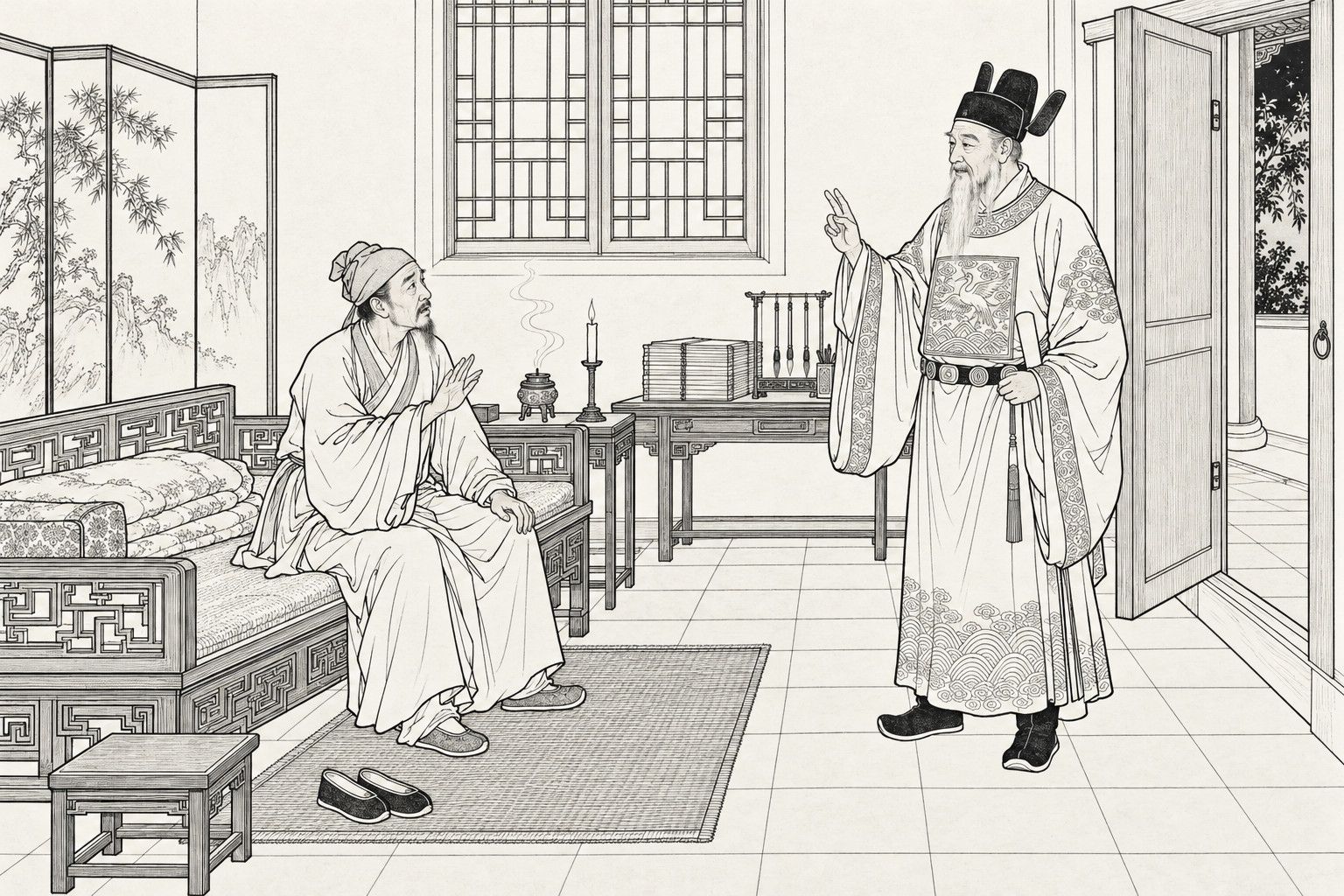
朱公徽蔭巡撫粵東時,往來商旅,多告無頭冤狀。千里行人,死不見尸,數客同遊,全無音信,積案纍纍,莫可究詰。初告,有司尚發牒行緝;迨投狀既多,竟置不問。公蒞任,歷稽舊案,狀中稱死者不下百餘,其千里無主者,更不知凡幾。公駭異惻怛,籌思廢寢。遍訪僚屬,迄少方略。於是潔誠熏沐,致檄城隍之神。已而齋寢,恍惚見一官僚,搢笏而入。問:「何官?」答云:「城隍劉某。」「將何言?」曰:「鬢邊垂雪,天際生雲,水中漂木,壁上安門。」言已而退。既醒,隱謎不解。輾轉終宵,忽悟曰:「垂雪者,老也;生雲者,龍也;水上木為舡;壁上門為戶:豈非『老龍舡戶』耶!」蓋省之東北,曰小嶺、曰藍關,源自老龍津,以達南海,嶺外巨商,每由此入粵。公遣武弁,密授機謀,捉龍津駕舟者,次第擒獲五十餘名,皆不械而服。蓋此等賊以舟渡為名,賺客登舟,或投蒙藥,或燒悶香,致客沉迷不醒;而後剖腹納石,以沉水底。冤慘極矣!自昭雪後,遐邇懽騰,謠頌成集焉。
朱徽蔭擔任粵東巡撫時,往來的商旅常來申訴一些找不到線索的冤案。有人遠行千里,死了卻找不到屍體;幾個客商結伴出行,竟全都沒了音信。這樣的案子積了一大堆,卻無法查清。起初有人告狀,主管官員還發文緝查;後來告狀的越來越多,竟然擱置不問。朱公上任後,逐一查閱舊案,訴狀裡提到的死者已有一百多人,那些遠離家鄉、無人替他們申訴的人,更不知道有多少。他又驚又悲,反覆思索,連覺也睡不著。他向屬下官員一一詢問,始終沒得到什麼辦法。於是,他懷著誠心潔身沐浴、焚香,向城隍神發出公文。隨後,他在齋戒的寢室睡下,恍惚間見一位官員將笏板插在腰間,走了進來。朱公問:「你是什麼官?」對方答道:「城隍劉某。」朱公又問:「你有什麼話要說?」城隍說:「鬢邊垂著白雪, 天邊生出雲氣, 水中漂著木頭, 牆上安著門。」說完便退了出去。朱公醒來後,解不開這個謎。他整夜輾轉,忽然悟道:「鬢邊垂著白雪,是『老』;能生出雲氣的,是『龍』;水上的木頭是『船』;牆上的門是『戶』。這不就是『老龍船戶』嗎!」原來省的東北部有小嶺、藍關,那裡有一條從老龍津流向南海的水路,嶺外的大商人往往由這條路進入粵東。朱公派出武官,秘密交代計策,捉拿在龍津駕船的人,陸續抓獲五十多人,都沒用刑便招認了。原來這些盜賊以擺渡為名,騙人上船,有的下蒙藥,有的燒悶香,使客人昏迷不醒,然後剖開肚子,塞進石頭,沉到水底。真是慘痛到了極點的冤案!冤案查清以後,遠近的人都歡欣鼓舞,歌頌朱公的歌謠匯成了一集。
朱公徽荫巡抚粤东时,往来商旅,多告无头冤状。千里行人,死不见尸,数客同游,全无音信,积案累累,莫可究诘。初告,有司尚发牒行缉;迨投状既多,竟置不问。公莅任,历稽旧案,状中称死者不下百余,其千里无主者,更不知凡几。公骇异恻怛,筹思废寝。遍访僚属,迄少方略。于是洁诚熏沐,致檄城隍之神。已而斋寝,恍惚见一官僚,搢笏而入。问:「何官?」答云:「城隍刘某。」「将何言?」曰:「鬓边垂雪,天际生云,水中漂木,壁上安门。」言已而退。既醒,隐谜不解。辗转终宵,忽悟曰:「垂雪者,老也;生云者,龙也;水上木为舡;壁上门为户:岂非『老龙舡户』耶!」盖省之东北,曰小岭、曰蓝关,源自老龙津,以达南海,岭外巨商,每由此入粤。公遣武弁,密授机谋,捉龙津驾舟者,次第擒获五十余名,皆不械而服。盖此等贼以舟渡为名,赚客登舟,或投蒙药,或烧闷香,致客沉迷不醒;而后剖腹纳石,以沉水底。冤惨极矣!自昭雪后,遐迩懽腾,谣颂成集焉。
朱徽荫担任粤东巡抚时,往来的商旅常来申诉一些找不到线索的冤案。有人远行千里,死了却找不到尸体;几个客商结伴出行,竟全都没了音信。这样的案子积了一大堆,却无法查清。起初有人告状,主管官员还发文缉查;后来告状的越来越多,竟然搁置不问。朱公上任后,逐一查阅旧案,诉状里提到的死者已有一百多人,那些远离家乡、无人替他们申诉的人,更不知道有多少。他又惊又悲,反复思索,连觉也睡不着。他向属下官员一一询问,始终没得到什么办法。于是,他怀着诚心洁身沐浴、焚香,向城隍神发出公文。随后,他在斋戒的寝室睡下,恍惚间见一位官员将笏板插在腰间,走了进来。朱公问:“你是什么官?”对方答道:“城隍刘某。”朱公又问:“你有什么话要说?”城隍说:“鬓边垂着白雪, 天边生出云气, 水中漂着木头, 墙上安着门。”说完便退了出去。朱公醒来后,解不开这个谜。他整夜辗转,忽然悟道:“鬓边垂着白雪,是‘老’;能生出云气的,是‘龙’;水上的木头是‘船’;墙上的门是‘户’。这不就是‘老龙船户’吗!”原来省的东北部有小岭、蓝关,那里有一条从老龙津流向南海的水路,岭外的大商人往往由这条路进入粤东。朱公派出武官,秘密交代计策,捉拿在龙津驾船的人,陆续抓获五十多人,都没用刑便招认了。原来这些盗贼以摆渡为名,骗人上船,有的下蒙药,有的烧闷香,使客人昏迷不醒,然后剖开肚子,塞进石头,沉到水底。真是惨痛到了极点的冤案!冤案查清以后,远近的人都欢欣鼓舞,歌颂朱公的歌谣汇成了一集。
When Lord Zhu Huiyin was governor of Guangdong, many travelling merchants brought him complaints of wrongs that had no clue to them. Men who had travelled far from home died, and their bodies were never found. Several merchants would set out together and never be heard of again. The cases piled up, and there was no getting to the bottom of them. When the complaints first came in, the officials concerned still sent out warrants for arrest. As the complaints multiplied, they stopped asking questions at all. When Lord Zhu took office, he went through all the old cases. The complaints named well over a hundred dead. Many more had come from far away with no one to claim them, and there was no knowing how many of those had died. He was shocked and grieved, and lay awake turning it over. He consulted all his subordinates, but hardly any of them had a plan. So he purified himself, bathed and burned incense, and sent a formal dispatch to the City God. Then he slept in the fasting chamber. In a daze he saw an official come in with a tablet tucked in his sash. “What official are you?” he asked. “The City God, Liu.” “What have you to say?” The official said: “Snow hangs at the temples, clouds rise at the sky’s edge, wood floats on the water, a door is set in the wall.” With that he withdrew. When Lord Zhu woke, he could not make out the riddle. He tossed and turned all night. Then suddenly it came to him. “Snow hanging means ‘old’. Clouds rising means ‘dragon’. Wood on the water is a boat. A door in the wall is a household. Is it not the Old Dragon boat households?” In the northeast of the province, at Xiaoling and Languan, there is a waterway that runs from Old Dragon Ford (Laolongjin) down to the Southern Sea. The great merchants from beyond the ridges usually came into Guangdong that way. Lord Zhu sent military officers with secret instructions to seize the boatmen who plied at Dragon Ford. One after another, more than fifty were caught, and all of them confessed without being put to torture. These robbers, it turned out, used the ferry as a cover. They lured travellers on board, then slipped them a knockout drug or burned a stupefying incense, so that the travellers sank into a stupor and did not wake. Then they split open their bellies, packed them with stones and sank them to the bottom of the water. Nothing could be crueller or more unjust! Once the wrongs were righted, people far and near rejoiced, and the songs in his praise filled a volume.