話說孫道全拉寶劍,正要殺雷鳴、陳亮,就聽廟裡一聲喊嚷:「哈哈。好雜毛,休要欺負我徒弟,待我來跟你分個高低上下。」老道一瞧,由廟中出來一個窮和尚:破僧衣,短袖缺領,腰系絨絛,疙里疙瘩,頭髮有二寸多長,一臉油泥,光著兩隻腳,穿著兩隻草鞋,三分不像人,七分倒像鬼。老道說:「你是濟顛?」和尚說:「正是,然也!你別欺辱我徒弟。冤各有頭,債各有主。」和尚把雷鳴、陳亮定神法撤了。雷鳴、陳亮說:「師父,我二人由小月屯來找你來了。」和尚說:「你二人不用說,我都知道,你兩個人頭裡走,我跟老道說句話,我隨後就到。」和尚說:「老道,咱們兩個人,找沒人地方說去。」老道說:「甚好。」
话说孙道全拉宝剑,正要杀雷鸣、陈亮,就听庙里一声喊嚷:「哈哈。好杂毛,休要欺负我徒弟,待我来跟你分个高低上下。」老道一瞧,由庙中出来一个穷和尚:破僧衣,短袖缺领,腰系绒绦,疙里疙瘩,头发有二寸多长,一脸油泥,光着两只脚,穿着两只草鞋,三分不像人,七分倒像鬼。老道说:「你是济颠?」和尚说:「正是,然也!你别欺辱我徒弟。冤各有头,债各有主。」和尚把雷鸣、陈亮定神法撤了。雷鸣、陈亮说:「师父,我二人由小月屯来找你来了。」和尚说:「你二人不用说,我都知道,你两个人头里走,我跟老道说句话,我随后就到。」和尚说:「老道,咱们两个人,找没人地方说去。」老道说:「甚好。」
Now, Sun Daoquan had drawn his sword and was just about to kill Lei Ming and Chen Liang when a shout rang out from inside the temple: “Ha ha! You shaggy-haired Daoist, stop bullying my disciples! Wait till I come and settle with you which of us is the better man.” The old Daoist looked, and out of the temple came a poor monk. His ragged monk’s robe had short sleeves and a torn collar; a silk sash, all lumps and knots, was tied about his waist. His hair was more than two cun long, his face was smeared with greasy dirt, and his two feet were bare in a pair of straw sandals. He was three parts unlike a man and seven parts more like a ghost. “Are you Crazy Ji?” said the old Daoist. “The very same, none other!” said the monk. “Don’t you push my disciples around. Every wrong has its wrongdoer, every debt its debtor.” The monk released Lei Ming and Chen Liang from the immobilizing spell. “Master,” said Lei Ming and Chen Liang, “the two of us have come from Xiaoyue Village to find you.” “You two needn’t tell me, I know it all,” said the monk. “You two go on ahead. I’ll have a word with the Daoist and be right behind you.” Then the monk said, “Daoist, let’s you and me find somewhere with nobody about and talk it over.” “Excellent,” said the old Daoist.
和尚頭裡走,老道隨後跟著,展眼之際,和尚沒了。老道遍找,找不著了。自己無奈,只好回店罷。老道又一想,盤費用盡了,想法子弄點錢,好吃飯住店,再訪查和尚,老道就在街上,買了二斤切糕回到店中,把棗兒豆子都挖了去,把切糕團成丸子,用飛金貼成衣子,用藥一熏,把丸子帶在兜囊。老道來到錢塘關,找地方賃了一張桌子,他說舍藥,桌子用一天一百錢,講明白了。老道拿著一個木頭盒,就在這裡一站,口中念道:「貧道乃梅花山梅花嶺梅花道人是也。正在洞中打坐,心血來潮,我掐指一算,知道這方有難,貧道腳踏祥雲,來至此處,舍藥濟人。眾位要求方,勿論多少錢,擱在我這盒裡,我會給把藥取來。」老道一念,就有許多人圍上。內中有好事人拿二百錢,往老道這盒子一擱,老道把盒蓋一蓋,老道用手指一指,口念:「無量佛。」把盒子打開一瞧,錢沒有了,一粒藥在盒裡。老道說:「眾位看見了,這藥是太上老君賜的,能治諸虛百損,五勞七傷,婦人胎前產後,男人五積六聚,勿論男女大小,諸般雜症百病,一吃就好了。把藥拿回去,用陰陽瓦焙了,用紅糖沖服。」大眾一瞧,錢擱在盒裡就沒了,藥就來了,真是神仙稀奇之事。凡世上人,都是少所見多所怪。老道這是換數,他是搬運法,能把錢換在腰裡去,把藥換在盒裡來。大眾瞧著一新鮮,這個也要討,那個也要討。老道說:「眾位別瞧我這盒子小,能裝得三山五嶽,大眾等不信,拿錢試試。擱一吊也沒了,擱八百也沒了。」老道正在誆錢舍藥、高興之際,那邊和尚來了。和尚遠遠一瞧,心裡說:「好雜毛老道,又在這裡誆人家的資財呢。拿切糕丸換錢。」和尚遠遠瞧明白,見眼前地下鋪著一張毛頭紙。上寫告白:四方仁人君子得知:小婦人張門吳氏,丈夫貿易在外,我家中婆娘病故,衣裳棺槨抬葬,手無分文,萬出無奈,只得叩求四方仁人君子,施惻隱之心,量力幫助。眾人扶湊,聚少成多,俾得將婆母可埋葬,以免屍骸暴露。歿存均感大德也。
和尚头里走,老道随后跟着,展眼之际,和尚没了。老道遍找,找不着了。自己无奈,只好回店罢。老道又一想,盘费用尽了,想法子弄点钱,好吃饭住店,再访查和尚,老道就在街上,买了二斤切糕回到店中,把枣儿豆子都挖了去,把切糕团成丸子,用飞金贴成衣子,用药一熏,把丸子带在兜囊。老道来到钱塘关,找地方赁了一张桌子,他说舍药,桌子用一天一百钱,讲明白了。老道拿着一个木头盒,就在这里一站,口中念道:「贫道乃梅花山梅花岭梅花道人是也。正在洞中打坐,心血来潮,我掐指一算,知道这方有难,贫道脚踏祥云,来至此处,舍药济人。众位要求方,勿论多少钱,搁在我这盒里,我会给把药取来。」老道一念,就有许多人围上。内中有好事人拿二百钱,往老道这盒子一搁,老道把盒盖一盖,老道用手指一指,口念:「无量佛。」把盒子打开一瞧,钱没有了,一粒药在盒里。老道说:「众位看见了,这药是太上老君赐的,能治诸虚百损,五劳七伤,妇人胎前产后,男人五积六聚,勿论男女大小,诸般杂症百病,一吃就好了。把药拿回去,用阴阳瓦焙了,用红糖冲服。」大众一瞧,钱搁在盒里就没了,药就来了,真是神仙稀奇之事。凡世上人,都是少所见多所怪。老道这是换数,他是搬运法,能把钱换在腰里去,把药换在盒里来。大众瞧着一新鲜,这个也要讨,那个也要讨。老道说:「众位别瞧我这盒子小,能装得三山五岳,大众等不信,拿钱试试。搁一吊也没了,搁八百也没了。」老道正在诓钱舍药、高兴之际,那边和尚来了。和尚远远一瞧,心里说:「好杂毛老道,又在这里诓人家的资财呢。拿切糕丸换钱。」和尚远远瞧明白,见眼前地下铺着一张毛头纸。上写告白:四方仁人君子得知:小妇人张门吴氏,丈夫贸易在外,我家中婆娘病故,衣裳棺椁抬葬,手无分文,万出无奈,只得叩求四方仁人君子,施恻隐之心,量力帮助。众人扶凑,聚少成多,俾得将婆母可埋葬,以免尸骸暴露。殁存均感大德也。
The monk walked in front with the old Daoist following behind, and in the blink of an eye the monk was gone. The Daoist searched everywhere but could not find him. There was nothing for it but to go back to the inn. Then the old Daoist thought it over: his travelling money was all spent, and he had better find some way to get hold of cash, so that he could eat and pay for his lodging while he went on hunting for the monk. So out in the street the old Daoist bought two catties of sticky-rice cake and took it back to the inn. He dug out all the dates and beans, rolled the cake into pills, covered them with gold leaf for a coating, smoked them over some drug, and put the pills in his pouch. The old Daoist came to the Qiantang Gate and found a place where he could rent a table. He said he was giving away medicine; the table would cost a hundred coppers a day, and they settled it plainly. The old Daoist held a wooden box, simply stood there, and chanted: “This humble Daoist is none other than the Daoist Meihua of Meihua Ridge on Mount Meihua. I was sitting in meditation in my cave when my heart-blood stirred. I reckoned on my fingers and knew that this region was in distress, so this humble Daoist trod upon an auspicious cloud and came here to give away medicine and save the people. Any of you good people who want a remedy, put in this box of mine whatever money you like, no matter how much, and I can fetch the medicine for you.” As soon as the Daoist began his chant, a great many people crowded round. Among them was a busybody who put two hundred coppers in the Daoist’s box. The old Daoist shut the lid, pointed at it with his finger and said, “Limitless Buddha.” He opened the box and looked: the money was gone, and there was one pill inside. “You all saw it, good people,” said the old Daoist. “This medicine is a gift of the Supreme Lord Lao. It cures every depletion and a hundred injuries, the five strains and seven damages, women’s troubles before and after childbirth, men’s five accumulations and six gatherings; man or woman, old or young, all manner of complaints and a hundred illnesses, one dose and you’re well. Take the pill home, roast it between a pair of yin-and-yang tiles, and wash it down with brown sugar water.” The crowd looked on: put money in the box and it vanished, and the medicine came instead. It was truly a marvel fit for an immortal. People in this world are all the same: those who have seen little find a great deal strange. What the old Daoist was doing was a swap. It was the art of magical transport, by which he could shift the money into his waistband and shift the medicine into the box. To the crowd it was a novelty worth seeing; this one wanted a pill and that one wanted a pill. “Don’t look down on this little box of mine, good people,” said the old Daoist. “It can hold all the Three Mountains and the Five Sacred Peaks. If you don’t believe me, try it with money. Put in a string of cash and it’s gone; put in eight hundred and it’s gone.” Just when the old Daoist was enjoying himself, swindling money and handing out medicine, along came the monk from over that way. The monk took a look from a distance and said to himself, “That rotten shaggy-haired Daoist, cheating people out of their money here again. Trading sticky-cake pills for cash!” Having seen it all clearly from a distance, the monk noticed a sheet of coarse paper spread on the ground before him, with a notice written on it: To all benevolent gentlemen of every quarter: I, a humble woman, Mrs. Zhang, born Wu, have a husband away trading, and my mother-in-law has died at home. For her grave clothes, coffin, bearers and burial I have not a single coin in hand. Driven to it with no other way out, I can only kowtow and beg the benevolent gentlemen of every quarter to show a compassionate heart and help as far as you are able. If everyone puts in a little, many littles will make much, so that I may bury my mother-in-law and spare her body from lying exposed. The living and the dead alike will be grateful for your great kindness.
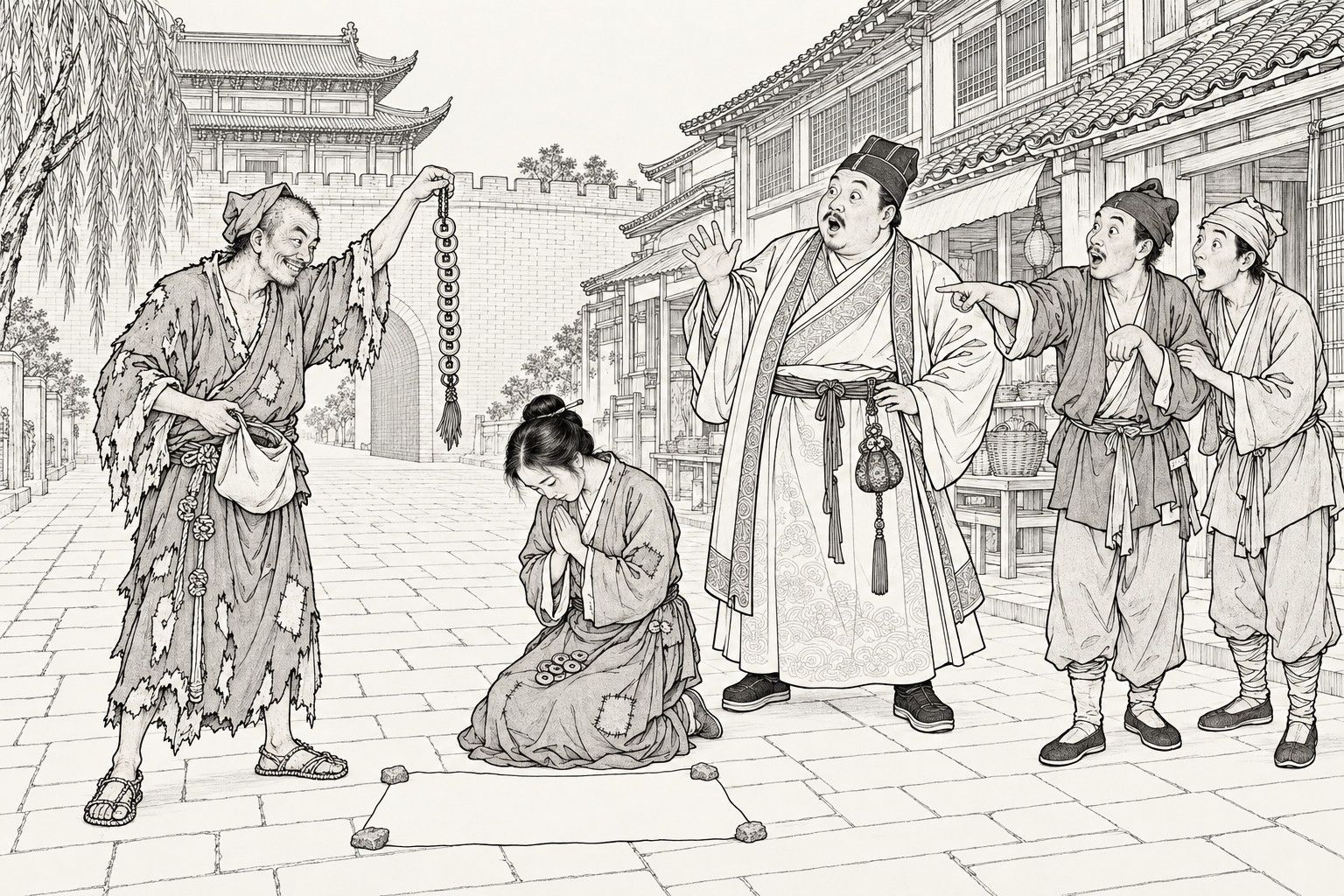
和尚來到近前一瞧,許多人圍著看,並無一人給錢的。和尚說:「你們有錢給她幾百,也是好事。」旁邊有一個人,扛著五百吊,說:「和尚,你別說便宜話,你給他幾百,我就給他幾百。」和尚說:「我給他,你敢和我比著給么?」這個人說:「就憑你這么樣窮和尚,我不敢跟你比?我給他一吊。」和尚說:「我也給一吊。」和尚由兜囊一掏,口念:「唵。敕令赫。」掏出五把錢,約一吊多,給了那婦人。那人說:「我再給五百。」和尚又一掏兜囊,口念:「唵。敕令赫。」掏出三百來,和尚又一掏,掏出二百來。這串錢是大黃銅錢,拿紅絲穿著,和尚也掏出來。旁邊有一個人瞧見,「呦」了一聲。旁邊這個人,
和尚来到近前一瞧,许多人围着看,并无一人给钱的。和尚说:「你们有钱给她几百,也是好事。」旁边有一个人,扛着五百吊,说:「和尚,你别说便宜话,你给他几百,我就给他几百。」和尚说:「我给他,你敢和我比着给幺?」这个人说:「就凭你这么样穷和尚,我不敢跟你比?我给他一吊。」和尚说:「我也给一吊。」和尚由兜囊一掏,口念:「唵。敕令赫。」掏出五把钱,约一吊多,给了那妇人。那人说:「我再给五百。」和尚又一掏兜囊,口念:「唵。敕令赫。」掏出三百来,和尚又一掏,掏出二百来。这串钱是大黄铜钱,拿红丝穿着,和尚也掏出来。旁边有一个人瞧见,「呦」了一声。旁边这个人,
The monk came up close and looked. A great many people stood round reading it, and not one of them gave any money. “If you’ve got money,” said the monk, “give her a few hundred. It would be a good deed.” Beside him stood a man who carried himself as though he had five hundred strings of cash on his shoulders. “Monk,” he said, “that’s easy for you to say. You give her a few hundred and I’ll give her a few hundred.” “If I give her some,” said the monk, “do you dare to match me?” “A poor monk like you?” said the man. “You think I wouldn’t dare match you? I’ll give her a string of cash.” “Then I’ll give a string too,” said the monk. He reached into his pouch, saying, “Om! By command — he!” and pulled out five handfuls of coins, a string and more, and gave them to the woman. “I’ll give five hundred more,” said the man. The monk reached into his pouch again — “Om! By command — he!” — and pulled out three hundred; he reached in again and pulled out two hundred. These were big yellow brass coins threaded on red silk, and the monk pulled out the string with them. A man standing nearby saw it and said, “Whoa!” This man standing nearby —