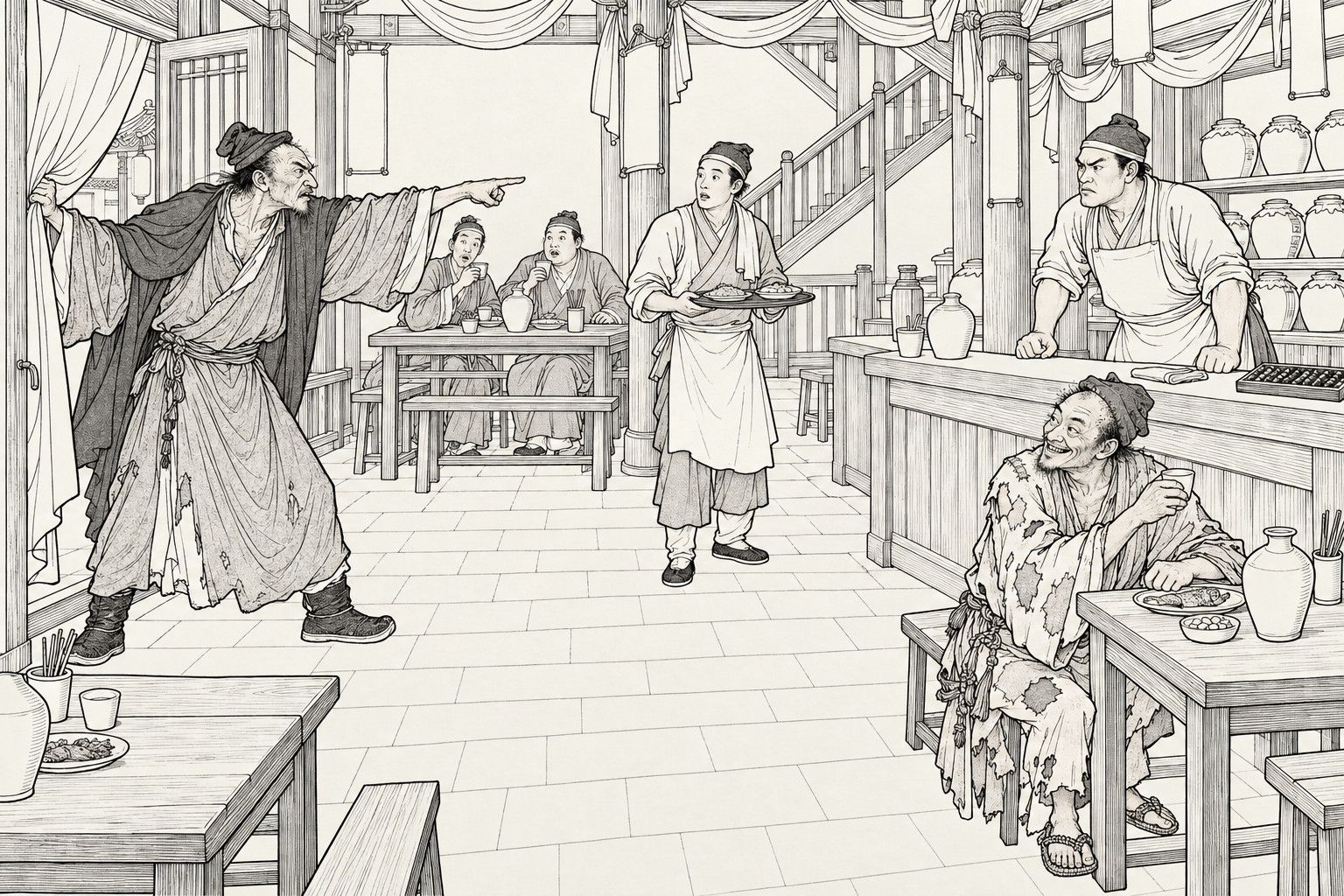
話說濟公在雙義樓吃完了酒飯,叫跑堂的算帳。跑堂的一算,說:「一共七百二十文。」和尚說:「不多。外加八十給八百罷。」夥計說:「大師父,謝謝。」和尚說:「給我寫上帳。」夥計說:「那可不行。今天新開張,一概不賒,減價一半,俱要現錢。」和尚說:「你敢不寫帳,咱們是一場官司。」夥計一聽這話,自己一想:「我何必跟他費話,我告訴掌柜的,隨他意賒不賒。」想罷,夥計來到柜上說:「掌柜的,那位大師父吃了八百錢,要寫帳,他說不給他寫帳,要打官司。」掌柜的抬頭一看,見和尚窮苦不堪。掌柜的說:「夥計,你不用跟和尚爭競,他是個窮人,我由困苦間過來,我知道窮人的難處,你告訴他,給他寫上。」夥計過去說:「大師父,我們掌柜說,給你寫上了。」和尚說:「要寫寫兩吊,找給我一吊二百錢,我帶著零花。我出來沒帶零錢。」夥計一聽,說:「掌柜的,聽見沒有?」掌柜的嘆了一聲說:「昨天我還沒飯吃,今天我開了這座鋪子,做了好幾萬銀子的買賣,還總算上天有眼,今天我總算大喜慶的日子了,也罷,和尚是個出家人,我給他一吊二百錢,你告訴大師父說,只當我舍在廟裡了。」夥計立刻把一吊二百錢,給和尚拿過來。和尚說:「再給我要一壺酒,要一個菜。」夥計說:「你不是吃完了再找呀。」夥計又給要了酒菜,和尚又喝了。旁邊酒飯座,就有無知的人,見和尚吃完了找錢,不找要打官司,掌柜的找給他,必是怕打官司,這兩個人吃完了,叫夥計一算,吃了兩吊,要找三吊,一共寫五吊,掌柜的也給找了。俗話說的不錯,善門難開,善門難閉。旁邊又有二個人,吃了三吊五。給四吊,要寫十吊,找六吊。掌柜的一聽可惱了,當時說:「眾位,我開這個鋪子,我說昨天沒飯吃,今天做了幾萬銀子的買賣,我可不是明火路劫,偷來搶來的銀子,也不是挖著銀礦。方才和尚找錢,我知道窮人的難處,再說他是出家人,我只當施捨了。眾位倒跟和尚學,吃兩吊找三吊。我想都是老街舊鄰,很不好意思,到咱們這個小鋪子來,說吃四吊,要找六吊。恐怕別處也不能這么找法嗎!我可不是怕打官司,我是窮人出身,在這方也不是一年半年,眾位別欺負我,我可不叫人欺負。哪位要找,可趁早說話。」這眾人一聽,全都愣了。
话说济公在双义楼吃完了酒饭,叫跑堂的算帐。跑堂的一算,说:「一共七百二十文。」和尚说:「不多。外加八十给八百罢。」伙计说:「大师父,谢谢。」和尚说:「给我写上帐。」伙计说:「那可不行。今天新开张,一概不赊,减价一半,俱要现钱。」和尚说:「你敢不写帐,咱们是一场官司。」伙计一听这话,自己一想:「我何必跟他费话,我告诉掌柜的,随他意赊不赊。」想罢,伙计来到柜上说:「掌柜的,那位大师父吃了八百钱,要写帐,他说不给他写帐,要打官司。」掌柜的抬头一看,见和尚穷苦不堪。掌柜的说:「伙计,你不用跟和尚争竞,他是个穷人,我由困苦间过来,我知道穷人的难处,你告诉他,给他写上。」伙计过去说:「大师父,我们掌柜说,给你写上了。」和尚说:「要写写两吊,找给我一吊二百钱,我带着零花。我出来没带零钱。」伙计一听,说:「掌柜的,听见没有?」掌柜的叹了一声说:「昨天我还没饭吃,今天我开了这座铺子,做了好几万银子的买卖,还总算上天有眼,今天我总算大喜庆的日子了,也罢,和尚是个出家人,我给他一吊二百钱,你告诉大师父说,只当我舍在庙里了。」伙计立刻把一吊二百钱,给和尚拿过来。和尚说:「再给我要一壶酒,要一个菜。」伙计说:「你不是吃完了再找呀。」伙计又给要了酒菜,和尚又喝了。旁边酒饭座,就有无知的人,见和尚吃完了找钱,不找要打官司,掌柜的找给他,必是怕打官司,这两个人吃完了,叫伙计一算,吃了两吊,要找三吊,一共写五吊,掌柜的也给找了。俗话说的不错,善门难开,善门难闭。旁边又有二个人,吃了三吊五。给四吊,要写十吊,找六吊。掌柜的一听可恼了,当时说:「众位,我开这个铺子,我说昨天没饭吃,今天做了几万银子的买卖,我可不是明火路劫,偷来抢来的银子,也不是挖着银矿。方才和尚找钱,我知道穷人的难处,再说他是出家人,我只当施舍了。众位倒跟和尚学,吃两吊找三吊。我想都是老街旧邻,很不好意思,到咱们这个小铺子来,说吃四吊,要找六吊。恐怕别处也不能这么找法吗!我可不是怕打官司,我是穷人出身,在这方也不是一年半年,众位别欺负我,我可不叫人欺负。哪位要找,可趁早说话。」这众人一听,全都愣了。
Now, Ji Gong finished his wine and food at Shuangyi Tower and called the waiter to make up the bill. The waiter reckoned it up. “Seven hundred and twenty cash in all,” he said. “Not much,” said the monk. “Add eighty and make it eight hundred.” “Thank you, Master,” said the waiter. “Put it on my tab,” said the monk. “That won’t do,” said the waiter. “We’ve only just opened today. No credit for anybody; everything’s half price, and it’s all cash down.” “If you dare not put it on the tab,” said the monk, “you and I will be going to court.” When the waiter heard this, he thought to himself, “Why should I waste words on him? I’ll tell the boss, and he can give credit or not, as he likes.” With that the waiter went over to the counter. “Boss,” he said, “that Master there has eaten eight hundred cash and wants it on the tab. He says if we don’t put it on the tab, he’ll take us to court.” The owner raised his head and looked, and saw that the monk was as poor and wretched as could be. “Waiter,” said the owner, “don’t argue with the monk. He’s a poor man. I’ve come up through hard times myself, and I know how hard it is to be poor. Tell him we’ll put it down for him.” The waiter went over. “Master,” he said, “our boss says it’s on the tab for you.” “If you’re putting it down, put down two strings,” said the monk, “and give me one string two hundred in change. I’ll take it along as pocket money. I came out without any small change.” When the waiter heard this, he said, “Boss, did you hear that?” The owner sighed. “Yesterday I had nothing to eat,” he said, “and today I’ve opened this shop and been given a business worth tens of thousands of taels of silver. Heaven has eyes after all, and today, after all, is a great and happy day for me. Very well. The monk has left his family for religion. I’ll give him one string two hundred. Tell the Master to count it as an offering I’ve made to his temple.” The waiter at once brought the monk one string two hundred cash. “Get me another pot of wine,” said the monk, “and another dish.” “So you’ll eat this one and want change back again, will you?” said the waiter. All the same, the waiter ordered him wine and a dish, and the monk drank again. Now among the diners nearby were some ignorant fellows who had watched the monk eat and then get change, threatening to go to court if he didn’t, and they reckoned the owner had given it to him because he must be afraid of going to court. Two of them finished eating and had the waiter reckon it up: they had eaten two strings’ worth, and they wanted three strings back, putting five strings on the tab in all. And the owner gave them the change too. The old saying is right: the door of charity is hard to open, and just as hard to shut. Then two more men nearby had eaten three strings five hundred. Call it four, they said; put ten on the tab and give us six in change. When the owner heard this, he lost his temper. “Gentlemen,” he said there and then, “I’ve opened this shop. I said that yesterday I had nothing to eat and today I’ve got a business worth tens of thousands of taels, but that’s not silver I robbed off the highway with torches blazing, it’s not stolen or snatched, and I haven’t struck a silver mine either. Just now, when the monk wanted change, I knew how hard it is to be poor, and besides, he’s left his family for religion, so I counted it as alms. And you gentlemen copy the monk: eat two strings and want three back. I thought, we’re all old neighbours from the same streets, and I was too embarrassed to say anything. Now you come into our little shop, eat four strings and want six back. I doubt anywhere else would give change like that! It’s not that I’m afraid of a lawsuit. I was born poor, and I’ve lived around here a good deal longer than a year or two. Don’t you gentlemen bully me, because I won’t be bullied by anybody. If anyone else wants change, better speak up now.” When the crowd heard this, they were all struck dumb.
正在這番光景,一掀帘子,進來一個人,說:「掌柜的,該我二百銀子,還不給我嗎?」掌柜的一瞧,這個人歪著帽子,閃披著大髦,五十多歲,黃臉膛,兩道短眉毛,一雙小圓眼,鷹鼻子,裂腮額,微有幾根黃鬍子,上頭七根,下八根,這人姓姚,名變,字荒山,素常就在外面訛人,無事生非,今天聽說雙義樓掌柜的怕打官司,吃飯倒找錢,這姚荒山想要來訛掌柜的。一進門就說:「掌柜的,該我二百銀子,還不該給我么。」掌柜的一聽,氣往上撞。過來照定姚荒山,就是一個嘴巴。焉想到這一嘴巴使姚荒山翻身栽倒,絕命身亡。眾酒飯座一陣大亂。
正在这番光景,一掀帘子,进来一个人,说:「掌柜的,该我二百银子,还不给我吗?」掌柜的一瞧,这个人歪着帽子,闪披着大髦,五十多岁,黄脸膛,两道短眉毛,一双小圆眼,鹰鼻子,裂腮额,微有几根黄胡子,上头七根,下八根,这人姓姚,名变,字荒山,素常就在外面讹人,无事生非,今天听说双义楼掌柜的怕打官司,吃饭倒找钱,这姚荒山想要来讹掌柜的。一进门就说:「掌柜的,该我二百银子,还不该给我幺。」掌柜的一听,气往上撞。过来照定姚荒山,就是一个嘴巴。焉想到这一嘴巴使姚荒山翻身栽倒,绝命身亡。众酒饭座一阵大乱。
Just as things stood like this, the door curtain was flung aside and in came a man. “Boss,” he said, “you owe me two hundred taels of silver. Aren’t you going to pay me yet?” The owner looked at him. The man wore his cap askew and had a big cloak thrown loosely over his shoulders. He was in his fifties, with a sallow face, two short eyebrows, a pair of small round eyes, a hooked nose like a hawk’s, craggy cheeks and brow, and a few wisps of yellow whiskers: seven hairs on top and eight below. His surname was Yao, his given name Bian and his style Huangshan. He had always made his living out on the streets by shaking people down, stirring up trouble out of nothing. Today he had heard that the owner of Shuangyi Tower was afraid of going to court and was handing out change to people who had eaten, so Yao Huangshan meant to come and shake the owner down. The moment he came in he said, “Boss, you owe me two hundred taels. Aren’t you going to pay me what you owe?” When the owner heard this, his anger surged up. He went over, squared up to Yao Huangshan and gave him one slap across the face. Who would have thought that one slap would send Yao Huangshan toppling over, dead on the spot? The diners were thrown into an uproar.
書中交代,這位掌柜的,本姓李,名叫李興,當年在酒飯館跑堂。人也勤儉,又正在年輕力壯,很安本分,做了幾年買賣、手中存有幾百吊錢。就有人見他有錢說:「李興,你為何不說個親事,也可以生兒養女。」李興說:「我倒打算安家,沒人給說。」立刻就有人給提親,是寡婦老太太有個姑娘,一說就說妥了。擇日迎娶過門。娶過來,岳母無人照管,也就跟著他,又過了兩年,生養了兩個孩子,未免他一個人一份手藝,家內四口人吃飯,所進不敷所出。偏巧有一位飯座姓趙,是財主,見李興很和氣,被家所累,趙老頭就問:「李興,你一個人手藝,家裡夠過的么?」李興說:「不夠。有什麼法子?」趙老頭說:「我成全成全你。你找一地方,我給你五百銀子,你自己開一個小飯館。好不好?」李興深為願意,一想做買賣,比做手藝強的多了。自己就在錢塘門外,開了一座小酒鋪,五百銀子成本。偏巧時運不濟,買賣作賠本了。趙老頭一看,買賣是不行了,這天說:「李興。你倒不必為難。買賣做賠了,我也不要了,我送給你自己支持去罷。再弄好了,我也不要了,你關門我也不管。」李興也無法,自己把夥友都散了,就剩了一個小夥計,李興自己掌灶,後院帶住家,一天一天對付著。這天忽然來了幾個人,騎著馬來到門首下馬,就問:「掌柜的,有清淨地方沒有?」李興說:「有。」
书中交代,这位掌柜的,本姓李,名叫李兴,当年在酒饭馆跑堂。人也勤俭,又正在年轻力壮,很安本分,做了几年买卖、手中存有几百吊钱。就有人见他有钱说:「李兴,你为何不说个亲事,也可以生儿养女。」李兴说:「我倒打算安家,没人给说。」立刻就有人给提亲,是寡妇老太太有个姑娘,一说就说妥了。择日迎娶过门。娶过来,岳母无人照管,也就跟着他,又过了两年,生养了两个孩子,未免他一个人一份手艺,家内四口人吃饭,所进不敷所出。偏巧有一位饭座姓赵,是财主,见李兴很和气,被家所累,赵老头就问:「李兴,你一个人手艺,家里够过的幺?」李兴说:「不够。有什么法子?」赵老头说:「我成全成全你。你找一地方,我给你五百银子,你自己开一个小饭馆。好不好?」李兴深为愿意,一想做买卖,比做手艺强的多了。自己就在钱塘门外,开了一座小酒铺,五百银子成本。偏巧时运不济,买卖作赔本了。赵老头一看,买卖是不行了,这天说:「李兴。你倒不必为难。买卖做赔了,我也不要了,我送给你自己支持去罢。再弄好了,我也不要了,你关门我也不管。」李兴也无法,自己把伙友都散了,就剩了一个小伙计,李兴自己掌灶,后院带住家,一天一天对付着。这天忽然来了几个人,骑着马来到门首下马,就问:「掌柜的,有清净地方没有?」李兴说:「有。」
A word of explanation: the owner’s surname was Li and his name was Li Xing. In years past he had worked as a waiter in eating houses. He was hardworking and thrifty, young and strong, and well content with his lot, and after a few years of doing business he had several hundred strings of cash put by. Seeing he had money, someone said to him, “Li Xing, why don’t you find yourself a match? Then you can have sons and daughters.” “I’d like to settle down,” said Li Xing, “but nobody’s offered to arrange it.” At once someone proposed a match: an old widow had a daughter, and as soon as it was proposed it was agreed. A day was chosen and the bride brought home. Once she had come to him, there was nobody to look after his mother-in-law, so she came along to live with him too. Two more years went by and they had two children. With one man working at one trade and four mouths to feed at home, what came in could not cover what went out. As it happened, there was a customer named Zhao, a man of wealth, who saw that Li Xing was good-natured and weighed down by his family. “Li Xing,” Old Zhao asked him, “is what you earn by yourself enough to keep your household?” “It’s not,” said Li Xing. “But what can I do?” “I’ll give you a hand,” said Old Zhao. “Find yourself a place and I’ll give you five hundred taels of silver, and you can open a little eating house of your own. How about that?” Li Xing was more than willing; he reckoned doing business would be far better than working at a trade. So outside the Qiantang Gate he opened a small wineshop on five hundred taels of capital. As luck would have it, his fortunes were low and the business ran at a loss. Old Zhao saw that the business wasn’t working, and one day he said, “Li Xing, don’t trouble yourself over it. The business has lost money, but I don’t want it back. I’m giving it to you to keep going on your own. If it does well, I still don’t want anything; if you close up, that’s no concern of mine either.” Li Xing had no choice. He let his staff go, keeping just one young waiter, and did the cooking himself, with the family living in the back courtyard, scraping by from one day to the next. Then one day several men suddenly rode up to his door and dismounted. “Boss,” they asked, “have you got somewhere quiet?” “I have,” said Li Xing.