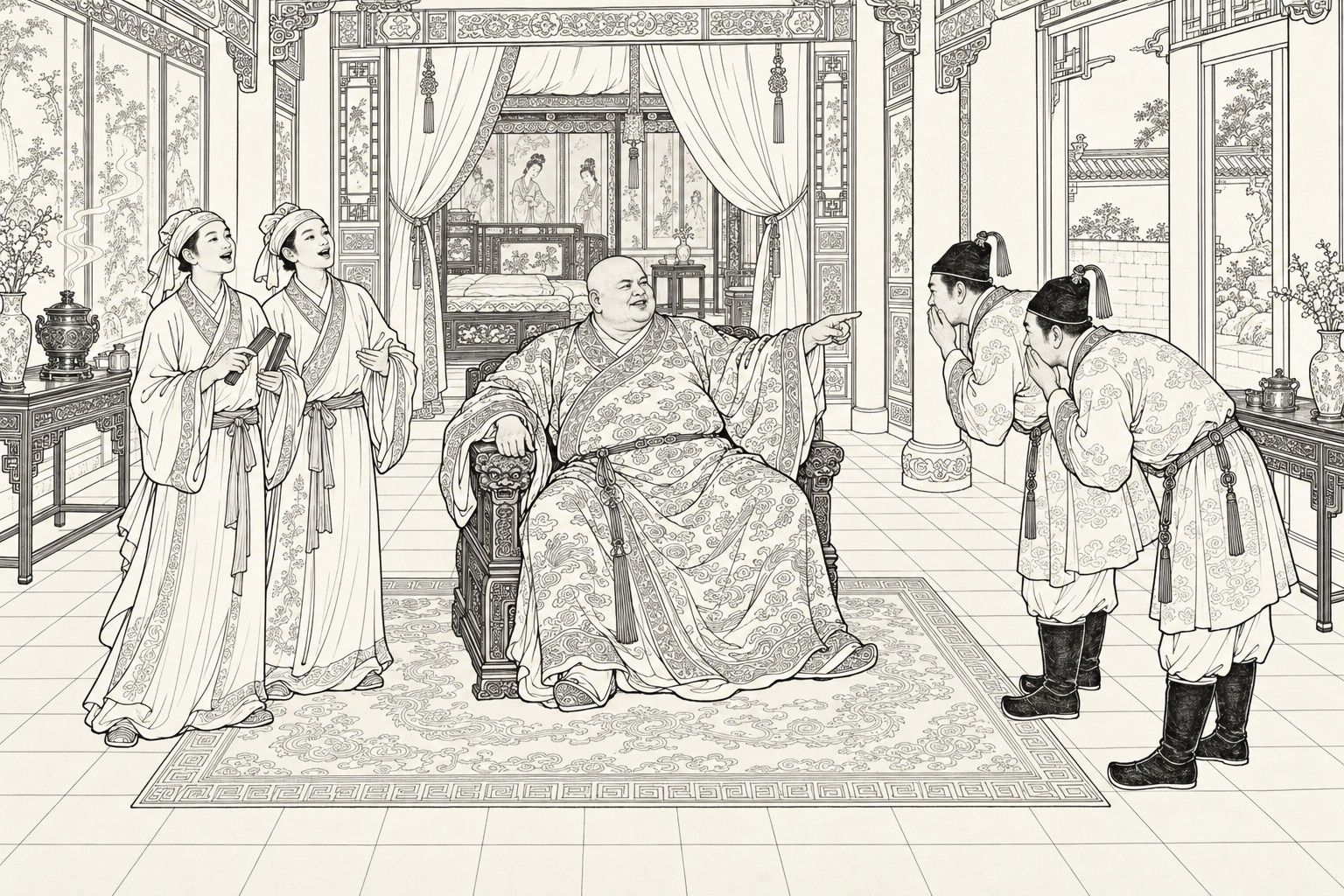
金和尚,諸城人。父無賴,以數百錢鬻于五蓮山寺。少頑鈍,不能肄清業,牧豬赴市,若傭保。後本師死,稍有遺金,捲懷離寺,作負販去。飲羊、登壟,計最工。數年暴富,買田宅於水坡里。弟子繁有徒,食指日千計。遶里膏田千百畝。里中起第數十處,皆僧無人;即有,亦貧無業,攜妻子,僦屋佃田者也。每一門內,四繚連屋,皆此輩列而居。僧舍其中:前有廳事,梁楹節梲,繪金碧,射人眼;堂上几屏,晶光可鑑;又其後為內寢,朱簾繡幙,蘭麝香充溢噴人;螺鈿雕檀為床,床上錦茵褥,褶疊厚尺有咫;壁上美人山水諸名跡,懸粘幾無隙處。一聲長呼,門外數十人,轟應如雷。細纓革靴者,皆烏集鵠立;受命皆揜口語,側耳以聽。客倉卒至,十餘筵可咄嗟辦,肥醴蒸薰,紛紛狼藉如霧霈。但不敢公然蓄歌妓;而狡童十數輩,皆慧黠能媚人,皂紗纏頭,唱豔曲,聽睹亦頗不惡。金若一出,前後數十騎,腰弓矢相摩戛。奴輩呼之皆以「爺」;即邑人之若民,或「祖」之,「伯、叔」之,不以「師」,不以「上人」,不以禪號也。其徒出,稍稍殺於金,而風鬃雲轡,亦略與貴公子等。金又廣結納,即千里外呼吸亦可通,以此挾方面短長,偶氣觸之,輒惕自懼。而其為人,鄙不文,頂趾無雅骨。生平不奉一經,持一咒,跡不履寺院,室中亦未嘗蓄鐃鼓;此等物,門人輩弗及見,並弗及聞。凡僦屋者,婦女浮麗如京都,脂澤金粉,皆取給於僧,僧亦不之靳,以故里中不田而農者以百數。時而惡佃決僧首瘞床下,亦不甚窮詰,但逐去之,其積習然也。金又買異姓兒,私子之。延儒師,教帖括業。兒聰慧能文,因令入邑庠;旋援例作太學生;未幾,赴北闈,領鄉薦。由是金之名以「太公」譟。向之「爺」之者「太」之,膝席者皆垂手執兒孫禮。無何,太公僧薨。孝廉縗絰臥苫塊,北面稱孤;諸門人釋杖滿床榻;而靈幃後嚶嚶細泣,惟孝廉夫人一而已。士大夫婦咸華妝來,搴幃弔唁,冠蓋輿馬塞道路。殯日,棚閣雲連,旛幢翳日。殉葬芻靈,飾以金帛;輿蓋儀仗數十事;馬千匹,美人百袂,皆如生。方弼、方相,以紙殼制巨人,皂帕金鎧;空中而橫以木架,納活人內負之行。設機轉動,鬚眉飛舞;目光鑠閃,如將叱吒;觀者驚怪,或小兒女遙望之,輒啼走。冥宅壯麗如宮闕,樓閣房廊連垣數十畝,千門萬戶,入者迷不可出。祭品象物,多難指名。會葬者蓋相摩,上自方面,皆傴僂入,起拜如朝儀;下至貢監簿史,則手據地以叩,不敢勞公子,勞諸師叔也。當是時,傾國瞻仰,男女喘汗屬於道;攜婦襁兒,呼兄覓妹者,聲鼎沸。雜以鼓樂喧豗,百戲鞺鞳,人語都不可聞。觀者自肩以下皆隱不見,惟萬頂攢動而已。有孕婦痛急欲產,諸女伴張裙為幄,羅守之;但聞兒啼,不暇問雌雄,斷幅繃懷中,或扶之,或曳之,蹩躠以去。奇觀哉!葬後,以金所遺貲產,瓜分而二之:子一,門人一。孝廉得半,而居第之南、之北、之西東,盡緇黨;然皆兄弟敘,痛癢猶相關云。
金和尚,诸城人。父无赖,以数百钱鬻于五莲山寺。少顽钝,不能肄清业,牧猪赴市,若佣保。后本师死,稍有遗金,卷怀离寺,作负贩去。饮羊、登垄,计最工。数年暴富,买田宅于水坡里。弟子繁有徒,食指日千计。绕里膏田千百亩。里中起第数十处,皆僧无人;即有,亦贫无业,携妻子,僦屋佃田者也。每一门内,四缭连屋,皆此辈列而居。僧舍其中:前有厅事,梁楹节棁,绘金碧,射人眼;堂上几屏,晶光可鉴;又其后为内寝,朱帘绣幙,兰麝香充溢喷人;螺钿雕檀为床,床上锦茵褥,褶叠厚尺有咫;壁上美人山水诸名迹,悬粘几无隙处。一声长呼,门外数十人,轰应如雷。细缨革靴者,皆乌集鹄立;受命皆揜口语,侧耳以听。客仓卒至,十余筵可咄嗟办,肥醴蒸薰,纷纷狼藉如雾霈。但不敢公然蓄歌妓;而狡童十数辈,皆慧黠能媚人,皂纱缠头,唱艳曲,听睹亦颇不恶。金若一出,前后数十骑,腰弓矢相摩戛。奴辈呼之皆以「爷」;即邑人之若民,或「祖」之,「伯、叔」之,不以「师」,不以「上人」,不以禅号也。其徒出,稍稍杀于金,而风鬃云辔,亦略与贵公子等。金又广结纳,即千里外呼吸亦可通,以此挟方面短长,偶气触之,辄惕自惧。而其为人,鄙不文,顶趾无雅骨。生平不奉一经,持一咒,迹不履寺院,室中亦未尝蓄铙鼓;此等物,门人辈弗及见,并弗及闻。凡僦屋者,妇女浮丽如京都,脂泽金粉,皆取给于僧,僧亦不之靳,以故里中不田而农者以百数。时而恶佃决僧首瘗床下,亦不甚穷诘,但逐去之,其积习然也。金又买异姓儿,私子之。延儒师,教帖括业。儿聪慧能文,因令入邑庠;旋援例作太学生;未几,赴北闱,领乡荐。由是金之名以「太公」噪。向之「爷」之者「太」之,膝席者皆垂手执儿孙礼。无何,太公僧薨。孝廉缞绖卧苫块,北面称孤;诸门人释杖满床榻;而灵帏后嘤嘤细泣,惟孝廉夫人一而已。士大夫妇咸华妆来,搴帏吊唁,冠盖舆马塞道路。殡日,棚阁云连,旛幢翳日。殉葬刍灵,饰以金帛;舆盖仪仗数十事;马千匹,美人百袂,皆如生。方弼、方相,以纸壳制巨人,皂帕金铠;空中而横以木架,纳活人内负之行。设机转动,须眉飞舞;目光铄闪,如将叱咤;观者惊怪,或小儿女遥望之,辄啼走。冥宅壮丽如宫阙,楼阁房廊连垣数十亩,千门万户,入者迷不可出。祭品象物,多难指名。会葬者盖相摩,上自方面,皆伛偻入,起拜如朝仪;下至贡监簿史,则手据地以叩,不敢劳公子,劳诸师叔也。当是时,倾国瞻仰,男女喘汗属于道;携妇襁儿,呼兄觅妹者,声鼎沸。杂以鼓乐喧豗,百戏鞺鞳,人语都不可闻。观者自肩以下皆隐不见,惟万顶攒动而已。有孕妇痛急欲产,诸女伴张裙为幄,罗守之;但闻儿啼,不暇问雌雄,断幅绷怀中,或扶之,或曳之,蹩躠以去。奇观哉!葬后,以金所遗赀产,瓜分而二之:子一,门人一。孝廉得半,而居第之南、之北、之西东,尽缁党;然皆兄弟叙,痛痒犹相关云。
Monk Jin was a native of Zhucheng. His father was a scoundrel who sold him for a few hundred cash to the temple on Mount Wulian. As a boy Jin was stubborn and dull and could not take to the pure work of a monk. He herded pigs and went to market like a hired hand. Later his master died and left a little money. Jin rolled it up in his robe, left the temple and went off to be a peddler. At watering the sheep before the sale and climbing the high ground to corner the market, no one schemed better. Within a few years he was suddenly rich, and he bought land and houses in Shuipo village. His disciples were legion; the mouths he fed each day ran into the thousands. Around the village he owned hundreds upon hundreds of mu of rich fields. In the village he built dozens of mansions, all full of monks and no laymen; or if there were any, they were poor men with nothing of their own, who had brought their wives and children to rent his houses and farm his fields. Inside each gate, buildings ran unbroken round all four sides, and these people lived in them in rows. The monks lodged in the middle. In front was a hall whose beams and pillars, brackets and posts were painted in gold and blue-green that dazzled the eye; the tables and screens in it shone bright enough to see your face in. Behind that were the inner chambers, with red blinds and embroidered hangings, and the scent of orchid and musk so thick it gushed out at you. The bed was of carved sandalwood inlaid with mother-of-pearl, and the brocade quilts and mattresses on it were folded and piled more than a foot and a half thick. On the walls, famous paintings of beauties and landscapes were hung and pasted so close there was hardly a gap. At one long shout, dozens of men outside the gate answered with a roar like thunder. Men in fine-tasselled caps and leather boots flocked like crows and stood like herons; when they took his orders, they covered their mouths to speak and cocked their ears to listen. If guests arrived without warning, a dozen banquets could be laid in a breath, rich meats and sweet wine, steaming and fragrant, heaped up in confusion like a driving mist. Only he did not dare keep singing girls openly. But he had a dozen or more pretty boys, all clever and sly and skilled at pleasing, their heads wrapped in black gauze, who sang love songs and were not at all bad to see or hear. Whenever Jin went out, dozens of horsemen rode before and behind him, the bows and arrows at their waists clattering together. His servants all called him “Master.” Even the people of the county and the common folk called him “Grandfather” or “Uncle” — never “Teacher,” never “Reverend,” never by his name in religion. When his disciples went out they had somewhat less pomp than Jin, but with their wind-blown manes and cloud-like bridles they were much the same as the sons of great families. Jin also made friends far and wide, so that even a thousand li away his every breath could be felt. With this he held the faults of provincial officials over them; if his temper so much as brushed one of them, the man would shake with fear. As a man he was vulgar and unlettered, without a refined bone from his crown to his toes. In all his life he never kept a single sutra or recited a single spell. He never set foot in a temple, and never kept cymbals or drums in his rooms. His followers had never seen such things, nor even heard of them. As for those who rented his houses, their women were as gaudy as women in the capital, and their rouge and hair oil, their gold and powder, all came from the monks. The monks did not grudge it, and so there were hundreds of men in the village who were farmers without farming. Now and then some bad tenant would cut off a monk’s head and bury it under the bed. Even then there was no close inquiry; the man was only driven out. Such was the long-standing custom. Jin also bought a boy of another surname and privately made him his son. He hired a Confucian tutor to teach the boy the examination essay. The boy was clever and wrote well, so Jin had him enter the county school. Soon after, under the regulations, he became a student of the Imperial Academy, and before long he went to the provincial examination in the capital and passed. From then on Jin was famous as “the Old Master.” Those who had called him “Master” now called him “Old Master,” and those who had knelt on the mat before him now stood with their hands at their sides and behaved like sons and grandsons. Before long the Old Master monk departed this life. The provincial graduate, in sackcloth and hempen bands, lay on straw with a clod for a pillow, faced north and called himself the orphan. The disciples’ mourning staffs, laid aside, covered the couches and beds. But behind the curtain before the coffin, the only soft weeping came from one person: the graduate’s wife. The wives of the gentry all came in their finery and lifted the curtain to offer condolences; caps and canopies, carriages and horses blocked the roads. On the day of the funeral, mat sheds and pavilions stretched like banks of cloud, and banners and streamers blotted out the sun. The straw figures to be buried with him were decked in gold and silk: dozens of sedan chairs, canopies and processional insignia, a thousand horses, a hundred beauties with flowing sleeves, all as if alive. There were Fang Bi and Fang Xiang, giants of paper shell in black kerchiefs and gold armour, hollow inside and braced with wooden crossbars, each with a live man inside carrying it along. Machinery inside turned so that their beards and eyebrows flew and danced and their eyes flashed as though they were about to roar. The onlookers were astonished, and small children who saw them from a distance ran off crying. The mansion for the underworld was as splendid as a palace: towers, halls, rooms and galleries walled in over dozens of mu, with a thousand gates and ten thousand doors, so that those who went in lost their way and could not get out. The offerings and effigies were mostly past naming. The mourners came canopy rubbing canopy. From the provincial officials on down, all came in bowing low, and rose and knelt as at a court audience. Those lower down — tribute students and Academy students, clerks and scribes — pressed their hands to the ground and knocked their heads, not daring to trouble the young master; they troubled his uncles in the faith instead. At that time the whole region turned out to gaze, and men and women, panting and sweating, filled the roads in an unbroken line. People with wives in tow and babies in swaddling called for brothers and hunted for sisters, and the noise boiled like a cauldron; mixed with the din of drums and music and the clang of a hundred shows, not a word anyone said could be heard. Of the onlookers nothing could be seen below the shoulders, only ten thousand heads jostling. A pregnant woman went into labour. Her women friends spread out their skirts as a tent and stood guard round her. They heard a baby cry. With no time to ask whether it was a boy or a girl, they tore off a strip of cloth and bound it to her breast, and some propping her up, some pulling her along, they hobbled away. What a spectacle! After the burial, the property Jin left was split like a melon in two: one half to the son, one half to the disciples. The provincial graduate got half, and to the south and north, east and west of his house, there was nothing but black-robed monks. But they all called each other brothers, and still shared each other’s aches and itches, so it is said.