水莽,毒草也。蔓生似葛;花紫,類扁荳。誤食之,立死,即為水莽鬼。俗傳此鬼不得輪迴,必再有毒死者,始代之。以故楚中桃花江一帶,此鬼尤多云。
水莽,毒草也。蔓生似葛;花紫,类扁荳。误食之,立死,即为水莽鬼。俗传此鬼不得轮回,必再有毒死者,始代之。以故楚中桃花江一带,此鬼尤多云。
Shuimang is a poisonous plant. It grows as a creeper, like kudzu; its flowers are purple, like those of the hyacinth bean. Whoever eats it by mistake dies at once and becomes a shuimang ghost. Folk belief has it that such a ghost cannot pass on to rebirth until someone else is poisoned and dies in its place. That is why, they say, these ghosts are especially many along the Taohua River in Chu.
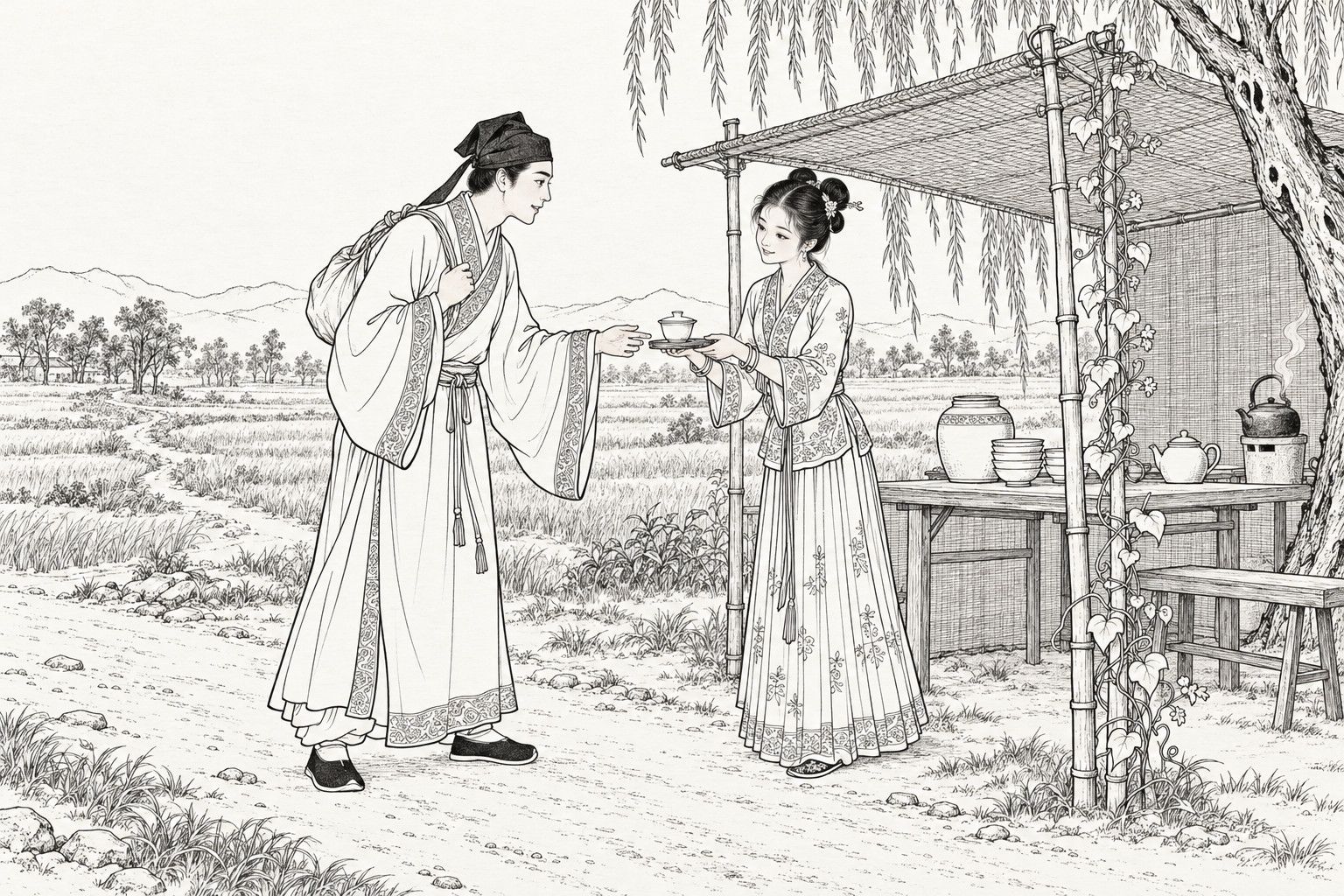
楚人以同歲生者為同年,投刺相謁,呼庚兄庚弟,子侄呼庚伯,習俗然也。有祝生造其同年某,中途燥渴思飲。俄見道旁一媼,張棚施飲,趨之。媼承迎入棚,給奉甚慇。嗅之有異味,不類茶茗,置不飲,起而出。媼急止客,便喚:「三娘,可將好茶一杯來。」俄有少女,捧茶自棚後出。年約十四五,姿容艷絕,指環臂釧,晶瑩鑒影。生受盞神馳;嗅其茶,芳烈無倫。吸盡再索。覷媼出,戲捉纖腕,脫指環一枚。女頳頰微笑,生益惑。略詰門戶,女曰:「郎暮來,妾猶在此也。」生求茶葉一撮,並藏指環而去。至同年家,覺心頭作惡,疑茶為患,以情告某。某駭曰:「殆矣!此水莽鬼也。先君死於是。是不可救,且為奈何?」生大懼,出茶葉驗之,真水莽草也。又出指環,兼述女子情狀。某懸想曰:「此必寇三娘也。」生以其名確符,問:「何故知?」曰:「南村富室寇氏女,夙有艷名。數年前,誤食水莽而死,必此為魅。」或言受魅者,若知鬼姓氏,求其故襠,煮服可痊。某急詣寇所,實告以情,長跪哀懇;寇以其將代女死,故靳不與。某忿而返,以告生。生亦切齒恨之,曰:「我死,必不令彼女脫生!」某舁送之,將至家門而卒。母號涕葬之。遺一子,甫週歲。妻不能守柏舟節,半年改醮去。母留孤自哺,劬瘁不堪,朝夕悲啼。一日,方抱兒哭室中,生悄然忽入。母大駭,揮涕問之。答云:「兒地下聞母哭,甚愴于懷,故來奉晨昏耳。兒雖死,已有家室,即同來分母勞,母其勿悲。」母問:「兒婦何人?」曰:「寇氏坐聽兒死,兒甚恨之。死後欲尋三娘,而不知其處;近遇某庚伯,始相指示。兒往,則三娘已投生任侍郎家;兒馳去,強捉之來,今為兒婦,亦相得,頗無苦。」移時,門外一女子入,華妝艷麗,伏地拜母。生曰:「此寇三娘也。」雖非生人,母視之,情懷差慰。生便遣三娘操作。三娘雅不習慣,然承順殊憐人。由此居故室,遂留不去。女請母告諸家。生意勿告;而母承女意,卒告之。寇家翁媼,聞而大駭,命車疾至。視之,果三娘。相嚮哭失聲,女勸止之。媼視生家良貧,意甚懮悼。女曰:「人已鬼,又何厭貧?祝郎母子,情義拳拳,兒固已安之矣。」因問:「茶媼誰也?」曰:「彼倪姓,自慚不能惑行人,故求兒助之耳。今已生于郡城賣漿者之家。」因顧生曰:「既婿矣,而不拜岳,妾復何心?」生乃投拜。女便入廚下,代母執炊,供翁媼。媼視之淒心。既歸,即遣兩婢來,為之服役;金百斤﹑布帛數十匹;酒胾不時饋送,小阜祝母矣。寇亦時招歸寧。居數日,輒曰:「家中無人,宜早送兒還。」或故稽之,則飄然自歸。翁乃代生起夏屋,營備臻至。然生終未嘗至翁家。
楚人以同岁生者为同年,投刺相谒,呼庚兄庚弟,子侄呼庚伯,习俗然也。有祝生造其同年某,中途燥渴思饮。俄见道旁一媪,张棚施饮,趋之。媪承迎入棚,给奉甚慇。嗅之有异味,不类茶茗,置不饮,起而出。媪急止客,便唤:「三娘,可将好茶一杯来。」俄有少女,捧茶自棚后出。年约十四五,姿容艳绝,指环臂钏,晶莹鉴影。生受盏神驰;嗅其茶,芳烈无伦。吸尽再索。觑媪出,戏捉纤腕,脱指环一枚。女頳颊微笑,生益惑。略诘门户,女曰:「郎暮来,妾犹在此也。」生求茶叶一撮,并藏指环而去。至同年家,觉心头作恶,疑茶为患,以情告某。某骇曰:「殆矣!此水莽鬼也。先君死于是。是不可救,且为奈何?」生大惧,出茶叶验之,真水莽草也。又出指环,兼述女子情状。某悬想曰:「此必寇三娘也。」生以其名确符,问:「何故知?」曰:「南村富室寇氏女,夙有艳名。数年前,误食水莽而死,必此为魅。」或言受魅者,若知鬼姓氏,求其故裆,煮服可痊。某急诣寇所,实告以情,长跪哀恳;寇以其将代女死,故靳不与。某忿而返,以告生。生亦切齿恨之,曰:「我死,必不令彼女脱生!」某舁送之,将至家门而卒。母号涕葬之。遗一子,甫周岁。妻不能守柏舟节,半年改醮去。母留孤自哺,劬瘁不堪,朝夕悲啼。一日,方抱儿哭室中,生悄然忽入。母大骇,挥涕问之。答云:「儿地下闻母哭,甚怆于怀,故来奉晨昏耳。儿虽死,已有家室,即同来分母劳,母其勿悲。」母问:「儿妇何人?」曰:「寇氏坐听儿死,儿甚恨之。死后欲寻三娘,而不知其处;近遇某庚伯,始相指示。儿往,则三娘已投生任侍郎家;儿驰去,强捉之来,今为儿妇,亦相得,颇无苦。」移时,门外一女子入,华妆艳丽,伏地拜母。生曰:「此寇三娘也。」虽非生人,母视之,情怀差慰。生便遣三娘操作。三娘雅不习惯,然承顺殊怜人。由此居故室,遂留不去。女请母告诸家。生意勿告;而母承女意,卒告之。寇家翁媪,闻而大骇,命车疾至。视之,果三娘。相向哭失声,女劝止之。媪视生家良贫,意甚懮悼。女曰:「人已鬼,又何厌贫?祝郎母子,情义拳拳,儿固已安之矣。」因问:「茶媪谁也?」曰:「彼倪姓,自惭不能惑行人,故求儿助之耳。今已生于郡城卖浆者之家。」因顾生曰:「既婿矣,而不拜岳,妾复何心?」生乃投拜。女便入厨下,代母执炊,供翁媪。媪视之凄心。既归,即遣两婢来,为之服役;金百斤﹑布帛数十匹;酒胾不时馈送,小阜祝母矣。寇亦时招归宁。居数日,辄曰:「家中无人,宜早送儿还。」或故稽之,则飘然自归。翁乃代生起夏屋,营备臻至。然生终未尝至翁家。
In Chu, people born in the same year call each other “same-year”. They send in their visiting cards and call on one another, addressing each other as “elder year-brother” and “younger year-brother”, and their sons and nephews call them “year-uncle”. Such is the custom. A scholar named Zhu was on his way to visit one of his year-mates, and on the road he grew parched and longed for a drink. Presently he saw an old woman by the roadside who had put up an awning and was giving out drinks, and he hurried over. She welcomed him in under the awning and served him most attentively. But when he sniffed the drink it had a strange smell, not like tea. He set it down untouched, rose and went out. The old woman hurried to stop him and called out, “Sanniang, bring a cup of good tea!” In a moment a girl came out from behind the awning, holding the tea in both hands. She was about fourteen or fifteen and dazzlingly beautiful; the rings on her fingers and the bracelets on her arms shone so bright they gave back reflections. Zhu took the cup, and his heart went out to her. He sniffed the tea: its fragrance was strong beyond compare. He drank it down and asked for more. Watching till the old woman had gone out, he playfully caught the girl’s slender wrist and slipped a ring off her finger. She blushed and smiled faintly, and Zhu was all the more bewitched. He asked a little about her family. “Come back in the evening,” she said, “and I will still be here.” Zhu begged a pinch of the tea leaves and went off with them and the ring hidden on him. By the time he reached his year-mate’s house he felt sick in his chest. Suspecting the tea, he told his friend what had happened. The friend was aghast. “You are done for! That was a shuimang ghost. My late father died of it. There is no saving you. What can be done?” Zhu was terrified. He took out the tea leaves to look, and they were indeed shuimang. He also brought out the ring and described the girl. The friend thought for a while. “That must be Kou Sanniang.” The name matched exactly. “How did you know?” asked Zhu. “She was the daughter of the Kous, a rich family in the South Village, long famous for her beauty. A few years ago she ate shuimang by mistake and died. It must be she who has bewitched you.” Someone said that if a person bewitched by a ghost knows its family and name, and can get its old trousers to boil and drink, he can be cured. The friend hurried to the Kous, told them the truth, and knelt long before them, pleading. But because Zhu was to die in their daughter’s place, they held back and would not give them. He came back furious and told Zhu. Zhu ground his teeth in hatred. “When I am dead, I will never let that girl of theirs be reborn!” The friend had him carried home, but he died just short of his own gate. His mother wailed and wept, and buried him. He left a son just a year old. His wife could not keep the widow’s vow of the Cypress Boat; after half a year she remarried and left. The mother kept the orphan and nursed him herself, worn out beyond bearing, weeping morning and night. One day, as she sat crying in her room with the child in her arms, Zhu suddenly walked in without a sound. His mother was terrified. Wiping away her tears, she asked what this meant. “Down below I heard you weeping, Mother,” he said, “and it grieved me to the heart, so I have come to wait on you morning and evening. Though I am dead, I have a wife now. She has come with me to share your work. Don’t grieve, Mother.” “Who is your wife?” she asked. “The Kous sat by and let me die, and I hated them for it. After I died I wanted to find Sanniang, but I didn’t know where she was. Lately I met a year-uncle of mine, and he showed me the way. When I got there, Sanniang had already been reborn into the family of Vice Minister Ren. I rode after her, seized her by force and brought her back. Now she is my wife; we get on well, and she is not unhappy at all.” After a while a young woman came in from outside, richly dressed and lovely, and bowed to the ground before the mother. “This is Kou Sanniang,” said Zhu. She was not a living person, but seeing her, the mother felt somewhat comforted. Zhu set Sanniang to the housework at once. She was not at all used to it, but she was so willing and obedient that it was touching. From then on they lived in his old room, and stayed. Sanniang asked the mother to let her family know. Zhu would rather they were not told, but the mother went along with the girl’s wish and in the end told them. Old Mr. and Mrs. Kou were astonished at the news and came in haste by carriage. They looked, and it was indeed Sanniang. They faced her and wept aloud, and she coaxed them to stop. Mrs. Kou saw how very poor Zhu’s household was, and it grieved her deeply. “I am a ghost now,” said Sanniang. “Why should I mind being poor? Zhu and his mother are so warm and kind to me; I am quite content here.” They asked, “Who was the old woman with the tea?” “Her name was Ni,” she said. “She was ashamed that she could not lure travellers on her own, so she begged me to help her. She has now been reborn into the family of a drink-seller in the prefectural city.” Then she turned to Zhu. “You are their son-in-law now, and you have not bowed to my parents. How do you think that makes me feel?” So Zhu threw himself down and bowed to them. Sanniang went into the kitchen, did the cooking in the mother’s place and served her parents. Mrs. Kou’s heart ached to watch her. As soon as they were home they sent two maids to wait on her, with a hundred catties of silver and several dozen bolts of cloth and silk; gifts of wine and meat came often after that, and Zhu’s mother grew modestly well off. The Kous often had Sanniang home to visit, too. After a few days she would say, “There is no one at home to do the work. You had better send me back soon.” If they kept her on purpose, she would simply drift home on her own. Old Mr. Kou built Zhu a large house and furnished it with everything. But Zhu never once went to his father-in-law’s house.
一日,村中有中水莽毒者,死而復甦,相傳為異。生曰:「是我活之也。彼為李九所害,我為之驅其鬼而去之。」母曰:「汝何不取人以自代?」曰:「兒深恨此等輩,方將盡驅除之,何屑此為!且兒事母最樂,不願生也。」由是中毒者,往往具豐筵,禱諸其庭,輒有效。
一日,村中有中水莽毒者,死而复苏,相传为异。生曰:「是我活之也。彼为李九所害,我为之驱其鬼而去之。」母曰:「汝何不取人以自代?」曰:「儿深恨此等辈,方将尽驱除之,何屑此为!且儿事母最乐,不愿生也。」由是中毒者,往往具丰筵,祷诸其庭,辄有效。
One day a man in the village who had been poisoned by shuimang died and came back to life, and everyone talked of it as a marvel. “It was I who brought him back,” said Zhu. “He had been done in by Li Jiu, and I drove the ghost off for him.” “Why don’t you take someone to replace yourself?” asked his mother. “I hate their kind,” he said. “I mean to drive every one of them away. Why would I stoop to that? Besides, serving you is my greatest joy, Mother. I have no wish to be reborn.” After that, people poisoned by the plant would often lay out a rich feast and pray in his courtyard, and it always worked.
積十餘年,母死。生夫婦亦哀毀,但不對客,惟命兒縗麻擗踴,教以禮儀而已。葬母後,又二年餘,為兒娶婦。婦,任侍郎之孫女也。先是,任公妾生女,數月而殤。後聞祝生之異,遂命駕其家,訂翁婿焉。至是,遂以孫女妻其子,往來不絕矣。一日,謂子曰:「上帝以我有功人世,策為四瀆牧龍君,今行矣。」俄見庭下有四馬,駕黃幨車,馬四股皆鱗甲。夫妻盛裝出,同登一輿。子及婦皆泣拜,瞬息而渺。是日,寇家見女來,拜別翁媼,亦如生言。媼泣挽留,女曰:「祝郎先去矣。」出門遂不復見。
积十余年,母死。生夫妇亦哀毁,但不对客,惟命儿缞麻擗踊,教以礼仪而已。葬母后,又二年余,为儿娶妇。妇,任侍郎之孙女也。先是,任公妾生女,数月而殇。后闻祝生之异,遂命驾其家,订翁婿焉。至是,遂以孙女妻其子,往来不绝矣。一日,谓子曰:「上帝以我有功人世,策为四渎牧龙君,今行矣。」俄见庭下有四马,驾黄幨车,马四股皆鳞甲。夫妻盛装出,同登一舆。子及妇皆泣拜,瞬息而渺。是日,寇家见女来,拜别翁媪,亦如生言。媪泣挽留,女曰:「祝郎先去矣。」出门遂不复见。
More than ten years went by, and the mother died. Zhu and his wife mourned till they wasted with grief, but they did not receive the mourners; they only had their son put on hemp mourning, beat his breast and stamp, and taught him the rites. Two years and more after the burial, they found the son a wife: the granddaughter of Vice Minister Ren. Some time before, a concubine of Lord Ren’s had borne him a daughter, who died at a few months old. Later, hearing the strange story of Zhu, he drove to his house and settled with him that they were father-in-law and son-in-law. Now he gave his granddaughter to Zhu’s son as wife, and the two families visited constantly. One day Zhu said to his son, “For my service to the world of men, the Lord on High has appointed me Dragon-Herding Lord of the Four Rivers. I go now.” In a moment four horses appeared in the courtyard, drawing a carriage with yellow curtains; the horses’ legs were all covered in scales. Zhu and his wife came out in full dress and climbed into the carriage together. Their son and his wife bowed, weeping, and in the blink of an eye they were gone. That same day the Kous saw their daughter come. She bowed farewell to her parents and said what Zhu had said. Her mother wept and tried to keep her. “Zhu has gone on ahead,” said Sanniang. She went out of the door and was never seen again.
其子名鶚,字離塵,請諸寇翁,以三娘骸骨,與生合葬焉。
其子名鹗,字离尘,请诸寇翁,以三娘骸骨,与生合葬焉。
Their son, whose name was E, with the courtesy name Lichen, asked old Mr. Kou for Sanniang’s remains and buried them with Zhu’s.